為何不證明“轉基因是安全的”的邏輯推導_風聞
鹰击长空-黑名单专治乌贼、反智、喷子、谣棍和杠精2018-07-28 13:56
友情提示:Alt + F4 鍵可以迅速關閉本文並封閉自己的視野。我認為可以幫助某些人節約不必要看文章的時間。
正文:
顯然,**沒有絕對安全的事物。**我們將要做一個測試和試着證明水在健康方面是安全的。
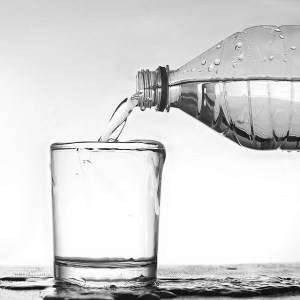
人們經常問,是否有文獻支持並證明轉基因作物是安全的。安全是一個相對的術語,一般被認為是否存在風險或者有害。同樣地,問食物的安全與否,其實是問它是否存在風險。對於風險的評價有很多限定因素,但並不與絕對的安全相違背。**對於風險的評估主要是檢查手頭上現有的證據,設計相關的試驗來驗證它對於身體健康和環境等的影響。**最終,人們對這些數據進行評估,來確定它是否可以引起某些危害。
我們首先要提出一個虛擬的假設,反駁這個假設屬於科研工作者的責任,通過實驗來説明它們之間是不同的或者存在一個影響。例如,如果你想找出經常看電視的小孩會有暴力傾向,你的虛擬假設應當為“看電視並不會使小孩具有攻擊性”。因此,我們的假設就會是“喝水不會誘發癌症”。
我們需要對這個假定進行更加具體的條件限制和説明。對於我們的研究,我們將會考慮我們的問題為“與全國的平均水平相比,居住在舊金山港灣區10-20年並且每天喝2-4杯自來水的居民,患乳腺癌的機率並沒有增加”。
如果居住在舊金山港灣區的人患乳腺癌的幾率與全國平均水平相同,那我們就證明那的水是“安全”的嗎?並非如此。我們所得到的全部證據只能表明喝水並不能誘發癌症,還有就是水是可以放心飲用的。就像以前提到的,**沒有任何東西被證明是絕對安全的,其中也包括水。**飲用太多或太少的水都可以對人體造成巨大的傷害,更不要説它沒有經過合理的淨化系統。因此,水也可以被認為是危險的:在世界範圍內,由水所誘發的疾病是一個非常重要的致死方式;水還可以引發洪水,破壞人們的家園。但是,同時,我們需要水來維持正常的生命活動,飲用適量的水還可以改善人們的身體狀況。科學也幫助我們對水的危害作出解釋:水在某些情況下確實可以對引發某些傷害,但是我們可以確保這些傷害降低到最低。
讓我們接着進行延伸分析:
廣義論題:MMR疫苗(麻疹、腮腺炎和風疹的混合疫苗)不會引起孤獨症。
具體論題:與沒有接種過默克公司的MMR疫苗的白人小孩相比,接種過疫苗的小孩患孤獨症的概率並沒有提高。廣義論題:轉基因食物並不會傷害人們的內臟。
具體論題:與食用普通的飼料相比,食用含有30%轉基因成分(轉Bt基因的玉米)的食物30天后,豬腸道內的菌羣並沒有發生改變。
這就一定意味着你已經證明了接種MMR疫苗不能誘發孤獨症嗎?其實並不是。你是否已經證明轉基因食物沒有影響腸道內的細菌種類?其實也不是。你所做的只是增加了一些證據,它們表明MMR疫苗沒有引發孤獨症和轉基因作物沒有對人們產生傷害。你已經證明了在一些特定的檢測領域內,試驗組(轉基因作物)和對照組(傳統作物)對安全的風險性是非常低的。
直到有人提出了一個研究課題,**表明A事件引起了B事件的發生。然後,我們的假設就為:A事件並不能導致B事件的發生。否則,你可以提出任何可能的假設,人們將不得不一一證明這些假設是錯誤的。**你可以説虛擬的巨龍一起跳動可以引起地震的發生,並且要求我們來證明這個假設並不是真的。或者由於手錶具有一定的輻射性,因此經常戴手錶的人,非常可能患有腕管綜合症。亦或者電腦可以釋放危險的毒素,從而誘發腦瘤。直到你證明他們是假的,人們才會相信:巨龍並不會引發地震,而且計算機也不會誘發腦瘤。這個責任應當由提出這個論斷的人來做,證明確實這個事情是存在的。
因此,**如果你宣稱地震是由巨龍所引起的,那麼請你拿出足夠的證據來支撐你的診斷,而並非由我來證明你是錯誤的。**一個相同的論斷,眾所周知的羅素的茶壺,是由哲學家伯特蘭·羅素的杜撰出來的。羅素説:如果我想説,在火星和太陽之間的軌道內,有一個茶壺正在運行,但是它非常的小,以致於用望遠鏡都無法觀察得到。但是卻沒有人能駁倒我的論斷。既然我的假設不能被駁倒,那麼它就不應該受到人們的懷疑。但是如果我不斷重複宣講,會被人們認為是胡説八道。這個例子強調了,證明某些人的假設是非常的不可能。因此,舉證的責任應當由提出假設的人來承擔。
無論何時,**人們提出一個不能證偽的假設,那麼舉證的責任應當由他來承擔。**通過了幾十年的研究,一直宣稱轉基因作物可以誘發孤獨症和癌症的人們,應當拿出足夠的證據來證明他們的論斷。正如卡爾·薩根所説,非凡的論斷,需要非凡的證據。宣稱我沒有足夠的知情權並不是一個經得起檢驗的證據,這也不能推導出轉基因作物是有危害性的,這僅僅是一個無意義的推測。
缺乏足夠的文獻支持轉基因作物是安全的,這經常引起人們的懷疑和恐懼。不可能證明它不具有危害性這一點,經常被反轉基因人士來進行大肆地宣傳(最近由一個醫師發表在紐約每日郵報上的文章就是一個完美的例子):我們是否知道轉基因食物不會誘發癌症?我們是否知道轉基因食物不會引發男性不育嗎?等等。。好,這些已經足夠了,我們都不知道。但是,許多飼餵實驗都推導出,沒有證據證明它們可以引發癌症,也沒有理論依據説明它們可以發生。
我們是否知道吃石榴不會引發男性禿髮嗎?我們是否知道在鍵盤上打字可以傳播性病嗎?不知道,我們真的不知道。我不認為有人曾做過這方面的研究。但是,非常奇怪的是,沒有人曾提議一個法案來限制鍵盤的作用,亦或有人聲稱我應該將我後院的石榴樹砍掉。請記住這一點,**沒有任何人可以證明安全是絕對存在的,我們僅僅可以證明它具有非常少的危險性,以回應那些持有懷疑態度的人們。**這些假設允許我們從科學的數據中清除那些迷信的説法。一些別有用心的人馬上就可能得出結論,埃博拉病毒是人造的或者艾茲病並不是由HIV病毒所引起的。通過表明“給我證據表明埃博拉病毒是人造的”或者“足夠的證據證明艾茲病是由HIV病毒所引起的”,我們可以站出來反對這些有害的理論。
當你問“轉基因食物安全的證據”或者是否有文獻支持時,事實上,這是一個抱有偏見的想法,無論他是否意識到這一點。不幸的是,我不能提供給你如此的證據,因為我並沒有讀過任何設計、執行和可重複性非常好的文獻,來證明轉基因對身體有負面的影響。
這就是為什麼科學家非常重視並對轉基因作物進行了大量的研究,這也是**為什麼科學家非常強調關於轉基因作物的聲明應由權威性的科研機構所發佈。這也是為什麼薈萃分析和文獻綜述是非常重要的。因為並不僅僅是一個報道證明其安全性,而是有大量的研究、充足的數據,非常多的調查表明目前市場上的轉基因食物與傳統育種的食物一樣安全。**通過對數據本身的驗證,科學家得出了一個共識:在這個領域內的絕大多數科學家們都停止了爭論,因為越來越多的數據使這個論斷越來越清晰和明瞭。儘管,在這個轉基因作物的問題上,並沒有出現一個非常清晰的共識,但是他們都認為,目前市場上的轉基因食物並沒有比傳統育種的食物有更大的危險性。
我最後的論點是:申請基金是非常困難的,科研單位需要看到具體的申請細節(編者注:申請不到這樣不符合科研規律的項目,是沒有人去證明“轉基因是安全的”重要原因):
1、如果一個科研工作者想確定是否一種物質可以誘發傷害,然後批准部門將會想知道傷害在何種情況下才會發生。在我們關於水是否安全的例子中,除非我們描述出一種生物學依據來表明水可以誘發乳腺癌,否則我們決不可能在這個課題上得到資助。
2、在目前的科研體系下,對於一個科研工作者來説,負面的數據或者不能駁倒你的假設不能真正的成為一個研究方向,或者他不能使批准部門使這項工作得以開展。設想你正在進行一個項目上,你不希望得到它們之間有差異,那麼你不僅浪費了納税人的錢,還浪費了你的時間。
但這是科研工作者不得不做的。在一個他們都不想有新穎結果的課題上,科研工作者不想浪費他們的時間和寶貴的資源。然而,與意識到這個簡單的解釋相反,許多人選擇相信科學家們是視而不見的或者是被賄賂了。幾乎沒有相關領域的科學家認為,長期的飼餵轉基因作物可以產生傷害,然而許多反轉活躍分子將會認為那些跨國公司控制了他們。
但是如果你對安全的定義是5年內的研究,來研究1000只老鼠是否對Bt玉米和麪筋過敏方面的問題。那麼就意味着,你將會花費10年的時間,並且獲得學校最低水平的工資;同時,你還要試着尋找一個批准單位來資助你的項目。
作者介紹:Layla Parker-Katiraee holds a PhD in Molecular Genetics from the University of Toronto and a Bachelors degree in biochemistry from the University of Western Ontario. She is currently a Senior Scientist in Product Development at a California human genetics biotech company. All views and opinions expressed are her own.
翻頁查看本文英文原文
英文原文:http://www.biofortified.org/2015/05/prove-gmos-are-safe/
(UP主注:原文鏈接下方有英文評論區,文章作者還對一些網友提出的問題做了現場解答,英文好可以自行翻看,無需科學上網。)
Why no one will ever “prove that GMOs are safe”
When discussing transgenic crops, I regularly get asked to provide a paper that “proves” that GMOs are safe. Whether you want proof that biotech crops, organic bananas, or conventional peaches are safe, I cannot provide you with such a paper. Safety is a relative term and is generally defined as the absence of risk or harm. As such, asking for proof of safety is, in essence, asking someone for proof of the absence of risk. The risk of what ever is being evaluated is measured in relation to other options, not against a theoretic idea of “perfectly safe”. Relative risk is scientifically determined by examining the evidence at hand: experiments are performed to determine the impact of a substance on health, environment, etc and the data from these experiments are assessed to determine if the substance causes harm.
Scientifically, nothing is truly 100% safe. To explain why, we’re going to do an exercise and try to prove that water is safe. The first thing to keep in mind is that there are many aspects to water safety: impact on health, water transportation, water treatment, proper water storage, etc. For our example, we’re going to select “impact on health”.
Then, we have to come up with a null hypothesis. It may seem counter-intuitive and the double-negatives in the explanation below suck, however the baseline for much of research is that there’s no impact or no difference. It’s the researcher’s responsibility to disprove that hypothesis, ie. to show that there is a difference or that there is an impact. For example, if you want to find out if kids who watch TV are more prone to hitting, your null hypothesis could be “watching TV does not increase aggression”. So for our exercise, our hypothesis will be “Drinking water does not cause cancer”.
Next, we narrow down the hypothesis to a question that we can actually test. For example, “children aged 2-4 who watch 1-2 hours of TV a day do not hit their parents more frequently than children who do not watch any TV.” For our study, we’ll consider our question to be “Individuals who have lived in the San Francisco Bay Area for 10-20 years and drink 2-4 cups of tap water daily do not have a greater incidence of breast cancer than the national average”. We conduct our study and gather data which will probably take a few years. Then we apply the proper statistics. If our study finds a difference, then we’ve disproven our null hypothesis, much hoopla will be made, and our findings will be published in the “Journal of Awesome Research”. If there’s no difference, then our null hypothesis still stands and our study will likely be published in the “Journal of Flibbity-Flooba”.
If we find no difference in the incidence of breast cancer in our study, have we “proven” that water is “safe”? No. All we’ve done is add data to the body of evidence that suggests that drinking water does not cause cancer and that it’s safe to drink it. As previously mentioned, nothing can be truly proven safe, even water; too much or too little of it can kill us, let alone if it is improperly purified. Yes, water can be considered dangerous: water-borne illnesses are one of the leading causes of death worldwide, water causes floods, and it can damage homes. But at the same time, we need water to survive and its intake in the proper amounts promotes health. Science has helped us define the harm that water can cause and the proper steps that we can take to ensure that harm is minimized.
Let’s go beyond our water analogy: here are a few other hypotheses along with a more narrow question of what will be tested:
Broad: The MMR vaccine does not cause autism. Narrow: There is no significant difference in the incidence of autism in caucasian children who have received Merck’s MMR vaccine in the San Jose Bay Area and children who are not vaccinated.
Broad: Eating transgenic crops does not harm the gut. Narrow: There is no significant difference in the relative abundance of bacterial species in the intestinal flora of pigs fed a diet consisting of 30% genetically modified Bt-corn for 30 days compared to a control diet.
Again, let’s say that you are unable to disprove your null hypothesis. Does that mean that you’ve proven that the MMR vaccine doesn’t cause autism? No. Have you proven that GMOs do not impact the bacteria in the gut? No. What you’ve done is add data to a body of evidence that suggests that the MMR vaccine doesn’t cause autism and that crops developed through biotechnology don’t cause harm. You’ve been able to demonstrate a relative lack of risk between the substance (the genetically engineered crop) and a control (the conventional crop) in the specific area examined.
Until someone comes up with a study showing that A causes B, then the null hypothesis is what we turn to: A does not cause B. Otherwise you could come up with any crazy hypothesis and people would have to “prove you wrong”. You could state that that earthquakes are caused by invisible dragons jumping at the same time and demand evidence showing that it’s not true. Or that wearing a watch causes carpal tunnel syndrome due to the radiation emitted by the watch. Or that computers leach dangerous toxins that cause brain tumors. That’s not the way it works. Dragons don’t cause earthquakes and computers don’t cause brain tumors, until you can prove otherwise. The onus is on the person making a claim to provide evidence supporting its existence. Therefore, if you claim that invisible dragons cause earthquakes, it is not my responsibility to “prove you wrong”. Rather, it is your responsibility to provide evidence demonstrating that these beings caused the earthquake. A similar analogy, known as Russell’s Teapot, was coined by the philosopher Bertrand Russell. To illustrate where the burden of proof rightfully belongs when someone makes an unfalsifiable claim, Russell laid out this example: “If I were to suggest that there is a teapot, too small to be detected by a telescope, orbiting around the Sun somewhere between the Earth and Mars, nobody would be able to disprove my assertion. But if I were to go on to say that, since my assertion cannot be disproven it should not be doubted either, then I should rightly be thought to be talking nonsense.” This example highlights how impossible it would be to “prove him wrong”; therefore, the burden of proof would lie with him, as he is the one making the claim.
Whenever someone makes an unfalsifiable claim, the burden of proof lies with the person making the claim. Without a credible hypothesis for harm, and after decades of study, the burden of proof for the people claiming that biotech crops could be causing autism or cancer, lies with those making these claims. As Carl Sagan said: “Extraordinary claims, require extraordinary evidence.” Claiming that “we just don’t know enough” is a not hypothesis that can be tested and is not in itself evidence of harm: it’s just idle speculation.
The absence of single papers demonstrating safety is often used to invoke fear and doubt, and impossibility of proving a negative is often capitalized in anti-GMO rhetoric (this recent article by a medical doctor in the New York Daily Mail is a perfect example of such arguments): “Do we know that GMOs don’t cause cancer? Do we know that they don’t cause male infertility? etc.” Well, no… We don’t… But in the many feeding studies that have been conducted, there’s absolutely no evidence to suggest that it DOES cause cancer, there’s no logical mechanism proposed by which this might occur, and the null hypothesis still stands. You could virtually make the same argument about anything. “Do we know that eating pomegranates doesn’t case male pattern baldness? Do we know that typing on a keyboard doesn’t cause STDs?” No… We don’t… I don’t think anyone has ever done those studies. But strangely enough, no one has proposed a ban the use of keyboards until someone proves that typing on one doesn’t cause herpes, nor has anyone suggested that I should uproot the pomegranate tree in my backyard. Remembering that safety can never be proven and that we can only demonstrate a lack of relative risk can allow us to view such claims with skepticism. The null hypothesis also allows us to weed out superstitious nonsense from cohesive scientific arguments. Some of the conspiracy theories circulating right now include the idea that the ebola virus is man-made and that AIDS is not caused by HIV. We can stand against such harmful ideas by stating “show me the evidence suggesting that ebola IS man-made” or “here’s a plethora of data indicating that AIDS IS caused by HIV”.
When you ask for “proof that GMOs are safe” or ask for a paper that has this evidence, that is absolutely the wrong request. In fact, it’s a loaded question, whether the person asking realizes or not, the “proof” is impossible to provide, no matter the subject. Ask a specific question and then try to find the data showing that it DOES cause harm. Unfortunately, I can’t provide you with such data because I haven’t read a well-designed, well-executed, reproducible study demonstrating that GMOs have a negative health impact.
THIS is why scientists stressthe number of studies that have examined genetically engineered crops. THIS is why scientists stressthe statements made by reputable scientific institutions about GMOs. THIS is why meta-analyses and literature reviews are important. Because no single study proves safety: its the sum of the studies, the body of data, the totality of research that’s been done which suggests that the current GMOs on the market are safe relative to their conventionally bred counter-parts. By examining the body of data, scientists develop a consensus: the overwhelming majority of mainstream working scientists in the relevant field stop debating an issue because the direction that the evidence points has become clear. Although there are many matters on which a clear consensus has not yet emerged, on the topic of genetically engineered crops the consensusis that the current crops on the market place pose no greater risk to health than their non-GMO counterparts.
My last point is this: receiving funding for a study is very difficult, and the institutions that fund these grants want to see proposals that
1)have a logical mechanism: in the context of this article, if a researcher wants to determine if a substance can cause harm, then the granting agency will want to know how that harm could potentially occur. In our exercise regarding the safety of water, we’d never get the money for our study unless we could outline a biological mechanism by which water could cause breast cancer.
2)have a high likelihood of generating positive results or disproving the null hypothesis. Negative data or being unable to disprove your hypothesis doesn’t really build a career for a research scientist in the current academic system, nor does it validate the work of the granting agency. As a consequence, many researchers will not pursue a path where they don’t see fruitful results nor will granting agencies fund such research. Imagine working on a project where you don’t expect to make a difference, waste tax-payers’ money, and burn away your time. Why on earth would you start such a project? While it is possible that this approach will miss some harms that we did not understand, in a resource constrained world, it’s counter-productive to pursue every speculation whether it makes “sense” or not. It’s far more productive to pursue the ideas that make sense before worrying about things that don’t make sense.
Whether or not you agree with the system, this is what scientists in the public arena have to work with. Scientists do not want to waste their time and valuable resources on a study where they don’t expect to demonstrate anything new. Instead of recognizing this simple explanation, many chose to believe that research is being silenced or that scientists are being paid off. Very nearly none of the scientists working in the relevant fields think that there is any reason that long term feeding trials of transgenic crops will produce a demonstration of harm, yet many anti-GMO activists would choose to believe that such research is not being conducted because “Big-Ag” drives funding at academic institutions. Rather than acknowledging that the absence of studies examining a link between Round-Up Ready corn and Alzheimer’s is a result of the fact that experts in the field cannot envision a credible mechanism for such harm based on the evidence at hand, many would prefer to believe that it’s because “Big-Ag” is suppressing the data or that Monsanto will break scientists’ kneecaps if they publish results suggesting that GMOs can cause harm.
But if your definition of “safety” is a 5 year longitudinal study on 1000 rats examining a link between Bt-corn and gluten sensitivity, by all means: spend 10 years of your life in school earning less than minimum wage, and then try to find a granting agency that will fund your study based on whatever evidence and reasoning you have. Best of luck in your future career path!