意大利轉基因大豆有害論文涉嫌造假遭撤稿_風聞
鹰击长空-黑名单专治乌贼、反智、喷子、谣棍和杠精2018-08-22 09:36
描述餵食轉基因作物對動物造成有害影響的論文,正因受控存在數據操縱行為而接受審查。從一項正由意大利那不勒斯大學進行的調查泄露出來的結果顯示,論文中的圖片可能被故意改動過。開展此項研究的實驗室負責人則表示,這些指控沒有任何意義。
c c c
全球食品和藥物機構進行的無數安全測試顯示,和食用轉基因食品相關的危險並不存在,但上述論文結果卻背道而馳。此項研究被反對轉基因的網站廣泛引用,而論文描述的實驗結果也在去年7月舉行的意大利參議院聽證會上被援引。聽證會就該國是否應允許種植獲得安全驗證的轉基因作物進行了討論。
“這起事件非常重要還因為這些論文被用於關於轉基因作物的政治爭論中。”意大利參議員、米蘭大學神經學家Elena Cattaneo表示。她對於該項研究的擔憂觸發了此次調查。

意大利參議員、神經學家艾琳娜·卡塔內奧(Elena Cattaneo)展開了對這些論文的分析
在去年參議院的聽證會後,Cattaneo更加仔細地研究了這3篇論文。它們均出自那不勒斯大學一個由獸醫學家Federico
Infascelli領導的實驗室。論文描述了在被餵食轉基因大豆的“母親”產下的山羊羔身上開展的試驗,並且提出,大豆中外來基因的碎片能通過腸道傳輸並隱藏在奶中,從而影響所養育“孩子”的生物學特徵。
附錄:果殼網關於該意大利論文造假相關證據的摘錄
例1:消失的陰性對照結果
在因法塞利2010年10月發表在《動物》(Animal)雜誌上的論文[1]中,論文圖1的凝膠電泳結果疑似遭到篡改。下圖右一泳道(-)呈現的是陰性對照結果,對論文原圖進行調整後發現該泳道的結果疑似被人為清除。DNA膠中陰性對照的作用在於確保受檢測的DNA並非污染產物。對陰性對照泳道的結果進行修改可能是試圖掩蓋污染。(文圖來源與果殼,後同)
2010年論文[1]中的DNA電泳圖片。經過處理後發現,關鍵的陰性對照泳道明顯經過人為篡改。
例2:老圖新用,變更描述
值得注意的是,上面這張很可能經過篡改的圖片還可能出現在了兩篇不同的論文裏——在因法塞利2015年發表於《小型反芻動物研究》(Small Ruminant Research)的論文中,極度相似的電泳圖片(連左一Marker欄的背景噪音特徵都完全一致)再次出現,而這一次,論文描述的DNA樣本來源卻與2010年論文對應圖片下的描述不一致。
疑似重複使用的論文圖片。2010年的論文[1]稱泳道1、2和泳道3、4的DNA分別來源於乳汁和血液樣本,而在2015年的論文[3]中,疑似相同的電泳圖再次出現,論文卻稱四條泳道的DNA都來自初乳樣本。
2010年論文[1]中的另一張圖片,也被發現疑似與2013年因法塞利發表在《食品與營養科學》(Food and Nutrition Sciences)上的論文[2]圖片重複,並且同樣有樣本表述前後不一的現象。
值得注意的是,2010年論文小圖d(左下)的6號泳道,在2013年論文中的描述變成了陰性對照泳道。
例3:圖片拼接
布奇的分析結果還提示,2010年的論文[1]中一張電泳圖中五條泳道的結果被摘取出來,拼接到了2015年論文[3]的一張電泳圖中。
時隔5年的兩篇論文圖片出現部分雷同。


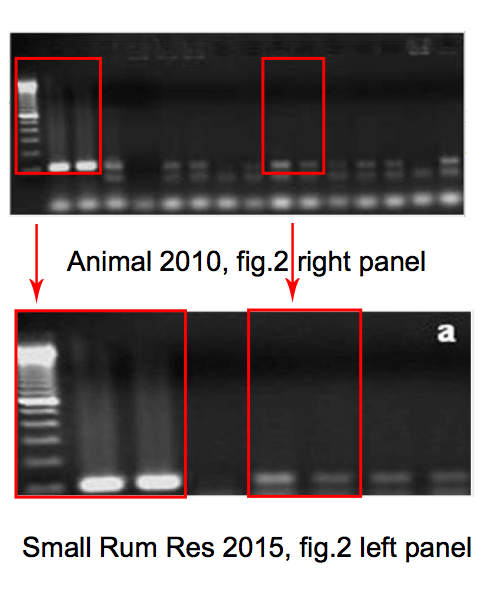
Cattaneo提出了3篇論文中看上去存在問題的地方:電泳凝膠的部分圖片似乎被塗抹過,而且一些出現在不同論文中的圖片看上去相同,但説明文字描述的是不同試驗。
隨後,她委託該國生物醫學服務和信息諮詢公司BioDigitalValley,對所有3篇文章進行取證分析。結果顯示,論文的確含有經過處理和重複使用的圖片。去年9月,Cattaneo聯繫了相關期刊,並在11月將分析結果轉發給那不勒斯大學。該校校長Gaetano Manfredi立即啓動了校內調查。他表示,該校可能會在2月底宣佈對此採取的舉措。
《自然》雜誌稱,2006年到2015年間,意大利那不勒斯大學的費德里科·因法塞利(Federico Infascelli)的動物營養研究團隊因涉嫌篡改圖片和/或捏造關鍵數據而遭受攻擊。其中發表於《食品與營養科學》雜誌的一篇論文已經被撤稿,有報道説其他三篇文章也在接受重新評議。
因法塞利所發表的這些研究大都是在反對轉基因的組織資助下進行的。以下僅舉幾例:
1)新研究表明:轉基因大豆造成山羊後代體重下降,《轉基因觀察》,2015年3月2日
2)研究人員發現:轉基因大豆改變了羊奶成分,並使後代發育遲緩,《獨立科學新聞》,2015年10月26日
3)研究發現:以轉基因大豆為食的母羊產下的幼崽遭受發育遲緩和營養不良困擾,《轉基因新聞》,2015年10月29日
作為一名科學家,真正令人不敢相信是的面對那些涉嫌人為篡改圖片的幻燈片。這些幻燈片顯示了圖像的篡改過程,以及或許是怕麻煩而在時隔多年的不同文章中引用同一張圖片,卻配以不同的圖釋來描述不同的試驗。
進行過凝膠電泳實驗的人都知道對於每次電泳都會有一個類似於特徵指紋的特殊不規則形狀存在。對於那些認為可以隨意重複使用電泳圖像而不會被發現的人來説,這無疑是一記響亮的耳光,尤其是考慮到轉基因相關研究本身就是具有爭議性的課題,人們更不會輕易放過每一個實驗細節。同時,這也不禁讓人對該研究小組的一系列文章中其他數據的真實性表示懷疑。

對於許多科學文獻中類似的動物飼餵實驗,該研究小組這些文章的結論毫無意義。已有許多研究都仔細審查過那些食用轉基因飼料動物的表現以及那些食用轉基因飼料動物所產生的乳、肉和蛋中重組DNA以及蛋白質的情況。事實上,由動物科學學會聯盟(the Federation of Animal Science Societies,FASS)保存着相關研究的記錄可供查詢。農業科學與技術委員會(The Council for Agricultural Science and Technology ,CAST)和歐洲食品安全局(European Food Safety Authority ,EFSA)對此均有過報告。在這一次又一次的研究中,研究人員均未能從來自於飼餵動物中檢測到任何來源於植物的基因的片段(單拷貝的植物內源性片段)。
這些結論在2013年格哈德·弗萊徹斯基(Gerhard Flachowsky)編寫《轉基因植物餵養動物的營養學(Animal nutrition with transgenic plants)》一書中由德國研究學者拉爾夫·愛因斯班尼爾(Ralf Einspanier)總結在了一個表格裏,這一章節名為《轉基因DNA和新表達蛋白的去向(The fate of transgenic DNA & newly expressed proteins)》。

上述表格展示了《自然》雜誌中所討論的拉菲樂·圖第斯科(Raffaella Tudisco)教授的兩篇論文為什麼相比於其他研究來説顯得與眾不同。在另一項研究中,作者夏爾瑪(Sharma)在豬的肌肉中發現了重組DNA的研究中,並總結道:
本研究證實,飼料攝入的DNA片段(內源性和轉基因),確實會在消化道終端存在,並被腸上皮組織吸收。豬體內確實會發生非常低頻率的(基因片段)在內臟組織中的轉移,但羊體內未發現該現象。眾所周知,在動物組織中檢測轉基因飼料來源的低拷貝轉基因片段的是一項技術挑戰,但是,沒有任何證據表明,重組DNA在腸道內與常規飼料攝入的內源性遺傳物質的代謝去向有何不同。
不同尋常的是,該研究在那些食用了轉基因飼料的動物的新鮮乳汁中發現了重組DNA(rDNA)序列。世界範圍內的許多研究都對此進行了大量的實驗,除了這一研究小組之外僅有另一項研究中檢測到了rDNA。在這個研究中,研究者從食用了轉基因飼料的對照組和實驗組動物的乳汁中都發現了rDNA,因此作者下結論説:認為乳汁中檢測到轉基因DNA可能來自於排泄物或者空氣污染,而不是動物所食用的轉基因飼料。然而,更多的實驗並未檢測到rDNA。總之,許多大量的數據表明並不存在飼料中DNA或蛋白質轉移到乳汁中的現象。考慮到這一點,意大利小組的研究結果是極其異常的。
為什麼強調這一點如此重要呢?其實它並不涉及公眾健康的安全性問題,而是如愛因斯班尼爾在那一章節中所總結的那樣:
1)飼料中的DNA和蛋白質片段會在腸道中出現。並且飼料中的DNA片段可能會經過一種自然過程而轉移到動物組織中。
2)現有證據表明,動物組織中存在飼料來源的DNA片段並不意味着對動物或消費者可能具有安全風險。
3)當食物來源的DNA中基因片段出現在器官中時,這些外源DNA片段並不具有生物學功能,因此並不會對動物產生顯著的影響,也沒有發現這些DNA片段會整合到動物基因組中。
審議所有現有數據之後,並未發現有任何證據表明,對於消費者來説那些食用商業化轉基因飼料的動物的乳汁、肉和蛋相比於那些食用傳統飼料而言更加不安全。
然而,從標識的角度來説,這是個非常重要的問題。那些來源於食用了轉基因飼料的牲畜的乳汁、肉類和蛋類目前並不屬於歐盟標識法規的管轄範圍。如果在動物的乳汁、肉類和蛋類中檢測到了重組DNA,那麼就很有可能引發對這類動物產品的強制性標識,同時,考慮到歐盟動物飼料的很大比例都是進口的轉基因飼料,那些執着反對將轉基因技術用於農業生產系統的人肯定不會忽視這些重大影響。
原文作者:Alison Van Eenennaam 博士,加州大學戴維斯分校動物科學系的動物遺傳學家。
翻頁查看原文:
Alison Van Eenennaam:
Why botched Italian GMO soy study never made science sense
A series of journal articles published between 2006 and 2015 by an Italian research team led Federico Infascelli, an animal nutrition researcher at the University of Naples, are under fire for allegedly manipulating images and/or fabricating key data, according to Nature magazine. One of the papers published in Food and Nutrition Science, has already been retracted. News reports suggest that three other papers are under review.
The Infrascelli et al. articles have been widely and aggressively promoted by anti-GMO groups. Here are three examples:
1)GM soybeans reduce weight of goats’ offspring – new study, GMWatch, March 2, 2015
2)GE Soybeans Give Altered Milk and Stunted Offspring, Researchers Find, Independent Science News, October 26, 2015
3)Baby goats born to mothers fed GMO soy suffer stunted growth and nutrition deficiencies, study finds, GMO.News, October 29, 2015
What is really mind-boggling to me as a scientist is looking at the slideshow of allegedly manipulated images. They appear to show doctoring of images and, perhaps as troubling, the use of the same image in papers that were published years apart but with captions describing different experiments. I will leave formal judgement on the doctoring of images to the University of Naples, but remain incredulous at the apparent reuse of the same gel in multiple papers.
Anyone that has ever run an agarose gel knows they have unique irregularities that are akin to a fingerprint. Below is a copy of perhaps my favorite irregularity that unintentionally appeared on a Southern Blot transfer that was run by students at the University of California, Davis. It just defies reason that anyone would think such image duplication would go unnoticed, especially given the controversial nature of GMO research. And this really brings into question the veracity of the other data presented in these papers.

Image Courtesy J. D. Murray, UC Davis
The results of these papers never quite made sense when considered in the context of the many other animal feeding studies in the scientific literature. There have been many studies looking at the performance of animals consuming GM feed and the fate of recombinant DNA and protein in the milk, meat and eggs derived from animals that have consumed GM feed. In fact, a list of such studies is maintained by the Federation of Animal Science Societies (FASS). The Council for Agricultural Science and Technology (CAST) has a report on it, as does the European Food Safety Authority (EFSA). Time and time again the findings were that researchers have been unable to detect fragments from naturally occurring plant-based (single-copy, endogenous) genes in food samples from farm animals.
This was summarized in a table in a chapter by independent German researcher Ralf Einspanier “The fate of transgenic DNA & newly expressed proteins” from a 2013 book by Gerhard Flachowsky entitled “Animal nutrition with transgenic plants.”
It shows how two of the papers authored by Professor Raffaella Tudisco discussed in the Nature article are outliers relative to many other studies. The authors of the other study that found rDNA in pig muscle (Sharma et al. 2006) concluded:
This study confirms that feed-ingested DNA fragments (endogenous and transgenic) do survive to the terminal GI tract and that uptake into gut epithelial tissues does occur. A very low frequency of transmittance to visceral tissue was confirmed in pigs, but not in sheep. It is recognized that the low copy number of transgenes in GM feeds is a challenge to their detection in tissues, but there was no evidence to suggest that recombinant DNA would be processed in the gut in any manner different from endogenous feed-ingested genetic material.
What is particularly unusual is the finding of recombinant DNA (rDNA) sequences in fresh milk from animals that have consumed GM feed. Multiple studies from around the world have tested extensively for this, and aside from this group only one other study has detected rDNA. In that case it was found in milk from both the control and group receiving GM feed leading the authors to conclude that “the detection of GM DNA in milk can be interpreted as an indicator of fecal or airborne contamination”, rather than from being from the feed consumed by the animal. There are however many, many studies that document no such finding. Bottom line is that there is a lot of data showing no transfer of feed DNA and proteins, whether endogenous or GM, into milk. In this regard, the studies from the Italian group are real outliers.
Why is this important? It is not from a public health standpoint. As the Einspanier (2013) chapter summarized:
1)Fragmented feed DNA and proteins are present in the intestinal tract. Feed DNA fragments may be transferred into the tissues of animals as a natural process.
2)Evidence indicates that the presence of feed DNA fragments in animal tissues does not represent a safety risk to the animal or the consumer.
3)When gene fragments from ingested DNA are found in organs, these foreign DNA fragments do not possess biological function and will not account for apparent effects in the animal, nor have they been found to be integrated in the animal genome
4)When finally reviewing all available data, there is no scientific evidence that milk, meat or eggs derived from animals fed recently commercialized GM forage are less safe for the consumer than those produced with conventional feed.
However, from a labeling standpoint this is an important issue. Products such as milk, meat, and eggs that are derived from livestock fed transgenic feeds are currently exempt from EU-labeling laws. If rDNA can be detected in the milk, meat, and/or eggs of animal products then this could trigger mandatory labeling of animal products and a sizable proportion of imported EU animal feed is from GM varieties, two points not lost on those opposed to the use of GM in agricultural production systems.
Alison Van Eenennaam, Ph.D. is an animal geneticist and Cooperative Extension specialist in the Department of Animal Science at the University of California, Davis. My Twitter handle: @BioBeef