民意調查:英國公眾支持“2030零碳”目標_風聞
龙腾网-2019-11-28 18:01
【來源龍騰網】正文原創翻譯:
Majority of UK public back 2030 zero-carbon target – poll
-Nearly half of Tory voters back plan, compared with 16% who back party’s 2050 target
民意調查:英國公眾支持“2030零碳”目標
——近一半的保守黨選民支持該計劃,相比之下,只有16%的人支持黨派“2050零碳”的目標
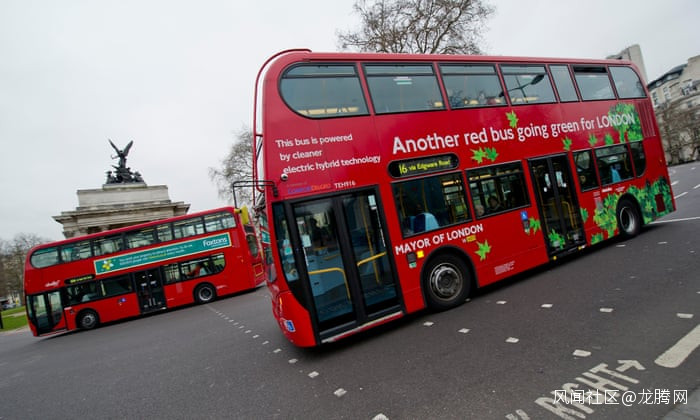
Just under half of those polled backed public spending to make large swathes of public transport free to use. Photograph: Guy Bell/Alamy
(接近一半的受訪者支持旨在使大部分公共交通免費使用的公共支出。圖片來源:蓋伊·貝爾/Alamy)
A majority of the UK public and almost half of Conservative voters support a radical plan to transform the economy and tackle the climate crisis, a poll suggests.
一項民意調查顯示,英國大多數公眾和近一半的保守派選民支持一項徹底改革經濟、應對氣候危機的計劃。
YouGov found that 56% of people back the total decarbonisation of the UK economy by 2030 and just under half support public spending to make large swathes of public transport free to use.
輿觀調查網發現,56%的人支持英國經濟到2030年實現完全脱碳,並且接近一半的受訪者支持旨在使大部分公共交通免費使用的公共支出。
The findings appear to highlight a growing awareness of the scale of the climate crisis and the increasingly radical policy solutions the public is willing to support.
調查結果似乎突顯出,人們越來越意識到氣候危機的規模,並且公眾願意支持日益激進的政策解決方案。
Last week a separate survey found that the climate emergency would influence how most people vote, with almost two-thirds agreeing it was the biggest issue facing humankind.
上週的另一項調查發現,氣候緊急情況將影響大多數人的投票,近三分之二的人認為這是人類面臨的最大問題。
The new poll, commissioned by Green New Deal UK, a non-party-aligned campaign group, found that 47% of Conservative voters back a zero-emissions target by 2030, compared with just 16% who support the government’s current aim of reaching that point by 2050.
這項由“英國綠色新政”委託進行的新民調發現,47%的保守派選民支持到2030年實現零排放目標,相比之下,只有16%的人支持政府當前的目標,即到2050年才實現這一目標。
Labour wants the UK to hit zero carbon by 2030 as part of its Green Industrial Revolution agenda, the Green party also has a target date of 2030, and the Liberal Democrats have set a target of 2045.
作為“綠色工業革命”議程的一部分,工黨希望英國到2030年實現零碳排放,綠黨也設定了2030年零碳目標,而自由民主黨則設定了2045年零碳目標。
Aliya Yule, a co-founder of Labour for a Green New Deal, which campaigned for Labour to adopt the 2030 target, said the polling showed next month’s vote was becoming the UK’s first “climate election”.
工黨“綠色新政”聯合創始人阿利亞·尤爾表示,民調顯示,下月的投票將成為英國首次“氣候選舉”。
“The figures demonstrate the huge public appetite for rapid and radical government action on climate change,” he said.
他説:“這些數據表明了公眾對政府迅速採取激進行動應對氣候變化的巨大需求。”
Yule said only Labour’s Green Industrial Revolution plans – which aim to tie radical action on the environment to huge job creation and housing upgrade schemes – would address the scale of the crisis.
尤爾表示,只有工黨的“綠色工業革命”計劃(旨在將環境方面的激進行動與大規模創造就業和住房升級計劃聯繫起來)才能解決危機的規模。
“Not even Conservative voters support the Tories’ net zero 2050 target. They have no credibility on climate change, not even with their own supporters,” he added.
“甚至連保守派選民也不支持保守黨2050年零排放的目標。後者在氣候變化問題上沒有可信度,甚至在自己的支持者中也沒有,”他補充道。
“Parties should respond in kind by offering a Green New Deal which rapidly reduces emissions while improving living standards and expanding services like free bus travel.”
“各方應以同樣的方式做出回應,提供一項綠色新政,在提高生活水平和擴大免費巴士旅行等服務的同時,迅速減少碳排放。”
評論翻譯:
原創翻譯:龍騰網 http://www.ltaaa.com 翻譯:jiangye111 轉載請註明出處
[–]RBII
Glad to see the message is starting to cut through. The problem is that people aren’‘‘‘‘‘‘’t very aware the associated costs and sacrifices we would have to make to meet the 2030 target.
I absolutely agree that we should make those sacrifices btw, but that’‘‘‘‘‘‘’s why it’‘‘‘‘‘‘’s polling so high.
很高興看到這個信息開始被傳開了。問題是,人們並沒有意識到,為了實現2030年零碳的目標,我們將不得不付出相應的代價和犧牲。
順便説一句,我完全同意我們應該做出這些犧牲,但這就是為什麼民調這麼高的原因。
[–]itchyfrog
Maybe we should have a referendum on it, without telling people about the costs and sacrifices of course.
或許我們應該就此舉行公投,當然不應該告訴人們(提前實現零碳所需的)成本和犧牲。
[–]ComfortableArt
We could run a campaign telling people how much they’‘‘‘‘‘‘’ll save on their energy bills but not tell them they have to stop using electricity to get those savings, should work a charm.
我們可以發起一場運動,告訴人們他們將在能源賬單上省下多少錢,但不告訴他們必須停止用電來節省這些錢,這應該會有效果。
[–]icameronLeft-of-Corbyn
I don’‘‘‘‘‘‘’t believe the only way to hit ambitious net-zero targets is to leave the poor unable to afford heating, electricity and the ability to travel by anything faster than a bicycle. I think it is better done by putting in place programmes that will make those things as low carbon as possible in the average case. That is: shift away from fossil fuel on the energy grid as fast as possible, insulate homes, encourage and heavily invest in public transport (especially electric based, as soon as it is practical), etc.
我認為,實現淨零排放這一宏偉目標的唯一途徑,不是讓窮人負擔不起暖氣、電力和任何比自行車快的交通工具。我認為在一般情況下,通過實施使這些事情儘可能低碳的計劃才是更好的做法。那就是:儘快從化石燃料的能源網中抽身出來,造保温房屋,鼓勵並大力投資公共交通(尤其是基於電力的,只要它是可行的),等等。
[–]CyclopsRock
It’‘‘‘‘‘‘’s practically impossible to imagine a method of reducing co2 output to zero in 11 years that doesn’‘‘‘‘‘‘’t also reduce consumption of fossil fuels - and the only practical ways of doing that are to literally ban them or to make them very expensive. Someone who has just bought a car to drive to work in is not going to go out and buy an electric car tomorrow. And if they did, they’‘‘‘‘‘‘’d still need to charge it from a wall socket routinely powered with fossil fuels.
It’‘‘‘‘‘‘’s beyond the realms of the possible that we could build so much off-shore wind that we could fulfil our needs 100% within 11 years. It’‘‘‘‘‘‘’s probably impossible to adapt everyone’‘‘‘‘‘‘’s homes to huge electric boilers rather than gas boilers. But what about cars and lorries and planes and animals and all the stuff we buy from countries that won’‘‘‘‘‘‘’t be carbon neutral in 2030?
I just don’‘‘‘‘‘‘’t see a way it won’‘‘‘‘‘‘’t cost everyone a huge amount of money.
要想在11年內將二氧化碳排放量降至零,同時又不減少化石燃料的消耗,這幾乎是不可能的——而要做到這一點,唯一切實可行的方法就是禁止使用化石燃料,或者讓它們變得非常昂貴。一個剛買了一輛車去上班的人,明天是不會再去買一輛電動車的。如果他們這樣做了,他們仍然需要從牆上的插座給它充電,而插座又通常是用化石燃料供電的。
我們建造這麼多的離岸風力電站,在11年內100%滿足我們的需求,這是不可能的。
我只是看不到一種不會讓每個人都損失一大筆錢的“2030零碳”方法。
[–]WhiteSatanicMills
It’‘‘‘‘‘‘’s beyond the realms of the possible that we could build so much off-shore wind that we could fulfil our needs 100% within 11 years.
It is because wind is systemically unreliable. A wind lull can affect most of western Europe at once, the result will be very low output, and we have to have an alternative (or just put up with frequent power cuts).
The only way we can replace fossil fuel generation with wind/solar is if we have sufficient storage, and that’‘‘‘‘‘‘’s simply too expensive (and will almost certainly remain so). To put the costs of batteries into perspective, it would cost about £17 billion to provide 1 hour’‘‘‘‘‘‘’s backup for the UK grid. A “typical” wind lull would require 7 days of backup, at a cost of around £3 trillion.
The cheapest form of storage is pumped hydro, which costs around £1 billion for an hour’‘‘‘‘‘‘’s storage for the UK. That would “only” cost £170 billion, but that assumes you can find more than 200+ storage sites in the UK, and in reality there are only a small number of suitable locations.
Just decarbonising electricity generation in the UK will be impossible by 2030. It requires either a large number of new nuclear reactors, and they are unlikely to be built by 2030 (although they could be, if political support was there) or a breakthrough in storage technology or carbon capture, neither of which looks likely.
“我們建造這麼多的離岸風力電站,在11年內100%滿足我們的需求,這是不可能的”
因為風能在系統上是不可靠的。風力停歇就會立刻影響到西歐的大部分地區,其結果將是非常低的能源產量,我們必須找到另一種選擇(要麼就得忍受頻繁的停電)。
我們能夠用風能和太陽能來替代化石燃料的唯一方法是我們有足夠的儲電能力,而這太貴了(而且幾乎肯定會一直如此)。從電池的成本來看,為英國電網提供1小時的電力備份將花費170億英鎊。一次“典型的”風力停歇需要7天的備份,花費大約3萬億英鎊。
最便宜的儲存方式是抽水蓄能,在英國,抽水蓄能每小時要花費10億英鎊。這將“僅僅”花費1700億英鎊,但前提是你能在英國找到超過200個以上的儲存地點,但實際上只有少數合適的地點。
到2030年,英國要實現發電脱碳是不可能的。它需要大量新的核反應堆,而這些反應堆不太可能在2030年前建成(儘管如果有政治支持的話,它們可能會建成),要麼在存儲技術或碳捕獲方面取得突破,但這兩種可能性都不大。
[–]CyclopsRock
You’‘‘‘‘‘‘’re not wrong, but I think in terms of a general 0% fossil fuel goal, the problems you describe aren’‘‘‘‘‘‘’t fatal. The UK has a uniquely ideal offshore wind generation capacity, due to our large area of shallow seas. The larger you spread out your farms, the less variability you get. There have been a few different studies about how much backup you’‘‘‘‘‘‘’d need, should you have a wind farm capable of theoretically generating 100% of our energy needs - E.On did one that estimated we’‘‘‘‘‘‘’d need 95% backup (But, of course, they’‘‘‘‘‘‘’re a company that makes money with power stations, so maybe they would say that). Another study by the UK Energy Research Center (funded by central government) suggested it could be as low as 15%. Bearing in mind we currently generate about 25% of our energy through Nuclear - some of these stations are intended to be closed before 2030, but there’‘‘‘‘‘‘’s ongoing work to extend them, as well as build new ones. Combine these with some additional storage (I don’‘‘‘‘‘‘’t honestly antipate that we’‘‘‘‘‘‘’d need 7 days worth of storage for the entire country - that figure may well be accurate for our existing wind capacity, but the more we build, the less variability we will have) and some better power sharing with our neighbours with alternative sources and I think it’‘‘‘‘‘‘’s possible we could get low, or very, very close to it.
Of course, this is all almost borderline irrelevant if China, India, the US etc aren’‘‘‘‘‘‘’t playing ball.
你沒有錯,但我認為,就一般的零化石燃料目標而言,你所描述的問題並不是致命的。英國有一個獨特的理想的離岸風力發電能力,因為我們的大面積的淺海。你的風力電廠分佈得越大,風力變化就越小。有一些不同的研究,關於你需要多少電力備份,假如你有一個風力發電場,理論上能夠產生100%的能源需求——E.On機構做了一個我們需要95%的電力備份的估計((當然,他們是一家靠發電站賺錢的公司,所以他們可能會這麼説)。另一項由英國能源研究中心(由中央政府資助)做出的研究暗示,這個數字可能低至15%。請記住,我們目前大約25%的能源是通過核能產生的——其中一些電站計劃在2030年之前關閉,但仍在進行擴建工作,並建造新的電站。這些與一些額外的能源存儲(老實説,我並不認為整個國家需要7天的儲存量——這個數字對我們現有的風力發電能力來説可能是準確的,但我們建的越多,風力變化的影響就越小)加上與我們的鄰居分享一些的更好的能源,我認為我們有可能降低碳能源需求或非常接近這個零碳目標。
當然,如果中國、印度、美國等國家不合作,那這幾乎就是在紙上談兵。