有利的氣泡:旅行氣泡能否成為經濟復甦之路?_風聞
龙腾网-2020-06-19 16:00
【來源龍騰網】
正文原創翻譯:
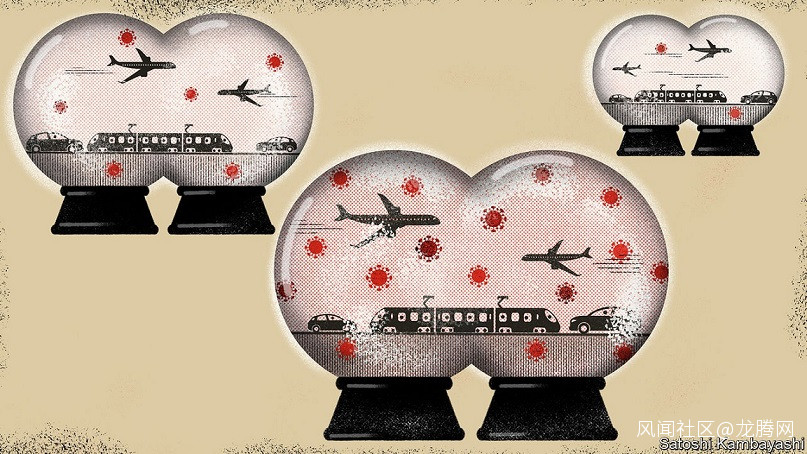
It may be a painful fact to contemplate during these locked-down days, but last year the world was more mobile than ever, with people taking 4.6bn flights. In April this year, though, planes carried just 47m passengers; that level of mobility, annualised, would set the clocks back to 1978. The virtual halt to travel has exacerbated the global economy’s woes, complicating trade ties, upending business and devastating the tourism industry. Little wonder that governments want to restore lixs. An idea gaining favour is the creation of travel “bubbles”, binding together countries that have fared well against the coronavirus.
在疫情封城期間,這是一個想來令人痛心的事實。去年,全世界的出行人數多於往年,乘飛機出行的旅客數量達46億人。但今年4月,搭乘飛機的旅客數量僅有4700萬人;按年度計算倒退回了1978年水平。旅行已進入事實上的停頓狀態,這使全球經濟困境加劇,貿易關係變複雜,商業發生翻天覆地的變化,旅遊產業受到衝擊。難怪各國政府打算恢復聯繫,目前受到青睞的想法是建立旅遊“氣泡”,將那些抗擊疫情成功的國家緊密聯繫在一起。
A closer look yields some grounds for optimism. The Economist has identified potential bubbles that account for around 35% of global gdp, 39% of all trade in goods and services and 42% of the world’s spending on tourism. But the challenge of connecting them also underscores how hard restarting the global economy will be.
仔細觀察會找到樂觀的理由。本刊已發現多處潛在氣泡,它們約佔全球GDP的35%,佔貨物貿易與服務貿易總額的39%,佔全球旅遊消費的42%。但將這些國家聯繫起來的挑戰也突顯了全球經濟復甦有多麼艱難。
Simply returning borders to pre-virus days is, for now, inconceivable. Many health experts, first critical of travel restrictions, have come to view strict controls as useful, especially for places that have contained local infections. “Every inbound case is a potential seed that can grow into an outbreak,” says Ben Cowling, an epidemiologist at Hong Kong University.
就目前而言,僅僅把邊境恢復到疫情之前的狀態是難以想象的。許多衞生專家當初對旅行限制持批評態度,現在開始認識到嚴格管控的重要性,尤其是已遏制住疫情蔓延的地方。香港大學流行病學家本·考林表示:“每一個境外輸入病例都是可能使疫情爆發的潛在種子”。
The first bubble is due to come to life on May 15th between Estonia, Latvia and Lithuania, among Europe’s best performers in taming the virus. Their citizens will be free to travel inside the zone without quarantine. The next might be a trans-Tasman bubble, tying New Zealand to Australia’s state of Tasmania, both of which have kept new cases down. China and South Korea have launched a “fast track” entry channel for business people. “My expectation is that there will be a large number of small travel bubbles,” Mr Cowling says.
第一個氣泡已於5月15日在愛沙尼亞、拉脱維亞、立陶宛之間形成,它們是歐洲控制疫情表現最好的國家,公民無需隔離就可以在該區域內自由旅行。下一個可能是跨塔斯曼海峽氣泡,將新西蘭與澳大利亞的塔斯馬尼亞州聯繫在一起,兩地的新增病例均保持在較低水平。中韓兩國已為商人建立“快捷通道”入境機制。考林先生表示:“我期待出現大量的旅行小氣泡”。
But in the same way that regional trade deals are more efficient than bilateral pacts, the economic benefits from making the bubbles bigger would be greater. Based on an analysis of infection data, The Economist sees two large zones that could emerge as bubbles, subsuming the smaller ones that are now being formed.
但同樣是建立氣泡,地區貿易協議比雙邊協定更為高效,氣泡越大,經濟效益越高。基於一份疫情數據分析報告,本刊預見到兩大區域可能形成氣泡,它們包含正在形成的小氣泡。
The first is in the Asia-Pacific region, where countries from Japan to New Zealand have recorded fewer than ten new infections per 1m residents over the past week. The second is in Europe: using a laxer threshold—fewer than 100 new cases on the same basis—the bubble could reach from the Baltic to the Adriatic, and take in Germany (see map). Our Asia-Pacific bubble would, thanks to China and Japan, account for 27% of global gdp. Our European one would make up 8%.
第一個氣泡是亞太地區,在過去的一週裏,從日本到新西蘭,每100萬居民的新增病例少於10例。第二個氣泡是歐洲:我們將門檻放寬些,每100萬居民的新增病例少於100例,氣泡範圍從波羅的海到亞得里亞海,包括德國。多虧了中國和日本,亞太氣泡佔全球GDP的27%。歐洲氣泡佔全球GDP的8%。
One measure of the potential value of the bubbles is their degree of trade integration, showing whether the economies are complementary. For the countries in our Asia-Pacific bubble, an average of 51% of their overall trade is with each other. In our Baltic-to-Adriatic bubble, it is 41%. Small countries would gain the most by reconnecting with larger neighbours.
衡量氣泡潛在價值的一個標準是貿易一體化程度,反映出各國經濟是否具有互補性。在亞太氣泡中,國與國之間的貿易平均佔貿易總額的51%。在波羅的海-亞得里亞海氣泡中,國與國之間的貿易佔41%。與周邊大國重新聯繫在一起的小國受益最大。
Free movement would be especially helpful for countries such as Thailand and Greece that rely on tourism. Factory Asia and Factory Europe also rely on workers shuttling back and forth. Before the pandemic, on a normal day up to 3.5m people would cross an internal border in the European unx, and 700,000 would go between Hong Kong and mainland China.
自由出行對於泰國、希臘等依賴旅遊產業的國家幫助極大,亞洲工廠和歐洲工廠也要依靠上下班的工人。在疫情爆發前,平常每天有350萬人跨越歐盟各成員國的邊境,70萬人跨越香港和中國內地的邊境。
The bubbles would have spillovers beyond their boundaries, positive and negative. Much trade these days is in services, not goods, requiring less of a physical presence. Britain would be outside the Baltic-to-Adriatic bubble, but London’s financiers would still hope for business, even if they could not visit their clients. Or if, for instance, Vietnam enters the Asia-Pacific bubble and Indonesia does not, investment that might have flowed to the latter could be diverted to the former.
旅行氣泡會對邊界之外的地區產生積極和負面影響。如今的貿易多是服務而非貨物,對實體存在的需求不大。英國處在波羅的海-亞得里亞海氣泡之外,儘管倫敦的金融家們無法拜訪客户,仍然渴望有生意可做。再比如説,如果越南被歸入亞太氣泡,而印度尼西亞沒有,那麼後者本來可以吸引的投資可能流入前者。
In any case, the public-health requirements for creating the travel bubbles will be vexing. In trade terms, they resemble an extreme version of non-tariff negotiations: countries will need to harmonise their approaches to managing the pandemic. That is a tall order when America and Europe cannot even agree on whether it is safe to wash chickens with chlorine.
在任何情況下,建立旅行氣泡都會面臨令人頭疼的公共衞生要求。從貿易角度講,這就像極端形式的非關税談判:各國需要協調各自應對疫情的措施。美國和歐洲就“氯洗雞”是否安全產生分歧,這種要求實在苛刻。
Consider the question of whether countries that have high but similar infection rates might form travel bubbles. This in effect describes Britain and France for now: recording hundreds of deaths a day but not quarantining each other’s citizens. This could, however, pose two problems. First, given that both countries still call for social distancing, they do not actually want to see people crowd onto the Eurostar. Second, if one starts to vanquish the virus, it might opt to close its borders to the other. “Contaminated” travel bubbles are thus likely to be less productive and less stable.
想一想感染率差不多高的國家是否可能形成旅行氣泡。其實,這正是英國和法國目前的狀況:每天數百個死亡病例,但沒有隔離彼此的公民,但這可能帶來兩個問題。首先,兩國仍然要求民眾保持社交距離,不希望看到“歐洲之星”人滿為患。其次,如果一國開始戰勝病毒,可能決定關閉兩國之間的邊境。如果旅行氣泡受到“污染”,效益和穩定性都可能下降。
The ideal is “clean” bubbles. For these to work, countries first have to control infections domestically, says Teo Yik Ying, dean of the Saw Swee Hock School of Public Health at the National University of Singapore. Then they have to be open with their partners: sharing data about infection levels and testing, and disclosing how they trace and isolate those who might have the virus. “This will all be underpinned by trust between governments,” Mr Teo says.
最理想的是“乾淨”的氣泡。新加坡國立大學蘇瑞福公共衞生學院院長張藝英表示,要想讓氣泡發揮作用,各國必須先做好疫情防控工作。然後必須向夥伴國家開放:分享有關感染水平和檢測結果的數據,披露如何追蹤和隔離可能攜帶病毒的人。張先生表示:“這一切都將以政府互信為基礎”。
The need for trust immediately puts the Asia-Pacific bubble into doubt, as underlined by the region’s latest spat: China suspended some beef imports from Australia after it called for an inquiry into the origins of covid-19. Poorer nations might also be excluded. Laos and Cambodia have reported few infections, but wealthier countries have little faith in them.
互信的需求立刻使亞太氣泡受到質疑,突出表現為該地區最近爆發的口水戰:在澳大利亞呼籲調查新冠肺炎的源頭後,中國停止從澳大利亞進口一部分牛肉。較為貧窮的國家可能也被排除在氣泡之外,老撾和緬甸報告的感染病例很少,較為富裕的國家卻對它們沒有信心。
More robust testing could help overcome the trust deficit. Take the fast track between South Korea and China. So long as business travellers test negative for the virus before departure, they are quarantined for just one or two days and are tested once more before being allowed out. But that is cumbersome, which helps explain why China admitted only 210 South Koreans in the first ten days of the agreement.
加大檢測力度有助於解決缺少信任的問題。以中韓兩國建立的快捷通道為例,只要商務旅客在出發前的病毒檢測結果為陰性,他們只需被隔離一兩天,再接受一次檢測即可離境。但這種做法很低效,所以在達成協議後的最初十天裏,中國僅接收了210名韓國人入境。
The upshot is that there are no real shortcuts. Michael Baker, an epidemiologist at the University of Otago in Wellington, sees developed countries splitting into two blocs: those like New Zealand and South Korea that aim to eliminate the coronavirus and those like America and Britain that merely want to suppress it. These blocs could, in time, resolve into two travel zones, he says. Goods and money would still flow between them. But people would find their horizons dictated by whether they were on the clean or contaminated side of the divide.
結論是沒有真正的捷徑可走。惠靈頓奧塔哥大學的流行病學家邁克爾·貝克發現,發達國家分為兩個陣營:新西蘭、韓國這類國家旨在徹底消滅新冠肺炎病毒,美國、英國這類國家只希望遏制住病毒。兩個陣營可能逐漸形成兩個旅行區域,他説道。貨物和資金仍然會在各國之間流動,但民眾將發現他們的活動範圍取決於自己處在乾淨的一邊還是受污染的一邊。