我最喜歡的漢字_風聞
龙腾网-2020-06-24 14:53
【來源龍騰網】正文原創翻譯:
MY FAVOURITE CHINESE CHARACTERS
1.我最喜歡的漢字
Most people think learning Chinese is difficult. Every time I’m back in Spain and I tell someone I can speak Chinese, they invariably reply with a: “Wow! Isn’t it super complicated?”. Some (weird) people claim that it is in fact very easy, though normally these people are just trying to sell you their “learn Chinese in 3 months” courses. I agree that the grammar is in general not very difficult, although remembering the correct classifier for each noun can be difficult at times, and I remember I had a very hard time grasping how some verbal constructions work. Some people say they learned to speak fluent Chinese in the street and I’m happy for them but I’m not so language-gifted (6 years in Suzhou and the local dialect still sounds like Japanese to me). There’s one thing I know for sure, though: in my opinion, if you can’t write the characters, you can’t really say you know Chinese.
大多數人認為學習中文是很困難的。每次我回到西班牙,告訴別人我會説中文,他們總是回答:“哇!它難道不是超級複雜嗎?”一些(奇怪的)人聲稱學習中文實際上很簡單,雖然通常這些人只是想向你推銷他們的“三個月學中文”課程。我同意語法通常不是很難,但記住每個名詞的正確分類有時會很困難,而且我記得我很難理解一些動詞結構是如何運用的。有些人説他們在街上學會了説一口流利的中文,我為他們感到高興,但我不是那麼有語言天賦(在蘇州呆了6年,當地方言對我來説仍然聽起來像日語)。但有一件事我可以肯定:在我看來,如果你不會寫漢字,你就不能説你懂中文。
When I was studying Chinese, we had to learn to write all the characters by hand. I guess it’s still like this. If you don’t practise writing each new character 20 times, it’s practically impossible to remember all the strokes. Nowadays writing by hand is not really that important, as everybody uses pinyin or wubihua to type on computers and phones and no one really writes by hand much (except students, of course) but I am really glad I got to learn how to write lots of characters. At the beginning you are taught the easier ones, the ones that used to represent graphically a tangible thing, like moon or sun, and you think: “Hey! This is very easy and fun!”. Then things start becoming complicated and it is not fun anymore when you have to spend 6 hours practising new characters (i.e. me when I had just arrived to Beijing).
當我學中文的時候,我們必須學會用手寫所有的漢字。我想現在還是這樣。如果你不練習把每個新字寫20遍,你幾乎不可能記住所有的筆畫。現在手寫已經不那麼重要了,因為每個人都用拼音或者五筆在電腦和手機上打字,沒有人真正用手寫字(當然,學生除外),但是我真的很高興我學會了如何寫很多字。一開始,你被教授了一些比較簡單的東西,用圖形化的方式表示一個有形的東西,比如月亮或者太陽,你會想:“嘿!這很簡單,也很有趣!”然後事情開始變得複雜,當你不得不花6個小時練習新的漢字時(也就是我剛到北京的時候),這就不再有趣了。
The title of the most difficult character in simplified Chinese is usually given to biang, a type of noodle dish. Luckily it is not commonly used and the only ones who would have to write it would be the waiters or owners of restaurants serving these noodles. However, it is so complicated that they sometimes write the pinyin instead because, really, why would anyone bother to write this?
簡體中文中最難的漢字通常被稱為biang,是一種麪食。幸運的是,這個詞並不常用,只有服務員或餐館老闆才會寫這個詞。然而,它是如此的複雜,以至於他們有時會用拼音來代替,因為是的,為什麼會有人費心去寫這個字呢?
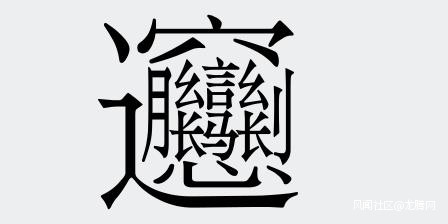
This is not a joke, it’s a real character! And the traditional version is even worse…
這不是玩笑,這是一個真實的漢字!而且傳統的版本更復雜…
I prefer simpler characters. My absolute favourite is undoubtedly this one:
我更喜歡簡單的漢字,毫無疑問,我最喜歡的就是這個:
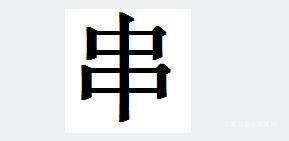
Can you guess what it means? It is very easy: skewer! Isn’t it great? You don’t need to know Chinese to understand it because it’s super clear! It is pronounced chuan and if you are in the north of China you will need to add many r behind it to be understood: chuanrrrrrr.
你能猜出這是什麼意思嗎?很簡單:串!是不是很棒?你不需要知道中文就能理解它,因為它表述得非常清楚!如果你在中國的北方,你需要在它後面加上許多r才能理解:串兒~~~。
Another character that I like is san:
我喜歡的另一個漢字是傘:
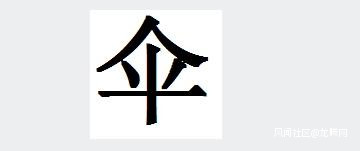
Do you know what it is? It’s also very obvious: umbrella!
你知道它是什麼意思嗎?它也很明顯:雨傘!
Another one that I like is a combination of two characters:
另一個我喜歡的字是兩個部分的組合:
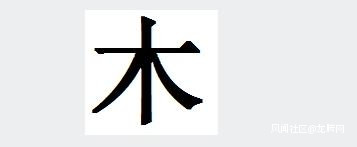
Mu means tree or wood. It looks a bit like a tree, right? The horizontal line is the ground and the three strokes below are the roots.
木的意思是樹或者木頭。它看起來有點像一棵樹,對吧?水平線是地面,下面的三個筆畫是根。
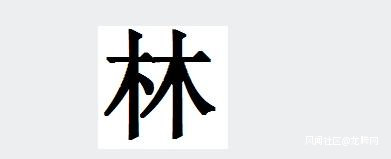
Lin is a surname and it also means wood, as it’s two trees.
林是一個姓氏,也意味着木頭,因為它是兩棵樹。
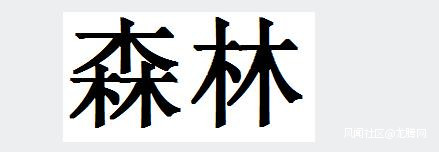
Senlin… five trees. Well… it’s decidedly a forest!
森林……五棵樹。嗯……這絕對是一片森林!
I wish all the characters were this easy! Then I would never forget how to write them by hand…
我希望所有的字都能這麼簡單!這樣我就永遠不會忘記如何手寫了…