從古老中藥尋找癌症治療新機遇_風聞
diewisch-历史唯物观察者-2020-06-26 15:22
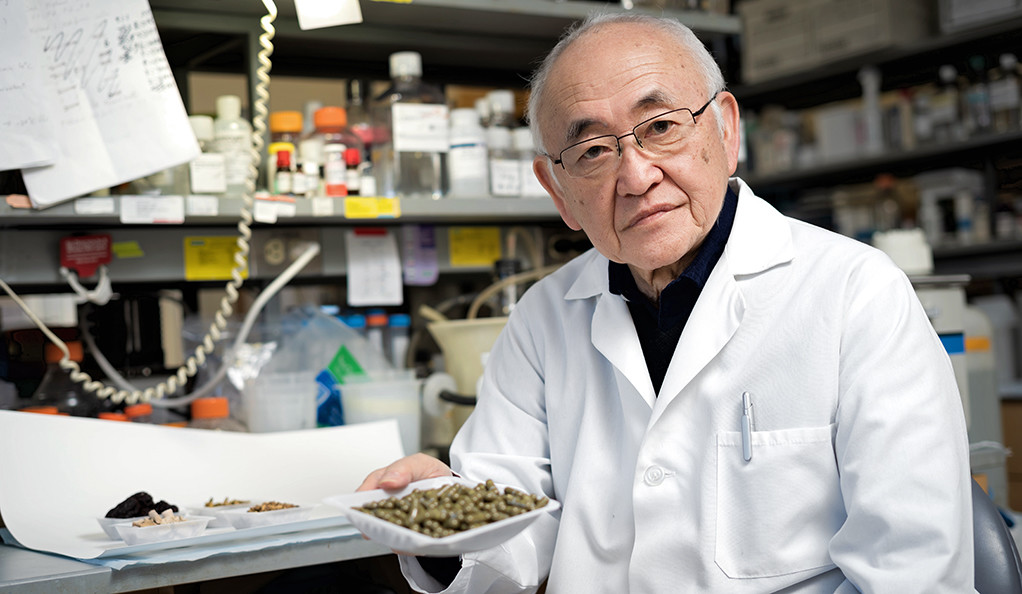
今年3月,耶魯大學官網刊登了一篇題為《從古老中藥尋找癌症治療新機遇》的文章,講述了該校科研團隊以中醫傳統名方黃芩湯為基礎,研製出抗癌藥YIV-906的過程。
https://news.yale.edu/2020/03/13/ancient-chinese-medicine-unlocks-new-possibilities-cancer-treatment
More than 20 years ago, Yale pharmacology professor Yung-Chi Cheng, a leader in drug development for hepatitis B, cancer, and HIV, had a radical idea: What if he could unlock the therapeutic potential of ancient Chinese medicines for treating cancer? What if he could design botanical drugs that would make traditional cancer treatments work better?
20多年前,耶魯大學藥理學Henry Bronson講席教授,治療乙肝、癌症和艾滋病的中草藥開發的領軍人物鄭永齊(Yung-Chi Cheng)有一個大膽的想法:是不是能發現古老中醫藥治療癌症的潛力?是不是可以研發植物藥,使癌症的傳統治療效果更好呢?
No one had done it before. The Food and Drug Administration didn’t even have a process in place for approving multi-ingredient botanical drugs, and wouldn’t until 2004, when the agency released botanical drug-specific guidelines.
以前沒人做過這方面的研究。美國食品和藥品管理局(FDA)一直都沒有批准多成分植物藥的相關程序,直到2004年該機構才發佈了植物藥專用指南。
Fellow researchers and drug development experts advised him to change course. Developing botanical drugs was too complicated, they said, too risky.
其他研究人員和藥物開發專家建議他改變路線。他們説,開發植物藥物太複雜,太冒險。
But the idea had taken hold, and Cheng, the Henry Bronson Professor of Pharmacology at Yale School of Medicine, was not going to let it go.
但這個想法始終縈繞在鄭教授心頭不曾放棄。
“Chinese medicine works by taking advantage of multiple chemicals, but also the capability of different organs in metabolizing these chemicals,” he said, surrounded by careening stacks of paper in his office at Yale’s Sterling Hall of Medicine. “It’s a totally new paradigm. I’ve been met with a lot of suspicion, but I think the results will speak for themselves.”
“中醫不僅利用多種化學物質,還利用不同器官代謝這些化學物質的能力,”在耶魯大學斯特林醫學大樓的辦公室裏他説到,“這是一種全新的模式。我遇到了很多懷疑,但我認為結果會説明一切。”
All they need now are larger data sets. When the results of the international trial are available about three years from now, YIV-906 may find itself next in a long line of breakthrough drugs developed from natural products, a lineage that includes aspirin (from willow bark); Taxol (from pacific yew tree bark); Tamiflu (from star anise); and Artemisinin, a malaria treatment developed from the Chinese herb Artemisia annua, the discovery of which led to a Nobel Prize for chemist Youyou Tu.
現在,是癌症研究的一個里程碑式的時刻。鄭教授和他的研究夥伴們正在為一種植物藥YIV-906進行第一次國際臨牀試驗。該試驗的對象為肝癌和乙型肝炎患者。這項試驗將在美國和中國的20個機構進行,包括紐約的紀念斯隆·凱特林癌症中心,諾斯威爾健康癌症研究所,中國國家癌症中心,台北醫科大學和香港的瑪麗女王醫院。
“He is a pioneer,” said Jon Soderstrom, managing director of Yale’s Office of Cooperative Research, who began advising Cheng in 1996. “He is Lewis and Clark going into the Pacific Northwest without a map. By the sheer force of his personality and his empirical results, he made people pay attention to this space.”
“他是一個先驅,”耶魯大學合作研究辦公室主任喬恩·索德斯特羅姆(Jon Soderstrom)説,他從1996年開始為鄭提供諮詢。“他就像是路易斯和克拉克,在沒有地圖的情況下進入太平洋西北地區。憑藉他的人格魅力和實證結果,讓人們注意到了這一領域。”
Major drug companies are watching Cheng’s progress from the sidelines for now, said Shwu-Huey Liu, who began working in Cheng’s Yale lab as a postdoctoral researcher in 1993, when his focus was on antivirals and traditional anticancer drugs. “They monitor us and come to meetings,” she said, “but until we get approved, big pharma is not going to jump in.”
劉淑慧(Shwu-Huey Liu)從1993年開始在鄭的耶魯實驗室做博士後研究,當時他的研究重點是抗病毒藥物和傳統抗癌藥物。説,目前主要的製藥公司都在關注鄭教授的進展。“他們會參加會議和跟蹤進度,”她説,“但在我們獲得批准之前,大型製藥公司是不會介入的。”
Today Liu is cofounder and chief scientific officer of Yiviva, Cheng’s biotech company, which is developing YIV-906. Combining Chinese and Spanish words, Yiviva translates as “long live medicine.” It’s a fitting slogan for a company that has resurrected an 1,800-year-old formula for stomach ailments to help fight cancer.
劉淑慧現在是鄭教授的醫起醫藥科技有限公司(Yiviva)的聯合創始人和首席科學官。該公司正在開發YIV-906。“Yiviva”結合了中文和西班牙文,翻譯為“長壽藥”。這個名字貼切地描述了公司的使命。該公司已經復活了一個1800年前治療胃病的配方,以幫助對抗癌症。
Old discoveries made new
老發現的新成就
In 1997, as Liu was finishing her postdoctoral work, Cheng mentioned his interest in Chinese medicine. “He said he thought it could be the future of medicine — especially in cancer,” Liu said. She was a chemist with no background in Chinese medicine, but “he thought we could work together,” she said. “My chemistry could help with quality control.”
1997年,劉淑慧完成她的博士後工作時,鄭教授提到了他對中醫的興趣。他認為這可能是醫學的未來——特別是在癌症方面。劉淑慧是沒有中醫背景的化學家,但鄭教授認為他們可以一起工作。劉淑慧的化學專業知識有助於藥物研究質量控制。
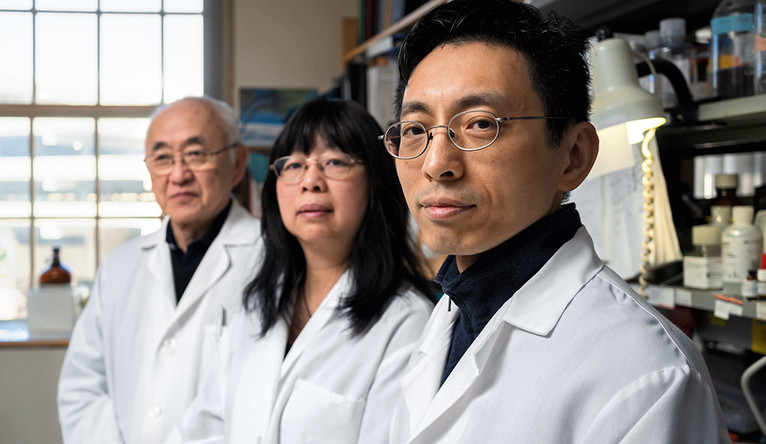
Liu connected with a librarian at Yale’s Sterling Memorial Library, and was led to a tucked-away room on the third floor where few patrons ever set foot. She spent hours leafing through Sterling’s collection of ancient Chinese texts, tracing the properties of Chinese herbs. Cheng had told her to look for herbs that were still in use, were not too rare, and had four or fewer elements.
劉淑慧與耶魯大學斯特林紀念圖書館的一名圖書管理員聯繫,在三樓一間隱蔽、少有人涉足的房間裏,花了很多時間翻閲斯特林圖書館收藏的中國古代文獻,尋找關於中草藥特性的內容。鄭教授告訴她要找那些還在使用的方劑,它們不太稀有,並且含有不多於四種元素。
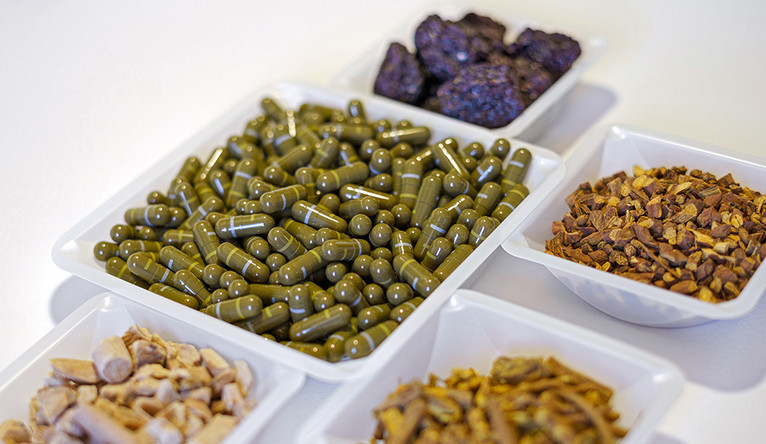
Liu returned with about 20 formulations. One of them, an 1,800-year-old treatment for stomach ailments, was called Huang Qin Tang. It combined licorice, dates, peonies, and skullcap, and was traditionally prepared as a tea. After lab testing, the Cheng team found that Huang Qin Tang had a high inhibitory property against the debilitating side effects of a chemotherapy drug called CPT-11 (later approved as irinotecan), including diarrhea, nausea, and vomiting. Cheng and team developed a drug based on the formula and tested it on one thousand mice.
劉淑慧找到了大約20種配方。其中一種是1800年前治療胃病的方劑,名叫黃芩湯。配方包括甘草、大棗、芍藥和黃芩,當時被製成茶湯飲用。在實驗室測試後,鄭教授團隊發現黃芩湯對一種名為CPT-11(後來被批准為伊立替康)的化療藥物的副作用有很強的抑制作用,包括腹瀉、噁心和嘔吐。鄭教授和他的團隊根據這個配方開發了一種藥物,並在1000只小鼠身上進行了測試。
Not only did their drug, YIV-906, reduce the toxic GI side effects of the chemo drug, but it also enhanced irinotecan’s anti-tumor activity — a major discovery that revealed YIV-906’s powerful therapeutic potential.
他們研發的藥物YIV-906不僅降低了化療藥物的毒性胃腸道副作用,還增強了伊立替康的抗腫瘤活性——這一重大發現揭示了YIV-906強大的治療潛力。
“It was a surprise to us to see not only a reduction in the GI side effects of chemo but also an increase in the chemo action against tumors,” Cheng said.
“我們驚訝地發現化療後不僅胃腸道副作用減少了,而且對腫瘤的化療作用也增加了,”鄭教授説。
The rise of “WE” medicine
“WE”醫學的興起
What followed were years of additional testing of the drug’s effectiveness for a range of cancers — including liver, pancreatic, and colorectal — in multiple human studies involving over 200 patients. The positive effects were replicated again and again. YIV-906 not only diminished the side effects of chemo drugs and radiation therapy, but also led to a stabilization of cancer, faster recovery, and longer survival rates.
之後的幾年時間裏,超過200名患者參加的臨牀試驗,測試了該藥對一系列癌症(包括肝癌、胰腺癌和結直腸癌)的療效。積極的效果被一次又一次地驗證。YIV-906不僅減少了化療和放療的副作用,而且使癌症病情更穩定,恢復更快,生存率更高。
In 2019, Cheng and his research partners ran a study with Yale immunobiology professor Lieping Chen to test YIV-906’s effectiveness with Chen’s immunotherapy drug anti-PD1, and found that YIV-906 enhanced the immunotherapy drug’s anti-tumor property. The combination of the drugs not only eradicated all tumors in mice, but when new tumors were implanted, the tumors did not grow. This suggested that YIV-906 with anti-PD1 “created a tumor-specific vaccine-like effect,” they wrote in their study.
2019年,鄭教授和他的研究夥伴與耶魯大學免疫生物學教授陳立平一起做了一項研究,測試YIV-906與陳教授的免疫治療藥物anti-PD1聯合使用的療效。測試結果發現,YIV-906增強了免疫治療藥物anti-PD1的抗腫瘤性能。這兩種藥物的結合不僅清除了小鼠體內的所有腫瘤,而且當小鼠被植入新的腫瘤時,腫瘤也沒有成長。他們在研究報告中寫道,這表明YIV-906與anti-PD1 結合後“產生了一種腫瘤特異性的類似疫苗的效果”。
They called the new approach “WE” medicine, a melding of Western medicine — focused on microscopic and single-disease targets — and Eastern medicine, exemplified by traditional Chinese therapies.
他們把這種新的方法稱為“WE”醫學,一種融合了西方(Western)醫學——專注於微觀和單一疾病和東方(Eastern)醫學——體現了傳統中醫療法的醫學。
A whole-system approach is needed to combat a complex adversary like cancer, Cheng said.
“The reason this drug works is because it has multiple chemicals which can work on multiple sites to alter the whole system of homeostasis,” he said. “It triggers both innate immunity as well as adaptive immunity within the cancer micro-environment.”
鄭教授説,人類需要一個完整的系統方法來對抗像癌症這樣的複雜對手。他説:“這種藥物之所以起作用,是因為它含有多種化學物質,可以在人體內多個部位起作用,從而改變整個體內平衡系統。它在癌症微環境中既能激發先天免疫,也能激發適應性免疫。”
All they need now are larger data sets. When the results of the international trial are available about three years from now, YIV-906 may find itself next in a long line of breakthrough drugs developed from natural products, a lineage that includes aspirin (from willow bark); Taxol (from pacific yew tree bark); Tamiflu (from star anise); and Artemisinin, a malaria treatment developed from the Chinese herb Artemisia annua, the discovery of which led to a Nobel Prize for chemist Youyou Tu.
他們現在所需要的只是更大的數據集。大約三年後,當國際試驗的結果公佈時,YIV-906可能會成為下一個從天然植物中研發出的突破性藥物,其中包括阿司匹林(從柳樹皮中提取);紫杉醇(來自太平洋紫杉樹皮);達菲(來自八角茴香);還有青蒿素,一種從中國草藥青蒿中開發出來的治療瘧疾的藥物,化學家屠呦呦因此獲得了諾貝爾獎。
It has been a long journey, but if Cheng and team are successful, it could yield a new approach for treating not only cancer, but for the prevention and treatment of age-related diseases and pulmonary diseases using adapted traditional Chinese medicine, Cheng said.
鄭教授説,這是一個漫長的過程。但是如果他和他的團隊成功了,使用調整後的傳統中藥不僅可以成為一種治療癌症的新方法,而且可以成為預防和治療老年性疾病和肺部疾病的新方法。
Said Soderstrom of Yale’s Office of Cooperative Research, “This is an untapped potential people hadn’t thought much about before.”
耶魯大學合作研究辦公室的索德斯特倫(Soderstrom)説:“這是一個尚未開發的潛在領域,人們之前還沒有做過太多探索。”
Liu, who has stuck with Cheng since she first began studying in his lab over two decades ago, through multiple startups and lean times, said his belief in the massive potential of botanical drugs has sustained her.
劉淑慧女士從20多年前開始在他的實驗室學習以來,一路跟隨,經歷了多次創業和經濟困難時期。是鄭教授對植物藥巨大潛力的信念支撐了她。
“Dr. Cheng said, ‘If we get the first Chinese medicine approved as an FDA prescription drug, it will change human history,’” Liu said. “And I believe him.”
鄭教授説:“如果我們讓第一例中藥被FDA批准為處方藥,它將改變人類歷史,”劉淑慧説:“我相信他。”
附新華網《耶魯大學教授鄭永齊:中國成功抗疫“中藥起了作用”》鄭教授回答“您覺得中藥的抗疫作用,怎樣才能得到國際承認?”:
中藥要想得到國際承認,必須在藥材製備一致性、基於證據的臨牀療效、藥物作用機制和安全性等方面下功夫。