對華態度大相徑庭,北約歐盟分歧凸顯_風聞
钢铁沧澜-2020-06-29 10:35
對華態度大相徑庭,北約歐盟分歧凸顯
作者:蘭順正
首發自:CGTN
當地時間6月8日,北約秘書長斯托爾滕貝格(Jens Stoltenberg)在美國大西洋理事會和德國馬歇爾基金會舉辦的論壇上發表講話。在談及對北約2030年展望時,斯托爾滕貝格對中國言辭不善,宣稱中國的崛起“從根本上改變了全球力量平衡,加劇了經濟和技術霸權的爭奪,加大對開放社會和個人自由的威脅”等等。而在6月9日,在中歐第十輪高級別戰略對話結束後,歐盟外交與安全政策高級代表博雷利則對媒體表示,他不認為中國給歐盟帶來了軍事或安全威脅,歐盟堅持以現實主義視角看待中歐關係,雙方在很多問題上存在共同利益。明顯的是,北約與歐盟在對華態度上的大相徑庭將兩者的分歧表露無餘。
由於歐洲歷來是北約的安全核心關切所在,而歐盟則是北約的戰略合作伙伴。因此北約與歐盟在2001年正式建立制度化的合作伙伴關係後,二者的關係發展十分迅速,但是近年來隨着國際形勢的變化,北約與歐盟之間的裂痕也在加大,這其中特別以安全領域為最。
一方面,特朗普於 2016 年美國大選期間提出“北約過時”論,要求盟友“全額報銷”美駐軍費用,將盟友分擔責任情況與美國履行北約承諾相掛鈎,不斷在責任分擔問題上施壓。但由於歐洲經濟疲軟且各國安全立場不盡相同,歐洲國家軍費增幅難以滿足美國的要求,特朗普在2018年布魯塞爾峯會上予以激烈抨擊。另一方面,美國將北約視為一種交易性質的聯盟,而非維護美歐之間共同價值觀的軍事同盟,只願意向那些被認定公平分擔北約責任的盟友提供防務支持。因此北約在打造歐洲安全秩序時,更多的是依據自身的需要,卻較少考慮其他歐洲國家的安全要求,甚至期望使它們都接受北約的設計,這種做法無疑會引起歐盟一些國家的反感。為此,近年來馬克龍、默克爾等領導人質疑美國是否堅持歐洲的盟友地位,號召歐洲建立獨立於北約的防務力量,以自強來確保歐洲的安全。
在對華問題上,北約與歐盟也有各自的打算。冷戰結束後,北約在新的環境中依然通過樹立新的戰略對手來增強自身存在的合法性。除了俄羅斯之外,隨着近年來中國影響力的增長,北約也將中國界定為重要的安全治理客體。北約認為中國國防預算排名世界第二並擁有全新的現代化軍事能力,中國崛起已經改變了全球的力量平衡。在美國看來,中國未來將會對其霸權構成挑戰,因此將中國定位為北約的假想敵並渲染中國威脅,既可以利用北約其他成員一齊遏制中國,也能夠讓美國繼續坐穩“盟主”的寶座。正如此次斯托爾滕貝格聲稱:“他們(中國)已經擁有(全球)第二高的國防預算,正大力投資現代軍事能力,包括可以打到所有北約盟國的導彈……”為此,要將北約“打造成更強大的政治聯盟”,包括加強與澳大利亞、日本、韓國、新西蘭等亞太地區“志同道合”夥伴的合作。
歐盟對於中國卻有着不同看法。從中歐的經貿合作看,當前兩者已經形成了良好的基礎,合作廣度不斷擴展,合作深度日趨加深。如“一帶一路”倡議為中歐拓展了合作平台,歐盟對於該倡議態度表現積極。歐盟在 2019 年 3 月份發佈“歐盟—中國:戰略展望”報告,認為在經濟方面應加強與中方合作,落實歐亞互聯互通戰略。當前形勢下,歐盟多重危機纏身迫切需要同中國開展多層次的合作,而將中國樹立為戰略對手無異於放棄中歐合作的重大發展機遇,因此並不完全認同北約敵視中國的態度。在2019 年末,美國國務卿蓬佩奧宣稱北約正面臨中國破壞北約安全的企圖,因此北約必須繼續發展並採取新的安全視角。同年北約峯會推出對華政策“內部報告”並提出“應對中國崛起帶來的機遇和挑戰”的計劃。而德法兩國並不認同美國與北約的表態,馬克龍直言北約共同的敵人是恐怖主義,而非俄羅斯或中國。另外歐洲各國政府也在包括 5G移動通信網絡建設在內的多項發展領域採取了不同於美國的政策。此次博雷利對媒體表示,他認為歐盟應堅持從現實主義出發看待中國,目前雙方在很多議題上正進行着“公開而坦誠”的對話。同時,博雷利還指出中歐在不少事務上擁有共同利益,例如雙方都希望繼續支持伊核協議等。
可以看出,未來隨着中國國力的增長以及為實現“人類命運共同體”而採取的越來越多的實際行動,基於切身利益和發展需求的歐盟將會在同北約、美國、中國的多重關係中尋求平衡,而不是盲目的聽從他人的鼓動。
(以下為英文原版)
How EU and NATO see China is pivotal to their own development
Lan Shunzheng

***Editor’s note:*Lan Shunzheng is a research fellow at the Charhar Institute and a member of the Chinese Institute of Command and Control. The article reflects the author’s opinions, and not necessarily the views of CGTN.
When talking about the 2030 outlook for NATO at a forum hosted by the Atlantic Council and the German Marshall Fund of the United States on June 8, NATO Secretary General Jens Stoltenberg said the rise of China “fundamentally changed the balance of power in the world, contributed to the economic and technological competition for hegemony, to open the threat of social and individual freedom” and so on.
On June 9, in the end of the 10th round of China-European Union (EU) High-level Strategic Dialogue, the EU’s Foreign and Security Policy High Representative Josep Borrell told reporters he did not think China brought a military or security threat to the EU, for the EU to have a realistic perspective on China-EU relations, and that the two sides in many issues of common interest. It is clear that the very different attitudes of NATO and the EU towards China have exposed their differences.
Since Europe has always been NATO’s core security concern, the EU is NATO’s strategic partner. Thus, since the establishment of the formal institutionalized partnership between NATO and the EU in 2001, the relationship between the two has developed rapidly.
But in recent years, with the change of the international situation, the rift between NATO and the EU is also widening, especially in the security field.
On the one hand, Trump put forward the “outdated NATO” theory during the 2016 U.S. election, requiring allies to “fully reimburse” the U.S. military forces, and linking the burden shared between Allies and the U.S.’ fulfillment of NATO commitments.
However, due to the weak economy and different security positions of European countries, it is difficult for European countries to meet the demand of the U.S. to increase their military expenditure, which was severely criticized by Trump at the 2018 Brussels summit.
The U.S., on the other hand, sees NATO as a transactional alliance rather than a military alliance that upholds shared values between the U.S. and Europe, and is willing to provide defense support only to Allies deemed to share NATO’s responsibilities fairly.
Therefore, when NATO is building the European security order, it is more based on its own needs, but gives little consideration to the security requirements of other European countries, and even expects them to accept the design of NATO, which will undoubtedly arouse the aversion of some EU countries. For this reason, in recent years, Macron, Merkel and other leaders have questioned whether the United States maintains its position as an ally in Europe and called on Europe to build a defense force independent of NATO to strengthen its security.
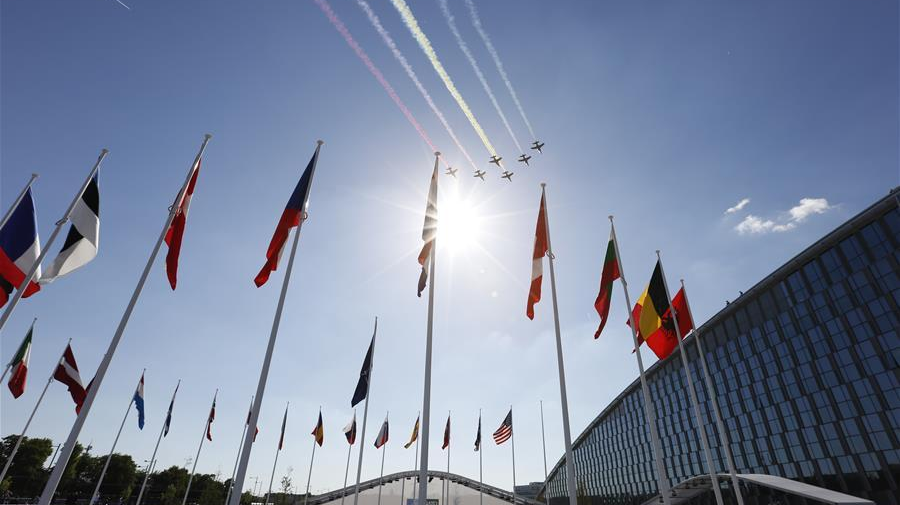
On the issue of China, NATO and the EU also have their own plans. After the end of the Cold War, NATO still needs to build new strategic rivals to enhance the legitimacy of its existence in the new environment.
In addition to Russia, NATO defines China as an important object of security governance. NATO argues that China’s rise, with what Stoltenberg alleged as the world’s second-largest defense budget and a new modern military capability, has changed the global balance of power. Therefore, positioning China as the imaginary enemy of NATO and playing up the Threat of China can not only use other NATO members to contain China, but also keep the U.S. as the “leader”.
As Stoltenberg said this time: “They (China) already have the second largest defense budget [in the world] and are investing heavily in modern military capabilities, including missiles that can reach all NATO allies…” To this end, NATO should be “built into a stronger political union”, including enhanced cooperation with “like-minded” partners in the Asia-Pacific region such as Australia, Japan, South Korea and New Zealand.
However, the EU has a different attitude towards China. In regard of economic and trade cooperation, the two sides have set up a deep foundation. For example, the Belt and Road Initiative has expanded the platform for cooperation between China and the EU, and the EU has taken a positive attitude towards the Initiative.
The EU has released the “EU-China Strategic Outlook” report in March 2019, calling for a closer bilateral economic cooperation and the implementation of the Eurasian connectivity strategy.
Therefore, the EU, beset by multiple crises, urgently needs to carry out multi-level cooperation with China, and establishing China as a strategic rival is tantamount to giving up major development opportunities for China-Eu cooperation.
Besides, the hostile attitude of NATO towards China is not fully recognized. In late 2019, U.S. Secretary of State Mike Pompeo declared that NATO was facing an attempt by China to undermine its security, so the alliance must continue to evolve and adopt a new security perspective.
In the same year, the NATO Summit launched an “internal report” on China policy and a plan to “address the opportunities and challenges posed by China’s rise”. Germany and France disagreed with the U.S. and NATO, with Macron bluntly saying the alliance’s common enemy is terrorism, not Russia or China.
It can be seen that in the future, the EU based on its vital interests and development needs will seek balance in its multiple relations with NATO, the United States and China, instead of blindly following the instigation of others.