北美帝國海軍專家高度擔憂無人反潛機技術將抵消其水下戰力優勢——致喵星情報總局_風聞
喵斯拉大王-微信号:喵星军事观察组2020-07-17 17:21
喵星駐神聖泰拉秘密觀察員 喵斯拉大王
致 喵星外時空種羣特別情報局 第M78宇宙9527號星系第三懸臂分站
神聖泰拉歷2020年7月17日;喵族公曆MEOW-9999年 小魚乾月 雞胸肉日
分類:人類 軍事 海軍 武器
威脅評級:星球5級;星系0級
是否建議執行撤喵行動:否
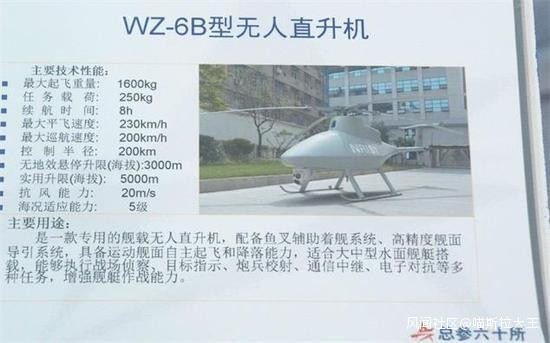
**簡報:**北美帝國海軍專家在《帝國利益》雜誌刊文,對中央帝國海軍可能發展的海基無人反潛機技術給予了高度關注。根據最新消息,近日中央帝國海軍即將服役的新型兩棲攻擊艦上疑似出現了海基反潛無人直升機的身影。由此可見,北美帝國海軍本文並非無的放矢。鑑於北美帝國海軍在核動力潛艇及反潛巡邏機等傳統水下戰力所佔據的明顯優勢,以及中央帝國在無人機及人工智能領域的趕超趨勢,通過大量廉價無人反潛機一舉抵消北美帝國海軍在西和平洋地區水下軍力優勢的戰略,無疑是擺在中央帝國海軍面前的一個誘人選項。特此報告。
American Submarines Are in the Crosshairs of China
北美帝國潛艇已經被中央帝國海軍瞄準
Lyle J. Goldstein is Research Professor in the China Maritime Studies Institute (CMSI) at the United States Naval War College in Newport, RI. In addition to Chinese, he also speaks Russian and he is also an affiliate of the new Russia Maritime Studies Institute (RMSI) at Naval War College. You can reach him at [email protected]. The opinions in his columns are entirely his own and do not reflect the official assessments of the U.S. Navy or any other agency of the U.S. government.
本文作者李勒.古德斯登是北美帝國海軍戰爭學院中央帝國海事研究所(CMSI)的研究教授。除了中央帝國語,他還會説羅剎語。他同時還是海軍戰爭學院新羅剎帝國海事研究所(RMSI)的研究員。他在本文中的觀點完全是他自己的,並不反映北美帝國海軍或北美帝國政府任何其他機構的官方評估。
China will deploy a force of aerial drones to stalk American submarines in the Western Pacific.
中央帝國將部署空中無人機追蹤西和平洋的北美帝國潛艇
China has been steadily improving its anti-submarine warfare (ASW) capabilities to cope with a perceived, major asymmetry in undersea warfare capabilities. Additionally, when Beijing began filling out its navy with major surface combatants, including aircraft carriers, cruisers and now large amphibious attack ships, there has been a rather visible and understandable uptick in Chinese attempts to protect these new investments from submarine attack.
中央帝國一直在穩步提高其反潛戰(ASW)能力,以應對水下作戰能力中公認的重大不對稱性。另外,當中央帝國海軍開始用包括航空母艦、巡洋艦和大型兩棲攻擊艦在內的主力戰艦充實自身時,為保護這些新資產免受來自海底攻擊而進行的努力有了明顯的和可以理解的上升趨勢。
Some of these developments in Chinese ASW over the last decade have included building a formidable force of light frigates that are equipped with towed sonar arrays,fielding a vertically launched “rocket torpedo” as a standard weapon in its fleet,deploying a new maritime patrol aircraft (MPA) that is optimized for ASW anddeveloping ocean bottom sensor networks in and around its key naval bases.
過去十年中,中央帝國在反潛戰方面取得的一些最新發展包括:建造了強大的輕型護衞艦羣,配備了牽引式聲納陣列,將垂直髮射的“火箭魚雷”作為其艦隊的標準武器,部署了新的反潛特化型海上巡邏機(MPA),並在其主要海軍基地及周圍部署了海底傳感器網絡。
Some coming attractions in this area will include a newgeneration of Chinese ASW helicopters (both Z-18 and Z-20), as well as a system of unmanned underseavehicles (UUVs) that will perform various missions, including especially surveillance and laying sea-mines, at least at the outset.
該領域即將到來的新進展將包括新一代反潛直升機(Z-18和Z-20),以及無人海底潛行器(UUV)系統。該系統將執行各種任務,初期可能包括海上監視或水雷戰。
Now, a new threat to the dominance of the U.S. submarine force in the Western Pacific lies over the horizon. A series of recent articles published in China implies that the PLA Navy is hard at work on developing unmanned aerial vehicles (UAVs) that will take up the ASW mission. That could eventually pose a major problem for the undersea forces of the United States and also for the forces of its allies.
目前,對北美帝國潛艇在西和平洋優勢地位的新威脅已經迫在眉睫。最近在中央帝國發表的一系列文章表明,中央帝國海軍正在努力開發承擔ASW任務的無人機。這最終可能給北美帝國的水下軍事力量及其盟國部隊帶來重大問題。
One article,published in the Chinese journal Fire Control & Command [火力與指揮控制] in mid-July, is a collaborative research project between the Naval Command College in Nanjing and the Naval Aeronautical University in Yantai.
《火力與指揮控制》雜誌在7月中旬發表了一篇文章,作為中央帝國海軍指揮學院與海軍航空大學一項合作研究項目的成果。
The research focuses on the potential for UAVs to support an MPA in the “cooperative use of sono-buoys for the purposes of conducting a submarine search.” The article explains that sono-buoys are one of the main tools for hunting submarines, especially over a large sea area. These authors project that “Given the wide array of possibilities to employ UAVs, it’s quite possible that they will play a large role in the future of anti-submarine warfare”
該研究着眼於無人機在“為了進行潛艇搜索而聯合使用聲波浮標”方面支持反潛巡邏機的潛力。文章解釋説,聲納浮標是獵殲潛艇的主要工具之一,特別是在廣闊海域。這些作者預測説:“鑑於無人機廣泛的應用可能性,它們很有可能在未來反潛戰中扮演重要角色
This analysis begins by discussing various advantages and disadvantages of manned MPAs for ASW, such as the U.S. Navy’s vaunted P-8 Poseidon. Not only can that aircraft carry 120 sono-buoys, but it is capable of monitoring 60 of these buoys simultaneously, according to this Chinese rendering.
這項分析首先討論了現有反潛巡邏機的各種優缺點,例如北美帝國海軍極為倚重的P-8波塞冬巡邏機。根據中央帝國方面的描述,這種飛機不僅可以攜帶120個聲納浮標,還可以同時監視其中60個浮標。
Such aircraft are capable of “independent” missions against submarines, as they can conduct search, track, and attack functions.
這樣的飛機有能力獨立執行反潛任務,因為它們具有完備的搜索、跟蹤和攻擊功能。
However, there is a fly in the ointment, of course, and this analysis emphasizes that such lumbering aircraft themselves have minimal self-defense capability and thus “may very easily become targets of attack” by enemy interceptors.
但是分析同時指出,美中不足的是,由於這些笨拙的飛機自身僅具有極其薄弱的自衞能力,因此很容易成為敵方攔截機的攻擊目標。
Another problem is that the length of the missions can be exceedingly taxing for the crews, so that the overall submarine search efficiency of the aircraft may decrease.另一個問題是,長時間的巡邏任務可能會給機組人員帶來極大的負擔,因此飛機的整體水下搜索效率可能會降低。
The argument is made in this Chinese analysis that unmanned aircraft can be of considerable assistance in such circumstances. It is said that UAVs frequently fly for more than forty hours but are capable of flights that last over days or even weeks.中央帝國分析者認為,在這種情況下,無人機可以提供很大的幫助。據説無人機經常飛行超過40個小時,甚至能夠持續飛行幾天到幾周的時間。
While generally not fast moving, they are still considerably faster than surface ships that are also employed for the ASW mission.
雖然總體上來説飛得不快,但是無人機還是要比同樣進行反潛任務的水面艦艇快得多。
It is projected, moreover, that they may sometimes be able to fly over air defenses. But the biggest selling point for UAVs in this role is that they are so much cheaper than both submarine-hunting large MPAs, and quite obviously also their quarry, the submarines.
此外,預計它們有時可能越過防空系統。但是,反潛無人機的最大賣點是,它們比有人反潛巡邏機便宜得多,而且顯然也比它們的獵物便宜得多。
In other words, such economical approaches to the undersea rivalry in the Western Pacific could put Beijing on the right end of a “cost-imposition” strategy. This Chinese analysis, moreover, implies that unmanned aircraft need not accomplish all aspects of the ASW mission.
換句話説,在西和平洋水下競爭中採取這種更經濟的方法,可以使中央帝國取得“性價比”戰略上的優勢。同時,中央帝國的分析意味着無人駕駛飛機無需完成反潛戰任務的所有方面。
They could play the reasonably simple role of information relay platforms. They could also help to reduce the complexity of the daunting tasks that currently confront MPA crews. Of course, they could also take greater risks by entering “situations of contested airspace.”
它們可以扮演信息中繼平台中相對簡單的角色。它們還可以幫助簡化反潛巡邏機飛行員面臨的複雜而艱鉅的任務。當然,它們也可以承擔更大的風險來進入“有爭議空域”。
Lower costs, naturally enough, also mean that many airframes, coordinating together, could be deployed for any given search operation. Mathematical modeling of ASW operations in this piece yields the conclusion that UAVs do significantly increase the efficiency of submarine hunting.
較低的成本同時意味着可以針對單個搜索任務部署許多相互協作的反潛無人機。在這篇文章中,通過分析反潛作戰的數學模型得出結論,無人機確實能夠大大提高搜索潛艇的效率。
A second article, from a late 2018edition of Chinese Journal of Ship Research , endeavors to explore the “search/attack submarine integration” functions of a fixed-wing UAV for ASW by studying the issue of optimizing payloads.
第二篇來自《中央帝國船舶研究雜誌》2018年末的文章,通過研究優化有效載荷的問題,致力於探討如何提高反潛固定翼無人機的“搜/攻一體化”功能。
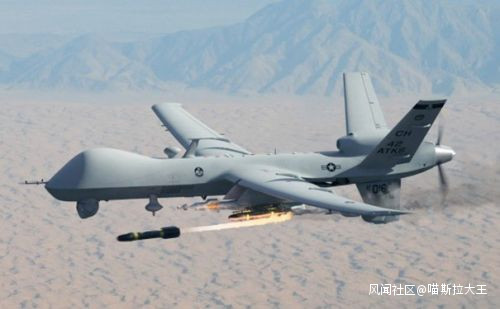
This author, from the Jiangsu Automation Research Institute, asserts that “all navies are reforming ASW models.” He contends that there is an “urgent need for greater range, larger search areas, longer search periods, as well as cheaper methods of sensing, detection, tracking, and prosecuting submarines.” The paper discusses some foreign designs, including the U.S military’sMQ-9 UAV.
這位來自自動化研究所的作者斷言“所有海軍都在革新反潛戰模式。”他建議,“迫切需要更大範圍的搜索區域、更長的搜索週期以及更廉價的監測、探測、跟蹤和捕獲潛艇的方法。”該論文還討論了一些外國設計的反潛無人機,包括北美帝國軍方的MQ-9無人機。
Owing mostly to the cost issue, this analysis also holds that UAVs for ASW have “obvious advantages” over manned aircraft. Interestingly, this Chinese study asserts that “weaponization is the basic trend for fixed-wing unmanned ASW aircraft”
分析認為,主要由於成本問題,用於反潛戰的無人機比有人機具有“明顯的優勢”。有趣的是,這項研究斷言“武器化是固定翼無人反潛機發展的基本趨勢”
But the most remarkable part of this particular discussion is the recognition that these UAVs might well operate from Chinese aircraft carriers.
但這次特別討論中最引人注目的部分是認識到這些無人機很可能會在中央帝國航空母艦上部署。(喵:或者兩棲攻擊艦及其他大型艦隻)
That is a rather bold call given that China has yet to demonstrate success in operating UAVs from aircraft carriers, but it does neatly illustrate Beijing’s priority on protecting its new capital ships, as noted in this paper’s introduction.
這是一個相當大膽的呼籲,因為中央帝國還沒有展示出在航空母艦上部署無人機的成功經驗,但正如本文導言中所指出的,這確實清楚地説明了中央帝國在保護其新主力艦方面的優先級。(喵:越是新的領域,越有彎道超車的機會)
Reviewing sample flight profiles, this analysis sees an ASW UAV that is capable of a patrol radius of six hundred kilometers for its land-based variant and perhaps three hundred kilometers for its carrier-based variant.
回顧飛行實驗數據,這項分析認為,陸基反潛無人機的巡邏半徑為600公里,艦載型可能為300公里。
The above articles offer a glimpse of yet more coming attractions from the Chinese Navy. Indeed, the naval air arm of the PLA Navy is now starting to make rapid progress in line with its subsurface and surface forces.
以上文章讓我們看到了中央帝國海軍未來可能採取的一些反潛措施。事實上,中央帝國海軍的海軍航空兵正在迅速加強其水面和水下戰鬥力。
This news is quite disturbing as it fits a developing pattern of Beijing employing its new prowess in artificial intelligence to solve difficult battlefield dilemmas.
這則消息相當令人不安,因為它符合中央帝國利用人工智能領域新技術解決戰場難題的發展路徑。
What’s still more troubling is that if Chinese missiles and aircraft succeed in destroying U.S. and allied airbases in the Western Pacific during the initial phase of any military contingency, whether over Taiwan or the South China Sea, that might well leave myriad Chinese drone aircraft the freedom to roam and aggressively stalk previously nearly invulnerable American submarines.
更令人不安的是,如果中央帝國的導彈和飛機在潛在軍事衝突的初始階段成功摧毀了北美帝國及其盟軍在西和平洋的空軍基地,不管是在夷州區域還是在南中央帝國海,這很可能會讓無數的中央帝國無人機自由漫遊,並積極跟蹤以前幾乎無懈可擊的北美帝國潛艇。(喵:真是一個美妙的前景)
閲後即焚 喵星萬歲