北美帝國消息人士透露:軍方高層內鬥激烈,海軍前景晦暗不明——致喵星情報總局_風聞
喵斯拉大王-微信号:喵星军事观察组2020-07-27 18:35
(本文配合我此前編髮的《北美帝國海軍高層強調:航母不是豆腐做的》一文對照閲讀,效果更佳。兩者相互印證,充分暴露了北美帝國海軍內部的激烈矛盾。雖然現階段福特級一聲炮響,海軍馬鹿衝上國會山還只是戲言,但是見微知著,一些跡象還是值得我們重視。)
喵星駐神聖泰拉秘密觀察員 喵斯拉大王
致 喵星外時空種羣特別情報局 第M78宇宙9527號星系第三懸臂分站
神聖泰拉歷2020年7月27日;喵族公曆MEOW-9999年 小魚乾月 貓薄荷日
分類:人類 軍事 海軍
威脅評級:星球3級;星系0級
是否建議執行撤喵行動:否
簡報: 北美帝國軍政高層在海軍未來戰略方向及預算分配方面分歧嚴重。近日,北美帝國消息人士馬克·佩裏在《帝國利益》雜誌刊文指出,以國防部長為首的文官體系(海軍激進改革派)與海軍高級軍官團(海軍傳統航母派)由於理念不同和分贓不均內鬥嚴重,甚至正在接近內訌。由於完全丟開海軍高層對30年造艦計劃另起爐灶,北美帝國國防部正在打破幾十年來各方對利益分配的均衡默契。這其中又牽涉到對帝國海軍內部腐敗窩案的追責和劇烈人事鬥爭,關係錯綜複雜。雙方在政府、國會和軍隊內部的角力已經持續了一段時間。北美帝國海軍專家指出,值此微妙時機,作為海軍傳統派支柱力量的一艘兩棲攻擊艦發生火災完全報廢,將對這場爭鬥起到重大影響。他甚至暗示存在陰謀論的可能。
一葉知秋,從中我們不難窺視到,隨着北美帝國相對實力的衰弱,其內部各方勢力的矛盾正在激化,文官體制對軍隊的壓制正在鬆動。特別是帝國軍隊作為帝國內部事實上支撐霸權的決定性力量,存在覺醒獨立政治思維的危險。回顧歷史,特別是帝國衰落的歷史進程,我們不難發現,軍隊尾大不掉是帝國國運進入螺旋下滑時期的普遍現象。而文官集團對此的提防與鎮壓,往往適得其反,反而激化了軍隊的獨走傾向。對此,我們一方面要抓住對手內部混亂的時機抓緊發展自己的力量,甚至可以想辦法利用這些矛盾;另一方面也要高度警惕北美帝國走向資本-軍隊一體化的極端法西斯體制。近期,特別是要警惕美國海軍傳統派為擺脱自身困境鋌而走險,重演“誤炸”把戲進行軍事冒險。特此報告。
The Burning of the USS Bonhomme Richard Could Mean Problems for the U.S. Navy
“好人理查德”號的火災可能給北美帝國海軍帶來大麻煩
Mark Perry is the author of ten books on the U.S. military and American history, including The Most Dangerous Man in America, the Making of Douglas MacArthur.
本文作者馬克·佩裏是北美帝國軍事和歷史方面的知名作者。
The irony is clear: even as the final embers of the USS Bonhomme Richard were being extinguished, it was the bent, melted and ungainly hulk of the Navy’s budget that was being rethought.
摘要:具有諷刺意味的是:就在“好人理查德”號最後的餘燼被熄滅之際,人們重新思考的是帝國海軍扭曲、混亂和笨拙的龐大預算。
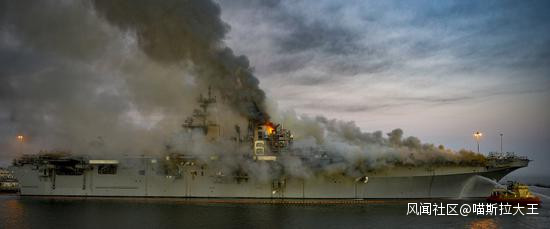
On July 13, as Secretary of State Mike Pompeo was issuing a press statement warning China that “the world will not allow Beijing to treat the South China Sea as its maritime empire,” the USS Bonhomme Richard—one of the U.S. Navy’s premier first responders to China’s growing naval presence—had been on fire for twenty-four hours.
7月13日,北美帝國國務卿肥蓬向新聞界發表聲明,警告中央帝國“世界不會允許中央帝國把南中央帝國海視為其海上帝國的一部分”。與此同時,北美帝國海軍 “好人理查德”號(USS Bonhome Richard)已經着火24小時了。它是北美帝國應對中央帝國日益增長的海上威脅的首要手段之一。
The amphibious warship, commissioned in 1998 and built for an estimated $750 million, had been burning since the previous day when a small blaze broke out in the lower armored vehicle storage area in the aft portion of the vessel.
這艘兩棲攻擊艦於1998年服役,當時造價約7.5億美元。自前一天在艦尾下部裝甲車存放區發生一場小火災以來,一直在燃燒。
Within minutes that fire had spread into surrounding compartments. The “BHR,” as it is called, does not have the public profile of one of the Navy’s eleven nuclear-powered aircraft carriers but it is viewed as one of the service’s premier warfighting vessels and named for John Paul Jones’s legendary three-master.
幾分鐘之內,大火就蔓延到周圍的車廂。“好人理查德號”雖然沒有海軍11艘核動力航空母艦那麼知名,但它仍然被視為海軍最重要的作戰艦艇之一,並以傳奇人物的名字命名。
The ship’s mission is to “embark, deploy and land” U.S. Marines in amphibious assault operations—supported by helicopters and, most recently, by F35B aircraft launched from its eight-hundred-foot deck. At the time of the fire, the USS Bonhomme Richard was undergoing maintenance, which was nearly completed, and was berthed at Pier 2 in San Diego.
該艦的任務是“運載、部署和機降”北美帝國海軍陸戰隊。在直升機的支持下,最近還通過從800英尺甲板上發射F35B戰鬥機執行兩棲攻擊行動。火災發生時,“好人理查德”號正在進行維修,且維修工作已接近完成,停泊在聖迭哥港的2號碼頭。
The USS Bonhomme Richard’s sailors responded to the fire when they noticed smoke billowing through the lower deck. But the initial blaze could not be controlled, as there were only some 160 sailors on board and the ship’s internal fire system had been deactivated during the maintenance period.
當發現濃煙滾滾穿過下層甲板時,北美帝國海軍“好人理查德”號的水手們對火災作出了反應。但最初的火勢無法控制,因為船上只有大約160名水手,而且在維修期間,船上的內部消防系統已被關閉。
The fire grew in intensity into that Sunday afternoon, spewing clouds of asphalt, plastic, paint and other toxic material into the air over San Diego and prompting Navy officials to call on the San Diego Federal Fire Department for help.
大火在週日下午愈演愈烈,將瀝青、塑料、油漆和其他有毒物質噴向聖迭戈上空,促使海軍官員向聖地亞哥聯邦消防局求救。
Shortly thereafter, an explosion ripped through the ship, knocking sailors to the ground, hurling debris across the pier and forcing firefighters into a temporary retreat. A call went out to nearby San Diego city fire stations for assistance—a “desperate measure,” according to a senior retired U.S. Navy officer with whom I spoke at the time. “Well, God bless the San Diego fire department,” he added, “but they don’t have a clue how to fight a ship fire. They’re just going to pour water onto the thing.”
此後不久,一場爆炸撕裂了整艘船,將水手們打倒在地,將殘骸拋向碼頭,迫使消防隊員暫時撤退。當時我和一位退休的北美帝國海軍高級軍官説,有人打電話到附近的聖地亞哥市消防局尋求援助,這是一個“絕望的措施”。“好吧,上帝保佑聖地亞哥消防局,”他補充道,“但他們不知道如何撲滅船上的火災。他們只是想把水倒在這可憐的東西上。”
By Monday morning, according to published reports, more than two hundred San Diego firefighters and fourteen local fire engines were on the scene—in addition to four hundred sailors from sixteen other ships—but fire officials feared the ship’s superstructure would collapse, killing or trapping those fighting the fire inside the ship.
據報道,到星期一早上,超過200名聖地亞哥消防隊員和14輛當地消防車趕到現場,另外還有來自16艘其他船隻的400名船員。消防官員擔心,這艘船的上層建築會倒塌,導致救火人員死亡或困在船內。
Smoke billowed through the ship, where temperatures reached one thousand degrees, melting large portions of the vessel’s structure. The fire was so intense that two nearby cruisers pulled off the pier, with firefighters calling on three squadrons of water-dropping helicopters and a fleet of fireboats for assistance. In all, fifteen hundred buckets of water were dropped on the ship by MH-60 Seahawk helicopters, mostly to cool the flight deck so that firefighters could board the ship.
濃煙在船上滾滾而過,温度高達一千度,融化了船上的大部分結構。火勢非常猛烈,附近兩艘巡洋艦從碼頭上駛離,消防隊員呼叫了三個中隊的灑水直升機和一支消防艇隊尋求援助。總共,MH-60“海鷹”直升機向船上投放了1500桶水,主要是為了冷卻飛行甲板,以便消防員能夠登上飛船。
A squad of tugboats, meanwhile, poured water into the ship’s hanger bay. By Monday afternoon, the ship had taken on so much water that it had begun to list to port, and officials feared it would sink. The ship was eventually righted but then began to list to its starboard side, before being once again righted.
與此同時,一隊拖船把水倒進了船的起重艙室。到了週一下午,因為船上的水太多,已經開始向港口方向傾斜,官員們擔心它會沉沒。這艘船最終被扶正了,但隨後又開始向右舷傾斜,然後再次被扶正。
By Tuesday morning, with the fire still spreading, firefighters were involved in three battles: to control the flames, to keep the ship’s structure from collapsing and to “dewater” the ship’s interior to keep the vessel from sinking.
到了週二上午,由於火勢仍在蔓延,消防人員參與了三場戰鬥:控制火勢,防止船體結構倒塌,以及排水防止船隻沉沒。
The fire control efforts were nothing less than heroic: initial fears that the fire would reach the ship’s lower decks, where tanks held one million gallons of fuel, did not materialize. It took four days to control the fire so that by Thursday morning, inspectors could get into the inaccessible compartments to search for remaining hotspots. What they found was a gutted interior. No lives were lost in the fire, but fifty-nine people were treated for smoke inhalation and heat exhaustion and, as recent reports confirm, some of the firefighters (forced to share protective firefighting gear), have tested positive for the coronavirus. Navy officials speculated that the USSBonhomme Richardwould be a total loss and need to be replaced, to the tune of some $4 billion.
控制火勢的努力是一次英雄的行為:人們最初擔心火勢會蔓延到船的下層甲板,那裏的油罐裝有100萬加侖的燃料,現在這個威脅已經消除。控制火勢花了四天時間,週四早上檢查人員進入過火艙室,搜尋潛在的起火點。他們發現艦船內部已經被燒空。火災中沒有人喪生,但有59人因吸入煙霧和中暑而接受治療。正如最近報告所證實的那樣,一些消防員(被迫共用保護性消防裝備)的冠狀病毒檢測呈陽性。海軍官員推測,北美帝國海軍“好人理查德”號將徹底報廢。如用新船,代價約40億美元。
“This should have been completely preventable because the Navy is supposed to have good practices for stowage aboard ships,” Bryan Clark, a senior fellow at the Hudson Institute, told the Wall Street Journal. “If a fire breaks out, the Navy should be able to fight it immediately.” “Commander Salamander”—the U.S. Navy’s most widely read commenter on all things afloat, was even more enraged—airing his personal judgment on his widely read and often controversial online blog: “We got lucky: we got lucky the ship was not full of Sailors and so far there have been no deaths.
哈德遜研究所高級研究員布萊恩·克拉克對《華爾街日報》表示:“這應該是完全可以預防的,因為海軍應該有良好的艦上裝載辦法。”“如果發生火災,海軍應該能夠立即撲滅火災。”北美帝國海軍事務評論員在博客上發表了個人判斷:“我們很幸運:船上沒有滿是水手,到目前為止還沒有死亡。
We are lucky that there were no weapons on-board. We are lucky this was not a nuclear-powered ship. We are lucky . . . BHR was not sunk. [The Pacific Fleet] has had a bad run the last three years, this is just another black eye.” Commander Salamander also commented on the Navy’spublic response, which he described as “slow and clunky.” Put simply, the loss of the USS Bonhomme Richard not only a blow to the Navy’s Pacific Fleet, it was a blow to the U.S. Navy’s prestige.
我們很幸運船上沒有武器。我們很幸運這不是一艘核動力軍艦。我們很幸運它沒有沉沒。太平洋艦隊過去三年經營不善,這只不過是又一次出洋相。”他還評論了海軍的公開回應,形容“緩慢而笨拙的”。簡單地説,失去好人理查德號不僅對海軍的太平洋艦隊是一個打擊,也是對北美帝國海軍威望的打擊。
The fire shook “Big Navy,” the service’s Washington, DC-based senior commanders, who were already staggered by a series of public scandals, including the unexpected retirement of widely respected Admiral Bill Moran, the firing of Navy Secretary Richard Spencer, the relief of USS Theodore Roosevelt Captain Brett Crozier and the resignation of Acting Navy Secretary Thomas Modly.
這場大火震撼了“大海軍”,該軍種駐華盛頓特區的高級指揮官此前就已經被一系列公開醜聞搞得不知所措,其中包括廣受尊敬的海軍上將比爾·莫蘭意外退休、海軍部長理查德·斯賓塞被解僱、羅斯福號航母艦長佈雷特·克羅齊爾獲釋以及代理海軍部長托馬斯·莫德利辭職。
Worse yet, according to senior civilian Pentagon officials, the Navy was still reeling from Defense Secretary Mark Esper’s under-the-radar announcement that he was taking future naval shipbuilding planning out of their hands and dividing it among three different groups—budget planners in his own office, force planners on the Pentagon’s joint staff and Navy experts at the Hudson Institute.
更糟糕的是,據五角大樓的高級文職官員稱,國防部長馬克·埃斯珀(Mark Esper)已經宣佈,將把未來的海軍造船計劃從高級軍官團手中奪走,並將其分配給三個不同的預算規劃組織,包括國防部長辦公室的規劃團隊、五角大樓聯合參謀部的規劃團隊和哈德遜研究所的海軍專家。
The Esper move was as unprecedented a vote of “no confidence” in the Navy as any in its history. Now, not only was the Navy’s thirty-year shipbuilding plan (its Integrated Naval Force Structure Assessment) being rethought “from the ground up,” a potential cornerstone of that project, a high-end amphibious vessel that included a suite of F-35Bs (and thereby recast as a “lightning carrier”), was a smoking hulk.
埃斯珀這一對海軍的“不信任”投票舉動,在海軍歷史上是前所未有的。現在,不僅海軍的30年造艦計劃(其綜合海軍力量結構評估報告)被“從頭開始”,該項目的潛在基石,一艘適於F-35B起降的高端兩棲攻擊艦( 輕型航母)也成了一艘冒煙的船殼。
“This is not tinkering at the margins,” as the senior civilian Pentagon official with whom I spoke said in describing Esper’s decision to circumvent the Navy’s shipbuilding planning. “The entire Navy budget is being reshaped, and for good reason. Big Navy assumed that they’d have twelve aircraft carriers by 2050, but that’s thirty years away.
與我交談的五角大樓高級文職官員在描述埃斯珀繞過海軍造船計劃的決定時説:“這不是在邊緣修補,整個海軍預算正在被重新調整。這是有理由的。按照原計劃,帝國海軍預計到2050年將擁有12艘航空母艦,但那是30年後的事了。
Not only are these big-ticket items, it’s not at all clear that they’re the kind of ships we’re going to need in any confrontation with China. If we can be faster and just as lethal at less cost, then why wouldn’t we do that?" Another Pentagon official put the Esper decision in context: “The cost of one aircraft carrier,” as he noted, “is nearly equal to the entire SOCOM [Special Operations Command] budget. It’s bullshit. What a waste of money. Great power competition will play out in the unconventional and irregular realm. Deterrence is important, but we don’t need new fleets.”
不僅是這些大型項目,海軍根本不清楚在與中央帝國的對抗中需要哪種艦艇。如果我們能以更低的成本做到更快、同樣致命,那我們為什麼不這麼做呢?”另一位五角大樓官員認為埃斯珀的決定與此相關:“一艘航空母艦的成本,幾乎相當於整個北美帝國特種作戰中央指揮部的預算。**完全是狗屎,真是浪費錢。**大國競爭將在非常規、不規則的領域展開。威懾很重要,但我們不需要新的艦隊。”
The burning of the USS Bonhomme Richard is significant. It is not simply that the fire gave a black eye to the U.S. Pacific Fleet, it has solidified the new thinking about the Navy budget that has swept through the Pentagon’s upper reaches—and has recast the way that the Office of the Secretary of Defense, the Joint Staff and the Hudson Institute shape the Navy’s future.
燒燬“好人理查德”號意義重大。這不僅僅是因為這場大火使北美帝國太平洋艦隊出了一個洋相,它還鞏固了席捲五角大樓上層的海軍預算新思維,並重塑了國防部長辦公室、參聯會和哈德遜研究所塑造海軍未來的方式。(喵:這是陰謀論的隱喻)
While Big Navy argues for the deterrence value of nuclear-powered aircraft carriers, which can sustain themselves longer than an amphibious ship like the USS Bonhomme Richard, they are harder to maintain, take longer to deploy and do little good if their ship’s complement is infected with the coronavirus.
雖然帝國海軍再三強調核動力航空母艦的戰略威懾價值,認為這種航母比好人理查德號這樣的兩棲攻擊艦具有更持久的作戰效能,但如果它們的補給被冠狀病毒污染,它們就更難維護,重新部署需要的時間更長,也沒什麼好處。
Then too, as those rising voices in favor of a more mobile fleet point out, the U.S. Navy is undermanned and overbuilt: there are simply too many ships and too few sailors. Navy planners are facing a tyranny of numbers: a Nimitz class aircraft carrier is manned by six thousand sailors, while a Wasp-class amphibious carrier (like the USS Bonhomme Richard) needs twelve hundred.
此外,正如那些支持增加艦隊靈活性的呼聲所指出的那樣,北美帝國海軍人手不足,建設過度:船隻太多,水手太少。海軍的規劃者們正面臨着一個龐大的人力缺口數字:一艘尼米茲級航空母艦需要6000名水手,而黃蜂級兩棲攻擊艦(如好人理查德號)則需要1200名船員。
The most recent Nimitz class carrier, the Gerald Ford, cost $12.8 billion, while the USS Tripoli (commissioned even as the BHR was burning), cost one-third as much. In an era of flat budgets, the Navy is being forced to choose between funding operations, maintenance and personnel—or funding more ships.
最新的核動力航母“傑拉爾德·福特”號耗資128億美元,而“的黎波里”號兩棲攻擊艦(在好人查理號燃燒之際服役)的造價則是後者的三分之一。在這個預算吃緊的時代,海軍被迫在為作戰行動、後勤維修和補充人員提供資金,還是為建造更多船隻提供資金之間做出選擇。
Which is why quietly, but inevitably, Navy planners are mulling a fleet of fewer Nimitz class carriers (perhaps no more than seven in all), while adding more BHR-like amphibious ships. The irony is clear: even as the final embers of the USS Bonhomme Richard were being extinguished, it was the bent, melted and ungainly hulk of the Navy’s budget that was being rethought.
這就是為什麼海軍規劃者們悄悄地,但不可避免地在考慮削減核動力航母(可能總共不超過7艘),同時增加更多類似好人理查德號這樣的兩棲攻擊艦。具有諷刺意味的是:就在“邦霍姆·理查德”號最後的餘燼被熄滅之際,人們重新思考的是帝國海軍扭曲、混亂和笨拙的龐大預算。
喵星萬歲 閲後即焚