美國醫生:我們現在正在戰爭中,半個的國家卻沒有參加,沒有人可以拯救我們!_風聞
兔家真探-让我们一起去探索真相吧!B站同号,有视频哦!2020-11-30 09:43
導讀:懂王特赦了一隻“土耳其(火雞)”,但是美國的新冠敢死隊卻沒有放過美國,反而發動了“感恩節攻勢”,而且隨後還將發動“聖誕節和新年攻勢”!美媒華盛頓郵報這篇報道説明了“抗疫戰士”的無奈與絕望!(漫畫是另外配圖,與原文無關)
在亞利桑那州,一名疲憊不堪的醫生驚恐地看着人們湧入機場,湧向商店以進行黑色星期五搶購,因為知道其中一些人最終出現在他的急診室只是時間問題。
在數百萬美國人為了避免旅行和感恩節大聚會而忽略健康指導的幾天之後,要説在假日週末的過程中有多少人被冠狀病毒感染還為時過早。但是,隨着旅行者回到已經受到該疾病沉重打擊的社區的家中,全國各地的醫院和衞生官員正為科學家戴夫·奧康納所説的“在疾病暴發之上進行疾病暴發”做好準備。
威斯康星大學麥迪遜分校的病毒學家O’Connor説:“觀看很痛苦。” “就像在遠處看到兩列火車,並知道它們將要對撞一樣,但您無能為力,無法阻止它。”
科學家補充説:“由於人們為慶祝而做出的決定和合理化,我們將迎來非常黑暗的十二月。”
假期通常是一年中最繁忙的旅行時間之一,在大流行期間尤為緊迫。十一月份,約有400萬美國人被診斷出患有冠狀病毒,是上個月創下的先前記錄的兩倍。每天有超過2,000人死亡。儘管如此,感恩節前一天仍有超過100萬人通過美國機場,這是自疫情爆發以來見到的旅客人數最多的地方。
約翰·霍普金斯大學健康安全中心的流行病學家凱特琳·裏弗斯説,許多州沒有在假日期間報告新的病例數,在報告延遲後,官方記錄通常需要大約一週的時間才能趕上。
但在兩到三週內,她説:“我完全希望在全國範圍內,病例數,住院和死亡人數的趨勢將繼續保持新高。”
這個國家在假期週末已經取得了幾個嚴峻的里程碑。在感恩節這一天,美國的住院人數首次超過90,000人。第二天,該國發生了1300萬例。至少有九個州每千居民中就有一人死於冠狀病毒。
同時,12月的假期臨近。
奧康納説:“希望人們能在聖誕節前後儘量減少風險,特別是如果有數據顯示感恩節確實有害的話。”
對於亞利桑那州尤馬市的海軍退伍軍人和急診室醫生克利馮·吉爾曼(Cleavon Gilman)來説,度假旅行的浪潮***“是一記耳光”。***
他説:“好像沒有大流行發生。” “我們現在正在戰爭中,半個國家卻沒有參加。”
上週五,亞利桑那大學冠狀病毒建模小組的成員向州衞生官員發出了緊急警告,預計該州將在12月初超過ICU的容量。
該小組在致公共衞生統計局局長史蒂文·貝利的信中寫道:“如果不立即採取行動,那將有可能造成該州經歷過的最嚴重自然災害的災難。” “這就像在沒有疏散命令的情況下面臨一場大森林大火。”
亞利桑那州沒有在全州範圍內使用面具的規定,並且該州許多地區的商家(包括在餐廳內的室內用餐)仍然開放。
吉爾曼説,他醫院的重症監護室已經滿員,無法轉移新病人。當他回到家時,他的思緒迴盪着人們喘着粗氣的聲音。他和他的同事精疲力盡,而且全國各地的案件激增,他擔心他們無法應對感恩節之後的激增。
在威斯康星州拉克羅斯,岡德森衞生系統首席執行官斯科特·拉斯加伯(Scott Rathgaber)回應了這種擔憂。他説:“我們不得不告訴我們勤奮的員工,‘沒有人可以拯救我們’。”
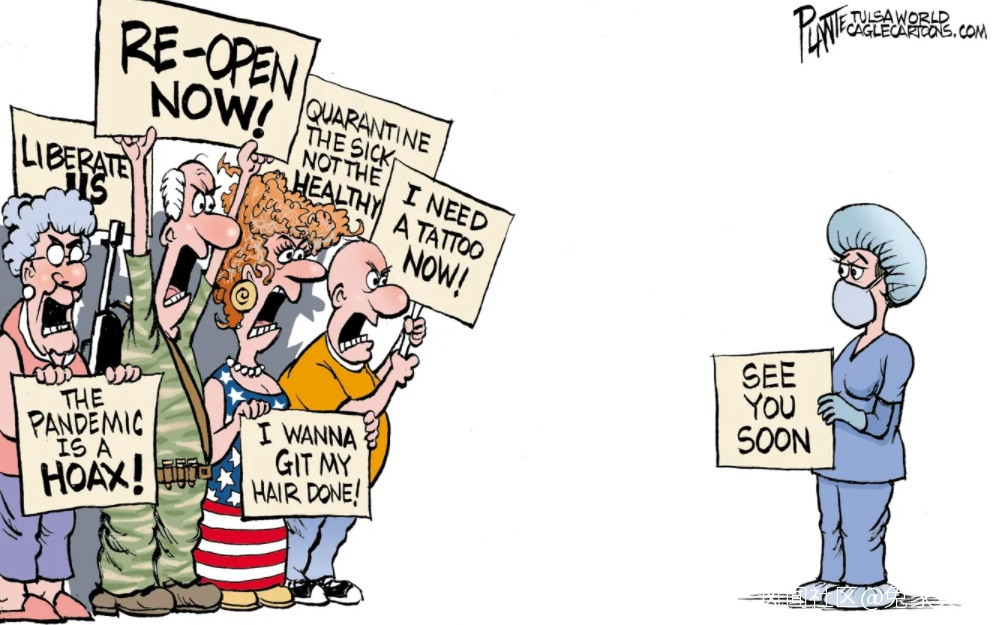
護士:很快就會(在醫院)見到你們
In Arizona, a battle-weary doctor watched in horror as people flooded airports and flocked to stores for Black Friday sales, knowing it was only a matter of time before some of them wound up in his emergency room.
Days after millions of Americans ignored health guidance to avoid travel and large Thanksgiving gatherings, it’s still too soon to tell how many people became infected with the coronavirus over the course of the holiday weekend. But as travelers head home to communities already hit hard by the disease, hospitals and health officials across the country are bracing for what scientist Dave O’Connor called “a surge on top of a surge.”
“It is painful to watch,” said O’Connor, a virologist at the University of Wisconsin at Madison. “Like seeing two trains in the distance and knowing they’re about to crash, but you can’t do anything to stop it.”
“Because of the decisions and rationalizations people made to celebrate,” the scientist added, “we’re in for a very dark December.”
The holiday, which is typically one of the busiest travel periods of the year, fell at a particularly dire time in the pandemic. Some 4 million Americans have been diagnosed with the coronavirus in November — twice the previous record, which was set last month. More than 2,000 people are dying every day. Despite that, over a million people passed through U.S. airports the day before Thanksgiving — the highest number of travelers seen since the start of the outbreak.
Many states did not report new case counts over the holiday, and it typically takes about a week for official records to catch up after reporting delays, said Caitlin Rivers, an epidemiologist at the Johns Hopkins Center for Health Security.
But in two to three weeks, she said, “I fully expect on a national level we will see those trends continue of new highs in case counts and hospitalizations and deaths.”
The nation has already notched several bleak milestones over the holiday weekend. On Thanksgiving Day, hospitalizations in the United States exceeded 90,000 people for the first time. The following day, the country hit 13 million cases. At least nine states have seen 1 in every 1,000 residents die of the coronavirus.
Meanwhile, the December holidays are looming.
“Hopefully people will try to minimize their risks around Christmas, especially if there’s data that show Thanksgiving was really harmful,” O’Connor said.
To Cleavon Gilman, a Navy veteran and emergency room doctor in Yuma, Ariz., the wave of holiday travel was “a slap in the face.”
“It’s as if there’s not a pandemic happening,” he said. “We’re in a war right now, and half the country isn’t on board.”
On Friday, members of the University of Arizona coronavirus modeling team issued an urgent warning to state health officials, projecting that the state will exceed ICU capacity by the beginning of December.
“If action is not immediately taken, then it risks a catastrophe on a scale of the worst natural disaster the state has ever experienced,” the team wrote in a letter to Steven Bailey, chief of the Bureau of Public Health Statistics. “It would be akin to facing a major forest fire without evacuation orders.”
Arizona has no statewide mask mandate, and businesses in many parts of the state, including indoor dining at restaurants, remain open.
Gilman said the intensive care unit at his hospital is full and there’s nowhere to transfer new patients. When he’s home, his mind echoes with the sound of people gasping for breath. He and his colleagues are exhausted, and with cases spiking across the country, he worries there is no way they can handle the surge that will probably follow Thanksgiving
In La Crosse, Wis., Gundersen Health System chief executive Scott Rathgaber echoed that fear. “We’ve had to tell our hard-working staff, ‘There’s no one out there to come rescue us,’” he said.