對話諾獎得主約阿希姆·弗蘭克(一)神器冷凍電鏡究竟是什麼?諾獎發明者親自解説_風聞
风云之声-风云之声官方账号-2020-12-30 16:09
導讀
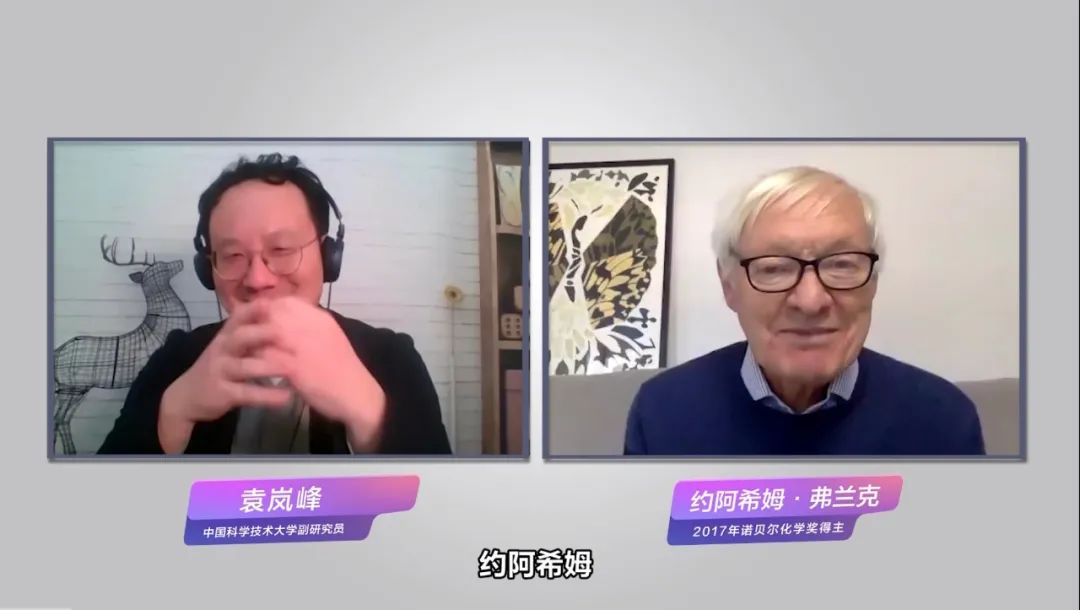
最近,世界頂尖科學家協會與字節跳動幫我聯繫到一位諾貝爾獎得主:約阿希姆·弗蘭克,他和另外兩位科學家雅克·杜波謝和理查德·亨德森因為對冷凍電鏡技術的貢獻獲得了2017年的諾貝爾化學獎。
視頻鏈接:
西瓜視頻:
https://www.ixigua.com/6904546032164700683
本視頻發佈於2020年12月11日,播放量已超三百萬
我們的節目經常有我跟著名科學家的對話。最近,世界頂尖科學家協會與字節跳動幫我聯繫到一位諾貝爾獎得主:約阿希姆·弗蘭克,他和另外兩位科學家雅克·杜波謝和理查德·亨德森因為對冷凍電鏡技術的貢獻獲得了2017年的諾貝爾化學獎。
説到冷凍電鏡這個詞,許多人可能是,雖然不知道原理,但是聽説過,這是一種解析生物分子結構的神器。
例如中國科學家施一公和顏寧等人,就用這種技術取得了很多成果。那麼冷凍電鏡究竟是什麼?它為什麼這麼神奇?弗蘭克教授作為一位1940年生的長者,對中國的科學事業有什麼建議?下面我就來和弗蘭克教授連線。
【約阿希姆·弗蘭克與袁嵐峯對話】
袁嵐峯:
So dear Professor Frank, Dear Prof. Frank, I heard that you just took a surgery several days ago, yet you still accept this interview. We are very grateful, and hope you recover soon. So first, how to pronounce your first name?
親愛的弗蘭克教授,我聽説您前幾天剛做了一個手術,然而您仍然接受了這個訪談。我們非常感謝,也祝您早日康復。首先,請問您的名字如何發音?是約阿希姆嗎?
約阿希姆·弗蘭克:
Joachim. Joachim.
是約阿希姆
袁嵐峯:
Joachim Okay? I see, thank you.
約阿希姆,好的,我知道了。
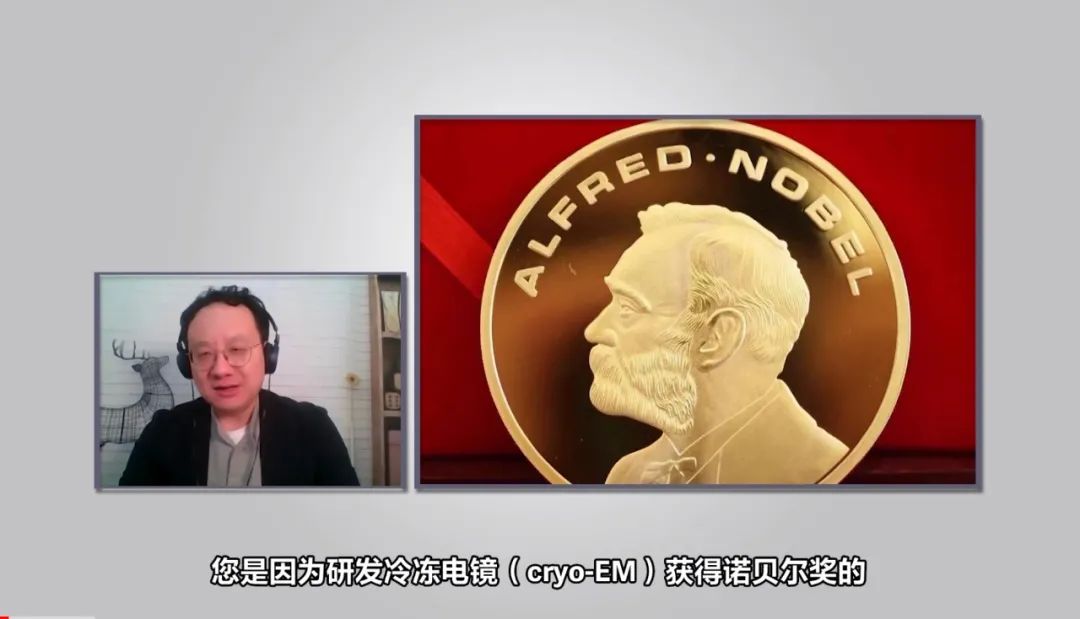
The reason of your Nobel Prize was your contribution to developing cryo-electron microscopy, i.e., cryo-EM. I was not familiar with this technology before, but I heard this name long before, because some famous Chinese scientists, e.g, Shi Yigong and Yan Ning, employed cryo-EM to analyze the structures of many biomolecules.
您是因為研發冷凍電鏡獲得諾貝爾獎的。我以前對於這項技術並不瞭解,不過早就聽説過這個名字,因為中國有一些著名的科學家如施一公和顏寧用這項技術解析了很多生物分子的結構。
Recently I read some reviews of cryo-EM, so my understanding to it has increased a lot. I got to know that there are many interesting stories, e.g., each one of you and the two scientists sharing the Nobel Prize with you, Prof. Dubochet and Prof. Henderson, solved some problems in this technology, respectively. I am curious, how would you introduce cryo-EM and your contributions to the public?
最近我看了一些對冷凍電鏡的綜述,對它增加了很多瞭解,同時發現這其中有很多有趣的故事,例如您和跟您同時得獎的杜波謝教授和亨德森教授分別解決了什麼困難。我很感興趣,您會如何向公眾介紹冷凍電鏡技術和你們的貢獻?
約阿希姆·弗蘭克:
Okay, one has to know that this all started in the 70s, 1970s and 80s. And at the time that I that I started, there was no cryo-EM. In fact, the press release of the Nobel foundation says that I got the award for work mainly between 1975 and 1986.
好吧,人們應該知道,這一切都始於70年代、1970年代到1980年代。當時還沒有冷凍電鏡。事實上,諾貝爾基金會的新聞稿説,我主要是由於1975到1986年間工作而獲獎。
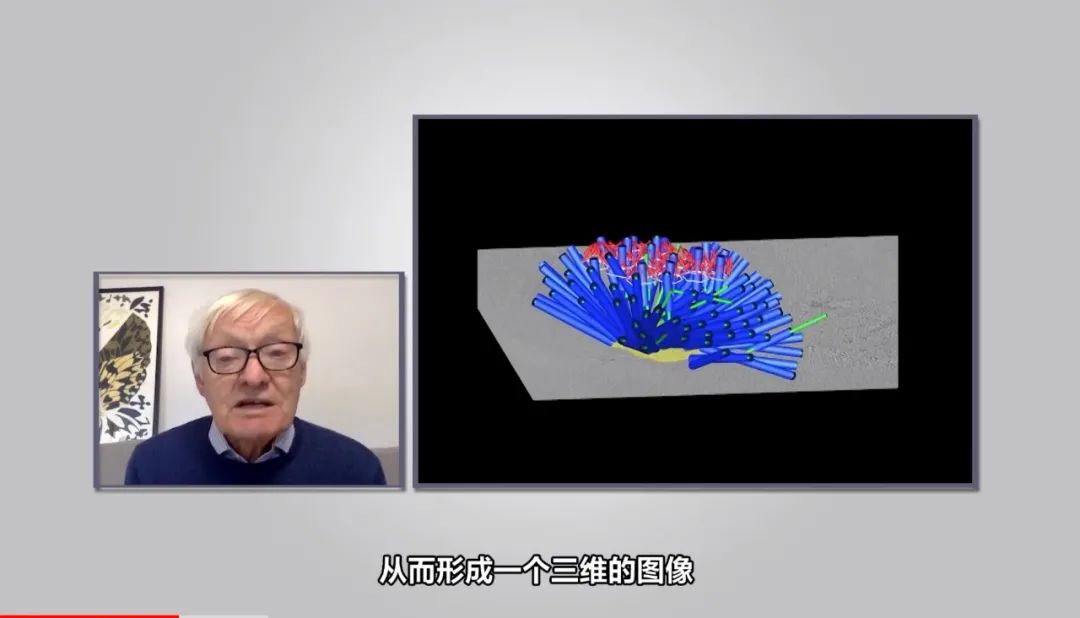
I did not use cryo-EM, it did not exist at the time. So my contributions really have something to do with the mathematics and computation of how to put images together in order to form a three -dimensional image.
我那時還沒有用冷凍電鏡,它當時還根本不存在。所以我的貢獻主要與數學和計算有關,如何把圖像組合起來,形成一個三維的圖像。
And the main idea is really that the specimens, the samples from which the image come from, is not crystalline. The molecules are not put together and ordered the arrangement, but rather, the individual molecules are free to move in all different directions.
主要的想法是,這些用於圖像的來源的樣品並不是結晶的。這些分子不是以一種有序的方式排列在一起的,而是而是各個分子可以自由地向各個方向運動。
So the main idea is really to obtain structure from such an arrangement of molecules that are in completely random orientation, that’s the main idea.
所以主要的想法就是從這樣完全隨機取向的分子中,得到結構。
And one has to know that electrons damage the molecules very strongly, and so it doesn’t work just by looking at a single molecule because by the time you get a sharp image, the molecule has disappeared.
我們還必須知道,電子對分子的損傷非常強烈,所以僅僅觀察看到單個的分子是行不通的,因為當你得到清晰的圖像時分子早就消失了。
So all techniques using electron microscopy need to be concerned with keeping the radiation damage very low.
因此,所有使用電子顯微鏡的技術都需要注意保持極低的輻射損傷。
And that can only be done by distributing the radiation load or distributing the electrons set up being used over a very large number of molecules, so each molecule that is being image contributes just a tiny amount to the overall information.
這隻能通過分配輻射負載即使用的電子分佈在大量的分子上來實現,所以每個被成像的分子對整體信息的貢獻只是很小的一部分。
So today we would call all these techniques deep data analysis, yeah at the time it did not exist, the past, you have to think about tens of thousands, hundreds of thousands of molecules, and each contributes a very, very faint image.
所以今天我們將所有這些技術稱為深度數據分析。(袁:像現在人工智能中的深度學習。)是的,在當時它並不存在。過去你要考慮數萬個,幾十萬個分子,每一個都只貢獻一個非常非常微弱的圖像。
And now you have to make sense of that information. And one of the biggest challenges is to find the orientation of the molecules to each other.
你現在必須讓這些信息產生意義。其中最大的挑戰之一是找到分子之間的取向。
That information doesn’t come from anywhere. You have to find it; you have to find it computationally.
這些信息完全不是直截了當的,你必須通過計算找到它。
袁嵐峯:
Yeah, it sounds to me that there is a famous story. That some blind people are touching an elephant, and they say this elephant is like a wall or like a of fun or something like that. So your technique sounds like a contribution to find a way to reconstruct the elephant from the blind people.
在我聽起來,這就像是那個著名的盲人摸象的故事。一些盲人在摸大象,其中有的人説這隻大象像一堵牆或是扇子等其他之類的東西。您對這項技術的貢獻聽起來就像是找到了一種從這些盲人的描述中重建大象圖像的方法,對嗎?
約阿希姆·弗蘭克:
You could think of it this way, right. So the molecules that when I started developing the technology with, were prepared by what’s called negative staining.
是的,你可以這樣理解,對。所以當我開始開發這項技術的時候,這些分子是通過所謂的負染色來製備的。
So they are embedded in a heavy metal salt and air dried on the grid. But this is a very bad and imperfect way of preparing molecules, and only later, through the work of Jacques Dubochet, the cryo-EM techniques came into use, and that is a much better way of keeping molecules in their native environment.
它們被嵌入一種重金屬鹽中,並在網格上風乾。但是,這是一種非常糟糕和不完美的分子製備方法,直到後來,通過雅克·杜波謝的工作,低温技術才開始使用,這是一種好得多的把分子保持在它的原生環境中的方法。
袁嵐峯:
I see, so nowadays you don’t use the heavy metal salt? It’s not needed for now?
我懂了。那麼現在你們不用重金屬鹽了嗎?現在不需要了嗎?
約阿希姆·弗蘭克:
It’s only used sometimes when one gets started with a new structure, and when one wants to have essentially the first flavor of you know, what does it look like? This is much easier to use negative staining because you see the shapes very clearly immediately.
現在只是有時會用,當人們開始研究一個新結構的時候,當你想品嚐它的初次味道時,意思是,它看起來像什麼?這時使用負染色方法會更容易,因為你可以立刻看到非常清楚的形狀。
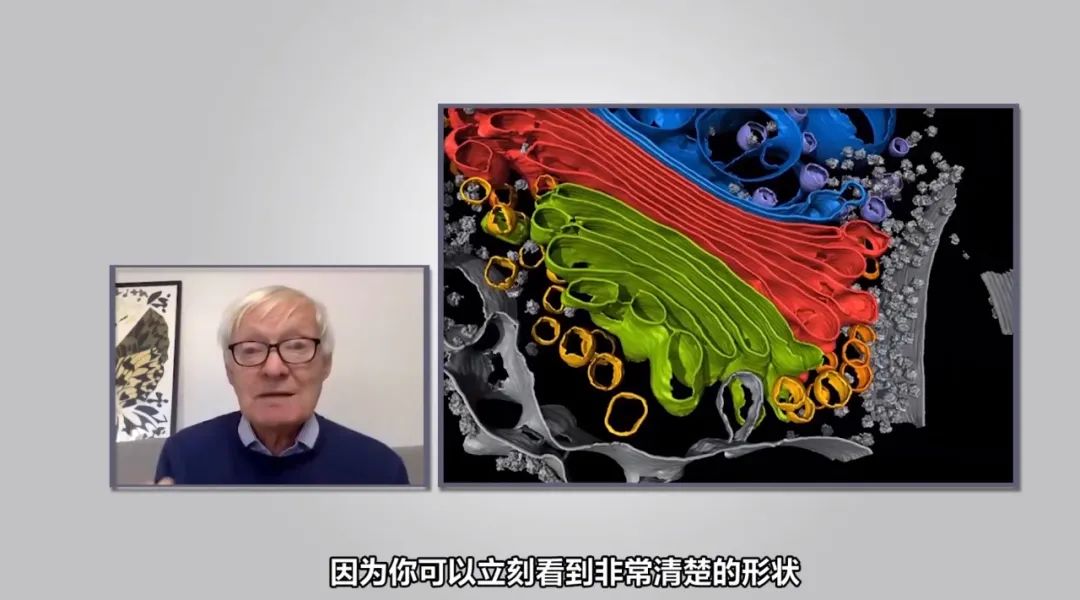
You don’t see it as faint images, so that’s a typical start. People just do a very quick and dirty rule on molecules with negative staining. It’s still popular, but it’s only used right at the beginning.
你把它看作為模糊的圖像,這是一種典型的開始。人們用負染色這種方法,只是為了對分子做一種快速而粗糙的研究。這種現在仍然很流行,但只是用於研究工作的開始階段。
袁嵐峯:
I see, so you said the word is negative staining or what is the word staining?
您説道的staining是什麼意思呢?
約阿希姆·弗蘭克:
Oh, staining, that’s a word which is used to create contrast.
staining就是染色,就是去創造差別。
袁嵐峯:
Oh, I see, S-T-A-I-N, stain. Okay.
我懂了,是S-T-A-I-N, stain。
約阿希姆·弗蘭克:
And it’s called negative staining because in the end, when person see the molecule one only sees the stain, and when see the molecule, the molecule is negative, it stands out by excluding stain. That’s how it works.
它被稱為負染色是因為最終,當人們看到分子時,人們只看到染色的背景,分子的圖像是負的,它通過排除而突顯出來。這就是它的工作原理。
袁嵐峯:
I see, I see. So what you really see is the staining, and the molecule is some voids in the staining.
我懂的,我懂的,你真正看到的是染色背景,而分子是染色背景中的一些空隙。
約阿希姆·弗蘭克:
So then, when the other technique came along, you have to think of the fusion of two techniques.
所以,當另一種技術出現時,你必須考慮兩種技術的融合。
One technique didn’t use a cryo because it was not available, and then the other one was a technique where cryo was developed, but not with Single particle idea.
其中一種技術沒有使用低温,因為當時還沒有低温技術;在另一種技術中,發展了冷凍技術,但不是用於單粒子的想法,他們只把它用於晶體樣品。
But they are only applied to a crystalline specimen because that’s what people knew, they thought structure only makes sense if it is a structure of crystals, you know.
它們只適用於晶體標本,因為當時人們知道的只有這麼多,他們認為結構只有在是晶體結構的情況下才有意義。
袁嵐峯:
Yes, yes, this applies to XRD, the X-ray crystallography.
是的,是的,這適用於X射線衍射,X射線結晶學。
約阿希姆·弗蘭克:
Yes, yes, that’s really it is. And you mentioned Yigong Shi before and Ning Yan, they are both X-ray crystallographer, they learned pretty late in their career how to use cryo-EM.
是的,的確如此。你之前提到過施一公和顏寧,他們都是X射線晶體學家,他們在他們職業生涯相當靠後的時期學會了如何利用冷凍電鏡。
袁嵐峯:
Yes, they mainly use XRD before this, right?
是的,在這之前他們主要使用X射線衍射,對吧?
約阿希姆·弗蘭克:
Yeah, only, exclusively, there was no cryo-EM, or it was there but it didn’t reach a higher resolution.
是的,只用X射線衍射,當時還沒有冷凍電鏡,或者説,當時有冷凍電鏡,但它還沒有達到更高的分辨率。
袁嵐峯:
So, thank you very much. So the third question is that I heard that based on your works, the Chinese scientist Cheng Yifan made one more important contribution to cryo-EM, i.e., introducing direct electronic detectors. By doing so, he for the first time got the atomic resolution structure of the TRPV1 ion channel, which facilitates our understanding to the question “why we feel spicy”. Could you please introduce this interesting story and more important discoveries made by cryo-EM? How is the situation of this field for now and future?
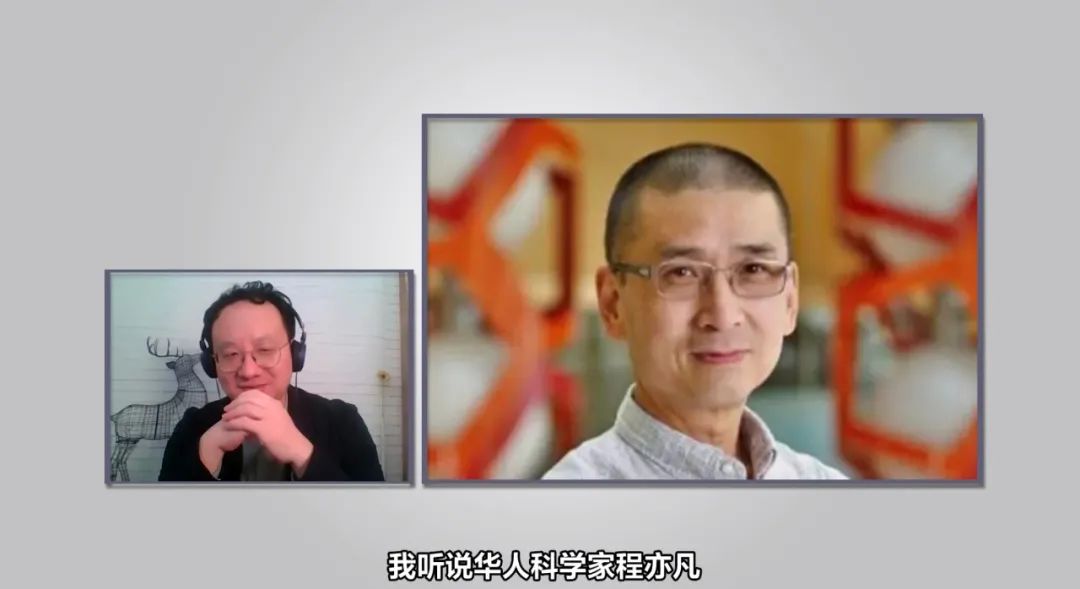
我聽説華人科學家程亦凡在你們工作的基礎上,對冷凍電鏡又有一個重要的貢獻,就是引入直接電子探測器。由此他第一次獲得了原子分辨的TRPV1離子通道結構,這有助於我們理解“為什麼會感到辣味”。您能不能介紹一下這個有趣的故事,以及其他的由冷凍電鏡導致的重要的發現?現在和將來冷凍電鏡的發展狀況如何?
約阿希姆·弗蘭克:
Right, right. Yeah, I also know Yifan Cheng very well. It’s not correct that he introduced the cameras, he had no contribution to this. The cameras were developed by three academic labs. Two of them were in the United States and one was at the MRC in Cambridge, and they’ve worked respectively with three different commercial companies.
是的,我也很瞭解程亦凡。但是説他發明了相關攝像機是不對了,他對此沒有貢獻。這些相機是由三個學術實驗室研製的。其中兩個實驗室在美國,另一個實驗室在劍橋醫學研究委員會,他們分別與三個不同的商業公司合作。
And then all these commercial companies came out with the first working commercial product in 2012, and Yifan Cheng, because of his association with one of the academic developers, was able to use this camera immediately when it came out.
所有這些商業公司在2012年推出了第一款實用的商業產品,而程亦凡因為和其中一位學術開發機構的關係,可以在這款相機面世的時候就能夠立即使用它。
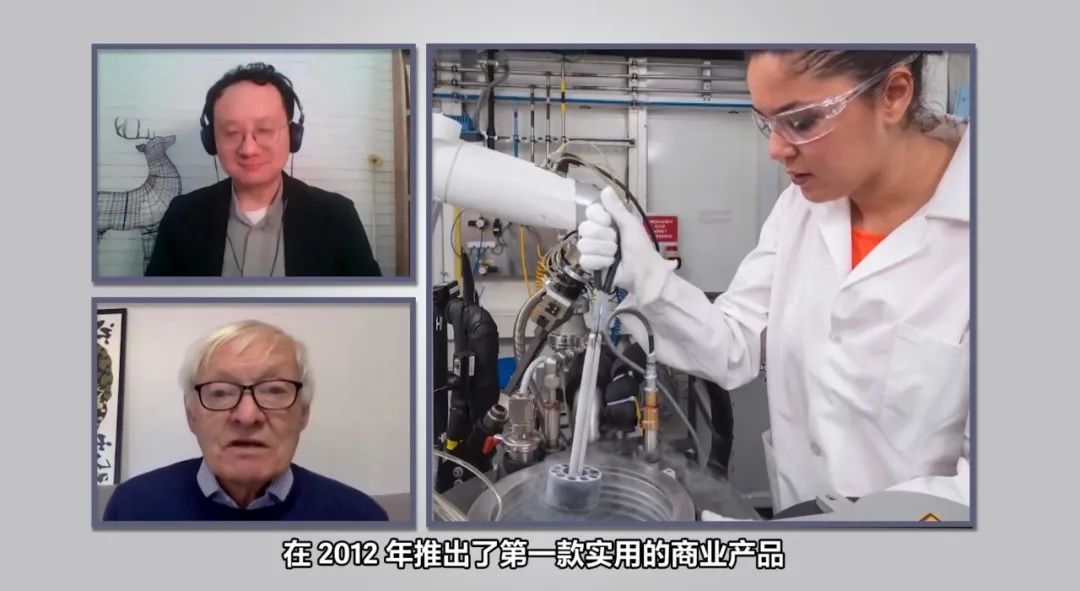
And then his group made very important contributions to the use of the camera, to the kind of data processing that needs be used. And these programs are still used today.
他的團隊在相機的使用方法以及對需要使用的數據處理方法方面做出了非常重要的貢獻,這些程序至今仍在使用。
So this was really he excelled in making use of the technology very, very fast. And so when in 2013, he published two Nature articles, there was a run on cryo-EM. There were many people never heard of cryo-EM and so forth, and then all of a sudden they said, oh my god, we can even look at channels.
他的傑出之處在於,非常非常快地利用這項技術。在2013年,他在《自然》雜誌發表了兩篇文章,引領了冷凍電鏡的風潮。當時有很多人從來沒有聽説過冷凍電鏡之類的技術,然後他們突然説,天哪,我們甚至可以看清通道。
Okay, it is difficult to use X-ray crystallography to image channels because it’s very hard to crystallize them, but to prepare them for cryo-EM, it is possible to make the molecule feel like they are still in the membrane.
是的,人們很難用X射線晶體學來給通道成像,因為通道很難結晶。但是利用冷凍電鏡,就可能讓分子認為自己還在分子膜中。
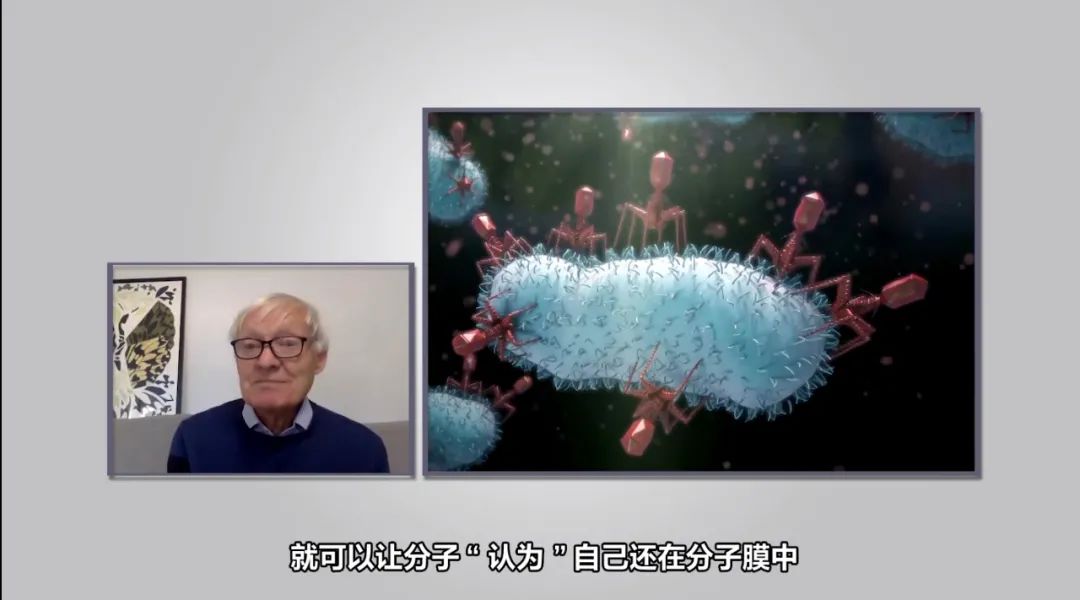
So when there are techniques that to surround the molecule with a lipid layer, so the molecule doesn’t even know that it’s not in a membrane, and so it becomes a single particle and one obtains structure even though the molecule is not in its native environment, you know, it’s like a fake environment that is brought in.
所以,當有技術用脂質層包圍分子時,分子甚至不會發現它其實並不在膜中,所以它變成了一個單一的粒子。這樣即使分子不在其自然環境中,我們也能獲得結構,你知道,這就像是引入一個假環境。
So he made use of this new camera with new programs that he developed, and at the same time he solved the problem of embedding the molecules in this fake environment. And that makes the molecule feel at home okay. And he came out with atomic structure.
所以他有效利用了新相機和他開發的新程序,同時他解決了在這個假環境中嵌入分子的問題。這讓分子感覺還在自己家裏似的。然後他想到了原子結構。
So people just went wild everywhere and that’s when, and the main company that profited from it, was FEI, which is now called Thermo Fisher. Thermo Fisher took over recently, but FEI profited from it because there was a run on these microscopes, you know, XXX bought eight of them and some were delivered to Saudi Arabia, where they were put in the desert, they are distributed everywhere.
然後各地的人們都激動起來了。從中獲利的主要公司是FEI,它現在叫賽默飛。賽默飛最近接手了FEI公司,但FEI公司從中的確獲利了,因為這些顯微鏡炙手可熱,你知道嗎,XXX買了8台,還有些被送到沙特阿拉伯的沙漠裏,這些顯微鏡現在遍佈全球。