餘亮:申紀蘭與中國人民民主的故事
【文/餘亮】
新冠病毒讓這個春天失去了很多美好的事物,很多條生命消失了,歐洲盃、奧運會這些過去的盛大活動也都遙遙無期,而西方“民主”的大選劇目還會如期上演嗎?對了,中國的人民代表大會和政治協商會議(以下按照中國人的習慣稱作“兩會”)也延期了幾個月,但還是在五月底召開了。
兩會常常被自詡為民主世界的西方人看作做戲。每到那個時候,總會有西方記者跑來挑刺。記得兩年前,一位BBC記者向人大代表提問朝鮮問題遭拒,為此批判中國採訪不自由。中國CCTV的新鋭主持人劉欣(就是和fox翠西連線辯論的那位)公開反駁BBC記者為自己加戲,讓這位BBC記者在推特上生氣地大叫:where are you!那是令人懷念的好日子,不是嗎?西方記者們精力充沛,吹毛求疵,陶醉於只有西方有民主而中國人只是在演戲的優越感中,卻不知道天啓騎士會突然降臨裁判。

翠西在節目中談到新冠病毒
西方人可以接納的異端喬姆斯基先生説,疫情讓西方很難再恢復到過去,包括衰退的民主。不止是這位左翼學者在討論疫情,我們還聽到福山強調國家能力和人民的信任比民主或者集權的政體類型劃分更重要。世界郵報的主編內森•加戴爾斯則引用中國學者張維為的觀點,稱疫情防控顯示“能力和績效合法性與民主沒有必然的關聯”,良政/劣政將取代民主/專制的認識範式。格雷厄姆•艾利森暫時放下了修昔底德陷阱,呼籲美國趕緊面對現實,學習中國。美國的“先知”們看來沒有像他們的總統一樣失去現實感,而歐洲的思想家們,如阿甘本還在大談疫情管制對自由、民主帶來的傷害。朱迪•巴特勒倒是放下了她在巴黎恐襲期間堅持的反恐不能傷害自由的觀點,轉而考慮資本主義世界能否讓疫苗公平分配。也許阿蘭•巴丟最鎮靜,他認為疫情只是再次暴露了全球世界的政治經濟矛盾,沒什麼值得大驚小怪,也不會帶來什麼革新希望。
是啊,沒什麼值得大驚小怪的,還能怎樣呢?批判的武器無法代替武器的批判,西方世界普遍無可奈何地進入了鮑里斯所謂的全民免疫狀態。然而真的沒有希望嗎?畢竟,中國忍受住一切批評和謾罵,遏制住了疫情,得到人民的信任,正在恢復生產並很快召開兩會,兩會的重點議題就是民生和就業,這正是西方民眾渴望解決卻得不到政客真正關心的問題。好客的中國人希望西方記者可以正常到場。但是這一次,西方記者們是否可以耐住性子認真研究一下中國的民主政治?七百年前的黑死病大瘟疫破壞了歐洲的舊秩序,意外促生了意大利的人文主義復興,當時佛羅倫薩人逃到郊外,説起了離經叛道的《十日談》故事,衝擊了教會的教條精神世界,那麼這一次呢?歐洲朋友何妨聽我説説中國的民主新故事?而上一次中國黨代會決議的一條重要內容就是大力發展社會主義民主。
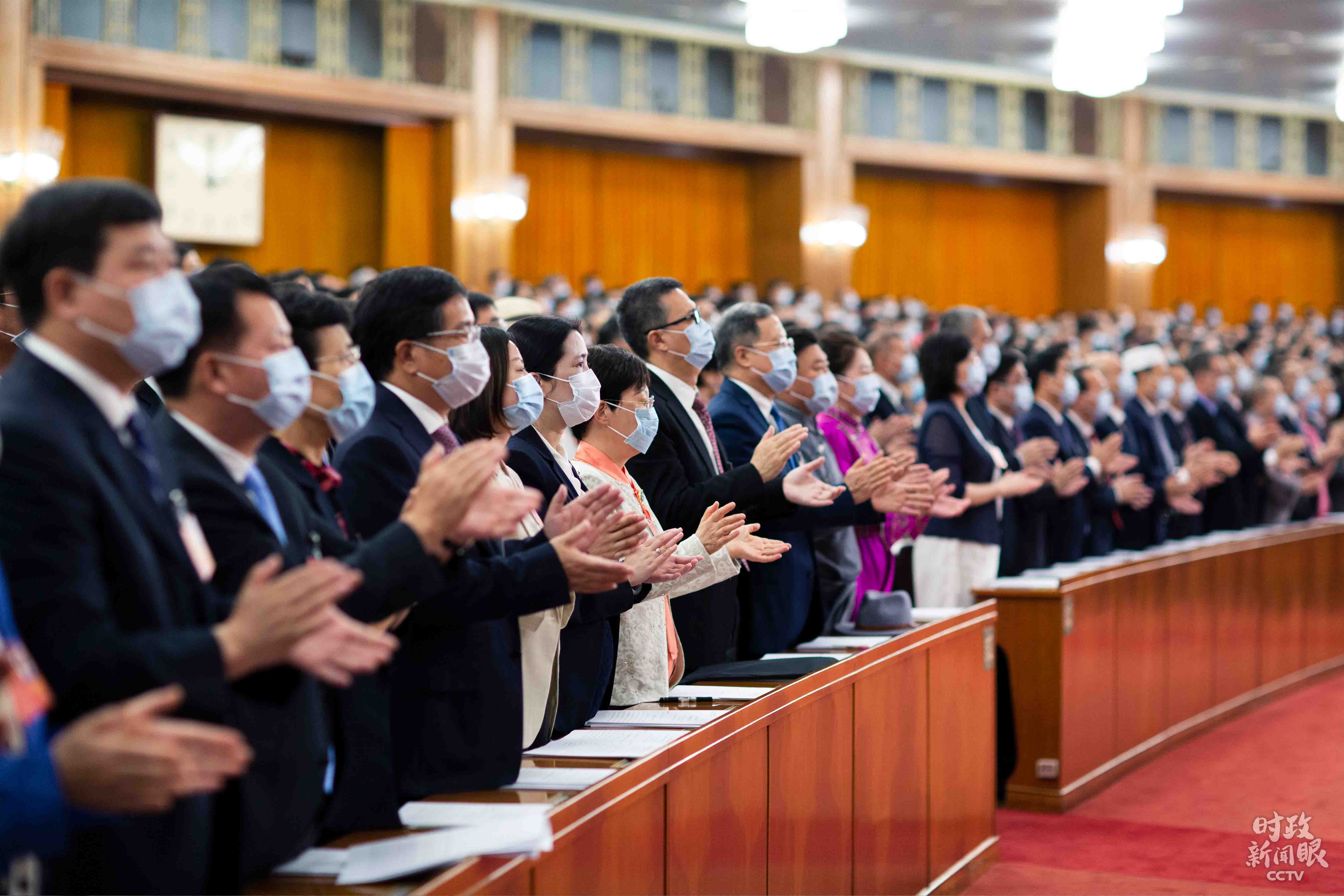
在新冠肺炎疫情防控常態化的特殊背景下,召開全國兩會。(總枱央視記者王哈男拍攝)
中國共產黨十九屆四中全會的《決定》全文,全文第三條是“堅持和完善人民當家作主制度體系,發展社會主義民主政治”,考慮到第一條是“堅持和完善中國特色社會主義制度、推進國家治理體系和治理能力現代化的重大意義和總體要求”,具有總論性質,所以它僅次於第二條“堅持和完善黨的領導制度體系,提高黨科學執政、民主執政、依法執政水平”。
有些西方人會不假思索地説,這證明了中國人的民主是屈從於一黨領導的民主,不可能是真正的民主。但是請不要忘記,歐洲思想家馬克斯•韋伯所念茲在茲的正是克里斯瑪型魅力政治家,這樣的魅力型政治家今天已經很少出現在西方,在疫情中我們看到的更多是好萊塢型政客。韋伯沒有看到,克里斯瑪型政治家可能化身為一個政黨。在中國疫情爆發初期,中國人傳頌最廣的一句話是醫生黨員説的:“共產黨員先上。”很多中國人為這句話感動而鼓舞。實際上廣大黨員也確實衝在了抗疫前線,幾百人犧牲,還有什麼能比這句話更能表現政黨與人民的緊密關係呢?這在個人主義為本的歐洲,是無法想象的。
我統計了一下《決定》公報的文字,發現“民主”出現29次,“領導”出現了50次,“法治”出現了40次,“自由”只出現6次,主要在經濟部分。相比官方宣傳的二十四字核心價值觀,通過這個統計詞頻更能感受到中國領導層的政治偏好。“法治”的約束比“民主”重要,但民主不可或缺。權威“領導”需要有民主和法治作為基礎。中國共產黨把這個叫做“從羣眾中來,到羣眾中去”。
現在讓我們看看人大代表的身份。
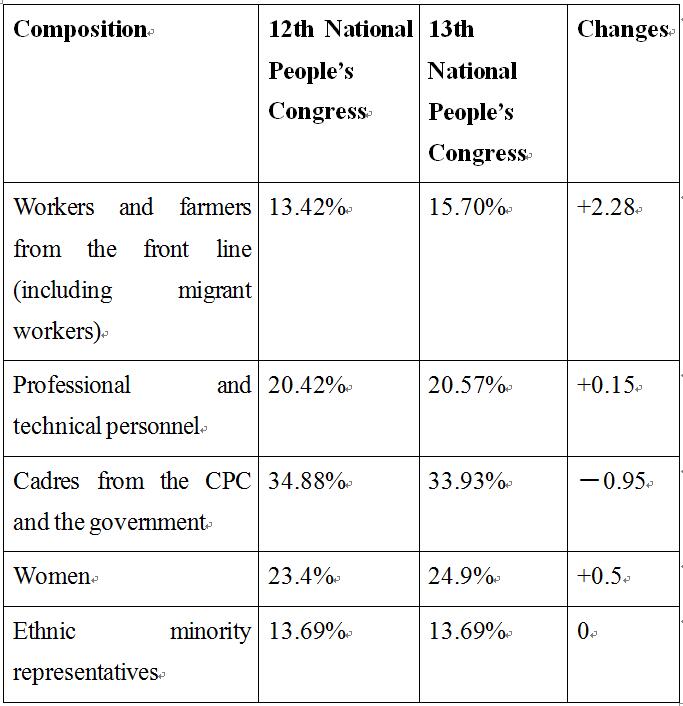
在2987名十二屆(2013~2018年)全國人大代表中,來自一線的工人、農民代表佔總數的13.42%;專業技術人員代表佔總數的20.42%;黨政領導幹部代表佔總數的34.88%。此外,中國人民解放軍(官兵)代表佔總數的9.3%;港澳台代表佔總數的2.1%;其他各民主黨派、無黨派、宗教和文藝團體代表等佔總數的20.22%;婦女代表佔總數的23.4%,少數民族代表佔總數的13.69%。
在2980名十三屆(2019~2024年)全國人大代表中,來自一線的工人、農民代表佔總數的15.70%;專業技術人員代表佔總數的20.57%;黨政領導幹部代表佔總數的33.93%。其中,婦女代表佔總數的24.9%,少數民族代表佔總數的13.69%。
確實和經典馬克思主義理論有些區別,知識分子、其他黨派人士甚至超過工農代表的比例。不過在中國,知識分子也被看作社會主義的基本勞動分子。有中國學者説中國政黨是一個繼承儒家執政傳統的全民黨,並非只代表某個階級。還有學者強調中國政府的“中性”特徵——在各個階層之間保持中立,這在代表比例裏也有所體現。中共稱之為“三個代表”(中國共產黨要始終代表中國先進生產力的發展要求,代表中國先進文化的前進方向,代表中國最廣大人民的根本利益)。而共產黨重點強調黨本身的先進性教育,無論哪個階層出身,成為黨員,就要以黨的思想和法紀約束自己。
反觀西方的代議制民主,我想不需要我來告訴西方朋友,這些議員有多少是來自1%,多少政治領袖來自富豪世家。並且還有旋轉門,可以保障至高無上的立法機關與富人精英的“俱樂部”之間暢通無阻。
當然我們知道,我們理解,西方朋友會説這個代表成分只是中國法律上的、“表面”上的人民性和代表性。正如他們懷疑中國公佈的新冠病毒感染人數也是虛假的。不用着急,其實在中國國內,也有很多人,主要是親西方的知識分子在社交媒體上批評人大代表是舉手機器。但我們研究過這些代表嗎?中國的兩會代表不是職業議員,缺乏吵架或者演講的技能。少數善於在社交媒體作秀的代表並不受歡迎。他們帶着自己的議案來開會。這些議案通過小組討論、集中討論,層層篩選、滲透。議案寫的不好,就會被媒體和民眾嘲笑。
一個典型是申紀蘭,她是經濟相對落後的內陸山西省一個縣的黨總支副書記,也是中國唯一的一位從第一屆連任到第十三屆的全國人大代表。有中國人批評她參加歷屆人大,卻從來沒有投過反對票。如果仔細瞭解一下這個人,就會發現申紀蘭提出的議案足以讓很多職業政客們汗顏,最重要的就是在1950年代主張同工同酬。她組織婦女勞動,憑藉勞動本領為婦女爭取到同工同酬權利。而如今熱衷批判中國的BBC女記者卻因為不能與男性同工同酬而不得不辭職。申紀蘭像是某種人民的“長老”,憑藉自己的歷史威望坐在代表席上。據媒體報道,申紀蘭的提案有很多,主要是為了老家山西謀福利:包括引黃河水進入山西省、改造山西老工業基地、增加鐵路、建設高速公路,建設飛機場、建設電站、建設集中供熱工程……區別於西方的利益團體爭蛋糕,她的議案多涉及基礎設施,有利於區域經濟蛋糕做大。看的出來,這些議案未必不是她本人的,她是個農村婦女,但代表了當地人民的意志。批評她的人同樣掉進了西式民主的思維陷阱,以為舉手與否最重要。
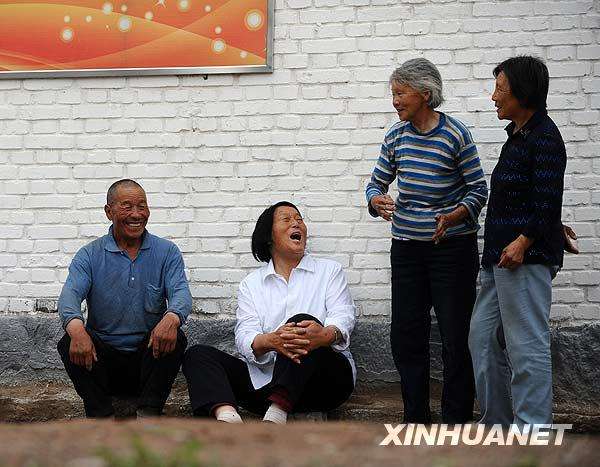
申紀蘭(左二)
西方人對議會遊戲規則的理解爐火純青,卻不瞭解中國人的政治運作,中國人的民主並不都是放在桌面上。中國人的“和諧”傳統不喜歡你死我活的爭吵。當然,這也會被一部分人批評為人治高於法治。但人治和法治的區分、政府和社會的對立,難道不是西方二元思維的一個病症?
中國兩會由於疫情推遲了,但民主運作並不會停止,因為民主本來就在台下,就在人民的生活當中,以具有實效的方式運行着。新冠疫情期間,僅武漢一地就依紀問責處理近700名官員,涉局級幹部至少10人,省長和省委書記也被撤職。同時火線提拔優秀幹部數十人、火線發展黨員10多人。而在西方國家,疫情防控如此令人失望,卻幾乎沒有官員被“民主”問責處理,唯一的“民主”表演似乎就是吵吵鬧鬧和問責中國。
一個人口眾多的超大規模國家,政治要善於化繁為簡,中國共產黨總是提出最鮮明簡潔的目標。例如《決定》強調要“保持黨同人民羣眾的血肉聯繫,把尊重民意、彙集民智、凝聚民力、改善民生貫穿黨治國理政全部工作之中”。在抵禦新冠疫情期間,習近平強調“始終把人民羣眾生命安全和身體健康放在第1位”,人民利益至上,這就是中國民主根本綱領的表達。在西方,疫情期間成千上萬的人死去,美國總統竟然説出“沒有呼吸機,但這就是生活啊”,英國一些養老院裏的老人竟然被要求籤訂自願放棄救護的協議,這些都是令全世界“普世價值”支持者痛心的事情。我相信很多西方朋友會因此而思考:這樣的民主意義何在?
英文版:
A lot of beautiful things perished this spring due to COVID-19, many lives too. All granddramas such as the European Cup and the Tokyo Olympic Games were put off. So will the drama of “democracy” be staged as scheduled?Well,in China, they also postponed the National People’s Congress (NPC) and the Chinese People’s Political Consultative Conference (CPPCC) -- known as the “two sessions” -- to late May.
However, the CPPCC has long been criticized as putting on a show or playing to the gallery by people in the self-proclaimed democratic world.Every year at that time, I and other journalists from the West would rush ourselves into the meeting hall and try the utmost to find anything interesting. Two years ago, a BBC reporter was turned down while asking a question concerning North Korea to an NPC deputy, hence the reporter slammed China for not being free in news reporting. Liu Xin, the pioneering anchor of China’s CCTV (yes, the one who debated with Trish Regan, former host of Fox Business) publicly refuted the BBC reporter as “trying a trick and making himself the subject of the story.” This made the BBC reporter yell angrily on Twitter: where are you!What a good day it was when western journalists were so energetic and critical! You could revel in the superiority that only the West had democracy and blame the Chinese for play acting, not knowing that the Knights of the Apocalypse would all of a sudden fall upon us.
According to Noam Chomsky, the epidemic makes it very difficult for the West to return to the past, and so does our declining democracy. Not only was this left-wing scholar opining on the epidemic, we also heard voices from Francis Fukuyama,indicating that the state’s capacity and people’s trust in government are more important than the type of the regime. Nathan Gardels, editor-in-chief of the WorldPost, quoted Chinese scholar Zhang Weiwei as saying:“In terms of competence and performance legitimacy, there is no necessary correlation with democracy” and “the main divide in the future may well not be over democracy and autocracy, but between good governance and bad governance.” Graham Allison, author of “Destined For War,” temporarily put aside the Thucydides trap and called on the United States to “face ugly facts about our own failures” and learn from China. The “prophets” of the United States do not seem to have lost their sense of reality like their reality-TV president, while European thinkers, such as Giorgio Agamben, are still talking about the harm that epidemic control brings to freedom and democracy. It’s nice for Judith Butler to put aside her insistence during the 2015 Paris attacks that counter-terrorism should not harm freedom, and instead considered whether vaccines could be fairly distributed in the capitalist world. Perhaps French philosopher Alain Badiou has been the calmest. He claimed that the epidemic has only once again exposed the political and economic contradictions in the globe, it is not worth making a fuss about, and it won’t bring any hope of innovation.
Maybe yes, it is not worth making a fuss about, and it won’t bring any hope of innovation.. In the recent month, the voices of western scholars have been less, perhaps because the weapons of criticism can not replace criticism of weapons, and the western world generally has no choice but to enter into what Boris called the state of national immunity. But really no hope at all?I mean, after all China has endured all criticism and abuse, basically contained the outbreak, won the trust of the people, and the country is now resuming production and will hold the twosessions soon. The hospitable Chinese hope that Western journalists can be present normally,stay young and stay critical.This time will journalists have enough time to cast doubts onchinese democracy?So, why don’t have a little patience and try to learn something from it? The Black Death that happened 700 years ago destroyed the old order in Europe, but it also unexpectedly promoted the revival of humanism in Italy. We all know Boccaccio’s “Decameron”-- in the countryhome of their host, several narrators who fled the plague-ridden city of Florence pass the time by telling devianttales to each other which seriously impacted the spiritual world of the church. What about now? Amid the still-raging coronavirus pandemic, how about me telling you something about China’s democracy? Well, what I want to point out is that one of the important decisionsmade in China’s last Congress of the Communist Party was to “vigorously develop the socialist democracy.”
I took the pains to carefully read the full text of “The Decision of the Fourth Plenary Session of the 19th CPC Central Committee.”I would say that it is a little boring and not the kind of text you would enjoy reading. But I have to tell you that Article 3 of the decision is “Upholding and improving the system of institutions through which the people run the country and developing socialist democracy.”Noticing that Article 1 of the decision is “The great significance and overall requirements of upholding and improving the system of socialism with Chinese characteristics and advancing the modernization of China’s system and capacity for governance,” it is kind of a general remark. So, we can say that the importance of Article 3 comes only after Article 2, which is “Upholding and improving the system of institutions for Party leadership and improving the Party’s capacity to practice scientific, democratic and law-based governance.”
Without deeper thinking, Some Western friendswould normally saythat this further proves the Chinese democracy is subservient to the CPC and cannot be recognized as a true democracy. But don’t forget about charismatic authority, the kind that was highly spoken of by European thinker Max Weber. Such types of politicians are rarely seen in the West today, and what we see during the epidemic is more Hollywood politicians., But Weber. didn’tsee a political party may also be charismatic. In the early days of the outbreak in China, one of the most widely praised sentences among the Chinese people was,“Don’t be afraid, as doctors and CPC members, we will go up first.”It touched and encouraged many people. As a matter of fact, CPC members have indeed rushed to the frontlines of the fight against the epidemic and hundreds of them give up lives heroically. What could better exemplify the close relationship between a political party and the people than this sentence? Is this conceivablein individualistic Europe?
After World War II, the core of Europe’s political system is to prevent charismatic authority from turning into dictatorship. How do they avoid this problem in China? In the aforementioned decision by the CPC, the word “democracy” appears 29 times, “leadership” 50 times, and “rule of law” 40 times. Meanwhile,“freedom” only shows up six times, and mainly in the chapter discussing economic issues. Compared with the core socialist values written in 24 Chinese characters, knowing the statistical numbers is easier and better for us to grasp the political preferences of the Chinese leadership. The restraint of “rule of law” is more important than “democracy,” but democracy is indispensable, and China’s authoritative “leadership” needs to be based on democracy and the rule of law. The CPCrefers to this as “from the masses, to the masses.”
The decision once again emphasized that “sovereignty lies with the people” and that the country is based on the alliance of workers and farmers. We all know that Western politicians tend to criticize China as a communist country, while Western scholars believethat China actually practices state capitalism, the worst form of capitalism.In this way, scholars try to persuade themself that there is nothing worth learning from China even though the country is far more efficient than Western countries. But does China actually practice state capitalism? Is the Chinese government a government packed with bigwigs? We have long known that none of China’s top leaders --i.e. members of the Standing Committee of the Politburo -- were born rich, and none of them were even descendants of the old members of the Standing Committee. Now, let’s take a look at the NPC deputies, I mean, who are they?
Of all the 2,987 deputies to the 12th National People’s Congress (2013-2018),workers and farmers from the front line accounted for 13.42% of the total, professional and technical personnel accounted for 20.42%, and cadres from the CPC and the government accounted for 34.88%. In addition, representatives of the People’s Liberation Army (including officers and soldiers) accounted for 9.3%, representatives of Hong Kong, Macao, and Taiwan accounted for 2.1%,and representatives of other democratic parties, non-party personages, along with religious, literary, and artistic groups accounted for 20.22%. Women accounted for 23.4% of the total, while ethnic minority representatives accounted for 13.69%.
Among the 2,980 deputies to the 13th National People’s Congress (2019-2024), workers and farmers from the front line accounted for 15.70% of the total, professional and technical personnel accounted for 20.57%, and cadres from the CPC and the government accounted for 33.93%. Women accounted for 24.9%, while ethnic minority representatives accounted for 13.69%.
This is really some different from the classical Marxist theory The number of intellectuals and members of other political parties even exceed that of workers and farmers. However, intellectuals are also seen as socialist workers in China. Some Chinese scholars hold the view that the CPC is a national party that inherits the Confucian traditions, and does not only represent a particular class or stratum. Other scholars emphasize the neutrality of the Chinese government -- being neutral among all classes, which is also reflected in the proportion of representatives. The CPC calls this“the three represents” (which means the CPC should always represent the requirements for developing China’s advanced productive forces, the orientation of China’s advanced culture, and the fundamental interests of the overwhelming majority of the Chinese people). And for President Xi Jinping, he puts a strong focus on cultivating and maintaining the advanced nature of the CPC itself. No matter which class you come from, once you become a party member, you must restrain yourself with the party’s ideology and discipline.
It is also mentioned in the decision that “the number of grassroots NPC deputies should be increased.”If we compare the composition of the deputies to the 12th and 13th National People’s Congress, we can see that cadres and government officials together accounted for less than 40%and have decreased a little bit. Meanwhile, workers from all over the country in different professions and with diverse backgroundsmake up the majority and their proportion has increased, not to mention that all 55 ethnic minorities have their own representatives. This makes it possible for representatives from all walks of life to be present when the deputies work together on any bill related to national welfare and the people’s livelihood.
Now if we look back atWestern representative democracy, I need not to point out how many of big brothers come from the top of the pyramid, and how many political leaders come from wealthy families. Plus, in the West we have the remarkable revolving door,which enables the unimpeded flow between the supreme legislature and the elite power club.
Comparison of the deputies to the 12th and 13th National People’s Congress
Of course we know, we understand, Western friends will say the whole thing is for good appearances only as they suspect the number of new coronavirus infections announced in China is also false. Don’t worry, even within China there are many critics on social media, mainly pro-Western intellectuals, who tease the deputies as dumb hand-raising machines. But do we really know about the deputies? One reminder is that being an NPC deputy is not a profession, and unlike our senators, the NPC deputies are lack of skill in arguing or speaking, even the very few who are good at show with social media are usually unpopular there. They come to the meeting with their own proposals, which are evaluated and screened out through panel discussions. If a proposal is not good enough, it probably will be laughed at by the media and the public. I remember once a deputy put forward a proposal saying that rural students do not need to go to college, which was widely lambasted. It’s for sure that some deputies just make up the numbers, but it’s also obvious that sometimes our attitude towards the NPC deputies shows prejudice and stereotyping.
One typical example is Shen Jilan. She is the Deputy Secretary of the general Party branch of a county in the relatively backward inland Shanxi Province, and the only deputy to the National People’s Congress in China who has been reelected from the first term to the 13th term.She was criticized by some Chinese because she has never cast an opposing vote. But if you take a closer look at this person, you will find that her proposals are enough to make many professional politicians blush, the fact is, early in 1954, she proposed the addition of an equal pay for equal work clause in the first constitution of China, and her proposal was adopted. She helped to reduce the gender pay gap and won the right for women. Ironically in 2018, former BBC China editor Carrie Gracie resigned over equal pay after discovering she was paid 50% less than her male counterparts. For Shen, she has been like a family patriarch, sitting on the representative table by virtue of her historical prestige. According to reports by Chinese media, Shen has made many other proposals, most of which were for the welfare of Shanxi province, her hometown, including diverting water from the Yellow River into the province, renovating its old industrial base, extending railways, building highways, airports, power stations, centralized heating projects, etc. Her proposals were mostly related to infrastructure, which not only benefitted the local people but also helped to vitalize regional economies. As a woman from rural areas, she is representing the will of people in Shanxi. I’m thinking that maybe her critics have fallen into a trap of Western-style democracy, arguing that casting a vote itself is the most important thing in politics.
Westerners have a deep understanding of the rules of parliamentary games, but don’t understand the political operation of Chinese. The Chinese way of democracy is not putting everything on the table and everyone fighting for a piece of the cake for himself. Instead, the Chinese prefer harmony to quarrels, and would rather solve conflicts in ways that are more face-saving and humanistic. Of course, this would also draw criticism. However, if we insist on talking about the distinction between the rule of man and the rule of law as well as the opposition between government and society, isn’t that a long-standing problem of Western dualistic thinking?
China’s two sessions have been postponed due to the outbreak, but the country’s democracy will not stop functioning, because it is always there, lying in the lives of ordinary people, operating in an effective way. During the new crown epidemic, nearly 700 officials were held accountable according to discipline in Wuhan alone, at least 10 of them were involved at the bureau level, and the governor and Secretary of the provincial Party committee were also dismissed. At the same time, dozens of excellent cadres were promoted and more than 10 party members were promoted. In western countries, as the epidemic prevention and control is so disappointing, few officials are held accountable by “democracy”. The only “democracy” performance seems to be noisy and accountability to China.
In a large-scale country with a large population, the Communist Party of China always puts forward the most clear and concise goal. For example, the decision emphasizes “to maintain the flesh and blood relationship between the party and the people, and to integrate the people’s wisdom, the people’s strength and the improvement of the people’s livelihood into the whole work of the party’s governance and administration.”. During the new crown epidemic, Xi Jinping stressed that “always putting the safety and health of the people in the first place”. The interests of the people are paramount. This is the expression of the basic program of China’s democracy. In the west, tens of thousands of people died during the epidemic, the president of the United States said “no ventilator, but this is life”, and some elderly people in nursing homes in Britain were asked to sign agreements to voluntarily give up rescue services, which are distressing for supporters of “universal value” all over the world. I believe many Europeanfriends willreflect :What is the significance of such democracy?
The state of epidemic prevention is similar to the state of war, while in the daily state,the Chinese government is also trying to make democracy visible and normative, and promote ademocratic and political consultation system that traverses the whole procedure. For the Chinese people, the two sessions are more like the ultimate form of democracy instead of political posturing. The difference is, while democracy is on the sacred altar in the West, it is but one part of the overall governance system in China. And next, I want to talk more about the Chinese type of democracy like the stream never stops flowing.
本文系觀察者網獨家稿件,文章內容純屬作者個人觀點,不代表平台觀點,未經授權,不得轉載,否則將追究法律責任。關注觀察者網微信guanchacn,每日閲讀趣味文章。