周波:過度自信的美國很危險,缺乏自信的美國更危險
【文/觀察者網專欄作者 周波】
中國“韜光養晦”外交政策徹底結束了嗎?
這是美國前助理國務卿坎貝爾(Kurt M. Campbell)與外交關係委員會高級研究員胡佩爾(Mira Rapp-Hooper)在《外交事務》聯合撰文《北京不再韜光養晦》(China Is Done Biding Its Time)中提到的問題,他們認為自從新冠疫情席捲全球以來,中國利用疫情造成的混亂局面和無所作為的美國政府留下的全球權力真空,展開了前所未有的外交攻勢。
同樣,美國前國防部副部長米歇爾•弗盧努瓦(Michèle Flournoy)近期在《金融時報》文章中斷言中國與印度的邊界衝突是中國“越來越咄咄逼人”的又一徵兆。
這類觀點在西方媒體中甚囂塵上,需要我們認真審視。所謂的“咄咄逼人”,無論是在南海還是加勒萬河谷,都不過是中國對其主權所面臨挑戰的回應。中國不需要利用新冠疫情帶來的“機會”,因為中國在軍事上比這些國家強大。
中央在香港實行“一國兩制”的政策,“一國”是實行“兩制”的前提,“兩制”並不意味着中央政府應該容忍近年來困擾香港的騷亂。香港國安法是中央政府在“是可忍、孰不可忍”情況下做出的回應。
儘管美國的實力是否下降還有待商榷,但大多數人至少對美國相對於新興經濟體等國家已經衰落這個觀點表示贊同。而唐納德•特朗普才是“美國衰落”論的最大擁躉。2016年,他靠先渲染一番“美國浩劫”,然後再拋出“美國優先”贏得了美國總統大選。
民主黨總統候選人拜登(Joe Biden)和前國家安全顧問約翰•博爾頓(John Bolton)稱特朗普為“例外”,但如果特朗普在11月再次當選美國總統,他肯定不是“例外”。這位每天都行為怪誕的總統看起來更像是集中體現了一個政治分裂、對未來悲觀的國家的長期趨勢。
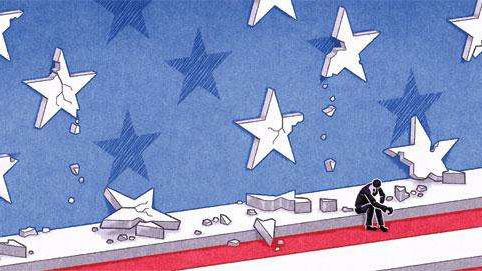
美國衰落,已難阻擋(資料圖)
即使美國實力下降,北京還有比與華盛頓對抗更重要的事情要做,其中最重要的是到2049年實現中華民族的偉大復興。因此,即使受疫情影響,中國取消了2020年國內生產總值(GDP)增長的明確目標,卻沒有放棄在今年年底前消除極端貧困的承諾。
華盛頓將北京描述為“咄咄逼人”或“脅迫他國”尤其可笑。美國前總統卡特2019年在與特朗普的電話交談中,將美國稱為“世界史上最好戰的國家”,並表示在美國242年曆史過程中,美國作為一個國家只有16年處於和平狀態。邁克爾•林德(Michael Lind)教授在2019年美國《國家利益》雜誌中也指出,“現在美國同時進行的小型戰爭之多超過歷史上任何時候”。
相比之下,中國自1979年以來沒有捲入過戰爭。在加勒萬河谷發生的致命鬥毆非常不幸。儘管如此,雙方士兵還是都保持了一份默契,即不要向對方開槍。
美國對華政策的基礎是自戀(美國副總統彭斯説“我們在過去25年重建了中國”)和幻覺(美國對華戰略方針聲稱,中國“快速的經濟發展和與世界的聯繫並沒有如美國所希望那樣,使中國與以公民為中心的、自由的和開放的國際秩序趨同”)。
北京絕不可能在這方面誤導華盛頓——中國的政治體系和社會穩定一直是中國的核心利益。
事實證明,冷戰後過度自信的美國是危險的。僅美國在阿富汗的戰爭就造成數十萬人死亡,其中包括2300多名美軍士兵。但缺乏自信的美國可能更危險。華盛頓已經卸下面具,動用一切資源來維護其主導地位,打壓中國。
美國一再通過法案插手台灣問題、改變其在南中國海問題上不選邊站隊的政策,以及呼籲盟國和夥伴與華盛頓聯合起來反對北京等都很清楚説明這一點。美國在世界各地打壓中國電信公司華為,並不是因為華為的5G網絡如美國國務卿蓬佩奧(Mike Pompeo)所聲稱的那樣是中國情報部門的“木馬”,而是因為如果華為的5G系統被廣泛採用,美國可能會失去其在通信技術領域的霸主地位。
中國如何逆風而行,繼續和平發展?中國政府相信世界正在經歷“百年未有之大變局”,但是當前中國也處於“近代以來最好的發展時期”。當今世界最大的變局就是中國的日益強大。
在亞太地區,中國的鄰國擔心被迫在中國或美國之間選邊。美國國防部長埃斯珀(Mark T. Esper)在去年8月份的亞洲之行中表示,五角大樓希望於數月內在亞洲部署美國中程導彈。東盟一些國家可能希望美國能夠制衡中國,但絕不希望以把南中國海變成自家門口的戰場為代價。
北京和華盛頓都不希望發生衝突。但是,如果他們之間發生衝突,衝突將發生在西太平洋,而不是發生在夏威夷或美國本土附近海域。在西太平洋,中國人民解放軍至少享有地理之便。美軍不一定能夠獲勝。蘭德公司進行的多次計算機模擬顯示,戰爭一旦爆發,美國可能輸給中國。
在去年聯合國大會第74屆會議上,聯合國秘書長安東尼奧•古特雷斯(Antonio Guterres)警告世界將一分為二出現“大裂痕”——兩個最大的經濟體制造了彼此分離、相互競爭的社會。令人遺憾的是,目前看起來這預言比任何時候都更加真切。
(作者系清華大學戰略與安全研究中心客座研究員;中國論壇國佳譯自《南華早報》,翻頁閲讀英文原文)
Why China must beware a less confident US, politically divided and pessimistic about its future
Has China’s foreign policy restraint ended? This is the question raised by Kurt M. Campbell and Mira Rapp-Hooper in their essay “China is done biding its time” in Foreign Affairs. They argue that since the pandemic first engulfed the world, China’s government has engaged in an unprecedented diplomatic offensive, taking advantage of the ensuing chaos and the global power vacuum left by a no-show US administration.
Likewise, in a recent opinion piece in the Financial Times, Michele Flournoy, a former US undersecretary of defence for policy, concludes that China’s border clash with India is another sign of the county’s growing assertiveness.
Such views, preponderant in Western media, need serious examination. China’s “assertiveness”, be it in the South China Sea or the Galwan Valley, is a response to the challenges it perceives to its sovereignty. And China doesn’t need to make use of the “chance” provided by the pandemic since China is stronger than these countries militarily.
In Hong Kong, where the “one country, two system” framework applies, “one country” comes first, and “two systems” doesn’t mean the central government should tolerate the unrest that has plagued the city in recent years. The national security law is an “enough is enough” response.
While it is debatable whether the US has declined in power, most people agree at least that the US has declined relative to other nations, such as the new emerging economies. But Donald Trump is the biggest proponent of the “decline” narrative. His sketch of “American carnage” and then championing of “America first” helped him win the presidential election in 2016.
Democrat presidential hopeful Joe Biden and former national security adviser John Bolton called Trump “an aberration”, but he surely isn’t one if he is re-elected in November. This president, who engaged in aberrant behaviour on a daily basis, would then look more like the culmination of long-standing trends in a country that is politically divided and broadly pessimistic about its future.
Even if the US is in retreat, Beijing has more serious business to attend to than confront Washington, most importantly the “great rejuvenation of the Chinese nation” by 2049. Thus, even if the Chinese government decided against setting a gross domestic product target for 2020 due to the pandemic, it hasn’t relented on its commitment to eliminate extreme poverty by the end of this year.
It is particularly ludicrous to hear Washington describe Beijing as “assertive” or “coercive”. In a telephone conversation with Trump in 2019, former US president Jimmy Carter referred to the US as “the most warlike nation in the history of the world” and said the US has been at peace for only 16 of its 242 years as a nation. Professor Michael Lind pointed out in The National Interest in 2019 that “the US is now engaged in more simultaneous small wars on more fronts than at any point in its history”.
In comparison, China has had no wars since 1979. The deadly brawl in the Galwan Valley is most unfortunate; still, soldiers from both sides had a tacit understanding of not shooting at each other.
American policies towards China have been based on narcissism (“We rebuilt China over the last 25 years”, remarked US Vice-President Michael Pence) and hallucination (the US Strategic Approach to China noted that China’s “rapid economic development and engagement with the world did not lead to convergence with the citizen-centric, free and open order as the United States had hoped”).
Beijing should never have misled Washington in this regard – stability in its political system and society has always been China’s core interest.
An overconfident US after the Cold War has proved dangerous. The US’ war in Afghanistan alone killed tens of thousands of people, including more than 2,300 American troops. But a less confident US is probably more dangerous. Washington has finally dropped its mask and is making all its resources available to maintain its primacy and suppress China.
This is clear in the US’ bills on Taiwan, its change of policy of not taking sides on the South China Sea issue and calls to allies and partners to band together with Washington against Beijing. The US’ efforts around the world against Chinese telecom company Huawei are not really because Huawei’s 5G network is a “Trojan horse” of Chinese intelligence services, as US Secretary of State Mike Pompeo asserted, but that if Huawei’s 5G system is widely adopted, the US might lose its supremacy in communication technology to China.
How could China continue to develop peacefully amid these headwinds? The Chinese government believes that while the world is experiencing profound changes “unprecedented in a century”, this is also the “best time for China’s development since modern times”. The most profound change the world is experiencing is China growing ever stronger.
In the Asia-Pacific, China’s neighbours fear being pushed to take sides by either China or the US. During an Asian tour in August last year, US Defence Secretary Mark T. Esper said the Pentagon would like to deploy intermediate-range American missiles in Asia within months. Some Association of South Asian Nations members might wish the US could balance China, but never at a cost of turning the South China Sea into a battlefield on their doorsteps.
Neither Beijing nor Washington wants a conflict. But should a conflict occur between them, it will occur in the Western Pacific, not in the waters off Hawaii or continental USA. The People’s Liberation Army thus at least enjoys the convenience of geography. There is no guarantee that the US military will prevail. War games conducted by Rand showed that the US could very well lose a war to China.
At the 74th session of the UN General Assembly last year, UN Secretary General Antonio Guterres warned against a “great fracture” – the world splitting in two with the two largest economies creating separate and competing worlds. Sadly, this looks more real than ever.

本文系觀察者網獨家稿件,文章內容純屬作者個人觀點,不代表平台觀點,未經授權,不得轉載,否則將追究法律責任。關注觀察者網微信guanchacn,每日閲讀趣味文章。