避免中美在南海發生誰都不想要的軍事衝突-周波
中美關係處於自由落體狀態。這很危險。美國國防部長埃斯珀(Mark Esper)表示希望年內訪華,説明五角大樓對此感到擔憂。8月,中國國防部長魏鳳和與埃斯珀先生進行了長時間的通話,這表明北京也感到擔憂。兩人均同意保持溝通,並在風險出現時努力降低風險。
關鍵問題是:怎麼做?
7月,美國國務卿蓬佩奧(Mike Pompeo)將里根(Ronald Reagan)關於前蘇聯的名言—“信任但驗證”篡改成針對中國要“不信任但驗證”。華盛頓懷疑中國越來越咄咄逼人,希望將美國趕出印太地區。
與此同時,北京認為美國擔心其全球霸主地位失落,已完全放棄其在南海問題上應有的中立。特朗普(Donald Trump)總統受經濟衰退和疫情困擾,又拼命想要連任,也將對抗中國作為擊敗對手拜登的最後一招。
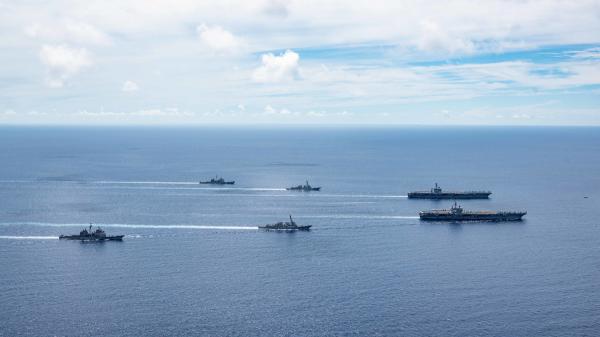
因此,出錯的風險很高。兩國相互指責是一回事;如果軍艦在南海發生碰撞,引發直接衝突,那就完全是另一回事了。2019年,美國海軍在南海進行的“航行自由行動”創歷史紀錄。埃斯珀先生誓言今年要保持同樣的節奏。
迄今為止,每當美國軍艦接近中國的島礁時,中國軍艦都會對其進行監視,並警告其離開。
如果雙方就這樣相安無事,彼此都不失面子,倒也罷了。美國可以聲稱其航行自由行動挑戰了中國對該地區的“軍事化”。中國也可以説,她已經將入侵者趕出了自己的水域。
但這可能引發不測。 2001年,一架美國偵察機與一架中國噴氣式戰鬥機相撞,造成一名中國飛行員喪生。 2018年,美國迪凱特號驅逐艦和中國蘭州號驅逐艦僅距41米,險些相撞。
雙方都承諾過相遇時保持安全距離。但是,安全距離到底是多少?
美國認為,中國的島礁是人工吹填而成,因此美國軍艦可以合法駛入到距離島礁500米處。但北京認為,這些是自然的中國領土,中方所做的僅僅是拓展而已。在吹填之前這些島礁擁有的名字就證明它們不是人工島。根據中國法律,外國軍艦進入領海需要得到中國政府的批准。
中美兩國甚至可以援引同一部國際法互相打架。華盛頓引用《聯合國海洋法公約》第58條為其航行和飛越自由權辯護。但北京可引用同一條款指出,“各國應適當顧及沿海國的權利和義務。”
如何化解一場雙方都不想要,然而卻有可能糊里糊塗發生的衝突?
冷戰期間,美國和蘇聯通過代理人戰爭進行競爭,避免了直接衝突。如果今天出現類似的競爭,美國的亞洲盟友很可能不會跟隨美國與其鄰國開戰,畢竟這個鄰國擁有核武器,還是它們最大的貿易伙伴。
與此同時,如果美國艦艇和飛機繼續保持對南海的高強度偵察,那麼對抗的風險就始終存在。北京沒有佔領華盛頓的計劃。從北京的角度來看,是美國在中國周邊滋事挑釁。
最終,促使美國三思的可能是中國龐大的軍力。中國軍隊至少享有地利之便。就軍艦和潛艇而言,其數量也超過了美國海軍,儘管美國艦隊的武備更加精良。美國印度-太平洋司令部司令戴維森上將(Philip S Davison)承認,“不能保證”美國今後一定能在與中國衝突時獲勝。
中國外交部長王毅表示,北京將以“冷靜和理智”來面對美國的“衝動和焦躁”。但在很多方面,蓬佩奧等對華鷹派人士的所作所為已經使後續政府很難讓美國與中國的競爭緩和下來。
因此,我們有理由問:埃斯珀先生今年的中國之行會有什麼不同?但是訪問本身即是在交流溝通和降低風險方面邁出的寶貴一步。各説各話也比完全不對話要好。
(文/周波 清華大學戰略與安全中心客座研究員、中國論壇特約專家,譯/韓樺 中國論壇執委。原文首發於2020年8月25日《金融時報》,翻頁閲讀英文原文)
The risk of China-US military conflict is worryingly high
The relationship between China and the US is in freefall. That is dangerous. US defense secretary Mark Esper has said he wants to visitChina this year, which shows the Pentagon is worried. That Wei Fenghe, China’s defense minister, spokeat length with Mr. Esper in August shows that Beijing is worried too. Both men have agreed to keep communications open and to work to reduce risks as they arise.
The crucial question is: how?
In July, US secretary of state Mike Pompeo inverteda famous line of Ronald Reagan about the Soviet Union and applied it to China: “trust but verify” became “distrust but verify”. Washington suspects that an increasingly coercive China wants to drive the US out of the Indo-Pacific.
Beijing meanwhile believes that the US, worried about its global primacy, has fully abandoned its supposed neutralityon the South China Sea. Haunted by economic recession and the pandemic, and desperate for re-election, President Donald Trump has also made confronting China his last-straw strategy to beat his opponent, Joe Biden.
The risk of a mistake is therefore high. It is one thing for the two countries to point their fingers at each other. It is quite another if naval vessels collide in the South China Sea, triggering a DIRECT conflict. In 2019, the US navy conducted a recordnumber of freedom of navigation operations there. Mr. Esper has vowed to keep up the pace this year.
So far, whenever a US ship has come close to China-controlled islands, Chinese naval ships have monitored it and warned it to leave.
This pattern might continue without accident, allowing both sides to “save face”. The US can claim its freedom of navigation operations have challenged China’s “militarisation” of the area. China can also say it has driven away intruders from its waters.
But that ignores the chance of mishap. The air collision in 2001 between a Chinese jet fighter and a US reconnaissance plane caused the death of one Chinese pilot. In 2018, the USS Decatur and Chinese destroyer Lanzhou escaped collision by just 41 metres.
Both sides have pledged to keep at a safe distance during these encounters. Yet what is a safe distance exactly?
For the US, the Chinese islands are artificial land reclamations, so a US warship can legally sail as close as 500 metres. But for Beijing, these are natural Chinese territories that China has chosen to enlarge, and that they had names before land reclamation are proof they are not artificial. Under Chinese law, a foreign military vessel’s entry into territorial seas needs government approval.
China and the US could then even fight each other under the same international laws. Washington cites Article 58 of the UN conventionon the law of the sea to justify its right of freedom of navigation and overflight. But Beijing can quote the same article, which says: “States shall have due regard to the rights and duties of the coastal State.”
How to de-risk the chance of a conflict that neither side wants but which they could nevertheless sleepwalk into?
During the cold war, the US and USSR competed via proxy wars, avoiding direct conflict. Should a similar competition arise today, America’s Asian allies most probably wouldn’t follow the US into war with a neighbour that has nuclear weapons and is their biggest trading partner.
Meanwhile, if US ships and aircraft continue to maintain high-intensity surveillance of the South China Sea, there is always the POTENTIAL of a confrontation. Beijing has no plan to take Washington. From Beijing’s point of view, it is the US that comes provocatively close to China.
Eventually, it may be that the sheer size of China’s military prompts a US rethink. The Chinese army enjoys the convenience of geography, to say the least. Its navy also outnumbers the US navy in terms of warships and submarines, although the US fleet is more heavily armed. Admiral Philip S Davison, commander of the US’s Indo-Pacific Command, has acknowledged that there is “no guarantee” the US would win a future conflict against China.
China’s foreign minister Wang Yi has said Beijing will remain “cool headed” when there are “impulsive moves” from the US. But in many ways, China hawks such as Mr Pompeo have made it hard for subsequent administrations to de-escalate US competition with China.
It is therefore reasonable to ask: what difference will Mr Esper’s trip to China this year make? But the visit itself is a valuable step forward in communication and risk reduction. Talking past each other is better than not talking at all.
本文系觀察者網獨家稿件,文章內容純屬作者個人觀點,不代表平台觀點,未經授權,不得轉載,否則將追究法律責任。關注觀察者網微信guanchacn,每日閲讀趣味文章。