周波:哪怕美國國運式微,中國也不需要建立勢力範圍
【文/周波,譯/中國論壇 許馨勻】
中國強大了就需要勢力範圍嗎?當我讀到哈佛大學教授格雷厄姆·艾利森在《外交事務》上發表的文章《新的勢力範圍》時,我問自己。艾利森教授認為,冷戰後整個世界事實上都變成了美國的勢力範圍,但是現在單極時代結束了,美國必須與中國、俄羅斯等其他大國分享其勢力範圍。
我想象了一下中國的“勢力範圍”可能在哪裏:不會是在俄羅斯影響力占主導地位的中亞;也不可能是在印度影響力最大的南亞。鑑於東亞與中國的歷史和文化淵源,只有東亞看起來最有可能。但是,如果勢力範圍意味着一國在文化、經濟、軍事或政治方面擁有一定程度的專屬控制權,且其他國家對該國表示臣服,那麼東亞其實很難被描述為中國的勢力範圍。朝鮮不顧中國的反對一意發展核武器;日本、韓國和泰國是美國的盟友;一些東盟成員國,如越南、菲律賓、馬來西亞和文萊,則與中國在南海存在領土爭端。
上海合作組織以漢語和俄語為官方語言,沒有西方成員國,乍一看像是中國和俄羅斯的共同勢力範圍。但事實證明,上合組織的包容性超出人們的預料。土耳其是北約成員國,同時也是上合組織的對話夥伴。總統埃爾多安甚至請求以正式成員國身份加入該組織。印度和巴基斯坦於2017年成為上合組織的成員國。把這兩個宿敵吸收進來可能會帶來一些問題,但他們的加入也提高了這個跨歐亞大陸組織的影響力,讓這個組織加強了打擊困擾該地區的恐怖主義、分裂主義和極端主義三股惡勢力的努力。
也許沒有什麼地方比南海更像是中國的勢力範圍了,尤其是因為中國的填海造地行動增強了其在南海的實際存在,國際上有不少中國想把該地區變成一個“中國內湖”的説辭。但是,沒有任何國際法禁止填海造地,而且其他的一些聲索國也這麼做了。中國表示,每年大約有10萬艘船隻通過南海,沒有航行自由的問題,中國反對的是以航行自由為名針對沿岸國利益的軍事活動。
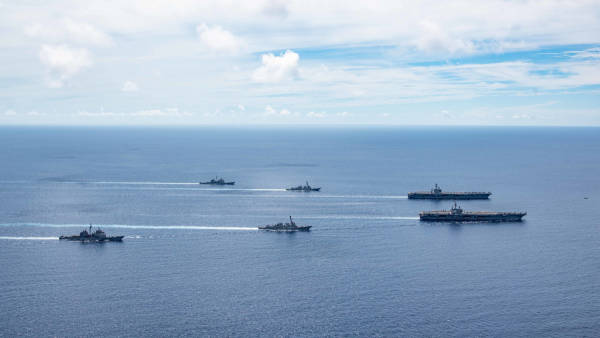
今年7月17日,美軍“尼米茲”號與“里根”號兩個航母戰鬥羣重返南海,開展第二次“雙航母”演習。圖自美國海軍
中國政府一再強調,中國即使強大了也不稱霸。儘管這在某些人聽起來可能像是空口承諾,但這個説法是有歷史依據的。中國對東亞大部分地區的影響長達兩千年,但這種影響主要是文化上的。鄭和七下西洋顯示了明代“天朝”橫掃天下的強大國威,但中國人並沒有在這些地方建立任何軍事基地。只是在600年後,中國人民解放軍才在吉布提建立了一個後勤基地,以支持在印度洋的反海盜行動。
影響力和勢力範圍是兩回事。今天,中國的影響力同美國幾乎難分伯仲, 並將進一步擴大:人們普遍預計,中國的GDP將在10至15年內超過美國,成為世界最大經濟體。換句話説,一個全球化的中國,其影響力已無處不在,所以不需要任何勢力範圍。
這就引出了21世紀最重要的兩個問題:世界將如何適應中國的崛起?而中國又能帶給世界什麼?
中國的“一帶一路”倡議可以為第二個問題提供答案。這一倡議雄心勃勃,但不是《經濟學人》所斷言的那樣是中國新秩序的鍍金工具。這不是慈善——中國投資是為了互利;這也不是債務陷阱——誰會花費數萬億美元來設置這樣一個超大陷阱?這個宏偉計劃可能需要幾代人才能完成,但這些具體項目正在日復一日地改善“一帶一路”沿線發展中國家的經濟狀況。
與艾利森教授的建議相反,美國最不希望的是將任何勢力範圍拱手讓給中國這個“大國競爭新時代”的主要競爭對手。在東亞地區,北京和華盛頓的影響力交織重疊,如何共存是一大挑戰。美國懷疑中國試圖將其從該地區趕出去,因此在台灣海峽和南海海域加大挑釁力度,這是在考驗日益強大的中國人民解放軍的耐心。
温斯頓·丘吉爾説過一句俏皮話:“只有一件事比與盟友並肩戰鬥更糟糕,那就是在沒有盟友的情況下作戰”。不見得。 在東亞,美國的盟友們已繃緊神經,在美國和他們最大的貿易伙伴(中國)之間如履薄冰。到目前為止,他們中還沒有一個加入美國海軍在中國南海島礁12海里以內的航行自由行動。
在從日本延伸到菲律賓再到南海的第一島鏈內,美國無法保證能在與中國的軍事衝突中一定獲勝,而一旦輸了,後果非同小可:美國將失去在該地區盟友和夥伴中的威望和信譽,聯盟會分崩離析,美國可能不得不打道回府。從這個意義上説,只有美國自己才能把自己趕出西太平洋。
艾利森教授的結論有一點是正確的,即其他國家會心甘情願、按部就班地生活在美國主導的國際秩序中的錯覺該結束了。就算這意味着當今世界確實存在各種勢力範圍,中國也應該保持小心、遠離它們。這些所謂的勢力範圍,不是中國該去填補的權力真空,而更像是充滿危險的陷阱。
(文章首發2020年11月6日南華早報;翻頁查看英文原文。)
Does a stronger China need a sphere of influence? I asked myself this question when I came across the article, “The New Spheres of Influence”, in Foreign Affairs by Harvard professor Graham Allison. Allison argues that, after the Cold War, the entire world became a de facto American sphere. But now the unipolarity is over. The United States must share its spheres of influence with other great powers such as China and Russia.
I imagine for a moment where a Chinese “sphere of influence” might be. Not in Central Asia, where Russia’s influence is dominant. Not in South Asia, where India’s influence is paramount. Only East Asia looks likely, given its historical and cultural ties with China.
But, if a sphere of influence means a state has a level of exclusive control in cultural, economic, military or political matters, to which other states show deference, East Asia can hardly be described as China’s sphere of influence.
North Korea has developed nuclear weapons despite China’s disapproval. Japan, South Korea and Thailand are American allies. Some member countries of the Association of Southeast Asian Nations, such as Vietnam, the Philippines, Malaysia and Brunei, have territorial disputes with China in the South China Sea.
With Chinese and Russian as its official languages, the Shanghai Cooperation Organisation (SCO), which has no Western members, might look like a joint sphere of influence for China and Russia. But it has proven more inclusive than anticipated. Turkey, a Nato member, is a dialogue partner of the SCO. President Recep Tayyip Erdogan had even asked to join the organisation as a full member.
India and Pakistan became member states in 2017. The inclusion of two long-time arch-rivals could bring problems, but their membership also increases the influence of the organisation, which straddles the Eurasia continent, and strengthens efforts to tackle the so-called “three evils” of terrorism, separatism and extremism that have plagued the region.
Perhaps nowhere looks more like China’s sphere of influence than the South China Sea. Much has been said about how China is turning the region into a “Chinese lake”, especially as its land reclamation has enhanced its physical presence there.
But no international laws prohibit land reclamation, and some other claimants have done the same. China maintains that around 100,000 ships transit through the South China Sea every year without freedom of navigation problems. What China opposes are military activities against the interests of the littoral states in the name of freedom of navigation.
The Chinese government has repeatedly stressed that China would not seek to be a hegemon even if it became developed. Although this might sound like lip service to some, its assertion is backed by history. For 2,000 years, much of East Asia was part of the Chinese sphere of influence, but that influence was primarily cultural.
Admiral Zheng He’s seven voyages in the Indian Ocean showed the sweeping power of the “Celestial Empire” in the Ming dynasty, but the Chinese didn’t bother establishing a single military base in any of these places. It was only 600 years later that the People’s Liberation Army established a logistics base there in support of counter-piracy efforts in the Indian Ocean.
Influence and a sphere of influence are two different things. Today, China’s influence almost overlaps with that of the United States. Such influence will grow further since China is widely expected to surpass the US to become the world’s largest economy in terms of gross domestic product in 10 to 15 years. In other words, a global China that is already influential enough doesn’t need any spheres of influence.
This then invites two most important questions for the 21st century: how will the world accommodate China’s rise? And, what can China bring to the world?
China’s Belt and Road Initiative might provide an answer to the second question. The initiative is ambitious, but it is not a gilded instrument of a new Chinese order, as The Economist asserted. It is not charity – China invests for mutual benefit. Neither is it a “debt trap” – who would spend trillions of dollars to lay such a mega trap? Any such grand scheme might take generations to finish. But the projects are, day by day, changing the economic landscape of the developing countries along the belt and road for the better.
Contrary to Allison’s suggestions, the last thing the US wants is to cede any sphere of influence to China, its primary competitor in what it sees as a new era of great-power competition. In East Asia, the challenge is how Beijing and Washington, with their overlapping influence, could coexist.
The US suspects China is trying to drive it out of the region. It has stepped up its provocations in the Taiwan Strait and the South China Sea, which risk testing the patience of a PLA growing ever stronger.
Winston Churchill once famously quipped: “There is only one thing worse than fighting with allies, and that is fighting without them.” Not really. In East Asia, America’s allies are steeling themselves and tiptoeing between their ally and their top trading partner. So far, none has joined the US Navy on its freedom of navigation operations in the 12-nautical-mile waters off Chinese rocks and islands in the South China Sea.
There is no guarantee the US could win in a military conflict with China in the first chain of islands stretching from Japan to the Philippines and the South China Sea. But should it lose, the consequence is not moot: it would lose prestige and credibility among its allies and partners in the region. The alliance would fall apart and it may have to go home. In that sense, only the United States can displace the United States in the Western Pacific.
Allison is right to conclude the illusion that other nations will simply take their assigned place in a US-led international order is over. But even if that means there are indeed spheres of influence in the world today, China should beware and stay away from them. They look more like perilous traps than power vacuums awaiting China.
(Senior Colonel Zhou Bo (retired) is a senior fellow at the Centre for International Security and Strategy, Tsingha University, and a China Forum expert)
本文系觀察者網獨家稿件,文章內容純屬作者個人觀點,不代表平台觀點,未經授權,不得轉載,否則將追究法律責任。關注觀察者網微信guanchacn,每日閲讀趣味文章。