【美國日記】21.01.30 有錢也“死無葬身之地”!_風聞
兔家真探-让我们一起去探索真相吧!B站同号,有视频哦!2021-01-30 14:42
如果我們單純的認為美國是“資本主義”國家,有錢就有一切的話,那實在是太膚淺了,因為美國是“種族資本主義”國家。
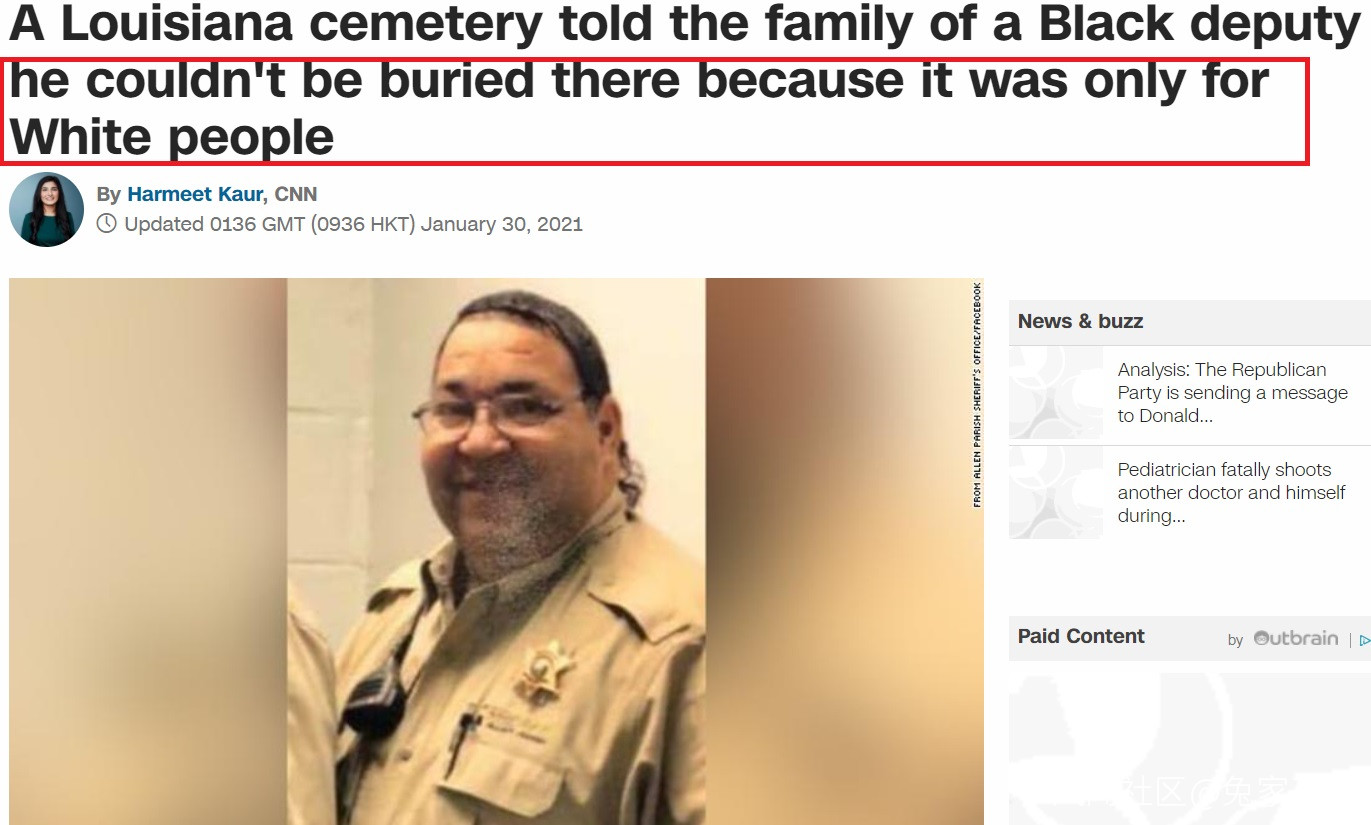
(CNN)卡拉·塞米倫(Karla Semien)去公墓為她的已故丈夫挑選墓地時,彷彿她已經回到了1950年代。
據美國有線電視新聞網(CNN)的子公司KPLC報道,她的丈夫達里爾·塞米恩(Darrell Semien)是路易斯安那州艾倫·帕裏什(Allen Parish)的一名警長,他於12月被診斷出癌症後於1月24日死亡。
Semien本週早些時候去了Oberlin的Oaklin Springs公墓,詢問要讓她的丈夫在那裏下葬。但是,由於她的丈夫是非裔美國人,因此該墓地的一名婦女拒絕了她。
塞米恩在臉書上寫道:“我與那位女士見面,她説她不能賣給我一塊墓地,因為該墓地是僅供白人。” “她甚至在剪貼板上向我展示了文件,只有白人才能埋葬在那裏。她站在我和孩子的面前。哇,這真是打臉啊。”
CNN已聯繫Semien進行評論。
奧克林斯普林斯公墓協會主席克雷格·維澤納(Creig Vizena)告訴美國有線電視新聞網(CNN)的分支機構KATC,他為得知如何此對待塞米恩一家而感到羞恥。他告訴華盛頓郵報説,那個拒絕他們的女人已經80多歲,從那以後“被解除了職務”。
CNN無法聯繫Vizena進行評論。
Vizena告訴KPLC,他一直不知道墓地銷售合同中使用的語言,該合同可追溯到1950年代,其中包括“埋葬白人遺骸的權利”一詞。他説,這個問題從未出現過。
Vizena對KPLC表示:“我對此負全部責任。” “我已經擔任該委員會的主席已有好幾年了。我對不閲讀章程負有全部責任。”
據KPLC報道,該墓地董事會成員於週四舉行了緊急會議,以便從合同中刪除該條款。
維澤納(Vizena)道歉,並説他向塞米恩一家人提供了他所擁有的一塊墓地,以便達勒爾·塞米恩(Darrell Semien)可以被埋葬在那裏。但是傷害已經造成,他們拒絕了。
(種族)隔離的墓地在美國歷史悠久,而那些黑暗章節中的殘留物一直延續到今天。
2016年,得克薩斯州韋科市下令從公共公墓中拆除鏈柵欄,該柵欄用於將白人區與黑人區分開。去年,得克薩斯州米尼奧拉(Mineola)墓地的類似籬笆拆除了。
路易斯安那州的美國公民自由協會(ACLU)敦促奧克林斯普林斯公墓協會從其章程中刪除所有“僅供白人”的提法,並援引最高法院1948年在Shelley v。Kraemer案中宣佈的關於房屋種族歧視的裁決。
該組織在一封信中寫道:“塞米恩家族或其他任何人面對如此公然的種族歧視,這在社會上令人難以置信和令人無法接受,尤其是在哀悼和悲傷的時期。”
(CNN)When Karla Semien went to a cemetery to pick out a plot where her late husband would be buried, it was as if she’d stepped back into the 1950’s.
Her husband Darrell Semien, a sheriff’s deputy for Allen Parish, Louisiana, died on January 24 after being diagnosed with cancer in December, CNN affiliate KPLC reported.Semien went to Oaklin Springs Cemetery in Oberlin earlier this week to inquire about laying her husband to rest there. But a woman at the cemetery turned her away because her husband was African American.“I met with the lady out there and she said she could NOT sell me a plot because the cemetery is a WHITES ONLY cemetery,” Semien wrote on Facebook. “She even had paperwork on a clipboard showing me that only white human beings can be buried there. She stood in front of me and all my kids. Wow what a slap in the face.”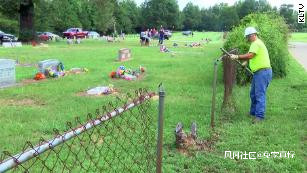 A Texas town just removed a fence separating historically segregated cemeteriesCNN has reached out to Semien for comment.Creig Vizena, president of the Oaklin Springs Cemetery Association, told CNN affiliate KATC that he was ashamed to learn about how the Semien family had been treated. The woman who turned them away was in her 80s and has since been “relieved of her duties,” he told the Washington Post.close dialog
 Sign up for CNN’s Meanwhile In America newsletter.Updates on the road ahead for the US and the world.Sign Me UpNo ThanksBy subscribing you agree to ourprivacy policy.CNN was unable to reach Vizena for comment.Vizena told KPLC that he hadn’t been aware of the language contained in the cemetery’s sales contracts, which date back to the 1950s and included the phrase “the right of burial of the remains of white human beings.” The issue hadn’t come up before, he said.“I take full responsibility for that,” Vizena told KPLC. “I’ve been the president of this board for several years now. I take full responsibility for not reading the by-laws.“Board members of the cemetery held an emergency meeting on Thursday to remove the clause from the contract, KPLC reported.
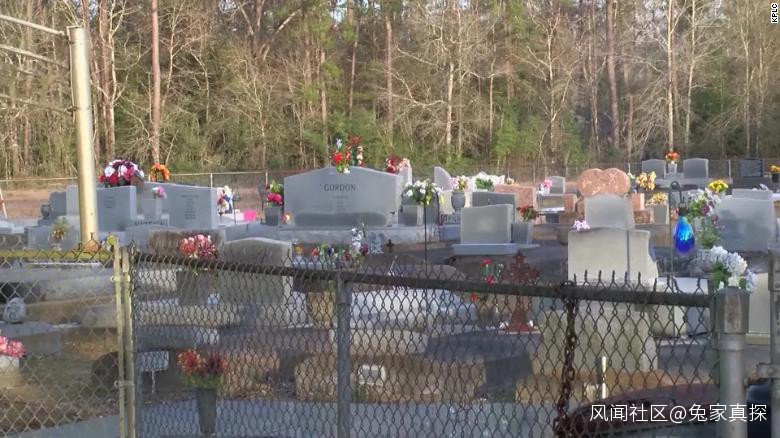 Oaklin Springs Cemetery in Oberlin, Louisiana.Vizena apologized and said he offered the family one of the plots that he owns so that Darrell Semien could be buried there. But the damage had been done, and they declined.Segregated cemeteries have a long history in the US, and remnants from those dark chapters persist to this day.In 2016, the city of Waco, Texas, ordered the removal of a chain-link fence from a public cemetery that was used to separate the White section from the Black section. A similar fence at a cemetery in Mineola, Texas, came down last year.The ACLU of Louisiana urged the Oaklin Springs Cemetery Association to remove any “Whites only” references from its bylaws, citing the Supreme Court’s 1948 decision in Shelley v. Kraemer that outlawed racial covenants in housing.“It is unconscionable and unacceptable that the Semien family—or anyone else—should face such blatant racial discrimination, especially during a time of mourning and grief,” the organization wrote in a letter.