兇殺是美國產婦死亡的首要原因_風聞
ultracold-to be AND not to be2021-11-25 12:36
機翻的《自然》11月12號的新聞,錯誤難免,不喜勿讀。原文附在後面。
讀後第一感:難過的無以言表,惡之花綻放的土地,願真相早日到來,告慰無辜的亡靈……
又:nature在文末附的note也是超級魔幻。
兇殺是美國產婦死亡的首要原因
對國家數據庫中的死亡證明的評估描繪了孕婦的嚴峻情況。
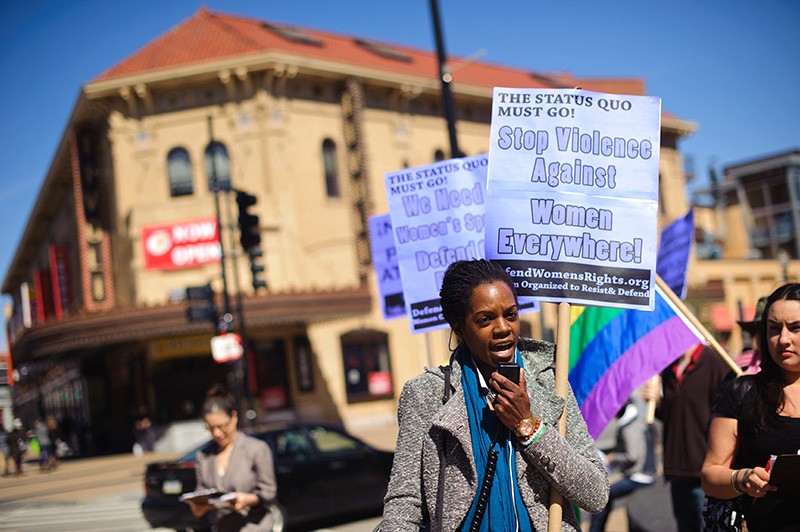
一名婦女發言,其他人舉着標語抗議針對婦女的暴力。
一名婦女在抗議活動中發言,要求制定防止暴力侵害婦女的標準。
根據上個月發表在《婦產科學》(Obstetrics & Gynecology)上的一項研究,美國的孕婦死於兇殺的情況比死於與懷孕有關的原因的情況更多--而且她們經常被伴侶殺害。研究人員通過使用死亡證明來比較整個國家的兇殺案和與懷孕有關的死亡,首次揭示了這一嚴峻的統計數字。
位於安阿伯的密歇根大學醫學院的醫生維賈伊-辛格説,儘管較小的研究在州和地方一級跟蹤了懷孕期間的兇殺案,但在全國範圍內確認這一現象的範圍是有價值的,他研究了保健工作者如何監測當前和以前的浪漫伴侶的虐待行為。“除非你能測量它,否則你無法理解一個問題。”
他補充説,研究結果是 “驚人的”。
研究人員發現,懷孕或在過去42天內(產後)懷孕的美國婦女死於兇殺的比例是死於出血或胎盤疾病的兩倍以上--這是通常被列為與懷孕有關的死亡的主要原因。此外,懷孕也會增加被殺死亡的風險:在10至44歲之間,懷孕或在過去一年中結束懷孕的婦女被殺的比率比沒有懷孕的婦女高16%。
“馬里蘭州巴爾的摩約翰霍普金斯大學護理學院的護士科學家菲利斯-夏普斯説:“20多年來,研究人員一直在討論與懷孕有關的婦女死亡和被殺問題。她説,人們的共識是,這種情況的發生在很大程度上是由於親密伴侶的暴力。
一個年齡和種族的故事
為了得出一個全國性的快照,路易斯安那州新奧爾良市杜蘭大學的生殖流行病學家Maeve Wallace和她的合著者分析了2018年和2019年美國所有50個州的死亡數據,使用國家衞生統計中心數據庫的信息,該數據庫由美國疾病控制和預防中心(CDC)託管。
2003年,美國開始要求在死亡證書上註明一個人是否在懷孕期間死亡,或在懷孕結束後42天或1年內死亡。到2010年,約有37個州的證書上包括了這樣的選項;到2018年,所有50個州都要求提供這一信息。今年,華萊士和同事們分析了由此產生的記錄。根據他們的統計,在整個2018年和2019年,共有273名婦女在懷孕期間或在懷孕結束後的一年內死於兇殺。
在追蹤美國孕婦的死亡情況時,CDC並沒有將兇殺、事故或自殺歸入 “產婦死亡 “的原因。華萊士和其他人説,兇殺案應該被計算在內,因為兇殺和懷孕之間確實存在聯繫。
美國的總體產婦死亡率正在上升。而且對於一個富裕的國家來説,這個數字特別高。造成這種情況的因素包括:獲得醫療保健的機會不足,工作人員在產科急診方面的訓練不足,以及由於臨牀實踐中的種族主義而給予黑人婦女的護理不合格。
根據多年的研究,親密伴侶暴力方面的專家預計,如果已經處於虐待關係中的婦女懷孕,她們被殺的風險會增加。華萊士和她的合著者説,在他們的數據中記錄的兇殺案中,約有三分之二發生在當事人的家中,這表明該婦女是被其伴侶殺害的。華萊士説,這不是一個完美的指標,“但這是我們在這些數據中得到的全部”。
研究小組發現,在美國,懷孕或最近懷孕的黑人婦女死於兇殺的風險比沒有懷孕的婦女高近三倍,這是所有種族或族裔羣體中報告的最高增幅。(該小組只報告了黑人、西班牙裔和白人婦女的比率,因為其他羣體--如亞裔美國婦女或美國土著婦女--的樣本量太小,無法公佈)。
黑人婦女因產科原因而死亡的風險同樣很高。根據CDC的數據,總體而言,懷孕或最近懷孕的黑人婦女死於與懷孕有關的原因的頻率是非西班牙裔白人婦女的2.5倍。
研究小組發現,年齡也是與懷孕有關的兇殺案的一個因素:根據該研究,10至24歲的年輕婦女在懷孕期間發生兇殺的風險高於那些年齡較大的婦女。“這是一個年齡和種族的故事,“華萊士説。
印第安納州印第安納波利斯大學研究家庭暴力和自殺預防的臨牀心理學家亞倫-基維斯托(Aaron Kivisto)説,華萊士和同事們 “利用現有數據所做的工作使人們對問題的範圍和之前的工作更有信心”。在今年2月發表的一項研究中2,他和他的同事顯示,與白人或西班牙裔孕婦相比,黑人孕婦的被殺風險增加。
Sharps説,黑人婦女風險較高的部分原因可能是,種族主義的經歷導致她們對執法機構更加不信任,不太可能提出關於家庭暴力的投訴。
辛格説,像華萊士這樣的研究可以被政策制定者或醫院管理者用來改善對孕婦和剛分娩的人的監測。它還可以建立公眾對懷孕期間的危害和風險的理解。“Sharps説:“在我們的社會中,有一種觀念認為懷孕是一個快樂的時刻。“但是對很多婦女來説,這不是真的,很多婦女在家裏就是不安全。”
編者注:《自然》雜誌承認,變性人和非二元人可以懷孕。我們在這個故事中使用’女性’來反映研究中使用的語言,該研究是基於只確定人們為男性或女性的死亡證明。
原文地址:https://www.nature.com/articles/d41586-021-03392-8
Homicide is a top cause of maternal death in the United States
Evaluation of death certificates from national database paints grim picture for pregnant women.
A woman speaks while others hold signs to protest against violence against women.
A woman speaks at a protest to demand standards to prevent violence against women.Credit:
Pregnant women in the United States die by homicide more often than they die of pregnancy-related causes — and they’re frequently killed by a partner, according to a study published last month in Obstetrics & Gynecology1. Researchers revealed this grim statistic by using death certificates to compare homicides and pregnancy-related deaths across the entire country for the first time.
Although smaller studies have tracked homicides during pregnancy at the state and local level, confirming the scope of the phenomenon on a national scale is valuable, says Vijay Singh, a physician at the University of Michigan Medical School in Ann Arbor, who studies how health-care workers can monitor abuse by current and former romantic partners. “You can’t understand a problem unless you can measure it.”
The study results, he adds, are “stunning”.
The researchers found that US women who are pregnant or were pregnant in the past 42 days (the post-partum period) die by homicide at more than twice the rate that they die of bleeding or placental disorders — the leading causes of what are usually classified as pregnancy-related deaths. Also, becoming pregnant increases the risk of death by homicide: between the ages of 10 and 44 years, women who are pregnant or had their pregnancy end in the past year are killed at a rate 16% higher than are women who are not pregnant.
“For more than 20 years, researchers have been talking about pregnancy-associated death and homicide of women,” says Phyllis Sharps, a nurse-scientist at the Johns Hopkins School of Nursing in Baltimore, Maryland. The consensus, she says, is that this is happening in large part because of violence by intimate partners.
‘An age and race story’
To arrive at a national snapshot, reproductive epidemiologist Maeve Wallace at Tulane University in New Orleans, Louisiana, and her co-authors analysed data for deaths in all 50 US states from 2018 and 2019, using information in the National Center for Health Statistics database, which is hosted by the US Centers for Disease Control and Prevention (CDC).
In 2003, the United States began requiring that death certificates indicate whether a person had died while pregnant, or within either 42 days or 1 year of the end of a pregnancy. By 2010, about 37 states included such an option on their certificates; by 2018, all 50 states required this information. This year, Wallace and coworkers analysed the resulting records. According to their count, across 2018 and 2019, a total of 273 women died by homicide either while pregnant or within a year of the end of their pregnancy.
When tracking deaths among pregnant women in the United States, the CDC doesn’t classify homicide, accidents or suicides as causes of ‘maternal mortality’. Wallace and others say homicides should be counted, because there is indeed a connection between homicide and pregnancy.
The overall rate of maternal mortality in the United States is on the rise. And it is particularly high for a wealthy country. Contributing factors include inadequate access to health care, staff who are poorly trained for obstetric emergencies, and subpar care given to Black women because of racism in clinical practice.
On the basis of years of study, specialists in intimate-partner violence expect women who are already in abusive relationships to be at increased risk of homicide if they become pregnant. Wallace and her co-authors say that about two-thirds of the homicides recorded in their data occurred in the person’s home, suggesting that the woman was killed by her partner. It’s not a perfect indicator, Wallace says, “but it’s all we’ve got in these data”.
The team found that Black women in the United States who are pregnant or were recently pregnant have up to nearly three-fold higher risk of dying by homicide than those who are not pregnant — the highest increase reported among any racial or ethnic group. (The team reported rates only among Black, Hispanic and white women, because the sample sizes for other groups — such as Asian American women or Native American women — were too small to publish.)
Black women are similarly at heightened risk of death from obstetric causes. Overall, Black women who are pregnant or were recently pregnant die of pregnancy-related causes 2.5 times as often as non-Hispanic white women, according to the CDC.
Age is also a factor in pregnancy-related homicide, the team found: young women between the ages of 10 and 24 are at higher risk of homicide while pregnant than are those who are older, according to the study. “It’s an age and race story,” Wallace says.
What Wallace and coworkers “have done with the data available gives more confidence to the scope of the problem and the work that came before”, says Aaron Kivisto, a clinical psychologist at the University of Indianapolis in Indiana who studies domestic violence and suicide prevention. In a study published in February this year2, he and his colleagues showed increased risk of homicide for Black pregnant women, compared with white or Hispanic pregnant women.
Sharps says part of the reason that Black women are at higher risk could be that experiences of racism have led them to be more distrustful of law-enforcement agencies and less likely to bring forward complaints about domestic violence.
Studies such as Wallace’s could be used by policymakers or hospital administrators to improve monitoring of pregnant people and those who have recently given birth, Singh says. It could also build public understanding of harms and risks during pregnancy. “There’s an idea in our society that pregnancy is a happy time,” Sharps says. “But for a lot of women, that’s just not true, and a lot of women are just not safe in their homes.”
Editor’s note: Nature recognizes that transgender men and non-binary people can become pregnant. We use ‘women’ in this story to reflect the language used in the study, which is based on death certificates that identify people only as men or women.