美國要意識到自己不過是國際社會的一員而已-周波
美國相信自己天賦異稟。這可以追溯到1630年,當時馬薩諸塞灣殖民地的創始人之一、英國清教徒律師温斯洛普(John Winthrop)在一場題為“基督教慈善典範”的佈道中向他的殖民地同胞發表演講。他直接引用了耶穌的登山寶訓告訴他們,他們的新家園將成為“山巔之城”,受到全世界矚目。
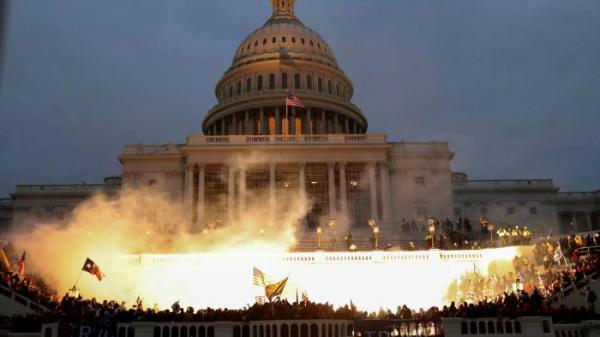
1月6日美國國會受到抗議者衝擊
這種自豪感與美國的無敵實力相伴而行,讓美國成為自封的“救世主”,俯視眾國。最近的例子是美國副總統彭斯(Mike Pence) 10月4日在華盛頓哈德遜研究所(Hudson Institute)就特朗普政府的對華政策發表的演講。
彭斯附和特朗普的説法,聲稱美國“在過去25年重建了中國”,然後指責中國“以史無前例的努力影響美國公眾輿論和2018年大選”。這一説法令中國人震驚。
第一個説法聽起來—反引彭斯自己的話説—更像是對中國人民過去40年集體努力的“大規模盜竊”。此外,需要指出的是,如果美國取消對華高科技產品出口禁令,美國對華3750億美元的貿易逆差將會大幅減少。
至於他對中國干預美國選舉的指責,就在彭斯發表演講的兩天前,國土安全部部長尼爾森(Kirstjen Nielson)表示,沒有跡象表明中國試圖黑進美國的中期選舉。
彭斯有一點是對的,即美國對“中國的自由將以各種形式擴展”的希望落空了。 以20國集團(G20)為代表的新經濟體的崛起和全球工業化程度最高的經濟體集團——七國集團(G7)的衰落告訴我們,各國可以通過其他途徑實現發展和繁榮,而不是非得遵循西方民主模式。
像海地這樣的“民主”國家,在1994年華盛頓的“維護民主行動”的軍事幹預下建立起來,迄今仍然是西半球最貧窮的國家。而就在不久前,全世界都震驚地聽到特朗普將其形容為一個“屎坑”國家。
觀察中國怎樣進一步融入國際體系,而美國一步步退出自己主導創建的體系,這很有趣。當北京在倡導多邊主義和自由貿易的時候,華盛頓則大言不慚地鼓吹單邊主義和保護主義。
如果説英國脱歐讓歐洲付出了不小的代價,那麼美國退出國際體系及其毫不掩飾地蔑視聯合國,其後果要嚴重得多。就士氣和信譽而言,美國已經跌落山巔。
關於特朗普決定終止伊朗核協議並對歐洲徵收貿易關税,歐洲理事會主席圖斯克(Donald Tusk)只能表示:“有這樣的朋友,誰還需要敵人?”
西方不需要擔心一個崛起又開放的中國。中國的崛起是和平的,繼續和平崛起符合中國自身利益。
作為國際社會負責任的一員,中國正在以多種方式向前邁進。在過去的十年中,中國軍隊在海外維和、打擊海盜和減災方面的力度大幅增加,承擔了更多國際義務。 僅2017年一年,就有60多萬中國人出國留學。在未來的歲月裏,“一帶一路”倡議將把中國與世界各國更加緊密地聯繫在一起。
因此,美國的懷疑在很大程度上是沒有根據的。即便彭斯的演講是面對美國國內受眾而不是中國,它也進一步激怒了中國。美國國防戰略將中國和俄羅斯列為該國的兩個戰略競爭對手,已經讓中國感到惱火。問題是:彭斯的演講是美國在新冷戰中的立場宣言嗎?
與冷戰時期的蘇聯不同,沒有證據表明中國試圖向其他國家輸出其意識形態或社會制度,或與其他國家結盟以形成一個集團。
不結盟政策賦予中國道德制高點。如果中國在幾十年前還是世界上最不發達國家之一的時候,都能堅持不結盟立場,那麼現在已經是世界第二大經濟體了,為什麼反倒要放棄這一立場呢?
美國拉攏盟友與合作伙伴與中國“一決勝負”的可能性微乎其微。退一萬步説,它的所有盟友與合作伙伴都與中國有着深厚的經濟關係。
在今年(2018年)於新加坡舉行的香格里拉對話會(Shangri-La Dialogue)上,印度總理莫迪(Narendra Modi)避免提及Quad,即美國、印度、日本和澳大利亞組成的四國機制,人們普遍認為這是為了制衡中國在印太地區的存在。相反,莫迪形容印太是一個“自然區域”,並讚揚了印度“與中國的多層次關係”。
中美關係的未來很可能是一種“競合”,一種合作與競爭的混合關係。問題是如何確保合作壓倒競爭,或者在最壞的情況下,競爭不會演變成衝突。
這對美國來説並不容易。人們普遍預計,中國將在未來20年內超越美國,成為全球最大經濟體。對大多數美國人來説,這將是他們第一次看到一個不再是世界第一的美國。這真是一個翻天覆地的變化。
如果説無知是傲慢之父,那麼“山巔之城”之説,更像是傲慢膨脹成為偏見。須知,美國和其他國家一樣,不過是國際社會的一員而已。當它承認這一點時,這是它從山巔走向平原的開始,山下的天氣肯定沒有山上那麼陰冷。
(翻頁閲讀英文原文)
Pride before a fall: time for arrogant US to realise it’s just another member of the inter****national community
The US believes it is exceptional. This dates back to 1630 when English Puritan lawyer John Winthrop, one of the founders of the Massachusetts Bay Colony, addressed his fellow colonists in a sermon titled “A Model of Christian Charity”. Quoting directly from Jesus’ Sermon on the Mount, he told them that their new community would be “as a city upon a hill”, watched by the world.
Such pride goes in tandem with the unrivalled strength of the United States. It makes the US a self-styled saviour looking down upon others. The latest example is American Vice-President Mike Pence’s speech, at the Washington-based Hudson Institute on October 4, on the Trump administration’s policy towards China.
Chinese jaws dropped when Pence – echoing US President Donald Trump – claimed that the US “rebuilt China over the last 25 years”, then accused China of initiating “an unprecedented effort to influence American public opinion and the 2018 elections”.
The first statement sounded like – to use Pence’s own words – a “wholesale theft” of the collective efforts of the Chinese people in the past four decades. Moreover, it should be pointed out that the US$375 billion trade deficit in China’s favour could be much reduced if the US had lifted its ban on hi-tech exports to China.
As for his accusation of election meddling, just two days before Pence’s speech, Homeland Security Secretary Kirstjen Nielson had said there was no sign China was trying to hack the US midterm vote.
Pence is right on one point: America’s hope that “freedom in China would expand in all forms” has gone unfulfilled. The rise of new economies represented by the rise of the G20 and the decline of the G7, a grouping of the world’s most industrialised economies, tells us that countries can develop and prosper through ways other than by following the Western democracy model.
And a “democracy” like Haiti, created through military intervention by Washington’s “Operation Uphold Democracy” in 1994, remains the poorest country in the western hemisphere. Not too long ago, the world was stunned to hear Trump described it as a “s***hole” country.
It is interesting to note how China is being further integrated into the international system while the US is withdrawing from the very system it led in creating. While Beijing now calls for multilateralism and free trade, Washington proudly proclaims its unilateralism and protectionism.
If Brexit is costing Europe in no small way, then America’s withdrawal from the international system and its undisguised contempt for the United Nations are far more consequential. In terms of morale and credibility, the US has fallen off the hill.
On Trump’s decision to end the Iran nuclear deal and impose trade tariffs on Europe, president of the European Council Donald Tusk put it this way: “With friends like that, who needs enemies?”
The West does not need to fear a rising but open China. China’s rise is peaceful, and it is in China’s own interests to continue to rise peacefully.
As a responsible member of the global community, China is stepping up in more ways than one. Over the past decade, the Chinese military has drastically increased its efforts in peacekeeping, counter- piracy and disaster relief overseas to shoulder more international obligations. And in 2017 alone, more than 600,000 Chinese studied abroad.
In the years to come, China’s Belt and Road Initiative will tie it up even more closely with the rest of the world.
Thus, US suspicions are largely unfounded. Even if Pence’s speech was aimed at a domestic audience, rather than at China, it further aggravated the Chinese, who were already rankled by the US national defence strategy that named China and Russia as the country’s two strategic competitors. The question is: is Pence’s speech a manifesto of America’s stance in a new cold war?
Unlike the Soviet Union during the cold war, there is no evidence that China is trying to export its ideology or social system to other countries or aligning itself with others to form a bloc.
Non-alliance gives China the moral high ground. If China could maintain its stance of non-alignment decades ago when it was one of the least developed countries in the world, why should it give in now when it is the second-largest economy in the world?
And it is highly unlikely that the US could gather its allies and partners together for a showdown with China. All of its allies and partners have deep economic relations with China, to say the least.
At the Shangri-La Dialogue in Singapore this year, Indian Prime Minister Narendra Modi avoided mentioning the “Quad”, the grouping of the US, India, Japan and Australia that is widely perceived to be a counterbalance against China’s presence in the Indo-Pacific. Instead, he described the Indo-Pacific as a “natural region” and lauded India’s “multi-layer relations with China”.
The future of China-US relations is most probably a kind of “corpetition”, a mix of cooperation and competition. The question is how to make sure cooperation prevails over competition, or, in the worst- case scenario, competition doesn’t spill over into conflict.
This won’t be easy for the US. China is widely expected to overtake it within the next two decades to become the world’s largest economy. For most Americans, this will be the first time that they will see an America that is no longer “first” in the world. This is a sea change.
If ignorance is the father of arrogance, then “a city upon a hill” looks more like pride inflated into prejudice. After all, the US is no more than a member of the international community, like the rest of us. When it admits that, it is the start of its walk down the hill towards the plain, where the weather is certainly less chilly there than on a hill.