周波:太空不應成為中美競爭的新疆場
【文/周波,翻譯/中國論壇 董思】
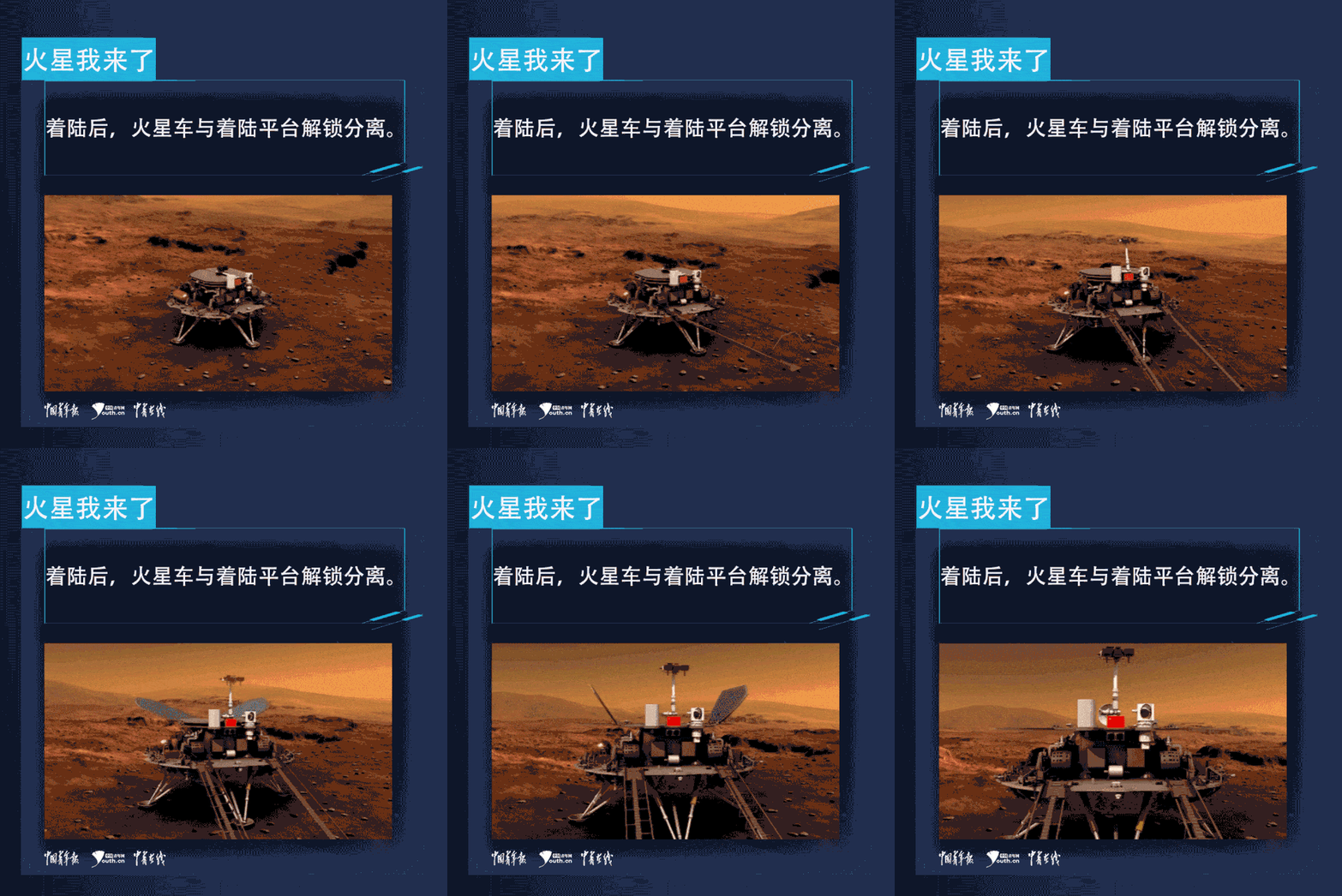
火星在一個月之內突然接待了三位來自地球的訪客,這很有趣。首先,阿聯酋名為“阿瑪爾”(意為“希望”)的探測器於2月9日抵達。一天後,中國的“天問一號”進入火星軌道。2月18日,美國宇航局最新的“毅力”號火星探測器登陸這顆紅色星球的表面。為什麼各國不能聚合資源和知識來共同完成如此艱鉅而昂貴的任務呢?
在太空,所有問題基本上可以歸結為兩類:和平利用太空和太空非軍事化。無論前者聽起來多麼令人嚮往,後者才是真正的挑戰。美國國防部長奧斯汀將太空描述為“大國競爭的擂台”。
但在冷戰期間,美國和蘇聯在阿波羅-聯盟號試驗項目上成功地進行了合作,這是第一個在太空中建立國際合作夥伴關係的項目。1975年7月17日,一架兩天前發射的美國“阿波羅”號宇宙飛船與蘇聯“聯盟”號宇宙飛船實現對接。
遺憾的是,這樣的合作不會發生在中美這兩個當今最大的經濟體之間。《沃爾夫修正案》限制美國國家航空航天局(NASA)這樣的美國政府機構與中國商業機構或政府部門進行合作。然而,富裕的中國有能力在自主創新和持續發展的國內航天工業領域大舉投資。
在某些領域,中國甚至已經超過了美國。中國的500米口徑球面射電望遠鏡是世界上最大的望遠鏡,比美國在波多黎各運營的阿雷西博球面反射盤還要大。2020年12月1日,也就是中國月球探測器登陸月球的同一天,阿雷西博反射盤突然坍塌了。
與華盛頓禁止中國宇航員進入美國建造的國際空間站不同的是,北京在與其他國家的太空合作方面似乎更加開放。北京已經表示,願與國際機構和科學家分享月球樣品,因為太空屬於每個人。中國還在一份與聯合國簽署的備忘錄中宣佈,中國空間站將於2022年建成,之後將用於國際科學實驗和國際宇航員飛行。
國際空間站原定於2024年到期。即使延長壽命至2030年(美國參議院已通過,但在眾議院遭到擱置),中國空間站仍可能會是唯一一個在軌運行的空間站。美國人屆時會提出搭中國的“便車”嗎?
避免太空軍事化—無論目標多麼崇高,都是説易行難。1967年的《外層空間條約》禁止在軌道上部署任何大規模殺傷性武器,禁止在月球和其他天體上建立軍事基地或設施,禁止試驗任何類型的武器或進行軍事演習。
自20世紀80年代以來,聯合國就避免太空軍備競賽進行了多次辯論。然而,到目前為止,各國尚未就此達成一個新的條約。2018年,美國就防止在外層空間進行軍備競賽及不首先在外空部署武器等四項聯合國決議都投了反對票。
一個突出的問題是:如何定義什麼是“太空武器”或“太空武器化”。大多數空間技術本質上都可以兩用,即同一種技術既可用於軍事目的也可用於民事目的。哪怕是一顆衞星靠近另一顆衞星,也能構成威脅。激光、電子干擾、定向能武器和攻擊性網絡工具都可能成為威脅衞星的武器。
如果所有國家都認同在太空軍備競賽中沒有贏家,那麼解釋上的差異就不應成為不可逾越的障礙。美國、中國、俄羅斯和印度都成功進行了反衞星試驗。美國比其他任何國家都更加脆弱,因為它在太空中的民用和軍用資產更多,而這些資產有可能受到對手的攻擊。
北京同樣也很脆弱。在過去三年裏,中國發射火箭的次數超過任何其他國家。太空正在變得越來越擁擠。在今年1月的一次發射中,SpaceX公司的“獵鷹9號”將143顆小型衞星送入軌道。在今後十年中,還將有數千顆新衞星被送入軌道。太空安全與每個國家都利害攸關。
冷戰的教訓可能有用。當時,“相互確保摧毀”(MAD)防止了一場全面核戰爭。當華盛頓和莫斯科確信它們各自不能在軍備競賽中擁有相對優勢,認為即使通過恐怖來實現戰略平衡也比戰爭更可取的時候,這個概念應運而生了。同樣,為了避免太空軍事化或武器化,解決之道或許是讓主要的航天大國彼此“相互確保脆弱性”(MAV),最終達成不在太空部署任何武器的條約。
如果冷戰期間的敵人可以合作,為什麼今天的競爭對手就不能呢?令人欣慰的是,拜登政府續簽了《新削減戰略武器條約》(New Start)核軍備控制協議。該協議(除其他事項外)禁止任何一個國家通過干涉對方的“國家技術手段”來監督遵守情況,這被理解為包括衞星偵察系統。
中美在一些民用航天項目上的合作,將引導更多的國家參與到太空開發的努力中來,這是可能實現的。在中國2019年的探月任務中,美國宇航局(NASA)獲得國會批准與中國國家航天局進行特定互動,使用美國宇航局的“月球勘測軌道飛行器(LRO)”觀察中國的月球探測器在月球背面着陸情況。
競爭是人性的一部分,但人類最愚蠢的行為,莫過於試圖在太空軌道上放置武器來打擊地球,以消滅對手。宇航員柯林斯(Michael Collins)曾建議世界領導人從16萬公里以外的高空看看他們的星球來改變他們的觀念。他們會看到什麼?“無比重要的邊界將遁於無形,喧囂的爭論瞬間沉寂。”

美麗的地球,我們的家園。圖片來源:視覺中國
(英文原文發表於《南華早報》,中國論壇董思譯、韓樺校,翻頁閲讀原文)
To avoid the folly of a US-China space race, the two competitors shou****ld learn some Soviet-era cooperation
It is interesting to see how, in one month, Mars suddenly had three visitors from Earth. First, the United Arab Emirates’ probe named Amal, or Hope, arrived on February 9; a day later, China’s Tianwen-I entered Mars’ orbit. Perseverance, Nasa’s newest rover, landed on the red planet’s surface on February 18. Why can’t nations pool their resources and knowledge on such gargantuan tasks that are extremely difficult and expensive?
In outer space, all issues basically boil down to two categories: peaceful use and demilitarisation of space. No matter how desirable the former sounds, the latter is the real challenge. US Secretary of Defence Lloyd Austin described space as “an arena of great power competition”.
But, during the Cold War, the United States and Soviet Union managed to cooperate on the Apollo-Soyuz Test Project, the first international partnership in space. On July 17, 1975, an American Apollo spacecraft, launched two days earlier, docked with a Soviet Soyuz spacecraft.
Sadly, this won’t happen between China and the US, the two largest economies today. The Wolf Amendment limits US government agencies such as Nasa from working with Chinese commercial or governmental agencies. However, a prosperous China can afford to invest lavishly in a domestic space industry that is self-propelled and sustainable.
In some areas, China has already overtaken the United States. China’s 500-metre Aperture Spherical Telescope, larger than the US-run Arecibo spherical reflector dish in Puerto Rico, is the biggest in the world. On December 1, 2020, the same day a Chinese lunar probe landed on the moon, the Arecibo dish collapsed.
Unlike Washington, which does not allow Chinese astronauts into the US-built International Space Station, Beijing appears more open-minded about space cooperation with other nations.
Beijing has said it is ready to share its moon samples with international institutions and scientists as space belongs to everyone. It has also declared in a UN memorandum that China’s space station, set to be completed in 2022, will be used for international scientific experiments and flights for international astronauts.
The International Space Station is scheduled to expire in 2024. But even after a life extension to 2030, which passed in the US Senate but has stalled in the House of Representatives, China’s space station might be the only one in orbit. Will the Americans ask Beijing for a ride then?
Avoiding militarisation of outer space, however lofty the aim, is easier said than done. The 1967 Outer Space Treaty prohibits placing any weapons of mass destruction in orbit, establishing military bases or installations, testing any type of weapons or conducting military exercises on the moon and other celestial bodies.
Since the 1980s, the UN has had several debates on avoiding a space arms race. So far, though, countries have failed to negotiate another treaty for the purpose. In 2018, the US voted “no” on four UN resolutions which included prevention of an arms race in outer space and no first placement of weapons in outer space.
One outstanding problem is how to define what constitutes a space weapon or the weaponisation of space. Most space technologies are dual-use in nature – the same technology can be used for military or civilian purposes. Even a satellite that can move close enough to another satellite can pose a threat. Lasers, electronic jamming, directed energy weapons and offensive cyber tools can all become weapons that threaten satellites.
A difference in interpretations should not be an insurmountable barrier if all countries agree there will be no winners in a space arms race. The US, China, Russia and India have successfully conducted anti-satellite tests. The US is more vulnerable than any other countries because it has more civilian and military assets in space that are subject to potential attacks from adversaries.
Beijing is vulnerable, too. In the past three years, China had more rocket launches than any other country. Space is becoming increasingly crowded. In a single launch in January, a SpaceX Falcon 9 sent 143 small satellites into orbit, and thousands of new satellites will be sent to orbit in the coming decade. Every nation has a stake in space security.
The lessons of the Cold War might prove useful. During that time, mutually assured destruction helped prevent an all-out nuclear war. This concept only came into being when Washington and Moscow decided they could not have an edge over the other in the arms race and a strategic equilibrium, even balanced by terror, was more desirable than war.
Similarly, in avoiding militarisation or weaponisation in space, perhaps the way out is recognition of mutually assured vulnerability by major spacefaring nations that eventually leads to a treaty agreeing not to deploy any weapons in outer space.
If enemies could cooperate during the Cold War, why not competitors today? It is a relief that the Biden administration has renewed the New Start nuclear arms control agreement. The agreement prohibited, among other things, either country from interfering with the other side’s “national technical means” for monitoring compliance. This is understood to include satellite reconnaissance systems.
China-US cooperation in selected civil space projects will steer more countries to join the effort to develop space. It is possible, too. During China’s 2019 moon exploration mission, Nasa got Congressional approval for a specific interaction with China’s National Space Administration to monitor China’s landing of a lunar probe on the dark side of the moon using Nasa’s Lunar Reconnaissance Orbiter.
Competition is part of human nature, but no human folly is more monumental than attempting to place weapons in orbit to strike Earth to eliminate adversaries. Astronaut Michael Collins once suggested that the political leaders of the world should see their planet from 160,000 km away to change their outlook. What could they see? “The all-important border would be invisible, that noisy argument suddenly silenced.”
本文系觀察者網獨家稿件,文章內容純屬作者個人觀點,不代表平台觀點,未經授權,不得轉載,否則將追究法律責任。關注觀察者網微信guanchacn,每日閲讀趣味文章。