周波:中印要從僵局中向前邁進,應回頭看看
【文/觀察者網專欄作者 周波】
一年前,中印軍隊在中印邊境地區的加勒萬河谷發生致命鬥毆,造成20名印度士兵和4名中國軍人死亡,其陰霾至今未散。
當北京提出幫助疫情肆虐的印度時,遭到了冷遇。印度的積怨充分説明了兩國關係冷若冰霜的現狀。印度外長蘇傑生曾形容這種關係遭到了“深深的動搖”。
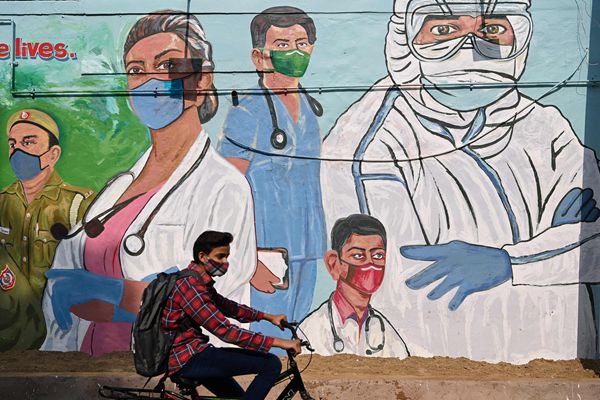
新德里街頭的抗疫宣傳畫(圖片來源:視覺中國)
在與印度學者的幾次會談中,我非常驚訝地發現他們幾乎一致認為,是中國預謀在先,挑起了加勒萬的衝突。這是不可能的。如果中國不得不在美國挑起的大國競爭中同美國競爭,為什麼要突然分散精力,轉而對抗印度呢?
由於邊境地區的實際控制線(LAC)沒有劃定,因此中印軍隊對峙的情形並不罕見。按照中國的説法,自2020年4月以來,印度軍隊不顧中方的抗議,單方面開始在加勒萬河谷修建道路和橋樑。
這次事件讓人感到壓抑,因為它幾乎打破了兩國之間長達數十年的一個默契,即不使用武力。印度總理莫迪在2017年表示,“在過去的40年裏,雙方沒有因為邊界爭端向對方開過一槍”。但是在加勒萬衝突中,即使雙方都沒有開槍,整個氣氛也驟然變冷。
中印邊界爭端的複雜性令人望而生畏。雙方甚至對邊界線的長度都看法不一。中國認為邊界線是2000公里,而印度認為是3488公里。按照新德里的説法,巴基斯坦於1963年非法將巴控克什米爾的5180平方公里的印度領土割讓給中國。中國和印度都堅持認為加勒萬河谷是自己的領土。
更糟糕的是,邊境實際控制線從來沒有得到核實。兩國政府1993年簽署的一項協定裏規定,“必要時,雙方將在對實際控制線有不同認識的局部地區共同核定實際控制線的方向”。但是什麼時候才是“必要“的呢?
中國和印度的做法似乎不可調和。中方傾向於自上而下的方式,基本上就是在雙方互諒互讓的基礎上進行土地交換,而印度堅持自下而上的方式,將核實實際控制線作為首選。
北京懷疑,一旦實際控制線的走向確認之後,印度就會把它當做事實上的邊界線,並拒絕進一步的談判。這種懷疑並非毫無根據,印度一直拒絕任何關於“阿魯納恰爾邦”的地位的談判。中方將所謂的“阿魯納恰爾邦”視為中國藏南地區的一部分,指出達旺就是六世達賴的出生地。
如何預防爭端演變為衝突? 前進之道是回首往事。1993年到2013年之間,中國和印度在政府和軍隊層面就建立信任措施達成了四項協議,這比中國與其他任何國家簽署的雙邊信任措施協議都要多。
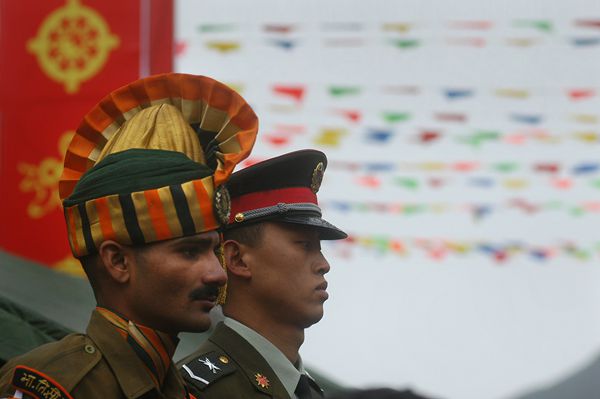
中印邊境,一名印度士兵與中國士兵在站崗(圖片來源:視覺中國)
這些信任措施內容具體,令人印象深刻:雙方都重申,將把邊境實際控制線兩側各自的軍力減少或者限定至最低範圍;主要的武器,比如坦克、步兵作戰車、大口徑火炮、地地導彈、地空導彈將被削減;雙方應該避免在實際控制線附近舉行超過一個師以上規模的大規模軍事演習;雙方的作戰飛機不能夠飛入實際控制線10公里以內。
要是這些措施都被執行就好了! 事實上, 雙方都在加強在該地區的軍事存在,這在危機之後並不奇怪,但是當局勢降温時,兩國將不得不思考如何儘量使邊境地區保持和平與安寧。
一個有益的辦法就是重新恢復聯合工作小組,並授權聯合工作小組下面的外交和軍事專家找出信任措施協議裏比較容易執行的部分。同時,還可以引進新的建立信任措施機制。在事件發生後,雙方舉行了至少11輪軍長級會晤,緩解了形勢。這種高級軍官在前線的定期會晤應該保持下去。
雙方還應考慮建立及時溝通聯繫的熱線。中國同俄羅斯、美國、韓國和越南都有熱線,據報道中國和日本也在考慮建立熱線。印度和巴基斯坦經常使用熱線。中印既然是近鄰,還有領土爭端,兩國足有理由建立類似的熱線。
也許雙方能夠邁出的最大膽一步,是在實際控制線最危險的地段建立緩衝區。這並不影響各自對邊界問題的立場,但是這是雙方之間脱離接觸、避免衝突的最有效的辦法。雙方都同意在對邊境實際控制線理解不一致的地區巡邏時不相互尾隨。建立緩衝區是往前邁出一大步,而且也有可能。在雙方部隊同時撤出班公湖附近的山地後,雙方事實上已經建立了一個緩衝區。
如果北京和新德里在21世紀仍然被一個殖民者留下的爭端所綁架就真的可笑了,尤其是因為除了邊界爭端之外,雙邊關係並沒有突出的問題。印度人講“Hindi Chini bhai bhai”(印地語,即“印度人民和中國人民是兄弟”)的日子一去不復返了,但是中印無論如何不能變成敵人。邊界問題不應該成為一個永恆的詛咒,兩個核大國之間連一場常規戰爭都不應該發生。
(以下為2021年6月15日南華早報原文)
China and India should look back to move forward on border impasse
One year has passed since a deadly brawl between Chinese and Indian troops in the Galwan Valley in the China-Indian border areas, which resulted in the death of 20 Indian soldiers and four Chinese troops. The aftermath is still being felt today.
Beijing was given the cold shoulder when it o!ered to help pandemic-devastated India. Such resentment speaks volumes of the frosty relationship, which was described by Indian Minister of External A!airs S. Jaishankar as “profoundly disturbed”.
In a few meetings with Indian scholars, I was surprised to learn how they almost invariably believed that the Galwan clash was the result of a planned attack by China. This is impossible. If China has to compete in an America-initiated great power competition, why would it suddenly divert its attention and strength away from that to take on India?
Since the Line of Actual Control (LAC) in the border areas is not demarcated, it is not rare for face-offs between Chinese and Indian troops. According to the Chinese, Indian troops started to unilaterally build roads and bridges in the valley in April 2020, despite Chinese protests.
The deadly incident was dreadful in that it came closest to breaking a decades-old tacit agreement between the two countries not to use force. “In the last 40 years, not a single bullet has been fired because of [the border dispute],” Indian Prime Minister Narendra Modi said in 2017. But the Galwan clash, even though no bullet was fired, has changed the whole atmosphere.
The complexity of the China-India border dispute is daunting. Even the length of the border is not necessarily agreed on. China believes it is 2,000km long, while India believes it is 3,488km. According to New Delhi, Pakistan illegally ceded 5,180 sq km of Indian territory in Pakistan-controlled Kashmir to China in 1963. Both China and India maintained that the valley is their own territory.
To makes things worse, the LAC is not verified. A 1993 agreement between the two governments stipulates that “when necessary, the two sides jointly check and determine the segments of the Line of Actual Control where they have different views as to its alignment”. But when is it necessary?
The approaches of China and India seem irreconcilable. China prefers a top-down approach, which is basically a land swap based on mutual accommodation, while India insists on a bottom-up approach of verifying the LAC as the priority.
Beijing suspects that, once the alignment of the LAC is verified, India would take it as a de facto border and refuse further negotiations. Such suspicion is not entirely groundless. India has refused any talks on the position of Arunachal Pradesh, which China holds as part of southern Tibet, citing the reason that Tawang is the birthplace of the 6th Dalai Lama.
How to prevent the dispute from spilling over into a conflict? The way forward is to look
back. Between 1993 and 2013, China and India reached four agreements on confidence-building measures at governmental and military levels. This is more than any bilateral agreements China has signed with other countries.
And they are substantive, too, which is impressive. Both rea"rm that they shall reduce or limit their respective military forces along the LAC to minimum levels; major categories of armaments such as combat tanks, infantry combat vehicles, large-calibre guns, surface-to-surface missiles and surface- to-air missiles are to be reduced; large-scale military exercises involving more than one division in the proximity of the LAC shall be avoided; and combat aircraft should not fly within 10km of the LAC.
If only these measures were being implemented. In fact, both sides are strengthening their military presence in the region. This is no surprise in the wake of a crisis. But when the situation cools down, both countries will have to think about how they can best make the border areas peaceful and tranquil.
One way is to resume the joint working group and ask the diplomatic and military experts working under it to find the low-hanging fruits in the confidence-building agreements. New confidence- building measures could also be ushered in. In the wake of the incident, at least 11 rounds of corps- commander-level talks were held, which helped to de-escalate the situation. Such regular meetings of front-line senior military officers should be maintained.
Both sides should also consider establishing hotlines for real-time communication. China has military hotlines with Russia, the United States, South Korea and Vietnam. Reportedly, China and Japan are considering establishing one as well. India often uses its hotline with Pakistan. There is no reason the two immediate neighbours with territorial disputes should not have similar instruments.
Perhaps the boldest step might be to establish buffer zones in the most dangerous areas along the LAC. Without prejudicing their respective positions on the boundary question, this is the most effective way to disengage and prevent conflict. Both sides agree they shall not follow or tail patrols of the other side in areas where there is no common understanding of the LAC.
Building buffer zones is a step further. And it is possible, too. From the mountains around Pangong Lake, a de facto buffer zone has already been established after the mutual withdrawal of troops.
It is ridiculous if, in the 21st century, Beijing and New Delhi are still hijacked by a dispute that is a colonial remnant, not least because apart from this dispute, they have no outstanding problems with each other.
Gone are the days when India said “Hindi Chini bhai bhai”, which means, in Hindi, “Indians and Chinese are brothers”. But China and India have every reason not to become foes. The border issue should not be a perennial curse. The two nuclear neighbours can ill-afford even a conventional war.
Senior Colonel Zhou Bo (ret) is a senior fellow at the Centre for International Security and Strategy at Tsinghua University and a China Forum expert
本文系觀察者網獨家稿件,文章內容純屬作者個人觀點,不代表平台觀點,未經授權,不得轉載,否則將追究法律責任。關注觀察者網微信guanchacn,每日閲讀趣味文章。