周波:中美海軍頻頻相遇,如何避免誤判?
周波:
德意志帝國宰相俾斯麥有句名言:“法律就像香腸,最好不要看到它們的製作過程”。果如其言,聯合國海洋法公約(UNCLOS)像是有史以來製作時間最長的一根“香腸”。大約140個國家圍繞公約制定進行了長達9年的談判,使其成為歷史上持續時間最長的國際法談判。可以理解的是,各方都做出了妥協,但是有些條款仍然模稜兩可,各方可以靈活解讀。
中國早在1996年就批准了《聯合國海洋法公約》,美國至今仍未批准《聯合國海洋法公約》,雙方對公約的例如航行和飛越自由的概念有不同的闡釋。中國認為,美國的軍事活動,如美國海軍在中國專屬經濟區的抵近偵察,侵犯了中國的國家安全及利益,因此不能簡單地歸類為航行自由。美國則堅持認為,其軍事活動可被歸類為航行自由和其他針對海洋的國際合法權利範圍。但我要指出的是,中國並不是持此立場的唯一的國家,至少還有25個國家對外國在本國專屬經濟區或毗連區的軍事活動有不同程度的限制。
這種差異是可以理解的,但美國根據其對《聯合國海洋法公約》的單方面解釋,表現得好像自己是海洋法的唯一捍衞者。根據五角大樓的説法,從2019年10月1日到2020年9月30日,美軍以軍事行動對“全球19個不同聲索國提出的28項不同的過度海洋聲索”提出了挑戰。因此,一個簡單的問題出現了:如果公約是好的,你美國為什麼不批准它?如果不是,你為什麼要以它的名義挑戰別人?
中國是唯一對美國挑釁做出軍事反應的國家。2001年發生過一起致命的中美軍機相撞事故,在海上也發生過多起危險的中美軍事對峙。二十多年來,中美兩國海軍的對話是有益的,但成果並不顯著:美方希望就如何避免艦艇和飛機近距離危險接觸進行技術性討論,而中方則指出,美國海軍在中國海域的高強度大範圍偵察和監視是對中國主權的挑釁,因而應該禁止或至少減少次數;美方要求監視美國軍艦的中國軍艦保持安全距離,中方則認為,如果美國軍艦根本不進入中國海域,它們自然安全。公正地説,中國和美國都不希望發生事故。但根本問題從一開始就存在:如果美國不想讓水沸騰,為什麼還要火上澆油?畢竟,是美國軍艦定期到中國家門口挑釁,而非中國軍艦到美國家門口滋事。
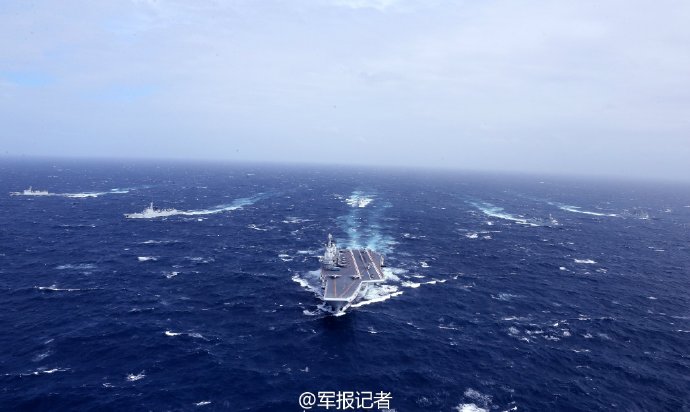
遼寧艦航母編隊在南海航行。圖片來源見水印
理論上,下一次危機發生只是時間問題。如今,降低北京和華盛頓之間的風險,比降低冷戰期間美蘇之間的風險更為困難,原因有兩個:首先,華盛頓和莫斯科之間有明確界定的勢力範圍,即便雙方在其他地方打代理人戰爭,他們也避免直接對抗。但是中美之間甚至連緩衝區都沒有,美國軍艦定期在中國南海和台灣海峽航行。
其次,美國和蘇聯通過擁有相互確保毀滅能力的軍事威懾達到了平衡,這在北京和華盛頓之間是不存在的。但在西太平洋,由於中國人民解放軍在過去幾十年裏的長足發展,中美軍事力量的差距正朝着有利於中國的方向縮小。一支更強大的中國人民解放軍,只會更加堅定地維護中國的主權和領土完整。在過去三年我讀到的所有美國智庫的報告裏,沒有一篇斷言美軍在西太平洋地區一定能夠戰勝解放軍。
如果我們不能解決問題,我們只能盡力應對危機,使之不至於滑入雙方都不希望發生的衝突。隧道的盡頭或許有光亮。2020年10月,中國國防部和美國國防部官員遠程召開了第一次危機溝通工作小組視頻會議,討論危機溝通、危機預防和危機管理的概念。這是第一次如此強調“危機”概念,因為之前的會談都是圍繞避免“事故”或“事件”展開的。現在,最重要的討論是危機管理,即事故發生後該如何做,這是以前從未討論過的情況。
中美兩國要想在海上化解衝突,雙方都需要遵守在“西太平洋海軍論壇”上多邊制訂的《海上意外相遇規則》(CUES)和中美雙邊制訂的《海空相遇安全行為準則》(ROB)的規則和規定,以避免誤判。避免事故的關鍵是軍艦和軍機要保持安全距離。但安全距離究竟是多少?根據《海上意外相遇規則》,在保持安全距離時,必須考慮能見度狀態、兩船的機動性和對另一船操縱意圖的理解等7個因素。顯然,這不僅需要認真討論,還需要定期培訓,以確保良好的航海技術。中美兩軍在2014年、2015年和2016年進行了聯合《海上意外相遇規則》演習。這種演習應該保持下去,部分原因是將來更強大的中國人民解放軍海軍必將在國際海域更頻繁地與美國海軍相遇。
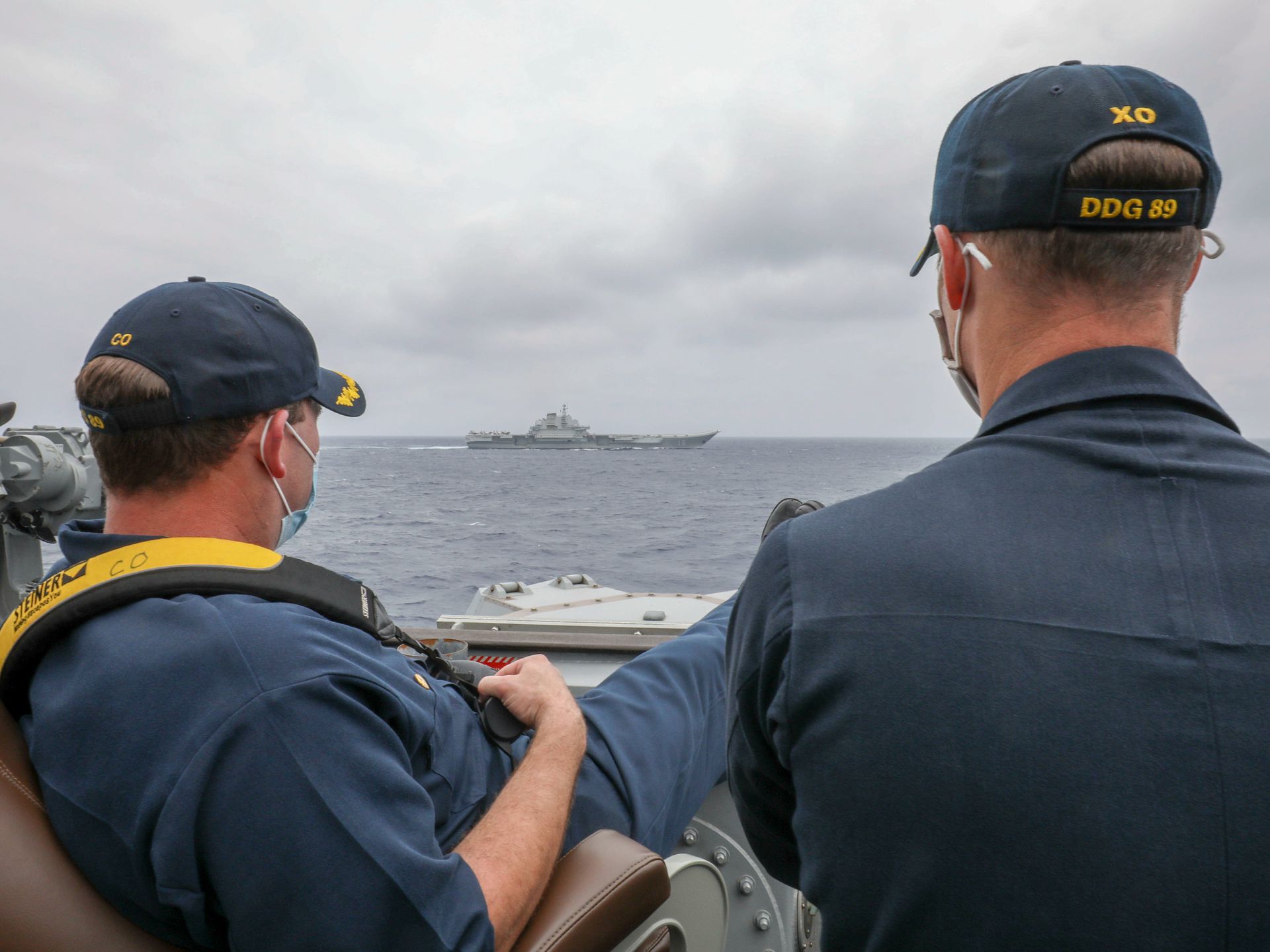
中國海軍遼寧艦航母與美軍“馬斯廷”號驅逐艦在南海“同框”。(美國海軍官網)
會議組織者要求我們討論新常態下基於規則的秩序。那麼新常態是什麼?所謂的“自由開放的印太”不是新常態,而是一個新神話。捫心自問,印度洋—太平洋地區何時不自由不開放?海洋是相通的。在人類歷史上,很少有國家試圖封鎖國際海峽或海上通道。印太地區最突出的問題是2008年至2013年在亞丁灣和索馬里盆地猖獗的海盜行為。現在,在國際海軍的共同努力下,這種現象已基本剷除。
“自由開放的印太”實際上是對中國欲蓋彌彰的攻擊,也是以東盟的“中心地位”為代價的。原因很簡單,從地理上講,如果東盟位於太平洋的中心,就不能同時處於印度洋—太平洋的中心。
觀察美日澳印四方安全對話(QUAD)會如何演變將很有趣。如果這是基於對中國的共同不滿,那麼將四國聯繫在一起的紐帶不可能牢固。中國是美國最大的貿易伙伴之一,也是日本、澳大利亞和印度的最大貿易伙伴。至少可以説,他們都不願意為了其他三國的利益而犧牲自己與中國的經濟關係。
在國際海事領域,一個新常態就是中國人民解放軍海軍越來越強大,它已經擁有世界上最多的艦艇,它的目標是到本世紀中葉發展成為世界一流海軍。任何時候,都有中國海軍艦艇在世界某地航行。
這對世界意味着什麼?當然,一支更強大的中國海軍將在維護中國主權和領土完整方面發揮更重要的作用,但在台灣問題或者南海問題上並不需要這麼多艦艇。是中國巨大且不斷增長的海外利益和一個大國義不容辭的國際責任,促使中國建設世界一流海軍。在國防白皮書中,維護中國海外利益,參與地區和國際安全合作以維護地區和世界和平,被描述為解放軍的“戰略任務”。
另一個新常態是,中國是一個不同於歷史上所有其他大國的新型海洋強國。中國無意當世界警察,因此,它不會試圖扼住國際海峽的咽喉要道。它不會建立所謂的“珍珠鏈”。相反,中國通過國際合作維護自己的海外利益,承擔自己的國際責任。在印度洋打擊海盜是中國海軍如何實現這一目標的一個傑出範例。在中國海軍編隊護航的大約7000艘船隻中,有一半是外國船隻。中國海軍加入多國海軍在亞丁灣護航意義有三:一是打擊海盜;二是維護海上通道安全;三是共同捍衞航行自由。這種踐行也許是彌合《聯合國海洋法公約》模糊之處的一個有效辦法。
(翻頁查看英文版)
Rules-based Maritime Order in The New Norm
Zhou Bo
Chancellor of the German Reich Otto von Bismarck famously said, “Laws are like sausages, it is better not to see them being made”. In this regard, the UN Convention on the Law of the Sea (UNCLOS) looks like the longest sausage ever made. It was negotiated for nine years by around 140 countries, making it the longest-running international law negotiation in history. Understandably, compromises are made and ambiguities that could be flexibly interpreted still found.
China, a country that has ratified the UNCLOS as early as 1996 and the US, a country so far hasn’t ratified the UNCLOS have different interpretations of the UNCLO, say, on freedom of navigation and overflight. China believes that American military activities, such as the close-in reconnaissance and surveillance by the US Navy in China’s Exclusive Economic Zone (EEZ), infringe on China’s security interests and therefore cannot be simply categorized as freedom of navigation. The US maintains that its military activities fall within the freedom of navigation and other internationally lawful uses of the sea. But I wish to point out that China is not the only country that holds such a view. At least 25 other countries also have restrictions regarding foreign military activities in their exclusive economic zones or contiguous zones to varying degrees.
Such difference is understandable, but the US, based upon its own interpretations of the UNCLOS, would behave as if it is the sole guardian of the maritime law. According to the Pentagon, from October 1, 2019 to September 30, 2020, U.S. forces operationally challenged “28 different excessive maritime claims made by 19 different claimants throughout the world”. Therefore, a simple question arises: If the Convention is good, why don’t you ratify it? And if it is not, why would you challenge others in the name of it?
China is the only country that has responded militarily to American provocations. There were a deadly aircraft collision in 2001 and a number of dangerous encounters at sea. For over two decades, the Chinese and American navies’ dialogues are useful but not fruitful: the American side wanted technical discussions on how to avoid close and dangerous encounters between ships and aircraft while the Chinese side would point out that American navy’s intense surveillance and reconnaissance in China’s waters were provocations to China’s sovereignty that should be stopped or at least reduced; Americans asked Chinese ships monitoring American ships to keep safe distance and Chinese believe the American ships are most safe if they don’t come at all. It is fair to say that neither China nor the US want an accident. But the fundamental problem exists from the very beginning: if the US doesn’t want the water to boil, why keep throwing wood into the fire? Afterall, it is the American ships that have come regularly to China’s doorsteps and not the other way round.
In theory, it is only a matter of time before the next crisis occurs. Today, risk reduction for Beijing and Washington is more difficult than that between the US and the Soviet Union during the cold war for two reasons. First, there are clearly defined spheres of influence between Washington and Moscow which allows them to avoid direct confrontations even if proxy wars had to be fought elsewhere. But between China and the United States, there isn’t even a buffer zone in the South China Sea or the Taiwan Straits where the American naval vessels sail regularly.
Second, the United States and the Soviet Union were balanced by mutually assured destruction which is not found between Beijing and Washington. But in the Western Pacific, the gap in military strength is shrinking in China’s favor thanks to the advances of the PLA in the past decades. A stronger PLA can only become more determined to safeguard China’s sovereignty and territorial integrity. Of all the reports by American think tanks that I read in the last three years, none of them concludes that within the Western Pacific, the US military is guaranteed to win over the PLA.
If we cannot resolve the problem, we can only try our best to manage a crisis sliding into a confrontation that neither wants. Perhaps there is some light at the end of the tunnel. In October 2020, officials of the Chinese Ministry of National Defense and the US Department of Defense convened the first Crisis Communication Working Group meeting by video teleconference to discuss concepts of crisis communications, crisis prevention and crisis management. This is the first time that crisis is stressed as such because previously talks were centered on avoiding “accidents” or “incidents”. The most significant part is management of crisis, that is, what to do after an accident has happened, a scenario never discussed before.
For China and the US to deconflict at sea, both sides need to observe the multilaterally agreed rules and regulations of the “Code for Unplanned Encounters at Sea” (CUES) made at the Western Pacific Naval Symposium and the bilaterally agreed “Rules of Behavior for Safety of Air and Maritime Encounters” (ROB) to avoid miscalculations. The key to avoid an accident is for ships and aircraft to keep safe distance. But what exactly is the safe distance? According to CUES, seven factors ranging from the state of visibility, the maneuverability of both vessels and understanding of the maneuvering intentions of the other vessel have to be considered in keeping safe distance. Apparently, they require not only serious discussions, but also regular training to ensure good seamanship. The two militaries conducted joint drills on CUES in 2014, 2015 and 2016. Such exercises should continue, partly because a stronger PLA Navy is bound to meet the US Navy more often in the international waters in days to come.
The organizer of the conference asks us to discuss the rules-based order in the new norm. Then what is the new norm? The so-called “free and open Indo-Pacific” is not the new norm, it is a new myth. Ask yourself when the Indo-Pacific is not free and open? Oceans are interconnected. In human history, few countries have attempted to block international straits or sea lanes. The most outstanding problem in the Indo-Pacific was piracy that was rampant in the Gulf of Aden and Somali Basin from 2008 to 2013. Now it is basically eradicated thanks to the joint efforts of the international navies.
The “free and open Indo-Pacific” is in fact thinly-veiled attack on China. It also comes at a cost on the centrality of the ASEAN. The reason is simple, geographically speaking, if ASEAN lies at the heart of the Pacific, it cannot be at the center of the Indo-Pacific at the same time.
It would be interesting to see how the Quad might evolve. If it is based upon a common resentment of China, then the glue that binds the four won’t be strong enough. China is one of the top trading partners of the US and the largest trading partner of Japan, Australia and India. None of them would wish to sacrifice their own economic ties with China for the interests of the other three countries, to say the least.
In the international maritime domain, one of the new norms is that the PLA Navy is getting stronger and stronger. It already has the largest number of ships in the world. It is aiming to grow into a world-class navy by mid-century. At any given time, there are Chinese naval vessels sailing somewhere in the rest of the world.
The question is what this means for the world. Of course, a stronger Chinese navy will play a more important role in safeguarding China’s sovereignty and territorial integrity, but the PLA Navy doesn’t need so many ships for Taiwan issue or the South China Sea issue. It is China’s tremendous and ever-growing overseas interests and international obligations which are incumbent upon a major power that call for China to build a world-class navy. In the defense white paper, safeguarding China’s overseas interests and participating in regional and international security cooperation to safeguard regional and world peace are described as “strategic tasks” of the PLA.
Another new norm is China is a new type of sea power different from all others in history. China has no intentions to police the world. Therefore, it won’t attempt to control the chokepoints in the international straits. It won’t establish the so-called “string of pearls”. Instead, China will safeguard its overseas interests and shoulder its international obligations through international cooperation. Countering piracy in the Indian Ocean is a brilliant example of how the Chinese navy might achieve that. Half of all the 7000 or so ships escorted by the Chinese naval flotillas are foreign ships. The significance of the Chinese navy joining the international navies in counter-piracy in the Gulf of Aden is three-fold: it is counter-piracy; it is maintenance of sea lines of communication, and it is also perseverance of freedom of navigation. Such a practice might be a useful way to mitigate the ambiguity of the UNCLOS.
本文系觀察者網獨家稿件,文章內容純屬作者個人觀點,不代表平台觀點,未經授權,不得轉載,否則將追究法律責任。關注觀察者網微信guanchacn,每日閲讀趣味文章。