周波:疫情是一場新的世界大戰,還是大戰的前奏?
【文/觀察者網專欄作者、中國論壇特約專家 周波】
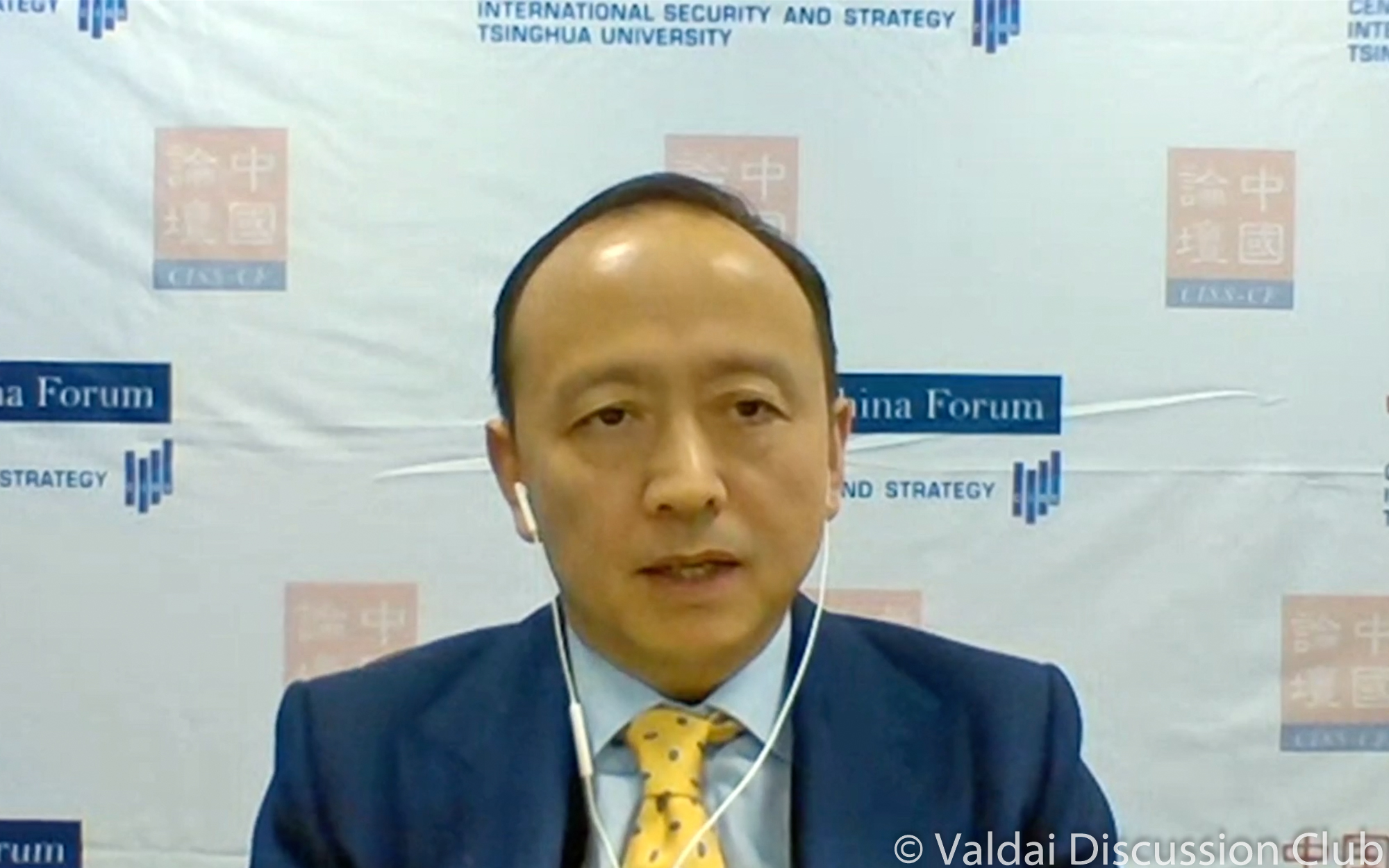
感謝主席先生的邀請,讓我有機會在這個重要論壇上進行發言。我當下在北京參加在俄羅斯索契舉辦的會議,就説明了新冠疫情如何改變了世界。
但是我們不必驚訝,縱觀歷史,傳染病造成的死亡人數超過自然災害或戰爭所造成的死亡人數。查士丁尼瘟疫(公元541-549年)是歷史上第一次瘟疫大流行的第一次集中大爆發,奪去了當時世界一半人口的生命。在第一次世界大戰期間,約5千萬到1億人喪生於1918年爆發的大流感——超過了同時期戰爭的死亡人數。由於有前所未有的迅速反應和對疫苗的大規模投入,新冠疫情造成的死亡人數已經趨緩。
病毒無國界。新冠疫情本應凝聚世界各國人民團結應對,然而事與願違。它製造了不和,凸顯了不平等,加劇了社會分裂。在國際舞台上,新冠疫情加劇了美國把中俄作為主要戰略競爭對手的大國競爭。如拜登所言,如今的中美競爭已經升級為“極端競爭”。
我無法代表俄羅斯人發言,但我想,美國把中國視為主要競爭對手的原因,按照前副總統彭斯所説,是“蘇聯解體後,我們認為一個自由的中國將不可避免地出現”。然而,中國並沒有變成一個西方式民主國家。對華盛頓來説,更糟糕的是,中國正變得越來越強大。
事實上,中國從來沒有打算像彭斯等人所希望的那樣,成為“一個自由的中國”。中國始終堅持走中國共產黨領導的社會主義道路。美國給中國貼上“主要競爭對手”的標籤,無非反證了中國長期堅持的想法:美國過去有關希望中國強大繁榮的甜言蜜語,不過是彌天大謊。
為什麼中國就非得成為像美國那樣的西方式民主國家呢?據全球民主監督機構“自由之家”稱,自2006年以來,全球民主狀況一直在衰退,即便是美國和印度等老牌民主國家也無法倖免。我堅信,未來西方式民主會繼續衰退。
當一個像中國這樣的所謂“威權國家”在2030年左右超過美國,成為全球擁有最大國內生產總值(GDP)的經濟體時,西方民主的影響力將降到最低點。這並不意味着中國要輸出自己的治理和發展模式,而是幫助人們迴歸常識——世界,無論過去還是現在,都是不同文明、不同社會制度、不同文化和不同宗教並存的世界。所謂民主對抗專制不過是一出神話。
西方對自由民主的自我膨脹是歷史性的短視。儘管自由民主的起源可以追溯到啓蒙運動時期,但它只是在工業革命和資本主義推行之後才傳播開來的。西方的自由民主概念至今還不到三百年,比中國的漢朝、唐朝、宋朝、明朝、清朝或俄羅斯的羅曼諾夫王朝的時間跨度均更短暫。據“自由之家”所稱,“現在世界上只有不到五分之一的人口生活在完全‘自由’的國家”。換句話説,世界從來都不是西方的。
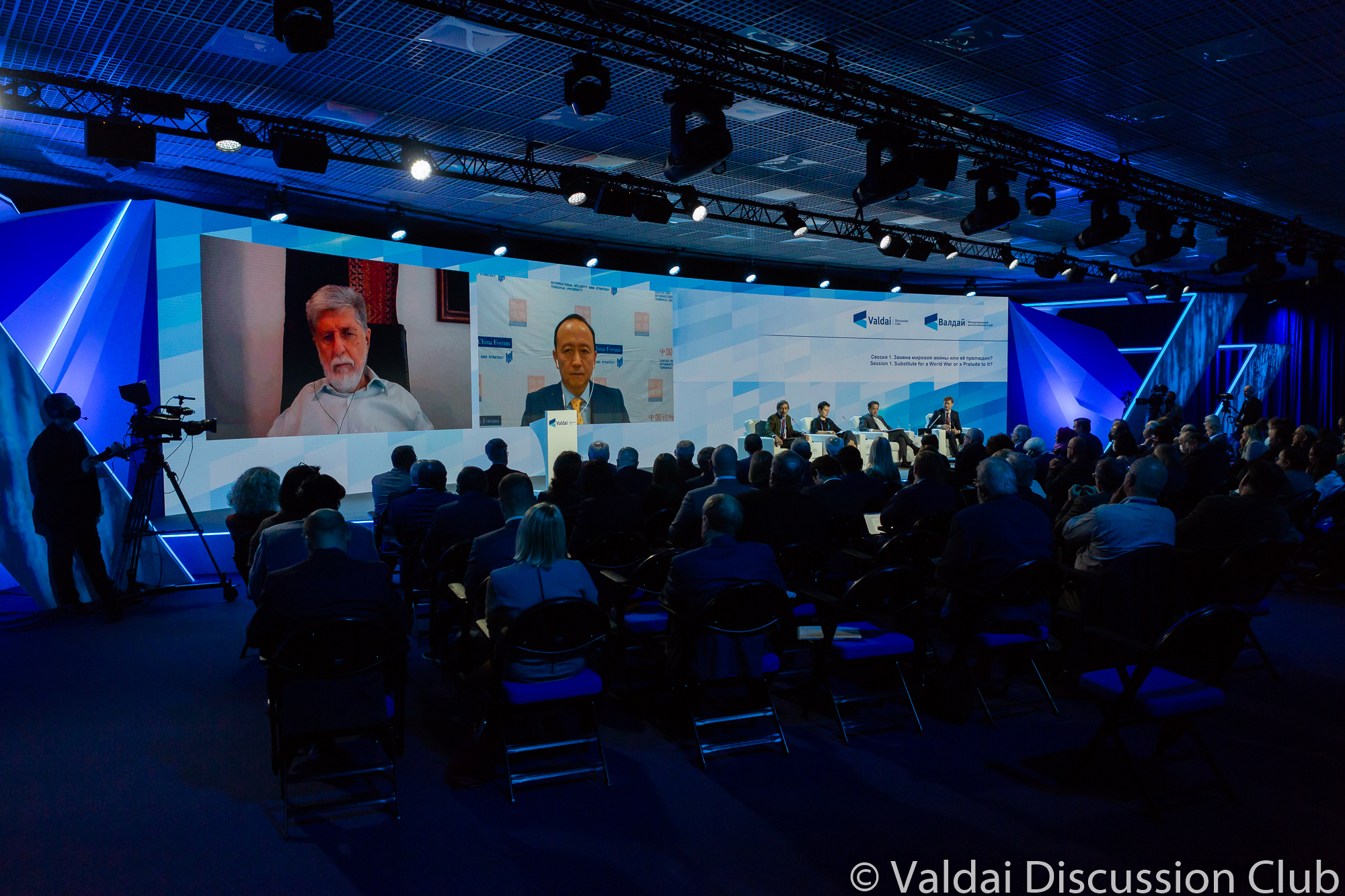
會議現場
在充分尊重“民主”一詞的語境下,我要指出,民主的明確定義尚無共識。已故聯合國秘書長安南説過:“世界上有多少個民主國家,就有多少種不同形式的民主”。馬裏被“自由之家”列為“自由”國家,但它是一個最不發達國家。卡塔爾可以説是全世界人均國內生產總值最高的國家,但它從來就不是民主國家。這兩個國家中,哪個國家給本國人民帶來更多的福祉?如果一個國家不能滿足本國人民的基本需求,這種民主還可取嗎?
兩年前,聯合國秘書長古特雷斯談到“我們的1945年時刻”,他看到世界一分為二的“大分裂”風險:地球上最大的兩個經濟體創造了兩個相互獨立且競爭的世界,兩者均擁有自己的主要貨幣、貿易和金融規則、互聯網和人工智能能力。今年9月,他進一步將中美關係定性為“完全失調”,並警告不要出現“與過去不同,可能更危險、更難以管控”的新冷戰。
我看到了更多的分裂。
首先,西方正在分裂。2020年慕尼黑安全會議報告的主題為一個詞,“西方缺失”。報告結論是,不僅世界沒那麼“西方化”了,西方自身也正變得不那麼“西方化”了。慕尼黑安全會議主席伊申格爾指出,“以往自由民主規範被視為理所當然……結果卻比大多數人想象的更為脆弱”。更糟糕的是,隨着反自由主義的興起和民族主義的迴歸,西方內部危機四起。
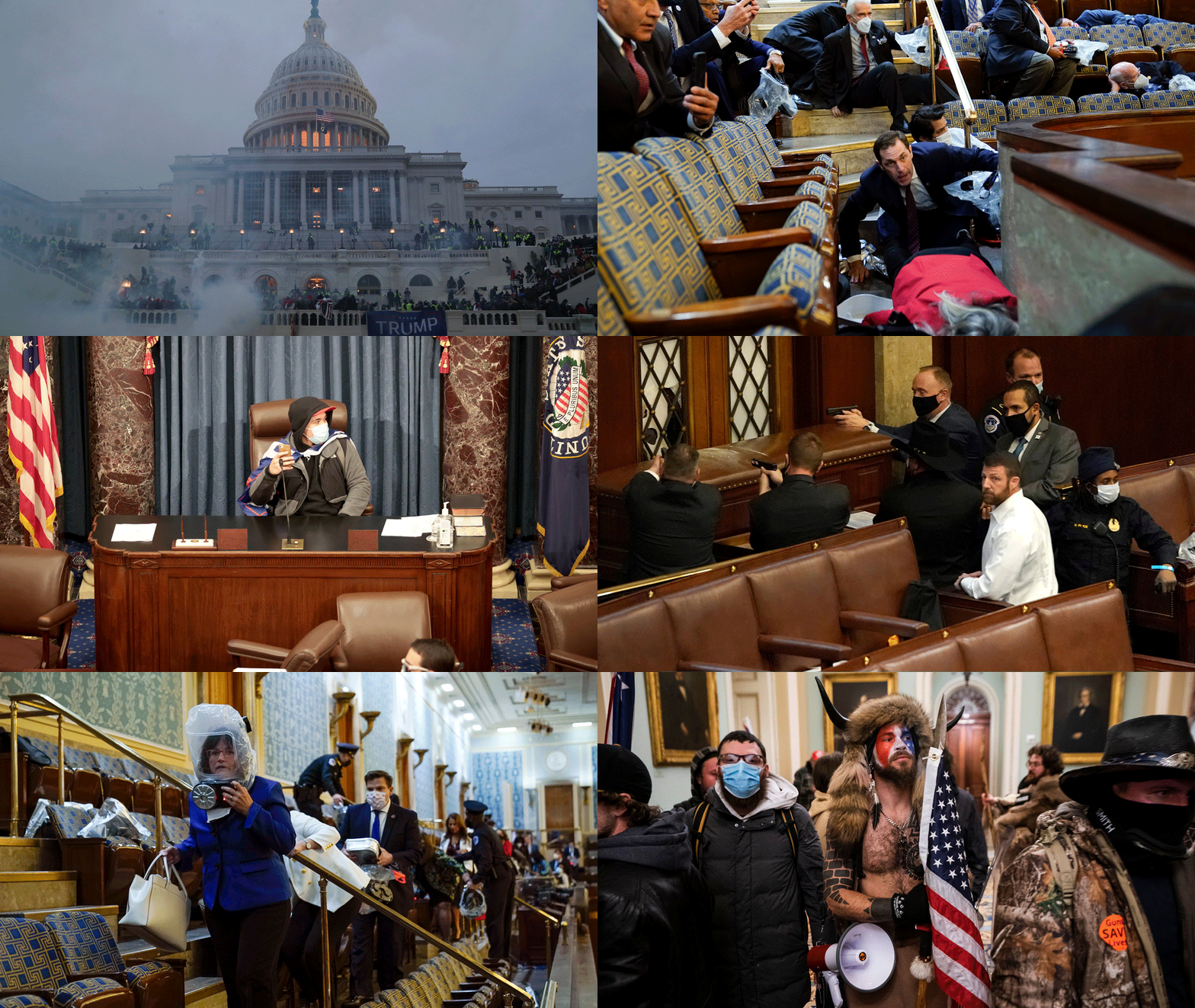
其次,作為“自由世界”的領導者,美國在社會問題、種族、性別和經濟問題上似乎遭受着前所未有的分裂。2020年美國的“總體社會調查”顯示,美國人的幸福水平處在50年來的最低點。美國民主最神聖的象徵——國會山被一位即將卸任的美國總統煽動的暴亂分子所攻陷,印證瞭如今的美國兩極分化有多嚴重。美國有線電視新聞網CNN稱,特朗普留下了一個自內戰以來最為分裂的美國。
最後,儘管拜登誓言加強美國領導的聯盟,但我相信它將繼續瓦解。在歐洲,由於沒有明確的敵人,北約早已失去動力,法國總統馬克龍稱之為“腦死亡”狀態。阿富汗戰爭的結束標誌着美國全球反恐戰爭的結束,也標誌着拜登在印太地區與中國極端競爭的開始。因此,美國不會像拜登所承諾的那樣重返歐洲,反而會逐漸減少對歐洲的關注和支持。這當然會削弱北約,並反過來促使歐洲加強其“戰略自治”,儘管目前這一概念仍然停留在口號上。
在亞洲,美國聯盟的力量也不是理所當然地存在。大多數國家,包括美國在亞太地區的盟友和夥伴,都擔心要在美國和他們最大的貿易伙伴中國之間選邊站隊。最近美國、英國、澳大利亞簽訂的AUKUS協定彰顯了美國是如何在與中國的競爭中不擇手段,甚至不惜失去重要盟友。然而,美國如果成功能讓過去三心二意的澳大利亞對抗中國,在法國“背後捅刀子”,如法國外交部長勒德里昂所説,這會產生長期影響。
現在請允許我回到會議組織者提出的問題“疫情是一場新的世界大戰,還是大戰的前奏?”我不認為我們正在步入一場新的世界大戰,也不處在大戰的前夜,但北京和華盛頓之間在台灣海峽和南海確實存在發生衝突的危險。
拜登表示,美國與中國的對抗將採取“極端競爭”而非衝突的形式。我寧信其有,因為不管是中國還是美國都不想發生衝突,更別説戰爭了。但問題是,如果我們處於極端競爭中,我們離衝突還遠嗎?像2001年撞機事件、軍艦對峙事件等事件已經發生過不少。迄今為止,所有事件均發生在中國周邊,而不是在美國周邊。可以很自然地得出結論:美國是麻煩製造者。
如果説,阿富汗的20年戰爭對美國是一場“永遠的戰爭”,那麼它與中國的競爭必定是“永遠的競爭”,因為中美競爭勢必會持續20年以上。在未來幾年裏,中美競爭勢必會加劇,因為美國將此視為扳倒一個正在崛起的大國的最後機會,但美國沒法保證自己一定會成功。中國崛起於現行國際體系中,而這個體系很大程度上是以美國為首的西方建立的。如今,中國已經融入了這一體系,並堅定表示要成為現有國際秩序的捍衞者。因此,美國對中國的打擊不僅會損害現有國際體系,也會殃及美國自身。
儘管美軍仍比中國人民解放軍強大得多,但兩軍在西太平洋的差距正在縮小,且對中國有利。基於過去四十年中取得的進步,解放軍獲得了在衝突中主場作戰的所有優勢。正如《紐約時報》所觀察到的,“美國及其盟友將軍事力量投擲到數千英里之外的台灣,遠比中國將軍力投擲到100英里的台灣海峽對面要困難得多”,“無論AUKUS潛艇還是澳大利亞北部起飛的美國轟炸機都不大會打破這一平衡”。
中國認為,“世界正在經歷百年未有之大變局”,但是中國對未來充滿信心。21世紀,沒有什麼變化比中國的崛起更偉大。全球力量正在不可逆轉地從西方轉移到東方,而中國在這一過程中發揮着核心作用。儘管和平或戰爭並不完全取決於北京,但今天的中國在塑造環境和避免戰爭方面無疑處於一個更有利的地位。
(周波/清華大學戰略與安全研究中心研究員、中國論壇特約專家,翻譯/中國論壇 湯卓筠,校譯/中國論壇 韓樺)
Substitute for a World War or a Prelude to it?
Zhou Bo:
Thanks Mr Chairman for providing me a chance to talk at this important club. The fact that I am talking from Beijing at a conference in Sochi, Russia tells how Covid-19 has changed the world. But we shouldn’t be surprised. Throughout history, infectious disease has killed more human beings than natural disasters or wars. The plague of Justinian (541–549 AD), the first major outbreak of the first plague pandemic wiped out half the global population at the time. During World War I, some 50 to 100 million people died in the 1918 influenza pandemic – numbers that surpass the death toll of the war that was being fought at the same time. Thanks to unprecedented speedy response and large-scale investment in the vaccine, the number of fatalities caused by COVID-19 has slowed down.
Pathogens know no borders. No matter how Covid should have united people around the world to fight against it, it hasn’t. Instead, it sowed disaccord, highlighted inequality and exacerbated social divisions. In the international arena, it adds fuel to the great power competition in which the United States takes China and Russia as the primary strategic competitors. Now America’s competition with China has become “extreme competition”, according to Joe Biden.
I cannot speak on behalf of Russians, but I guess the reason behind China being taken by the US as primary competitor is because, according to former Vice President Michael Pence, “After the fall of the Soviet Union, we assumed that a free China was inevitable”. But China hasn’t become a liberal democracy. Worse still for Washington, China is getting stronger and stronger.
The thing is China has never intended to become “a free China” as Pence and his likes wish. China always maintains that it is a socialist country led by the Chinese communist party. When the US brands China as “primary competitor”, it confirms what China has long believed that all the sweet talks of the US in the past about how it wished China would be strong and prosperous are but fat lies.
And why should China become a liberal democracy like the US? According to Freedom House, a watchdog of democracy around the world, democracy around the globe has been declining since 2006, even in established democracies such as the US and India. I am pretty sure that liberal democray will continue to decline in the years ahead. When an “authoritarian state” such as China overtakes the US to become the world’s largest economy in terms of gross domestic product in around 2030, the influence of Western democracy will be looking at its nadir. This doesn’t mean China wishes to export its model of governance and development, but it helps people to come to terms with common sense -- the world, now as in the past, is always a coexistence of different civilizations, social systems, cultures and religions. There is no such myth of democracy vs autocracy.
The self-aggrandizement of the west for liberal democracy is historical myopia. Although liberal democracy traces its origins to the Age of Enlightenment, it only spread after the Industrial Revolution and the introduction of capitalism. So far the concept of western liberal democracy is less than three hundred years old, which is a shorter time span than the lengths of either the Han, Tang, Song, Ming, and Qing Dynasties of China or Russia’s Romanov Dynasty. According to Freedom House, “fewer than a fifth of the world’s people now live in fully Free countries”. In other words, the world is never western. With full respect for the word “democracy”, I wish to point out that no consensus exists on a precise definition of democracy. The late UN secretary general Kofi Annan said that “there are as many different forms of democracy as there are democratic nations in the world.” Mali is ranked as “Free” by Freedom House, but is a Least Developed Country. Qatar has arguably the highest GDP per capita in the world, but has never been democratic. Which of the two countries has delivered more to its own people? And if a country fails to meet the basic needs of its own people, is such democracy still desirable?
Two years ago, the UN secretary general Antonio Guterres talked about “our 1945 moment” in which he saw the risk of “a great fracture” of the world splitting in two, with the two largest economies on earth creating two separate and competing worlds, each with their own dominant currency, trade and financial rules, their own internet and artificial intelligence capacities. In September, he further described the relationship between China and the United States as “completely dysfunctional” and warned against a new cold war “that would be different from the past one, and probably more dangerous and more difficult to manage”.
I see a few more fractures. First, the West is splintering. The 2020 Munich security conference report is titled in one word “Westlessness”. It concluded that not only was the world becoming less Western, the West itself was becoming less Western, too. Wolfgang Ischinger, Chairman of the Munich Security Conference pointed out that “a liberal-democratic set of norms that were once taken for granted… turned out to be more fragile than most could have imagined”. Worse still, the west is threatened from inside with the rise of illiberalism and the return of nationalism.
Secondly, the US as the leader of the “free world” appears more divided than ever over social issues, race, gender and the economy. America’s General Social Survey in 2020 shows that Americans are the unhappiest they have been in 50 years. The fact that the Capitol Hill, the supreme seat of American democracy, was taken over by the insurrectionists incited by an outgoing American president tells how deeply Americans are polarized today. CNN said Trump has left America at its most divided since the Civil War.
Finally, I believe America-led alliance will continue to decay in spite of Biden’s vow to strengthen it. In Europe, short of an apparent enemy, NATO has long lost its momentum to the extent that French President Macron called it “braindead”. The ending of Afghan wars marks the ending of America’s global war on terrorism and the beginning of Biden’s extreme competition with China in the Indo-Pacific. As a result, the US will not be back as Biden promised, it will reduce, however gradually, its attention on and support of Europe. This will of course weaken NATO and will in turn cause Europe to strengthen its “strategic autonomy” which has so far remains very much of a slogan.
In Asia, the strength of America’s alliance cannot be taken for granted either. Most countries including America’s allies and partners in the Asia-Pacific are worried about choosing sides between the US and China, their largest trading partners. The recent AUKUS agreement between the US, Britain and Australia shows how the US could resort to desperate measures in its competition against China, even at the cost of an important ally. But if the US has succeeded in turning a once half-hearted Australia against China, the “stab in the back” of France, as French Foreign Affairs Minister Jean-Yves Le Drian described, will have long term impact.
Now let me come to the question raised by the organizer of the conference. Is this “Substitute for a World War or a Prelude to It”? I don’t think we are sliding into a world war or even prelude of it, but there is indeed danger of conflict between Beijing and Washington in the Taiwan Strait and the South China Sea.
Biden said that US rivalry with China will take the form of “extreme competition” rather than conflict. I’d love to f believe in him, because neither China nor the US wants a conflict, let alone a war. But the problem is: if we are in extreme competition, are we far away from conflict? There were already quite a few accidents including a deadly collision of military aircraft in 2001 and dangerous encounters by naval ships at sea. All the accidents so far occurred in China’s, not America’s, periphery. Naturally enough, the US is the trouble maker.
If the 20-year war in Afghanistan is a “forever war” for the United States, then its competition with China must be “forever competition”, because it will surely last longer than twenty years. In the years ahead, China-US competition will most certainly intensify in that the US will take it as the last chance to bring down a rising power, but there is no guarantee it will succeed. China’s rise is from within the current international system that was to a great extent established by the west led by the US. Today China is so integrated with the system that it vows to be a guardian of the existing international order. Therefore, America’s efforts to bash China will bring damage to the international system and hurt the US itself.
Although the US militarily is still much stronger than the PLA, the gap in the Western Pacific is closing in China’s favor. Thanks to the progress made in the last four decades, the PLA has all the advantages of being on home turf in a conflict. As the New York times has observed, “it is far more difficult for the United STATES and its allies to project power thousands of miles to Taiwan than it is for China to project power 100 miles across the Taiwan Strait”, “neither AUKUS submarines nor US bombers flying from northern Australia are likely to tip the balance”.
China believes “the world is undergoing great changes that have not been seen in a century”, but it is confident about the future. In the 21st century, no change is greater than the rise of China. The global power is shifting irreversibly from the west to the east with China playing a central role in this process. Although it is not entirely up to Beijing to choose between peace and war, China today is certainly in a better position to shape her environment and avert wars.
Senior Colonel Zhou Bo(ret) is a senior Fellow, Center for International Security and Strategy Tsinghua University and China Forum expert
本文系觀察者網獨家稿件,文章內容純屬作者個人觀點,不代表平台觀點,未經授權,不得轉載,否則將追究法律責任。關注觀察者網微信guanchacn,每日閲讀趣味文章。