馬丁·雅克:美國這麼喜歡談民主,為什麼從不在國際體系中使用?

馬丁·雅克以線上方式參加了會議
馬丁•雅克:
感謝主辦方邀請我參加今天的對話,我覺得這次對話舉辦的恰逢其時。
拜登總統就要召集的民主峯會非常具有諷刺意味。美國召集峯會以推動西方民主,而當前美國自己的民主卻處於危機當中,處於前所未有的弱勢狀態。至少自內戰以來,美國的民主從來沒有這麼弱勢過。他們的做法就彷彿今年年初的國會山事件從未發生過,一切只是一場噩夢。
西方的民主概念有以下兩個深刻的問題,首先,就是缺少歷史背景;其次,就是它沒有理解和尊重文化的差異。
第一點,歷史背景。在西方人的心目中,民主已經從一個適用於特定時間和地點的政治形式,提升為適用於所有時間和所有國家的普遍形式。這樣一來,任何歷史背景環境的意識都已經喪失。
這樣的思維方式存在很大問題。沒有任何一個政治制度是萬能的,所有制度都是其時代和歷史環境的產物,西方的民主也不例外。在未來,即使在西方的範圍內,這樣的民主是否具有可持續性,也並非定數。而在過去幾十年裏,支撐西方民主的條件是否會繼續維持下去,也是有很大問題的。所謂西方民主是永恆的,這個想法是基於一種信念,即在過去70年裏,西方的基本條件一直保持不變。當然,就美國和英國而言,時間更長,將無限期地持續下去。現在愈發清晰的事實是這個假設不成立。
一些西方國家現在的民主情況都不好,他們現在的情況是30年代以來最糟糕的。我們需要認清一點,西方的民主只是在1945年之後才在西方佔據了主導地位。在此之前,即1918年至1939年期間,所謂的西方民主制度,即使在歐洲範圍內,也只是侷限在少數幾個國家。正如偉大的歷史學家埃裏克-霍布斯鮑姆所指出的,在1918年至1939年這一時間段內,擁有正常運作的民主政治機構並設法生存下來的歐洲國家,只有英國、芬蘭、愛爾蘭自由邦、瑞典和瑞士,而這些國家的人口只佔歐洲人口的極小一部分。其他絕大多數的歐洲國家在這一時期的某一階段都處於某種形式的獨裁統治之下。
民主的缺失有其原因,最主要的原因是大蕭條帶來了災難性影響和後果,導致像法西斯這樣的獨裁政權上台,破壞了民主產生的條件。相反,在第二次世界大戰結束之後,西方民主走上了歷史舞台,主要原因是1945年至70年代中期的長期繁榮。此後,民主進入了長期的活躍期,但發展速度大大降低,直至2007年。2008年的金融危機標誌着一個重要的轉折點,包括美國、英國、意大利、法國和希臘這些國家的民眾對執政精英和國家治理機構越來越失望。最具戲劇性的例子就是美國,特朗普上台,國家日益分裂,社會出現兩極分化,民粹主義和民族主義抬頭,以及現有精英集團的處境愈加嚴峻。劍橋大學公共政策研究所記錄顯示昂格魯薩克遜國家正面臨民主危機,自1995年以來,對民主表現不滿意的人增加了一倍。隨着西方經濟的衰落,他們肯定會不滿,這種不滿情緒也極有可能繼續增長。即使是對長期以來作為西方民主堡壘的美國民主,現在的結果也不在確定。

2021年初國會山事件帶給美國民主的衝擊,似乎早已被忘記了。圖片來源:紐約時報
美國從其誕生起就幾乎一直處於上升狀態,這是不尋常的事實,也給它的治理體系帶來極大的威望和權威。但如果情況發生了逆轉,如果美國持續衰落下去,那麼會出現怎麼樣的一種狀況?這就是未來的情況。美國民主還能在美國不斷衰退的情況下繼續生存嗎?早期的跡象並不太樂觀。
讓我以另一種方式來説明這一點。歸根結底,無論政府的形式如何,它都要為人民謀福祉,這是底線。如果不能做到這一點,這樣的政體就遲早會被取代。這是現代西方民主國家面臨的最大問題。無論他們把民主吹得多麼天花亂墜,但是他們為人民造福的能力都在下降,他們並沒有辦法讓人民過上更好的生活。檢驗的標準就是是否能夠提高人民的生活水平。這正是西方民主國家現在失敗的地方,而中國則與之形成了鮮明的對比。在過去的40年裏,中國的治理制度已經證明比西式民主制度更有成效。
接下來是我的第二點,文化差異。西方國家一直認為自己的政治模式具有普適性,無論國家在哪裏,無論歷史和文化如何,都可以採用西式的民主制度。典型的例子是,2003年爆發的伊拉克戰爭。美國強行將自己的民主制度和政體嫁接到伊拉克,但是伊拉克的國情和文化與美國完全不同。這次的失敗並不是偶然或孤立的事件。英國、法國、荷蘭和其他歐洲大國在19世紀,甚至更早的時候也遵循同樣的理念。歐洲列強試圖將他們的意志、他們的宗教、他們的習俗和他們的恐懼強加於任何他們能夠奪取的領土,包括中國。所有這些都是以文明未開化的名義進行的。以民主的名義進行的入侵和干預只不過是最新的例子。因此,在美國看來,如果一個國家有一個不合法的治理形式,那麼它就認為自己有權進行干預,以強加自己的民主模式。
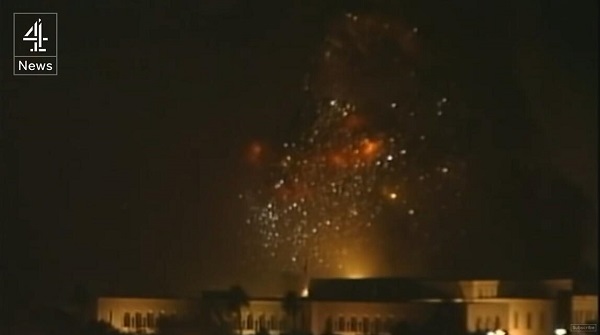
2003年,美國在沒有聯合國授權的情況下攻擊伊拉克
大家不要忘記,西方的民主概念是建立在民族國家的基礎之上,在民族國家之外,例如國際領域,是不適用的。這就是為什麼西方從來不在國際體系中使用民主這個詞,這也就是為什麼在國際體系裏沒有民主的原因。美國是國際體系的設計者和維護者,它認為自己有權隨時隨地採取單邊行動。現在西方國家的人口占不到全球人口總數的15%,但他們卻是國際體系中的主導者。任何民主的概念都被視為與國際體系無關,不適用於國際體系。回到民族國家,民族國家與西方所青睞的一元化方式相去甚遠,在這種情況下,各國被要求遵從西方的政治的規則和制度。但是,在現實中,世界上有不同的歷史、文化和治理形式。不承認和不尊重這一點,就已經對包括中國在內的許多國家造成了巨大的傷害。
弗朗西斯•福山曾經説過,中國的治理體系有着超凡的連續性,兩千年延續至今,遠超過其他任何國家。也正因如此,中國政府能夠取如此出色,如此有效。中國政治體制所擁有的深厚根基,比西方國家要深厚得多。成功的治理並非將一個國家的制度和規則照搬到其他國家,特別是在兩國國情完全不同的情況下。民主意味着要尊重某一國家的文化和傳統,允許該國治理模式在本國環境裏開花結果。謝謝大家。
Martin Jacques:
I’d like to thank the organizers for inviting me to participate in this very timely dialogue.
There is something deeply ironic of a president Biden’s summit for democracy. Convened by the United States in order to promote the case, the western style democracy, it takes place at a time when democracy in the United States itself has never been weaker or more under threat, certainly not since the civil war. It is almost as if the insurrection at Capitol Hill earlier this year had never taken place. That it was just a bad dream. There are two profound problems in the west concept of democracy. The first is the lack of any serious historical context. The second is the failure to understand and respect cultural difference.
First, historical context. In the western mind, democracy has been elevated from a political form specific to its time and place, to a universal form all times and in all countries. In so doing, any sense of historical context has been lost. Such a mindset is profoundly flawed. No political form is a cure-all. All are a product of their time and circumstances. Western democracy is no exception. Its future, even in the west itself, is neither certain nor guaranteed. The idea western style democracy is permanent rest on a belief that the fundamental conditions that have sustained in the west over the last 70 years, longer of course in the case of the U.S. and U.K. will continue indefinitely. It is becoming increasingly clear that this cannot be assumed. Democracy in a range of western countries is not in good health.
It is in a worst condition more than any time since the 1930s. We should remind ourselves that democracy has only been dominant in the west since 1945. During inter-war period, 1918 to 1939, democracy was confined, at least in Europe, to a very small number of countries. As the great historian Eric Hobsbawm has pointed out, the only European countries to have functioning democratic political institutions, which managed to survive for the entire period between 1918 and 1939 were the U.K., Finland, the Irish Free State, Sweden, and Switzerland. These countries contain a very small minority of Europe’s population. The great majority lived under various forms of dictatorship for part, most or all of that period.
There are many reasons why democracy was sparse, but the most important were the catastrophic effects and consequences of the Great Depression, which created the conditions for fascism and undermined those for democracy. In direct contrast, the main reason for the success of western democracy after the second world war was the long boom from 1945 until the mid-70s. After which growth continued, but at a much lower pace until 2007. The financial crisis in 2008 marked a major turning point. It led to growing disillusion in the governing elites and institutions in many western countries, including the U.S., U.K., Italy, France, and Greece. The most dramatic example was the United States, the rise of trump, growing divisions, polarization, the rise of populism and nationalism and austerity towards established elites. The very institute for public policy and Cambridge has recorded a growing crisis of democracy in the Anglo-Saxon countries with those dissatisfied with the performance of democracy doubling since 1995. As the western economy continue their relative decline, as they certainly will. It seems highly likely that such dissatisfaction will continue to grow. Even the future of U.S. democracy, long the bastion of western democracy, is now far from certain.
The U.S. has been on the rise for virtually its whole existence and extraordinary fact. This is given its governing system great prestige and authority. But what happens when the opposite is the case? When the U.S. finds itself in an unending process of relatively decline? Because that is what the future holds. Will American democracy survive in far less increment circumstances? The early signs are not too encouraging. Let me put this point in a different way. Ultimately, whatever the form of governments it has to deliver on behalf of its people. This is the bottom line. If it can’t deliver, then sooner or later it will be replaced. This is the crucial problem now faced by western democracy. Increasingly, they have been unable to deliver whatever the fancy talk about democracy. The acid test is the ability to deliver, to enhance the living standards and lives of the people. This is exactly where the western democracies are now failing, and China, in stark contrast is delivering. The Chinese governing system has proved much superior in delivering results over the last 40 years than the western-style democratic system.
This brings me to my second general point, cultural difference. The west has always regarded its model of governance to be universally applicable. Wherever the country might be, and whatever history and culture one size fits all. The classic example was the invasion of Iraq in 2003. The imposition of an entirely alien form of governance on a country that culturally and historically was profoundly different. But this abortive mission was no accident or isolated incident. The same basic philosophy had informed the colonial empires of Britain, France, the Netherlands, and other European powers in the 19th century and earlier. The European powers sought to impose their will, their religion, their customs, and their fear in whatever territory they could seize, including China. All in the name of civilizing the uncivilized. Invasion and intervention in the name of democracy is but the latest example. If a state has, in the U.S.’s view, an illegitimate form of governance, then it believes it has the right to intervene in order to impose its own version of democracy. So, the right of every country to sovereignty and its right to choose is, in the eyes of the U.S., conditional upon what choice it makes.
Remember, too, that the west conception of democracy is solely confined to the nation-state. It has no application outside the nation state, for example crucially in the international realm. That is why the term democracy is never used by the west in the context of the international system. And this is why the latter is devoid of democracy. United States is the architect and keeper of the international system, and it believes it has the right to act unilaterally whenever and wherever it was. The west now represents less than 15 % of the world’s population, and yet it is by far the dominant player in the international system. Any notion of democracy is regarded as irrelevant and inapplicable to the international system. Let’s return to the nation-state, far from the monolithic approach favored by the west, where countries are expected to conform to the western norm of governance. In the reality, of course, the world embraces a huge variety of different histories, cultures, and forms of governance. The failure to recognize and respect this has inflicted huge damage on many countries, including China.
As Francis Fukuyama has rightly argued, the governing system in China has been characterized by an extraordinary continuity over a period of two millennia, far greater than that in any other country. This is one of the reasons why Chinese governance is so remarkable, and so affected. It has very deep roots, far deeper than those of any western system of governance. Successful governance is not about transplanting an abstract set of rules and procedures from one country and applying it to an entirely different environment and set of circumstances somewhere else. Democracy means respecting the culture and traditions of a country, allowing governance to grow and flower in its own indigenous conditions. Thank you very much.
(翻譯:張佳奕、程澤笠)
本文系觀察者網獨家稿件,文章內容純屬作者個人觀點,不代表平台觀點,未經授權,不得轉載,否則將追究法律責任。關注觀察者網微信guanchacn,每日閲讀趣味文章。