為什麼日本在軟件方面不如其在硬件方面般出類拔萃?_風聞
龙腾网-2022-02-18 17:58
【來源龍騰網】
評論原創翻譯:
Yumashish Subba
, Software Developer
Ah… Finally. My time has come.
Where to begin?
In Japan software development is not held to the same standard as other engineering positions.
Japan has always had a custom where every year, new university graduates in their thousands march through giant career fairs searching for a job. This is something I call the March of the Penguins - every one of them is adorned with a new black suit with a pristine white shirt.
There the companies will take their resumes, interview them and perhaps extend an invitation to the next interview. None of these companies care about what you studied or what your passions are. They might perk up if they hear that you are from one of the top flight schools (Todai, Keio, Waseda, Tokyo Tech et al).
The whole idea here is that everything you need to know about doing your job will be taught to you.
Now I know people working at somewhat (emphasis on somewhat) internationalized companies like Mercari or Rakuten (the Japanese eBay and Amazon respectively) will tell you that this is not how tech companies hire.
The sad truth is that they do. While there are enough foreigners who will stand up to being told to hire and train clueless graduates and mold them into proper software developers in more international companies - the huge majority of software development firms don’t operate like that.
Naturally, many Japanese software development firms have engineering teams of pitiful quality.
Software development is looked at as any other skill that can be picked up in a few months to a year: accounting, secretarial work, project management, business analysis etc.
They don’t speak English
Naturally when you cannot read or speak English, the tools you use to develop software as well as the methods you use to develop them will be those that have managed to percolate downwards from English sources due to the magnanimity of people willing to volunteer their time to translate documentation and articles.
At any given time, the cutting edge of software development in Japan is 6 months to 7 years behind the rest of the world.
Software development is a reversed pyramid scheme
Most technology consulting firms who are awarded contracts do not actually have developers - or have only a handful at hand. They will sub-contract their work to firms down the totem pole who will in turn sub-sub-contract their work to a lesser firm.
The actual developer working on your product could be a sub-contract 5 contract levels removed from you.
Good luck managing changes in business requirements.
All this works because the people who award the contracts are as technologically illiterate as the ones proposing them. If there ever was an apropos time to use the word circlejerk this would be it.
Consumers have extremely conservative tastes
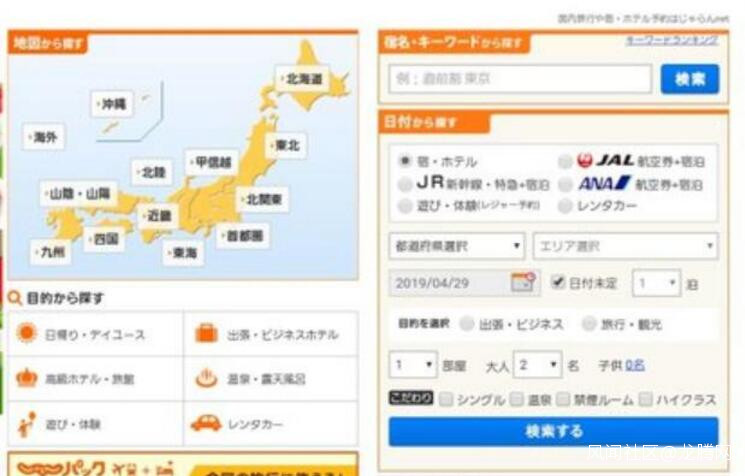
Anyone asking this question by now will have seen the absolutely antediluvian website designs that are still being employed by Japanese firms. (Behold the largest online travel agency site in Japan: www.jalan.net).
We have actually done user testing and A/B testing with non-trivial sample sizes.
Japanese websites don’t look like trash because the designers wanted to do this. They look this way because the Japanese audiences like this. They like the huge and distracting flashing banners. They like the overwhelming amount of text. They like what you and I might call crass and unpolished advertising masquerading as website content.
So you can either create modern designs that will bring in international attention, but alienate domestic users, or serve your existing customers as you have been doing for decades.
That’s an easy choice for many companies.
啊哈……終於,輪到我來秀了。
從哪裏開始呢?
1 在日本,軟件開發與其他工程職位的標準不同。
日本一直有一種習俗,每年成千上萬的新大學畢業生通過巨大的招聘會尋找工作。這被我稱之為“企鵝遊行”——每個人都穿着一件新的黑色西裝和一件質樸的白襯衫。
在那裏,公司會收下他們的簡歷,對他們進行面試,也許會發出參加下一次面試的邀請。這些公司都不關心你學過什麼,或者你的激情在哪些方面。如果他們聽到你是來自頂級學校(東大、慶應、早稻田、東京理工等),他們可能會興奮起來。
這裏的整個想法是,你需要知道的關於做你的工作的一切都將被教給你。
現在,我知道在Mercari或Rakuten(分別是日本的eBay和亞馬遜)等有點(強調:有點)國際化的公司工作的人將告訴你,這不是科技公司的招聘方式。
可悲的是,他們確實如此。雖然有足夠多的外國人會站出來告訴你,在更多的國際公司中,僱用和培訓毫無頭緒的畢業生,把他們塑造成合適的軟件開發人員--但絕大多數的軟件開發公司並不是這樣運作的。
自然,許多日本軟件開發公司的工程團隊的素質也很差。
軟件開發被看作是可以在幾個月到一年內掌握的任意其他技能:會計、秘書工作、項目管理、商業分析等等。
2 他們不會説英語
當你不能讀或説英語時,你用來開發軟件的工具以及你用來開發軟件的方法自然是那些願意自願花時間翻譯文件和文章的寬宏大量的人設法從英語來源滲透下來的。
在任何時候,日本的軟件開發前沿都要比世界其他地方落後6個月到7年。
3 軟件開發是一個反向的金字塔計劃
大多數獲得合同的技術諮詢公司實際上並沒有開發人員--或者手頭只有少數幾個。他們會把工作分包給圖騰柱下的公司,這些公司又會把工作分包給更小的公司。
在你的產品上工作的實際開發人員可能是一個與你相差5個合同級別的分包商。
祝你在管理業務需求變化方面好運。
之所以所有這些行得通,是因為授予合同的人和提出合同的人一樣都是技術上的文盲。如果有一個合適的時間來使用"小圈子"這個詞,那就是在這個時候用。
4 消費者的口味極其保守
任何問到這個問題的人現在都會看到日本公司仍在使用的絕對“前衞”的網站設計。(請看日本最大的在線旅行社網站:www.jalan.net)。
我們實際上已經用非平凡的樣本量進行了用户測試和 A/B 測試。
日本的網站看起來像垃圾,並不是因為設計師想這麼做。它們看起來像這樣,是因為日本的受眾喜歡這樣。他們喜歡巨大的、令人分心的閃爍的橫幅。他們喜歡鋪天蓋地的文字。他們喜歡你和我可能稱之為偽裝成網站內容的粗俗和不加修飾的廣告。
因此,你要麼創造出能帶來國際關注的現代設計,但疏遠國內用户,要麼像你幾十年來一直做的那樣為你的現有的客户服務。
這對許多公司來説都是一個簡單的選擇。
原創翻譯:龍騰網 http://www.ltaaa.cn 轉載請註明出處
Dan Lenski
Interesting answer!
Regarding Japanese consumers’ taste in websites… you wrote that Japanese consumers prefer crass/loud websites. That certainly comports with the Japanese websites I’ve seen, but do you think it is really those consumers’ preference, or just what they’ve become accustomed to?
It’s confusing to me because Japanese people seem to generally have tastes that I’d describe as rather minimalist and subtle in many areas: restaurant decor, hotel rooms, parks, gardens, museums, menus, clothing…
It seems to be only in advertising and commercial sites (whether online or real-world) that Japan prefers loud and garish things. Why is that? ¯\\\\\\\\_(ツ)_/¯
有意思的答案!
關於日本消費者對網站的品味……你寫道,日本消費者更喜歡粗俗/花哨的網站。這當然與我所看到的日本網站相吻合,但你認為這真的是這些消費者的偏好,還是隻是他們已經習慣了的東西?
這讓我很困惑,因為日本人的品味似乎一般都很簡約,在許多領域都很含蓄:餐廳裝飾、酒店房間、公園、花園、博物館、菜單、服裝……
似乎只有在廣告和商業網站(無論是在線還是現實世界)中,日本人更喜歡響亮和花哨的東西。這是為什麼呢?¯\\\\\\\\_(ツ)_/¯
Thorsten Schmidt
I think the idea that Japanese people prefer “minimalist and subtle” things is based on hearsay and myths. If you live in Japan, you will understand that people who like these things are a small niche minority, similar to how there might be a niche minority of connoisseurs of 18th century Icelandic literature in the US.
Just walk through any Japanese city, browse department stores, supermarkets, watch any Japanese TV channel, go to any Hotel etc. etc. - you will find that loud and garish things are the norm, especially compared to Western Europe.
The image of “minimal an subtle Japanese culture” is basically limited Western travel magazines or coffee table books that cater to the this mythical image of Japan but is not reality. It is a way to “sell” Japan because that’s what Western people’s escapist dream of Japan is. But nothing more.
我認為日本人喜歡"簡約而微妙"的東西的想法是一種道聽途説和神話。如果你生活在日本,你就會明白,喜歡這些東西的人是一個小眾的少數,類似於在美國可能有一個小眾的18世紀冰島文學的鑑賞家羣體。
只要走過任何一個日本城市,逛逛百貨商店和超市,看任何一個日本電視頻道,去任何一家酒店,等等 - - 你會發現,喧鬧和花哨的東西是常態,特別是與西歐相比。
“極簡微妙的日本文化”的形象基本上僅限於西方的旅遊雜誌或咖啡桌書籍,它們迎合了日本的這種神話般的形象,但這並不是現實。這是一種"推銷"日本的方式,因為這就是西方人對日本的逃避主義夢想。但僅此而已。