亞裔比例“明顯過高” ,紐約時報冬奧推特爭議如潮_風聞
大雾拦江-退伍军人-2022-02-20 14:11
文:紐約華人資訊網特約記者 Immanuel
2022年2月9日,《紐約時報》在國外社交媒體上推送了由體育記者安德魯·凱(Andrew Keh)在北京冬奧會現場採寫的一篇關於美國花樣滑冰代表隊的文章。
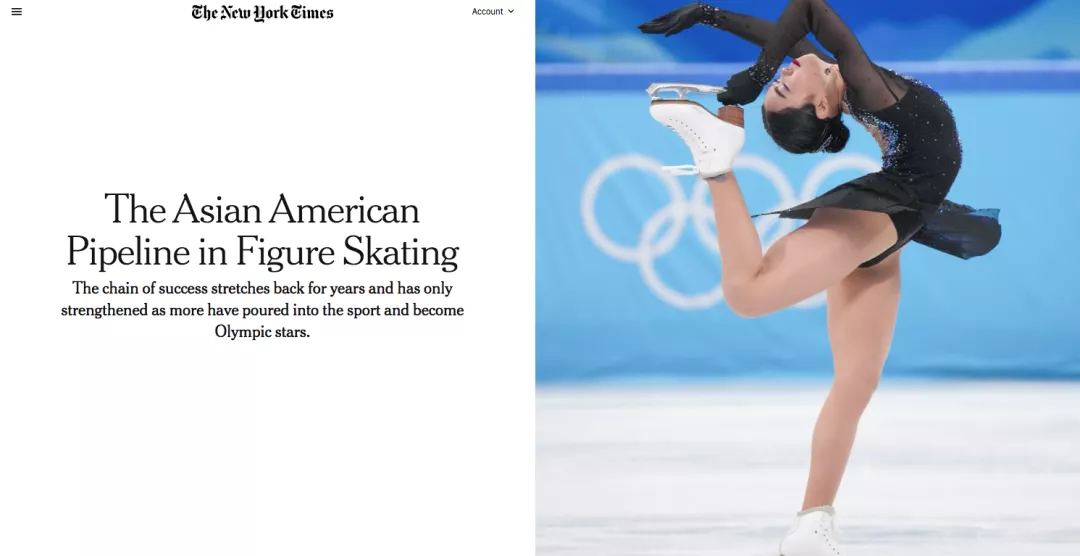
凱發佈在紐時上的文章。
這篇文章從退役的華裔花滑運動員陳婷婷的感慨寫起,講述曾經在美國運動界毫無存在感的亞裔是如何在三十年的時間內,在花樣滑冰領域實現“逆襲”,佔據美國花樣滑冰隊“半邊天”的故事。文章通過採訪多名現役運動員和老運動員,記錄了新老運動員之間的激勵和傳承。他們從感到邊緣化甚至被歧視,到逐漸找到文化自信,勇敢的抵制各種區別對待,也戰勝了網暴壓力取得令人矚目的成績。
為了推送這篇用體育新聞的形式討論社會話題的報道,紐時連發了四條推特,第一條是文章結尾的一句話:“長期以來,亞裔一直苦於在美國流行文化中缺乏代表性。因此,對於這些花滑選手來説,看到頂尖運動員身上反映出自己的元素,可能是一種激動人心的體驗。”
這條推文並沒有引起什麼波瀾,但是後來的一條卻引發了軒然大波,從網友到政客,從社交媒體到機構媒體,從美國到中國,那條推文中的一個詞組成功引來了鋪天蓋地的爭議。那條推文寫道:
“亞洲人約佔美國人口的 7%,但在各個級別的溜冰場和比賽中,從東海岸到西海岸,亞洲人的代表顯而易見的高於人口比例(vividly overrepresented)。逐漸地,他們改變了一項運動,直到 1990 年代,這項運動幾乎都是白人。”
在中文媒體中,vividly overrepresented這個詞多被翻譯為“明顯過高”,還有媒體進一步將文章中的“亞裔”替換成“華裔”,直指紐時“反華”;而在英文社交媒體上,這個詞本身也引來了諸多吐槽。多名網友留言道:“你們怎麼不報道NBA(美國職業籃球聯賽)裏面有哪些種族vividly overrepresented了呢?”還有更多人直斥其“種族主義”,其中包括共和黨聯邦參議員泰德·科魯茲(Ted Cruz)。
作為支持1月6日國會山“奪權”行動的右派領袖之一,科魯茲長期被左派大本營媒體《紐約時報》口誅筆伐,其評論版不吝尖鋭措辭,指責他為“美國有史以來最沒良心的政客”“那些可恥的政變策劃者共和黨人”等等。這次,科魯茲終於抓住機會,他轉發了紐時的推特,評論説:“自由主義者擁抱種族主義,尤其是針對亞裔美國人。《紐約時報》抱怨亞裔在滑冰項目里人明顯超比例了。”
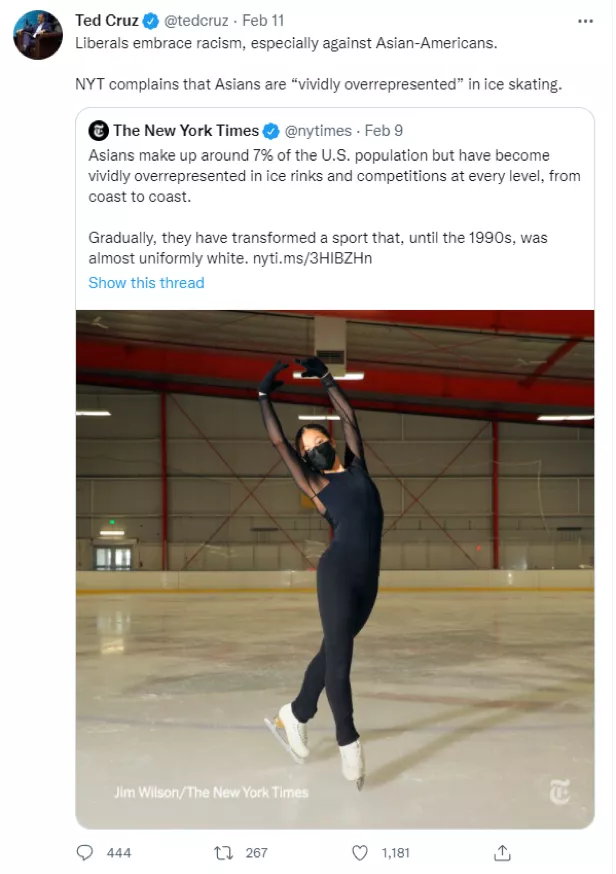
科魯茲的社交媒體截圖
激烈的討論持續了一個多星期,直到昨天,紐約市居民聯盟還在發文譴責,要求《紐約時報》道歉。此前,《紐約時報》等媒體報道了在紐約重點打造的特殊高中尖子班裏面,亞裔的人數超過人口比例,也是用的overrepresented這個詞,並且引發了一些政客當機立斷提議要取消特殊高中考試,按照人口比例分配入學名額以照顧弱勢族裔的風波。紐約市居民聯盟本身也是一羣以華裔為主的家長為了捍衞特殊高中考試而成立。
除了教育資源之外,在美國社會的其他多個領域,不同種族選民羣體之間的資源競爭關係也在日漸緊張,使得客觀描述人口比例在統計上的“超高”或者“超低”成了可能直接帶來一系列後果的特殊詞彙。尤其是對持有不同政見的人來説,這個敏感詞有了見仁見智的不同指向和含義。
“作者自己也是亞裔,我不認為他是在歧視亞裔。”
“我懷疑你們有沒有讀原文?”
也有支持者對紐時記者表達支持,儘管在評論區如潮的譴責聲中,這樣的評論並不多。
“我完全能夠理解,”這篇報道的作者凱在評論區回應説:“推特上已經不止一次發生這種情況,一個詞在推文中的使用沒能表達出原文中的意思。讀了原文的人們可能有不一樣的感受。”他並解釋説:“我與多名亞裔美國社會學家對話時聽到‘比例過高’(overrepresented)這個詞,然後使用了它。從字面意思看,這隻意味着參與率與人口統計數據不成比例,不含任何批判色彩。”
“比例超高這個詞或許是個統計學上的中性詞,但是在現在的社會環境下,它已經承載了太多的含義。作為面對大眾的寫作者來説,應該考慮用更好的詞來表達這個意思。”網民Chris Young評論説
附:《紐約時報》報道中英文對照原文
亞裔美國人撐起美國花樣滑冰“半邊天”
The Asian American Pipeline in Figure Skating
BEIJING — Tiffany Chin scanned the arena at the U.S. Figure Skating Championships last month and marveled at how things had changed.
北京——在上個月的美國花樣滑冰錦標賽上,陳婷婷掃視全場,感嘆變化之大。
Chin won the national title in 1985. She was a happy-go-lucky teenager back then, but savvy enough to realize that the winners who had come before her had not looked like her, that few people in the rinks where she skated ever did.
1985年,陳婷婷獲得全國冠軍。那時她還是個無憂無慮的少女,但她的見識也足以讓她意識到,之前的獲勝者都和她長得不一樣,在這個冰場裏幾乎沒什麼人和她一樣。
The scene last month was different. Asian American skaters populated the singles and pairs and ice dancing competitions. They appeared up and down the standings in the senior and junior contests. And by the end of the week, they filled the roster of the Olympic team.
上個月的情況則有所不同。亞裔美國滑冰選手佔據了單人滑、雙人滑和冰舞比賽。他們在各級別比賽排行榜上起起落落。週末,美國奧運花滑代表隊的名單上出現的也全是他們。
For the second consecutive Winter Games, four of the six figure skaters who arrived to represent the United States in the singles events were Asian American: Karen Chen, Nathan Chen, Alysa Liu and Vincent Zhou. A fifth Asian American skater, Madison Chock, is competing in the ice dancing event.
在連續兩屆冬奧會代表美國參加單人比賽的六名花樣滑冰選手中,有四名是亞裔美國人:陳楷雯、陳巍、劉美賢和周知方。第五名亞裔美國滑冰選手麥迪遜·喬克將參加冰舞比賽。
“There are so many,” Chin said. “And that is so exciting.”
“好多啊,”陳婷婷説。“太讓人興奮了。”
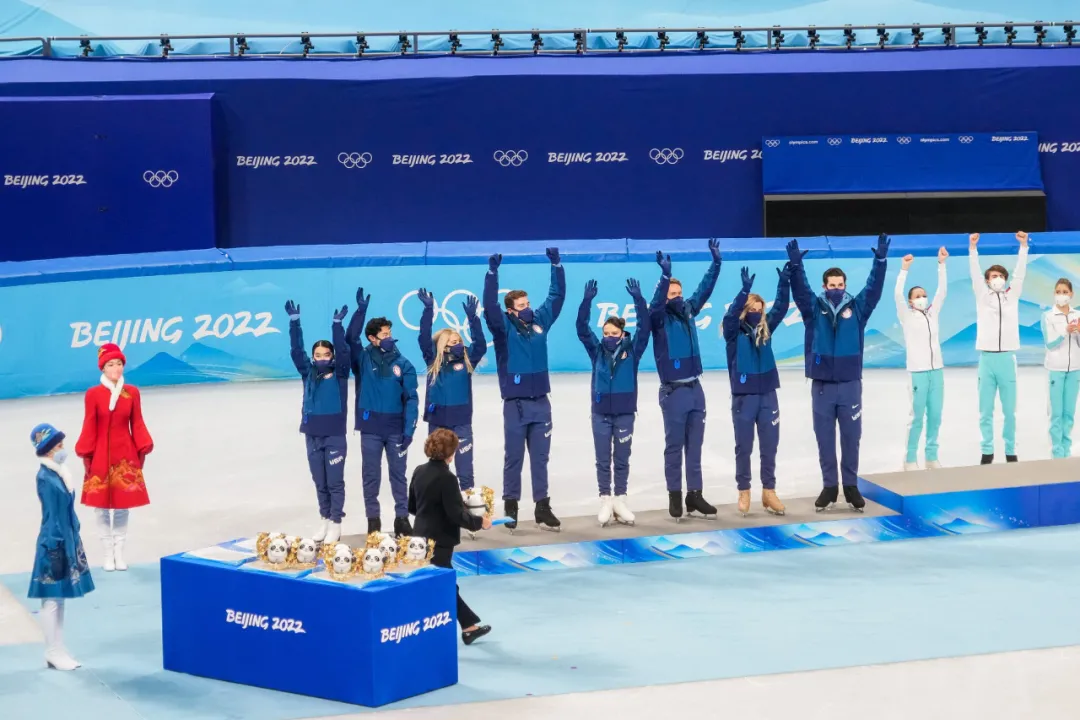
美國選手陳楷雯、陳巍和麥迪遜·喬克在團體項目中獲得銀牌。(由於新冠病毒檢測結果為陽性,周知方沒有出席頒獎儀式。) CHANG W. LEE/THE NEW YORK TIMES
In the United States, a country where Asians and sports are not often intertwined in the popular imagination, figure skating is now plainly an Asian American sport. Asians make up around 7 percent of the American population but have become vividly overrepresented in ice rinks and competitions at every level, from coast to coast.
在美國,大眾通常不會把亞裔與體育運動聯繫在一起,但花樣滑冰現在顯然是一項亞裔美國人的運動。亞裔約佔美國人口的7%,但在美國各地的冰場和比賽中,亞裔的比例明顯高於其他族裔。
Gradually, they have transformed a sport that, until the 1990s, was almost uniformly white. They have infused competitions with music that draws from their Asian heritage, bolstered a pipeline that could solidify their hold on the sport and, in a climate of anxiety about anti-Asian violence, navigated the perils of hate on social media while insisting on expressing their roots.
漸漸地,他們改變了這項直到1990年代幾乎都屬於白人的運動。他們在比賽中注入了來自亞裔傳統的音樂,加強了可以鞏固他們在這項運動中地位的人才輸送渠道,在對反亞裔暴力感到焦慮的氣氛中,他們克服社交媒體上的仇恨,堅持表達他們自己的根源。
“I think representation is really important,” said Nathan Chen, a Chinese American who was also a member of the Olympic team in 2018, when seven of the 14 skaters were Asian American. “So to continue seeing faces that kind of look like yours on TV doing really cool things, I think, is still useful to a young kid.”
“我認為代表性真的很重要,”華裔美國人陳巍説。他也是2018年冬奧會代表隊的成員,當時14名花滑選手中有7人是亞裔美國人。“所以,我認為,一直能在電視上看到像你們這樣的面孔做出非常酷的事情,對一個年輕的孩子來説仍然是有用的。”
Amid the various factors behind this phenomenon, almost every Asian American skater mentions being inspired by a chain of early pioneers.
在這一現象背後的各種原因之中,幾乎每個亞裔美國花滑選手都提到自己受到了一批早期先驅者的啓發。
Chin provided such a spark for Kristi Yamaguchi, four years her junior, who recalled watching Chin whenever she came to the Bay Area, where Yamaguchi grew up, marveling at her technique and even asking once for her autograph.
陳婷婷給比她小四歲的克里斯蒂·山口帶來了這樣的火花。山口回憶説,每當她來到自己長大的舊金山灣區,都會去看陳婷婷,陳婷婷的技巧令她驚歎,她甚至有一次還向陳婷婷要簽名。
“I always looked up to her,” said Yamaguchi, a two-time world champion, who became a household name after winning a gold medal at the 1992 Games. “There was definitely that kinship, that inherent connection, because she is Asian American.”
“我一直很仰慕她,”山口説。山口曾兩獲世界冠軍,在1992年奧運會上贏得金牌後,她成了家喻户曉的人物。“肯定是有那種親近感,那種內在的聯繫,因為她是亞裔美國人。”
Liu, 16, a two-time U.S. champion, began skating, in part, because her father, Arthur Liu, had become such a big fan of Michelle Kwan — a two-time Olympic medalist (1998, 2002), five-time world champion and nine-time national champion — after immigrating to the United States from China three decades ago.
16歲的劉美賢曾兩獲得美國滑冰冠軍,她之所以開始滑冰,部分原因是她的父親劉俊30年前從中國移民到美國後,就成了關穎珊的超級粉絲。關穎珊曾於1998年和2002年兩獲奧運獎牌,五獲世界冠軍,九獲全國冠軍。
“I watched figure skating all the time,” he said. “When I had Alysa, my office was two blocks away from the Oakland Ice Center, and I figured, let’s see if she likes it.”
“我一直在看花樣滑冰,”劉俊説。“阿萊莎(劉美賢的英文名——譯註)出生的時候,我的辦公室離奧克蘭冰雪中心只有兩個街區,我想,看看她會不會喜歡吧。”
In some ways, it has seemed like a matter of being in the right place at the right time.
在某些方面,這似乎是天時地利的結果。
The success of Yamaguchi and Kwan came at a time when figure skating was near the peak of its popularity in the United States (it has faded considerably since then) and on the heels of a surge in new rinks around the country.
克里斯蒂·山口和關穎珊獲得成功的時候,花樣滑冰在美國的受歡迎程度正接近頂峯(從那以後就開始大幅下降了),而且全國各地的新建冰場也在激增。
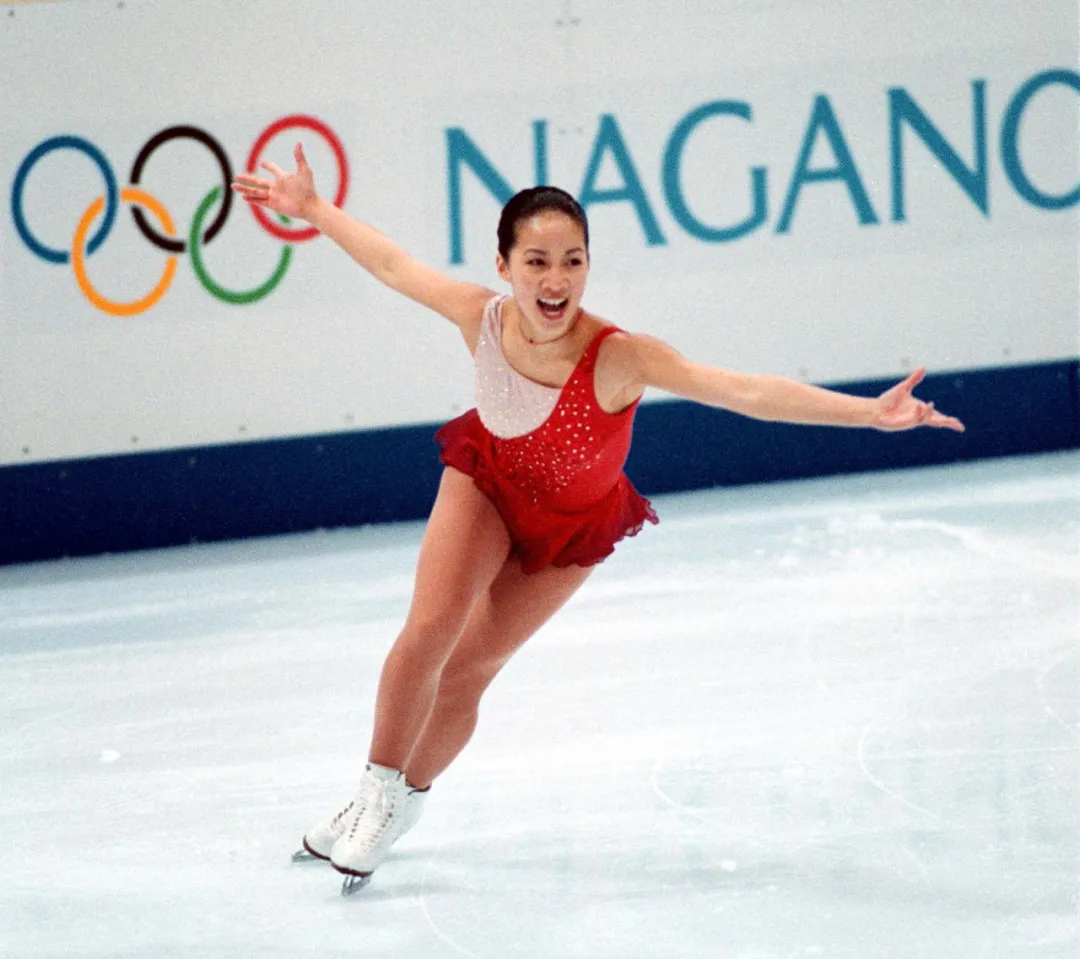
關穎珊在1998年長野奧運會上表演短節目。CHANG W. LEE/THE NEW YORK TIMES
Chin, Yamaguchi and Kwan all grew up in California, and the state, with its considerable Asian population, remains a center of gravity for the sport today. Karen Chen, Chock, Liu and Zhou, for instance, were all born in California.
陳婷婷、克里斯蒂·山口和關穎珊都是在加州長大,那裏有相當多的亞裔人口,如今仍是這項運動的重心。陳楷雯、麥迪遜·喬克、劉美賢和周知方都出生在加州。
When Kwan opened an ice rink in Artesia, Calif., in 2005, it quickly became a magnet for Asian families from the area. Chin, who coaches now in Southern California, said around 40 percent of her pupils were Asian. And Californians are not only representing America: Zhu Yi (also known as Beverly Zhu), who is from Los Angeles, is competing for China this year after winning the U.S. novice title in 2018.
2005年,關穎珊在加州阿特西亞開了一家溜冰場,很快吸引了該地區的亞裔家庭。目前在南加州當教練的陳婷婷説,她的學生中大約有40%是亞裔。加州人不僅代表美國參賽:來自洛杉磯的朱易(又名貝弗莉·朱)在2018年贏得美國少年賽冠軍後,今年將代表中國參賽。
Other explanations — that Asians excel because they tend to have smaller bodies or because their parents are demanding, so-called tiger parents — are often floated, including by some Asian Americans, but experts tend to dismiss such theories outright.
其他的解釋也經常被提起——亞裔之所以優秀,是因為他們的身材往往更小巧,或者是因為他們的父母要求更嚴格,也就是所謂的虎爸虎媽——一些亞裔美國人自己也這樣説,但專家傾向於直接否定這些説法。
“Every race has body types that would be successful in figure skating,” said Christina Chin, who teaches a sports sociology course at Cal State Fullerton. “It’s the cultural acceptance, the societal pressures or opportunities, the structural forces and institutions that make it possible.”
“每個種族都有能在花樣滑冰中取得成功的體型,”加州州立大學富勒頓分校教授體育社會學課程的克里斯蒂娜·陳説。“是文化接受度、社會壓力或機會、結構性力量和制度使其成為可能。”
People do tend to agree on one factor in explaining why Asian Americans have broken through in figure skating, while other minority groups in the United States have not: Figure skating is expensive, and East Asians, as an immigrant group, have the highest average household income in the country.
在解釋為什麼亞裔美國人在花樣滑冰方面取得突破,而美國其他少數族裔卻沒能做到時,人們傾向於認同一個因素:花樣滑冰花費昂貴,而東亞人作為移民羣體,在美國擁有最高的平均家庭收入。
Asians have long struggled with a lack of representation in American popular culture. For these skaters, then, seeing elements of themselves mirrored in top athletes could be a soul-stirring experience.
長期以來,亞裔一直苦於在美國流行文化中缺乏代表性。因此,對於這些花滑選手來説,看到頂尖運動員身上反映出自己的元素,可能是一種激動人心的體驗。
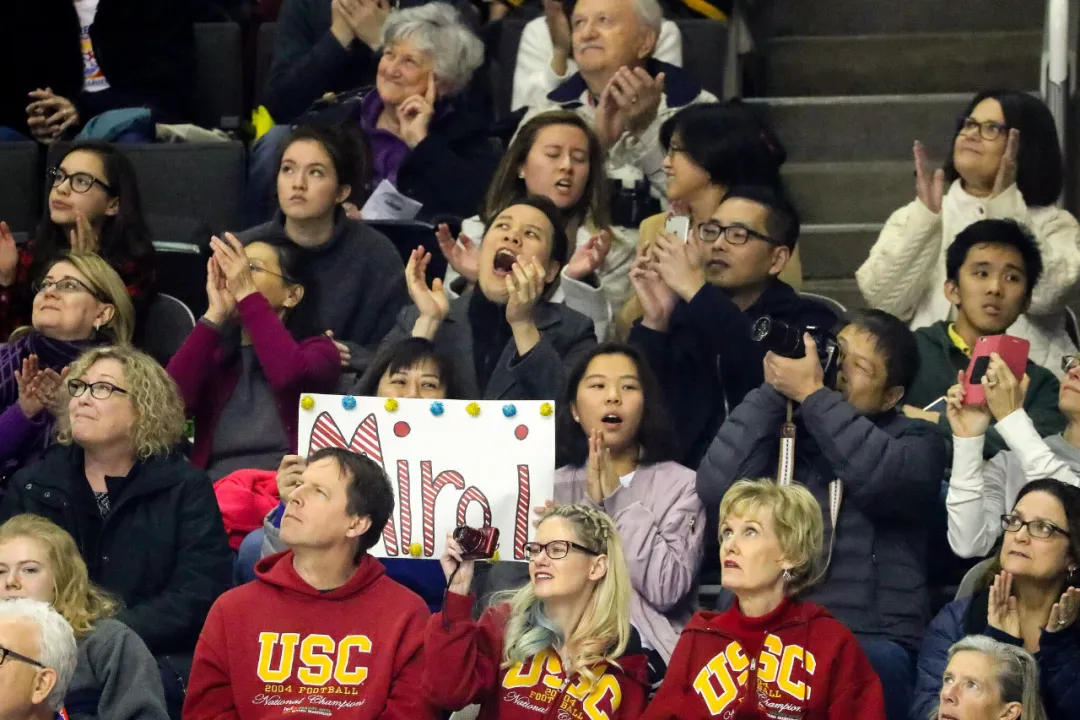
在2018年美國花樣滑冰錦標賽上,長洲未來的得分讓粉絲們驚歎不已。CHANG W. LEE/THE NEW YORK TIMES
Mirai Nagasu, a former national champion and two-time Olympian (2010, 2018), grew up working at her parents’ Japanese restaurant, where they eked out enough money to pay for her lessons. Nagasu laughed remembering how much it meant to her, as a young skater, to learn that Kwan’s parents had owned a restaurant, too. (Chin’s parents also owned a Chinese restaurant, and Liu’s father worked in one before she was born.)
前國家冠軍和兩屆奧運會選手(2010年、2018年)長洲未來從小就在父母的日本餐館工作,他們靠這家餐館勉強攢夠了錢支付她的課程。長洲未來笑着回憶起,當她還是一名年輕滑冰運動員時,得知關穎珊的父母也開過餐館,這對她來説非常重要。(陳婷婷的父母也開了一家中餐館,劉美賢的父親在她出生前也曾在餐館工作。)
Naomi Nari Nam, who won a silver medal at the 1999 national championships, noted that the rise of Asian American participation had also coincided with the success of skaters from East Asia, like Yuna Kim of South Korea.
曾在1999年全國錦標賽上獲得銀牌的娜奧米·納裏·南指出,亞裔美國人蔘與花滑人數的上升與東亞運動員取得成功(如韓國的金妍兒)發生在同一個時期。
“When I started skating, I was the one out of two Asian skaters in my rink, in Costa Mesa, Calif.,” said Nam, whose success led to an appearance on “The Tonight Show” at age 13 and a run of television appearances and commercials in Korea. “I coach now in Lakewood, Calif., and around 90 percent of my clientele is Asian or half Asian.”
“我剛開始滑冰的時候,在加州科斯塔梅薩的溜冰場裏,我是兩名亞裔滑冰選手中的一名,”娜奧米·南説。她的成功讓她在13歲時登上了《今夜秀》(The Tonight Show)節目,並在韓國一系列電視節目和廣告中出現。“我現在在加利福尼亞州的萊克伍德當教練,我的客户中大約90%是亞裔或半亞裔。”
Still, the sport was not always accommodating to them.
儘管如此,這項運動並不總是包容他們。
When Chin skated, she was often called “China Doll” by commentators and journalists. Articles from the time refer to her “porcelain complexion” and “Oriental roots.” She was called a “siamese cat” and “unemotional” and an “exotic beauty.”
陳婷婷滑冰時,經常被評論員和記者稱為“中國娃娃”。當時的文章提到了她的“瓷器膚色”和“東方根基”。她被稱為“暹羅貓”、“不帶情緒”,是個“異國情調的美女”。
Nam was placed in an etiquette class by her coach so she could learn how to interact with the predominantly white officials and judges who could decide her fate in skating.
娜奧米·南被她的教練安排上禮儀課,這樣她就可以學習如何與白人佔主導的官員和法官互動,這些人可以決定她滑冰事業的命運。
“He knew that it was a different culture,” Nam said.
“他知道這是一種不同的文化,”南説。
Skaters said that while explicit racism inside figure skating felt rare, many acknowledged that they received racist comments on social media. Alysa Liu learned over time to tune out harassing messages. But some incidents, in a time when violence and hate against Asian Americans have increased, have been harder to ignore. Liu, who has spoken about her growing awareness of social issues, called her father one recent night, struggling to sleep after reading about the shooting of a 71-year-old Chinese man in Chicago.
花樣滑冰運動員表示,雖然這項運動中很少見到明顯的種族主義,但許多人承認他們在社交媒體上收到了種族主義評論。隨着時間的推移,劉美賢學會了對騷擾信息充耳不聞。但在針對亞裔美國人的暴力和仇恨增加之際,一些事件仍難以忽視。劉美賢談到她對社會問題的意識日益增強,最近一天晚上,她在讀到一名71歲的中國男子在芝加哥被槍擊後難以入睡,給父親打了電話。
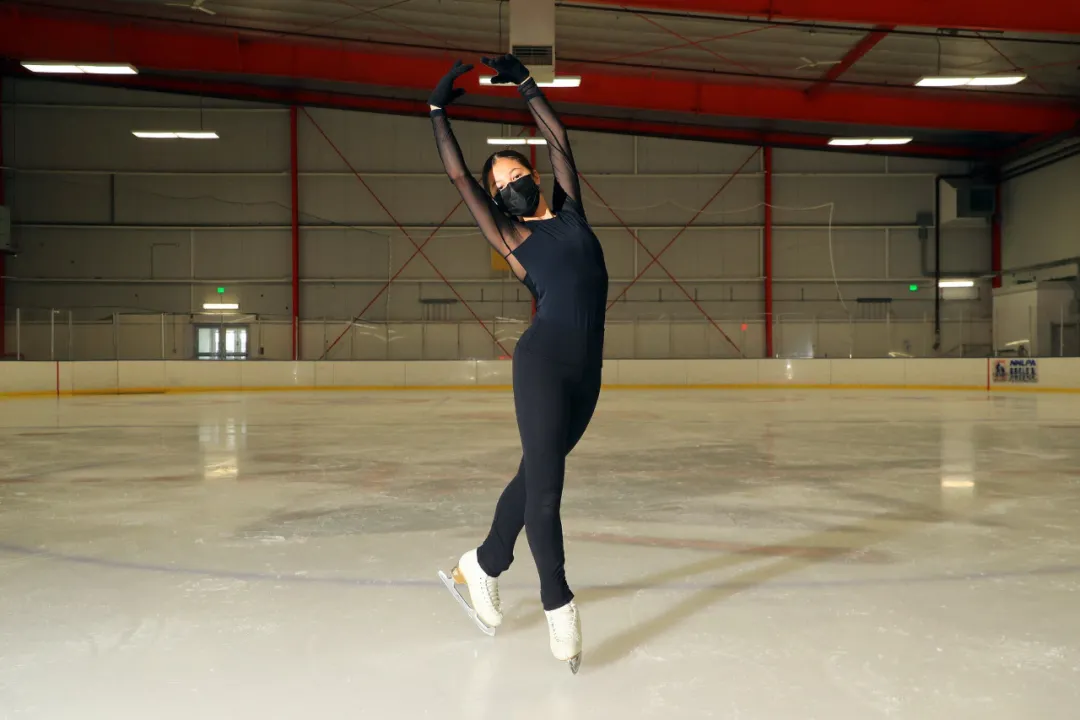
劉美賢在加州奧克蘭訓練。JIM WILSON/THE NEW YORK TIMES
“She was crying,” Arthur Liu said. “Crying hard.”
“她在哭,”亞瑟·劉(音)説。“哭得很厲害。”
At the 2018 Games, Nagasu’s excitement over becoming the first American woman to land a triple axel in Olympic competition was muted by a viral tweet from a columnist for the opinion section at The New York Times who wrote, “Immigrants: They get the job done,” based on a line from “Hamilton.” Nagasu, who was born in Montebello, Calif., had declined to comment on it then. But in an interview last month she said, “It was not appropriate.”
在2018年奧運會上,長洲成為第一位在奧運會比賽中完成三週半跳的美國女性,但她的興奮被《紐約時報》評論版一位專欄作家的熱轉推文潑了冷水,作家基於音樂劇《漢密爾頓》中的一句台詞寫道:“移民:他們就是能成事。”出生在加州蒙特貝羅的長洲當時拒絕對此發表評論。但在上個月的一次採訪中,她説,“那樣是不妥的。”
Over time, Asian American skaters have become more comfortable publicly asserting their identities.
隨着時間的推移,亞裔美國花樣滑冰選手變得更加樂於公開表達自己的身份。
At the 2018 Games, Nathan Chen wore an outfit from the Chinese American designer Vera Wang and skated to the music of “Mao’s Last Dancer,” a 2009 film about the Chinese ballet dancer Li Cunxin.
在2018年奧運會上,陳巍穿着華裔美國設計師王薇薇(Vera Wang)的服裝,選曲來自《毛澤東時代的最後舞者》,這是一部2009年講述中國芭蕾舞演員李存信的電影。
Karen Chen, who took Chinese dance classes as a child, has incorporated traditional fans and other Chinese objects into show numbers. She has been skating this season to “The Butterfly Lovers’ Violin Concerto,” which she called “a Chinese classic.”
小時候學過中國舞的陳楷雯將傳統扇子和其他中國元素融入了比賽。這個賽季,她選擇了《梁祝小提琴協奏曲》,她稱之為“一部中國經典”。
“I think my ethnicity and cultural background has a huge impact on me as a person, even in skating,” she said. “It’s stuff that inspires me, and it does make me proud of who I am and who I’ve become.”
“我認為我的種族和文化背景對我個人產生了巨大的影響,即使在滑冰方面也是如此,”她説。“這些激勵着我,確實讓我為我是誰以及我成為了什麼樣的人而感到自豪。”
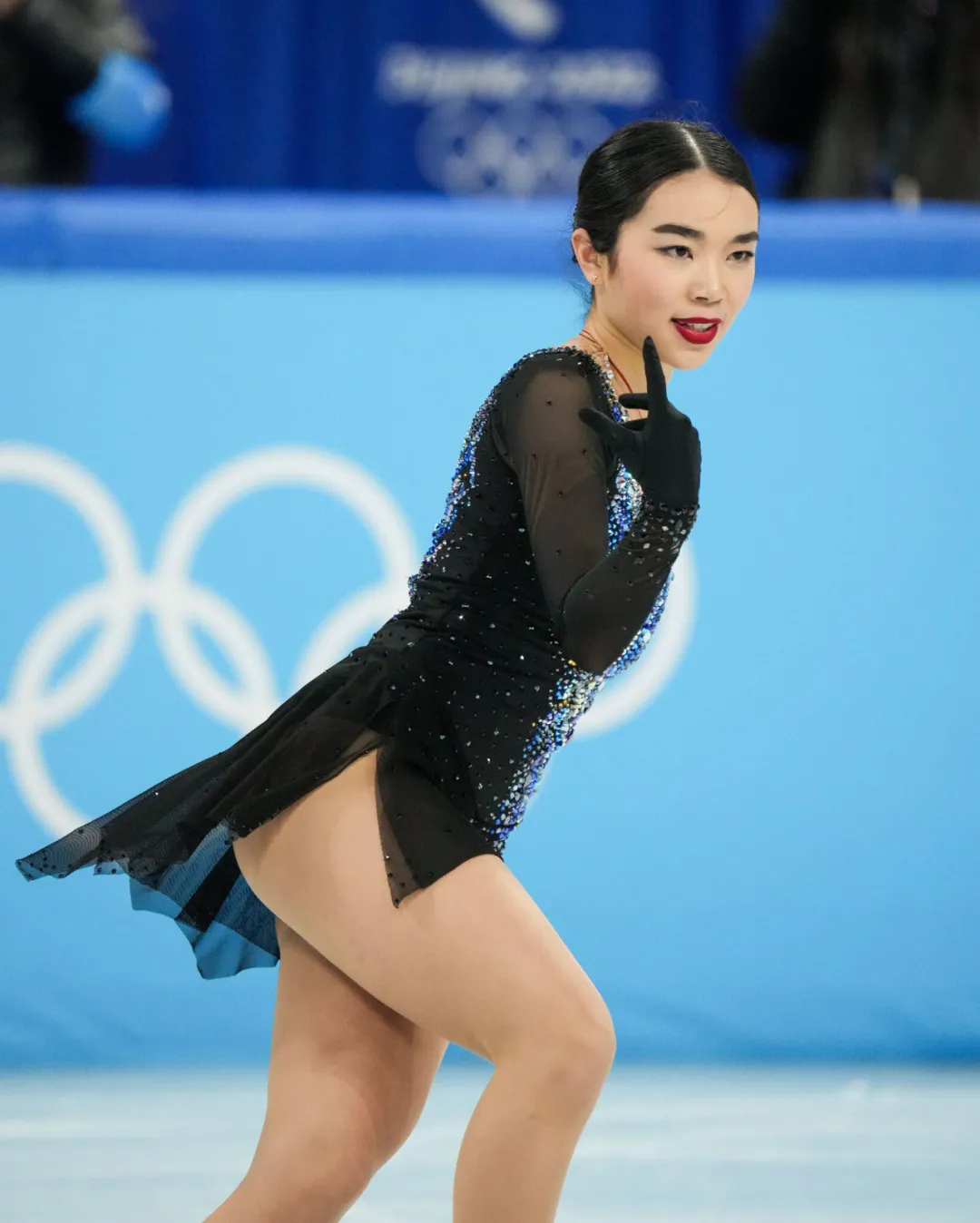
陳楷雯在北京奧運會團體賽女子短節目比賽中獲得第五名。GABRIELA BHASKAR/THE NEW YORK TIMES
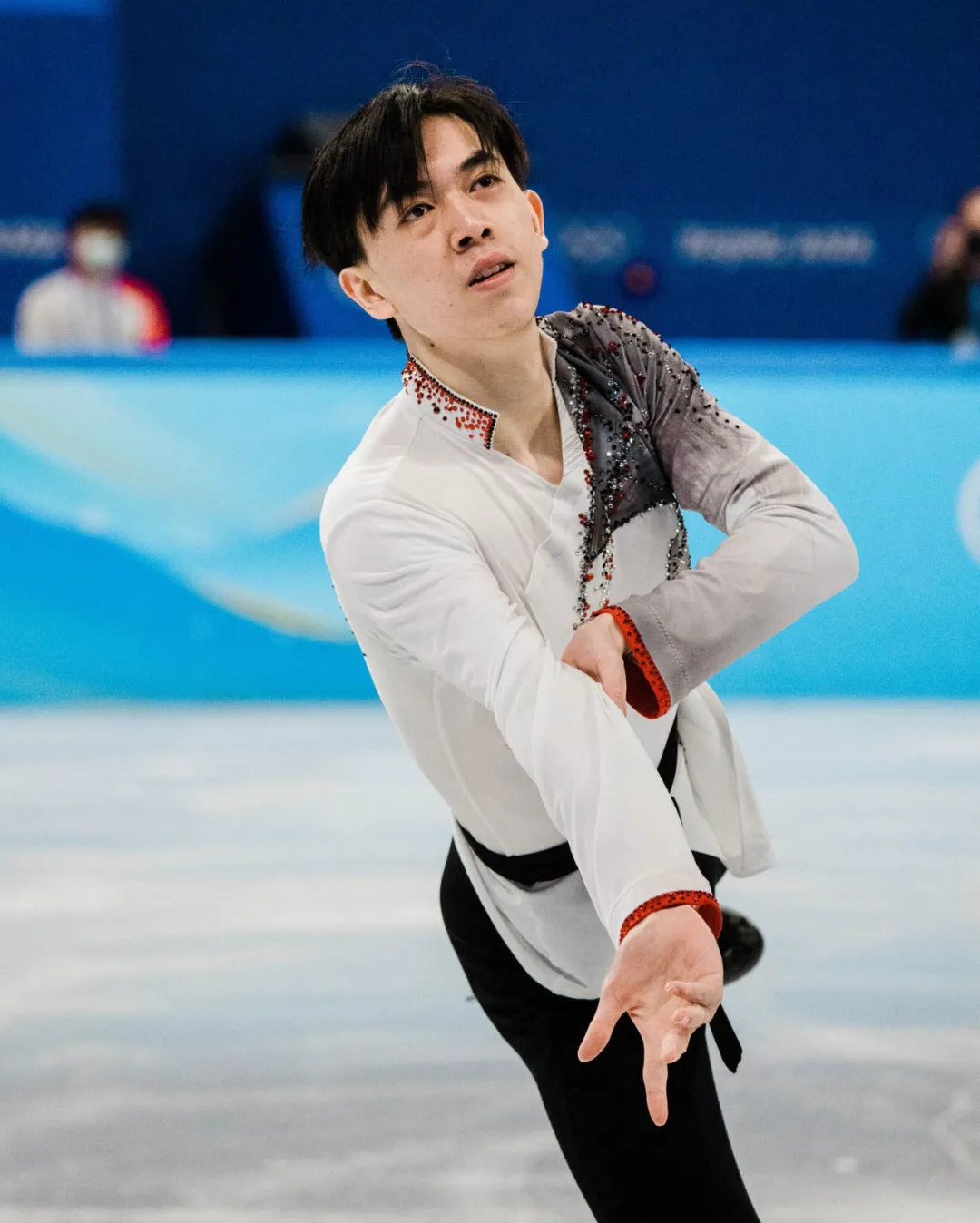
周知方參加了北京奧運會團體賽男子自由滑冰項目的比賽。美國隊獲得銀牌。GABRIELA BHASKAR/THE NEW YORK TIMES
Zhou, who had to withdraw from the Games on Monday after testing positive for the coronavirus, has skated exhibition performances to the music of Joji, a pop singer from Japan, and last week skated in the team event to the theme from the 2000 Ang Lee film “Crouching Tiger, Hidden Dragon.”
本週一因新冠病毒檢測呈陽性而不得不退出奧運會的周知方選擇的曲目是日本流行歌手Joji的音樂。他在上週的團體項目的選曲是2000年李安電影《卧虎藏龍》的主題曲。
“Everybody is celebrating Chinese New Year right now,” Zhou said. “It’s the Year of the Tiger, and I was born in the Year of the Dragon, so it’s kind of perfect.”
“現在每個人都在慶祝中國新年,”周知方説。“今年是虎年,而我是龍年出生的,所以很完美。”
As a group, these skaters have enjoyed a kind of hidden comfort zone on the team, a calmness afforded by not being the Only One.
作為一個團體,這些選手在團隊中享受着一種隱藏的舒適區,自己不再是“唯一的亞裔”,從而得到了平靜。
Zhou’s mother has become known for inviting the skaters over to her place for home cooking.
大家都知道周知方的母親喜歡邀請其他選手到她家吃飯。
Karen Chen said she had meaningful conversations with Nathan Chen about managing the pressure and expectations of immigrant parents, about addressing mental health in a community in which it is not often prioritized. (Studies regularly show Asian Americans, as a racial group, are among the least likely in this country to seek mental health services.)
陳楷雯説,她與陳巍深入地討論過如何處理移民父母帶來的壓力和期望,以及如何在一個通常不重視心理健康的羣體裏探討心理健康問題。(研究經常表明,在美國,作為一個種族羣體,亞裔美國人尋求心理健康服務的可能性是最低的。)
More lightheartedly, Karen Chen pointed out that all four Asian American singles skaters on the team spoke Mandarin, at varying levels of proficiency. She had been brushing up before arriving here.
還有一件輕鬆點的事,陳楷雯指出,隊中的所有四名亞裔單人選手或多或少都會一些普通話。她在來參賽前一直在温習。
“I think Nathan’s Chinese is the worst,” she said, laughing. “I can say confidently that’s one thing I am better than Nathan at.”
“我認為陳巍的中文是最差的,”她笑着説。“我可以自信地説,至少這方面我總算是比他強的。
Juliet Macur對本文有報道貢獻。
Andrew Keh是駐紐約的體育記者,報道奧運會相關新聞。
《紐約時間》出品