諾獎得主Wilczek:延遲宇宙熱寂_風聞
返朴-返朴官方账号-关注返朴(ID:fanpu2019),阅读更多!2022-10-19 10:45
撰文 | Frank Wilczek
翻譯 | 胡風、梁丁當
中文版

在今年夏天某個酷熱的上午,當我正在游泳時,我的思緒突然飄到了另一個關於“氣候變化”的問題上:宇宙的“熱死亡”,也就是我們常説的“熱寂”。這很可能是宇宙的終極命運。諷刺的是,比起我們這個越來越熱的星球,宇宙死亡的話題反而沒有那麼令人焦慮。
在19世紀,隨着科學家對“熱”的科學理解逐漸加深,產生了“宇宙熱寂”的假説。它的核心思想很簡單 :物理系統總是會趨於平衡。比如,熱量總是從較熱的物體自發流入較冷的相鄰物體 ;隨着熱量的交換,前者被冷卻,後者被加熱,當二者達到相同的温度後,熱量交換就會終止。
我們可以通過給對應的系統注入能量,從而延遲到達最終的平衡與靜止的時間,但這也只是暫時的。比如,我們可以給發動機加油,給動物餵食,給電池充電。但是發動機會磨損,動物會死亡,電池也會老化而無法充電。
這些日常現象可以在熱力學中被進一步概括和強化。在熱力學中,所謂的拱頂石就是熱力學第二定律。1865年,魯道夫 · 克勞修斯(Rudolf Clausius)首次給出了熱力學第二定律的數學表達式。它指出:系統的無序性由熵來度量,隨着時間的流逝,熵會不斷增加,這也意味着系統的有序結構在逐漸消失。最終,系統會演化到一個完全無序且毫無特徵的平衡態——熵最大的狀態。
根據熱力學第二定律的無情邏輯,宇宙最終將演化到一個毫無變化與生機的死寂狀態,即“宇宙熱寂”。現代宇宙學進一步充實了這一説法。
引力作用導致物質傾向於聚集。但在早期宇宙中,物質分佈極為均勻,所以引力處於遠離平衡的狀態。隨着時間的推移,引力試圖達到平衡,將稀薄的星雲凝聚成恆星。恆星內部的高密度和高壓會點燃核反應。核燃燒釋放的熱將為宇宙的運動提供能量,但這只是緩刑。幾百億年後,所有的恆星的燃料都將燃燒殆盡。
要想對抗宇宙熱寂,我們的子孫後輩或者宇宙中的其他智慧生命,或許可以採用以下的一些方法。下面這些方法是我在游泳的時候逐步構想出來的 :
第一,在恆星耗盡燃料之後,或許可以進一步燃燒物質。因為恆星發生核聚變時,質子和中子被重新組合,但總數保持不變。繼續燃燒這些粒子可以獲得數百倍的能量。還有一種無可名狀的燃料是“暗物質”。目前還沒有人知道它是什麼,但宇宙中有很多這樣的暗燃料。它們或許可以給我們的後輩或者其他智慧生命留下一線希望。
第二,在未來,工程師或許可以操控行星或者死亡星球的碰撞,這種碰撞很有可能進一步釋放出大量能量。而在未來的宇宙中,應該有很多這樣的材料可以使用。
第三,未來的文明或許只需要很有限的能量就可以維持運轉。最近關於可逆計算機與量子計算機、以及時間晶體的理論研究表明,進一步發展——至少是維持運動——所需要的能量是沒有下限的。
第四,由於我們並不真正地瞭解到底是什麼機制觸發了宇宙大爆炸,可以想象,或許有那麼一天,我們能夠設計出類似的機制,未來也將有機會重新引爆宇宙。
這次游泳很盡興。我腦洞大開,想象着那些可以拯救宇宙的技術手段,備感愉悦。宇宙的終極命運固然讓人絕望,但或許不那麼嚴重。
從湖裏出來的時候,我似乎比之前更熱了,這讓我頗為鬱悶。而在眼下,地球上的氣候問題確實已經變得非常糟糕了,儘管可能還沒有發展到無可救藥的地步。
英文版
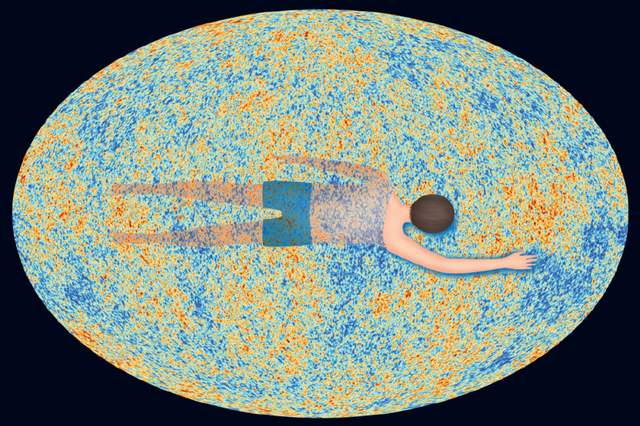
One very hot day this summer, during a morning swim, my mind wandered to a different version of climate change: the “heat death” of the universe. Ironically, though it remains a plausible outcome for cosmic history, it’s a less distressing subject than our own warming planet.
The idea of heat death arose with the scientific understanding of heat itself in the 19th century. The core idea is simple: Physical systems tend to settle toward equilibrium. For example, heat will tend to flow from a hot body into an adjacent cold body, cooling the former and warming the latter, until both reach the same intermediate temperature, after which heat is no longer exchanged.
Ultimate equilibrium and stasis can be postponed by the injection of energy, but only temporarily. Engines can be refueled, animals fed, batteries recharged; but engines wear down, animals die, and batteries lose their juice.
These common observations are generalized and sharpened in the science of thermodynamics. The capstone of thermodynamics is its so-called Second Law, first formulated mathematically by Rudolf Clausius in 1865, which states that entropy, a measure of disorder, increases over time—distinctive structure erodes. Featureless equilibrium is the state of maximum entropy, toward which the Second Law drives us.
The inexorable logic of the Second Law leads, in the long run, to a bland universe wherein nothing changes-that is, heat death. Modern physical cosmology has fleshed out that conclusion. Gravity wants matter to clump, but in the early universe, matter’s distribution was extremely uniform, so gravity was way out of equilibrium. Over time, gravity has sought to come into equilibrium, notably by condensing stars out of gas clouds. The high density and pressure found inside stars ignites nuclear fuel.
Nuclear burning injects heat and powers a dynamic universe. But this is a temporary reprieve. After a few tensof billions of years, stars everywhere will have exhausted their fuel and winked out.
There are several ways that our distant descendants, or other embodiments of mind in the universe, might resist heat death. Here are some ideas that occurred to me as I swam:
First, it is probably possible to burn matter further than stars do. Stars rearrange protons and neutrons but do not change their overall number. Burning those particles would give access to hundreds of times more energy. Another (barely) conceivable form of fuel is “dark matter.” At present, nobody knows what it is, but there’s lots of it in the universe.
Second, future engineers also might be able to arrange controlled collisions of planets or dead stars, to tap into the energy the crashes liberate.
Third, future minds themselves might be able to run on very limited power. Recent theoretical work on reversible and quantum computers, and on time crystals, has shown that there’s no lower limit to how little energy they need to keep making progress, or at least to keep moving.
Fourth, since we don’t really understand what triggered the Big Bang, it’s conceivable that someday we’ll be able to engineer something similar, and thereby rejuvenate the universe.
It was a good swim. I had fun saving the universe by inventing speculative technological fixes and adaptations, spiced up with wishful thinking. The long-term future of mind in the universe is desperate, but not serious.
Unfortunately, when I emerged from the lake, it was even hotter than before. Here and now on Earth the situation is dead serious—though maybe not yet utterly desperate.
Frank Wilczek
本文經授權轉載自微信公眾號“蔻享學術”,編輯:王亞琨。
特 別 提 示
1. 進入『返樸』微信公眾號底部菜單“精品專欄“,可查閲不同主題系列科普文章。
2. 『返樸』提供按月檢索文章功能。關注公眾號,回覆四位數組成的年份+月份,如“1903”,可獲取2019年3月的文章索引,以此類推。