時政文本英譯:“新詩改罷自長吟”_風聞
外宣微记-外宣微记官方账号-2022-10-25 21:09

出品 | 外宣微記
歡迎轉發朋友圈,轉載全文請申請授權
諸位讀者,好久不見!
閉關工作結束,過了一個月沒有手機和網絡的自律生活。昨日集中惡補近期外媒舊聞,尤其細讀了拜登政府10月12日發佈的《美國國家安全戰略》報告。
細讀報告,文刀君有一種“似曾相識”的感覺,尤其和最近的黨代會報告對照閲讀。
拜登政府説,to advance shared prosperity domestically,我們講“促進共同富裕(promote common prosperity)。
拜登政府説,modernize and strengthen our military,我們講“加快國防和軍隊現代化建設(move faster to modernize our national defense and the armed forces)”。
拜登政府説,美國與其盟友“優勢互補(are mutually reinforcing)”,我們講“構建優勢互補的區域經濟佈局和國土空間體系(develop a regional economic layout and a territorial space system that complement each other’s strengths)”。
“優勢互補”一詞的兩種英文譯法可以視情況互換。
拜登政府強調“critical and emerging technologies (關鍵和新興技術)”,我們講“關鍵核心技術(core technologies in key fields)”以及“戰略性新興產業(strategic emerging industries)”。
……
像《國家安全戰略》這類時政報告,主基調難免枯燥。但是,我們讀英文,還是能感受到起草者儘量給文字增加感染力的努力。
比如,拜登政府説,
There’s not a single thing we cannot do as a nation when we do it together—and I mean that—not a single solitary thing.
We are now in the early years of a decisive decade for America and the world.
選詞用詞使用頭韻修辭(s, s;d, d),讀起來多一絲韻律。
美國這份報告全篇“our”含量極高,多次重複our,讀來鏗鏘有力。比如這句:
Oureconomy, ourpopulation, ourinnovation, and ourmilitary power continue to grow, often outpacing those of other large countries.
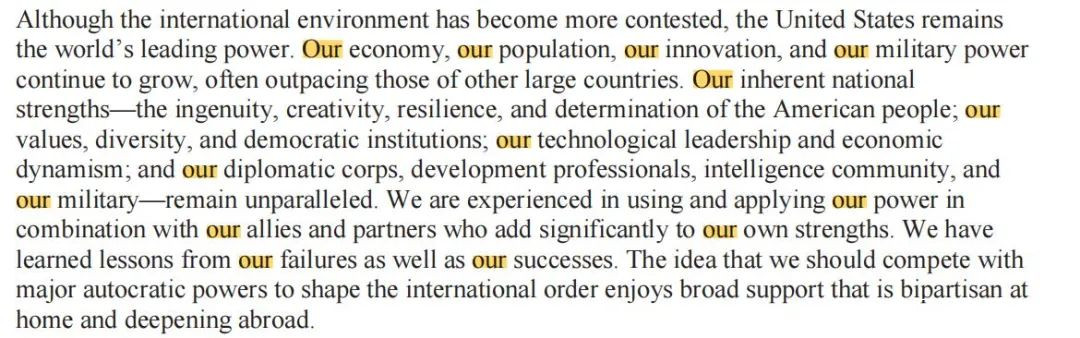
使用頭韻修辭以及適當重複詞語,在時政文本英譯裏也大有用處。
我們説,以中國式現代化推進中華民族偉大復興,統攬偉大斗爭、偉大工程、偉大事業、偉大夢想。
We have made well-coordinated efforts to advance ourgreat struggle, ourgreat project, ourgreat cause, and ourgreat dream.
我們説,既不好高騖遠,也不因循守舊。
We will neither pursue grandiose goals nor go by the rulebook.
走筆至此,文刀君想起杜甫的一句詩:新詩改罷自長吟。
天才如杜甫,新詩作罷還要不斷推敲修改,改後還要“長吟”。長吟,就是要儘量讓文字讀出來有節奏感、有感染力。詩歌的美,既體現在字詞的推敲,也體現在“長吟”出來的聲韻。
時政文本英譯與詩歌創作當然有天壤之別,但翻譯實踐中可以借鑑杜甫的“新詩改罷自長吟”。有時候,目之所及不覺譯文佶屈聱牙,讀出來卻是另一個感覺。你覺得呢?