於濱:身處國際社會至暗時刻,中國的有原則中立意味着什麼?
【文/於濱】
一個幽靈正在西方徘徊——中俄聯盟的幽靈,無論是確有其事,還是捕風捉影。如今西方正竭盡全力向烏克蘭運送致命武器,美國卻突然對華髮難,質疑中國在烏克蘭問題上一貫的中立立場。然而,中國中立不僅是為了自身利益,也是為了維護世界穩定。如今烏克蘭戰禍不已,滿目瘡痍,且衝突很可能長期化,甚至進一步升級。在基辛格一直警示的充斥大規模殺傷性武器和人工智能的“嚴峻新世界”中(Kissingerian grave new world),美國這一“非友即敵”的2.0版本猶如一紙最後通牒。
中國特色的中立
中國在烏克蘭問題上的中立態度是真誠的,因為俄羅斯和烏克蘭都是中國的朋友或“戰略伙伴”,中國駐華盛頓大使秦剛將這一立場其定義為“客觀公正”。中國要二者之間選邊站是非常困難的,如果不是完全不可能的話。事實是,持續的戰爭正在嚴重損害中國的利益,包括“一帶一路”倡議下龐大的對外投資項目,而烏克蘭正是“一帶一路”的重要區域樞紐。2021年,中烏貿易額同比增長35%,規模達193億美元。儘管這比中俄貿易額(1470 億美元)要小得多,但中烏貿易額在過去五年中已經翻了一倍多。
早在 2013 年底,當烏克蘭陷於俄羅斯和歐盟之間的兩難困境時,中國一舉向烏克蘭提出 80 億美元的投資協議。儘管這比俄羅斯的150 億美元援助計劃要小,但它遠多於歐盟44 億歐元的計劃。
中國在烏克蘭問題上的中立並非純粹出於商業目的,它是人道主義、實用主義和政治現實主義共同作用的結果。4月1日,在與歐盟領導人夏爾·米歇爾(歐洲理事會主席)和烏爾蘇拉·馮德萊恩(歐盟委員會主席)的電話會議中,中國領導人敦促各方為烏克蘭戰爭的政治解決而努力,同時避免局勢升級和更大的人道主義災難。從長遠來看,中國領導人呼籲歐盟/美國和俄羅斯之間進行對話,以構建“均衡、有效、可持續的歐洲安全機制”。
對許多中國人來説,烏克蘭戰爭的破壞性令人痛心。中國人民大學最近的一項研究表明,30%的受訪者支持俄羅斯的“特別軍事行動”,20%支持烏克蘭,40%保持中立。許多人擔心,當前在烏克蘭衝突上爭先恐後、火上澆油的引戰言行,會導致戰爭進一步擴大化。在大規模殺傷性武器時代,必須在政治和外交領域尋求衝突的解決之道。因此,中國政府呼籲各方保持克制並通過談判儘早結束戰爭,這得到了中國人的廣泛支持。中國捐助的三批人道主義援助物資已運往烏克蘭,後續更多援助物資也在路上。
因此,中國的中立不僅僅是被動應對,而是基於原則的,意在促使各方達成均衡和可持續安全。相比之下,美國在巴巴羅薩行動(譯註:1941 年6 月22日—1942年1月,納粹德國在第二次世界大戰中發起侵蘇行動的代號)和珍珠港事件(1941年12月7日)之間數月中的孤立主義並非那般光鮮(not-so-splendid isolation)。當時的參議員哈里·杜魯門對此直言無諱。德國入侵蘇聯兩天後,《紐約時報》援引這位未來的美國總統的話稱:“如果德國佔上風,我們應該幫助俄羅斯,如果俄羅斯佔上風,我們就幫助德國,這樣我們就能儘可能讓他們互相殘殺……” 不到六個月後,珍珠港事件爆發,美國捲入戰爭,接下來的歷史人盡皆知。
進入21世紀,中國在混亂的世界中穩步崛起,並從歷史上的儒家思想汲取智慧。儒家思想的一個關鍵組成部分是中庸,即保持中道、避免極端。在1950-1970年代內外政策發生巨大波動後,中國從1982年開始奉行不結盟的獨立自主外交政策,基辛格在其2011年的《論中國》(On China)一書中,將其描述為“公正務實”(impartial and pragmatic),這與秦剛大使的表述非常相似。這種立場不僅適用於當前的烏克蘭戰爭,也應用於2014年的烏克蘭-克里米亞危機、2008年的格魯吉亞-俄羅斯衝突,以及1980年代以來的朝核問題,因為中國反對任何破壞半島穩定的舉動。
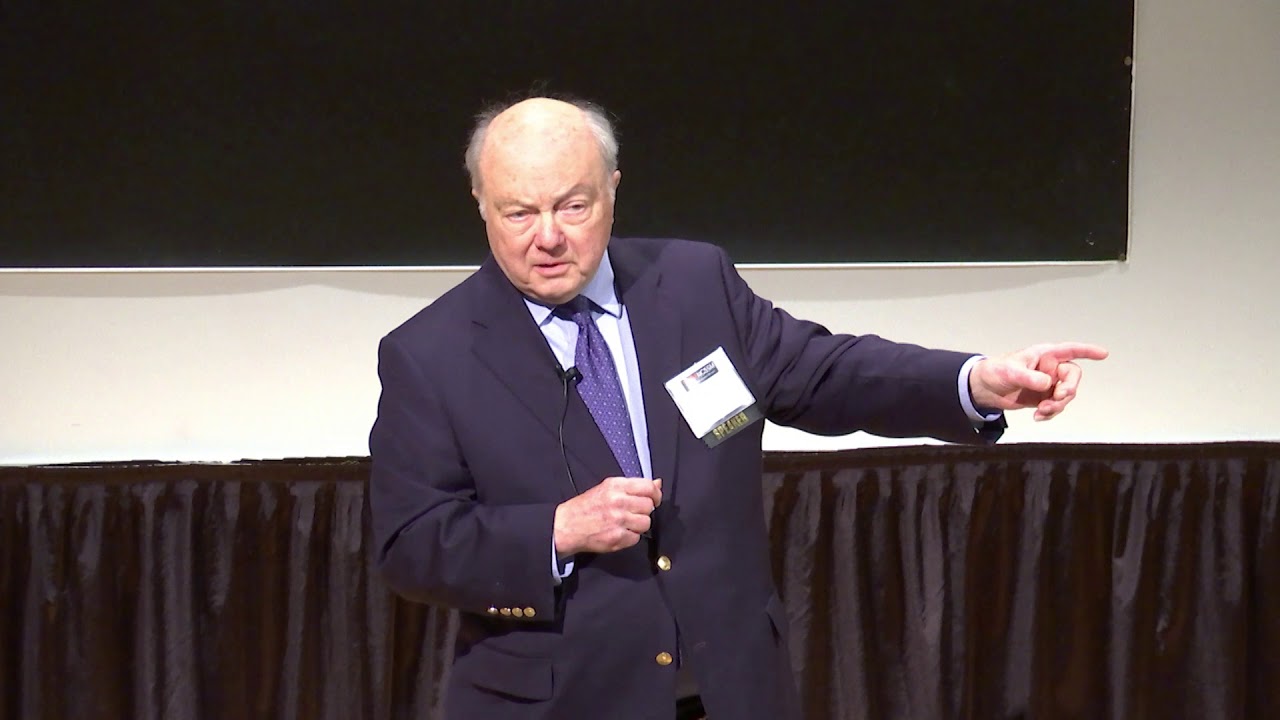
傑克·馬特洛克(Jack Matlock),1987-1991年美國駐蘇聯大使,著有《蘇聯解體親歷記》一書。
西方現實主義者去哪兒了?
在中國公共輿論空間對烏克蘭問題的各種不同觀點中,喬治·凱南等西方現實主義者佔據一席之地。凱南在25 年前曾警告説,北約東擴是“整個後冷戰時代美國政策最致命的錯誤”(the most fatal error)。在 1997 年向參議院外交關係委員會作證時,傑克·馬特洛克(Jack Matlock,1987-1991年美國駐蘇聯大使)也表達了類似的深切擔憂,即“誤入歧途的”北約擴張“很可能被作為自冷戰結束以來最嚴重的戰略失誤而載入史冊。” 2014 年烏克蘭-克里米亞危機後不久,基辛格也警告説,鑑於其幾個世紀以來作為俄羅斯一部分的獨特歷史,烏克蘭只有作為俄羅斯與西方之間“橋樑” 而非戰場,才能獲得生存和繁榮。西方現實主義者的這些觀點以前只出現在中國的學術圈子裏,現在則在公共空間中隨處可見。
對於許多中國人來説,政治現實主義在西方關於烏克蘭問題的語境中的缺位是很奇怪的。如果這些清醒的、儘管“政治上不正確”的觀點在西方得到重視,烏克蘭目前的戰爭本可以避免。因此,西方關於俄羅斯“無端入侵” (unprovoked invasion)烏克蘭的説法不能令多數中國人信服。相較於亨利·基辛格所描述的美式唯我論(solipsism)——無法以不同的方式看待世界,中國人的思想要開放得多。
中俄之間: 一種“獨具一格”的成熟關係
2022年2月4日,中俄領導人在北京冬奧會開幕前簽署的聯合聲明稱:“兩國友好沒有止境,合作沒有禁區”。儘管如此,這種長達數十年的“戰略伙伴關係”的最新發展,並不意味着結成軍事聯盟。它沒有類似於北約第5條規定的相互約束機制,亦即在衝突情況下自動鎖定的彼此的承諾。實際上,在克里米亞、中國台灣、中國南海、中印邊界爭端等問題上,莫斯科和北京幾乎對彼此的所有“核心利益”都保持不置可否或中立的態度。
這種友好而靈活的戰略伙伴關係框架的關鍵驅動因素之一是歷史的經驗教訓。1950年至1989年間,中蘇關係經歷了從同盟到敵對的急劇轉向,雙方為此付出巨大代價。此後,兩國將高度意識形態化和危險的軍事化關係轉化為一種務實的共存關係,其核心因素是意識形態缺位。在中蘇在“蜜月期”(1949-1959年),意識形態因素誇大了的雙方的友誼,又放大了中蘇長達30 年間“決裂期”(1960-1989年)的分歧。從某種意義上説,目前的中俄“戰略伙伴關係”,無論是否有止境,都是雙方在經歷“最好”和“最壞”時代之後的一種正常關係。
自 1989 年以來的這種務實關係,也許是自1689年中俄《尼布楚條約》以來對兩個大國最穩定、最平等(總體而言)和危害最小的關係。這碰巧也是雙方都經歷了巨大的社會經濟政治轉型的時期。中國或許比世界上任何其他國家都更瞭解俄羅斯在後蘇聯時代的痛苦轉型中所面臨的巨大風險、挑戰和困難。而且,與西方一些國家不同,中國沒有利用俄羅斯的弱點來獲取任何短期利益。俄羅斯的民族自豪感(pride)應該得到尊重,尤其是在俄羅斯處於歷史性衰退的時刻。
中俄戰略伙伴關係並非一帆風順。相反,它的某些方面“存在麻煩”,甚至是“有爭議的”,普京在2017年10月的瓦爾代演講中如是表示。但他補充説,這些方面的問題經過深思熟慮後“找到了妥協的解決辦法”,因此沒有“使局勢陷入僵局”。雙方都將當前的中俄關系描述為“成熟”的關係,這與1950至1970年代高度政治化的過往經歷形成鮮明對比。中俄完全有理由排除外部干擾,繼續保持這種關係。
最後,中國和俄羅斯是兩個大型的文明實體,無論其經濟地位如何,它們都具有追求各自獨立的外交和戰略目標的物質和思想能力。它們在外交政策中的這種傾向伴隨着它們在不同程度上對其文化/宗教遺產的迴歸:即中國的儒家思想,以及俄羅斯帶有濃厚東正教色彩的“温和保守主義”。
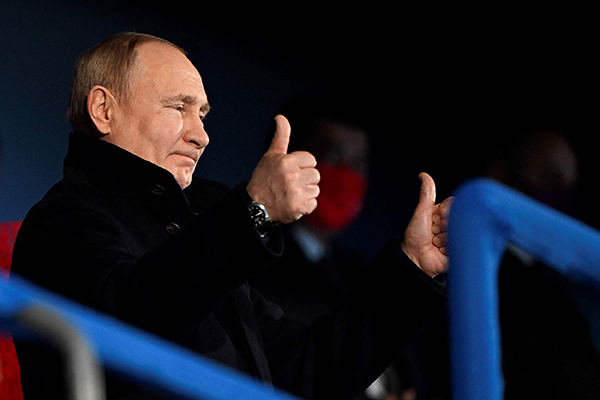
2022年2月4日,俄羅斯總統普京出席北京冬奧開幕式。@視覺中國
“西方新內戰”亟需真正的中立
中俄雙邊關係的穩定和意識形態因素的缺位對世界其他地區產生了巨大影響。這意味着這兩個大國歷史性地迴歸以互不干涉內政為核心的威斯特伐利亞主義(Westphalianism),威斯特伐利亞主義是現代世界主權國家體系的基礎,它雖然發軔於西方,但現在基本上被西方完全拋棄了。
除了北約不斷東擴外,冷戰後西方無休止的民主促進和政權更迭戰爭構成所謂“自由國際秩序”,在尼爾·弗格森(Niall Ferguson)看來,這種秩序既不自由,也談不上有序。從這個意義上説,那些警告冷戰捲土重來的人,似乎對歷史缺乏瞭解。冷戰期間,儘管世界超級大國在軍事和意識形態上相互對峙,但由於存在各種正式和非正式的遊戲規則、包括各種可驗證的軍備控制機制,它們之間恰恰維持了“長期和平”(long peace)。在這個兩極體系中,安全是相互的,雙方都有剋制,特別是在 1962 年古巴導彈危機之後,美國總統肯尼迪公開呼籲“真正的和平,那種讓我們的生活值得過下去的和平,那種讓人類和國家能夠發展、飽含希望併為他們的後代建立更美好生活的和平——這不僅是美國人的和平,而且是所有人的和平,不僅是我們時代的和平,而且是永久的和平。”
現今的世界離這種理想主義和清醒認知相去甚遠。隨着西方自由主義與其社會主義對手(蘇聯)的均衡被打破,西方以犧牲包括俄羅斯在內的世界其他地區的安全為代價,追求單邊和絕對安全。因此,烏克蘭成為了凱南所説的“致命錯誤”引發的反彈(blowback)。
在發表於1993年的《文明的衝突》這篇極具爭議的論文中,亨廷頓提出了區別於福山版本的自由主義歷史“終結論”的另一套終結論,即冷戰的終結是“西方內戰”(從1648年威斯特伐利亞條約到1991年)的終結。回頭看,亨廷頓的終結論不僅低估了西方自我毀滅的能力,而且低估了所謂“西方內戰” 對非西方的影響。20 世紀的“西方內戰”是禍及非西方世界大部分地區的“全面戰爭”。僅在二戰中,俄羅斯和中國的傷亡人數分別為2700萬和3500萬。除此之外,人們不應忽視 20 世紀之前西方在世界範圍內進行的一切征戰和殖民統治。或許正因為如此,許多非西方國家——包括印度、巴西、南非等——都在避免制裁俄羅斯,而是呼籲剋制和談判。
保持温和與公正遠比選邊站更具挑戰性,特別是當世界正經歷二戰以來最危險的衝突時刻。斯坦福大學的斯科特·薩根(Scott Sagan)的研究標明,一戰前夕,歐洲兩個勢不兩立且具有強大約束力的聯盟因為受到聯盟承諾(interlocking commitment) 的驅使,在一週內相互宣戰。有鑑於此,北京目前的原則性和公正中立應該受到讚賞,它對選邊站的危害保持了充分警惕,從而避免了在歐亞大陸上出現另一個或將引爆大戰的對抗性聯盟。在大規模殺傷性武器和假新聞大行其道的時代,國際社會應該為對話、和平和中立留出空間,以實現包容、不可分割和可持續的安全。
(翻譯/述垚)
翻頁為英文版全文:
Beijing’s Principled Neutrality In A Grave New World1
A specter is haunting the West—the specter of a China-Russian alliance, real or imagined. As the West is rushing lethal weapons to Ukraine, Washington suddenly confronts Beijing’s long-standing neutrality as a make-or-break issue. For China, however, its neutrality is crucial for not only its own interest but also for world stability. The ongoing war in Ukraine, for all its destruction and desolation, is likely to prolong and even escalate. Welcome to the Kissingerian2 grave new world of WMD and AI, plus the US’ “to-be-with-us-or-against-us” ultimatum 2.0.
- Neutrality of Chinese Characteristics
China’s neutrality regarding the Ukraine issue—which is defined as “objective and impartial” by the Chinese ambassador to Washington Qin Gang3—is genuine for the basic fact of life that both Russia and Ukraine are China’s friends, or “strategic partners.” It is very difficult, if not impossible for China to take sides. Indeed, the ongoing war is seriously undermining China’s interests including its extensive foreign investment program of the Belt-and-Road Initiative (BRI), for which Ukraine has been an important regional hub. In 2021, the Sino-Ukraine trade jumped by 35% to $19.3 billion over the previous year. Although this was much smaller than trade with Russia ($147 billion), bilateral trade has been more than doubled in the past five years.
Back in late 2013 when Ukraine was torn between Russia and the EU, China went as far as to offer Ukraine an $8 billion4 investment deal. Although this was smaller than Russia’s $15 billion5 aid package, it was larger than the EU’s €4.4 billion6.
China’s neutrality regarding the Ukraine case is not purely commercial but is driven by a mix of humanitarianism, pragmatism, and political realism. In his teleconference with the EU leaders (Charles Michel and Ursula von der Leyen) on April 1, President Xi Jinping7 urged all sides to work for a political settlement of the war in Ukraine while avoiding escalation and a bigger humanitarian disaster. In the longer run, Xi called for dialogue between the EU/US and Russia for a “balanced, effective and sustainable security framework in Europe.”
For many in China, the war in Ukraine is destructive and heartbreaking. A recent study by Beijing’s Renmin University8 indicates that 30% of respondents support Russia’s “special military operations,” 20% side with Ukraine, and 40% remain neutral. Many are concerned about the current “you-go-low-and-I-go-lower” escalatory rhetoric and actions regarding the Ukraine conflict, leading to a much wider war. In the age of WMD, the ending of the conflict will have to be found in the politico-diplomatic realm. There has been therefore broad support among the Chinese for the government’s call for restraints and negotiations by all parties to end the war at the earliest possible time. Three shipments of Chinese humanitarian assistance have been delivered to Ukraine and more will go.
China’s neutrality, therefore, is not just passive but principled for a balanced and lasting security of all parties. This is in sharp contrast to America’s not-so-splendid isolation in the fateful months between Operation Barbarossa (22 June 1941) and Pearl Harbor (7 December 1941), which was best captured by then-Senator Harry Truman. Two days after the German invasion of the Soviet Union, the New York Times quoted the future US president “If we see that Germany is winning we should help Russia and if Russia is winning we ought to help Germany and that way let them kill as many as possible…” In less than six months, America was at war and the rest is history.
Fast forward to the 21st century, China’s steady rise has been accompanied by a return to its Confucian past for wisdom in a world of chaos. A key component of Confucianism is being moderate (中庸) or staying in the middle while avoiding extremes. After huge swings in its domestic and foreign policies in the 1950s-1970s, China has since 1982 pursued an independent foreign policy of non-alliance, or what Henry Kissinger9 depicts as impartiality and pragmatism, which is very similar to Ambassador Qin Gang’s stance. This applies to the current Ukraine war, the 2014 Ukraine-Crimea crisis, and the 2008 Georgia-Russia conflict, as well as the Korea issue since the 1980s as China has opposed any move to destabilize the peninsular.
- Western Realists Misplaced?
Among the various competing views in China’s public space regarding the Ukraine issue are those by Western realists like George Kennan10 who warned 25 years ago that NATO eastward expansion constitutes “the most fateful error of American policy in the entire post-cold-war era.” In his 1997 testimony to the Senate Foreign Relations Committee, Jack Matlock11 (US ambassador to the USSR,1987-1991) echoed Kennan’s deep concerns that the “misguided” NATO expansion “may well go down in history as the most profound strategic blunder made since the end of the Cold War.” Shortly after the 2014 Ukraine-Crimea crisis, Henry Kissinger12, too, warned that given its unique history as part of Russia for centuries, Ukraine’s survival and thriving must be based on its neutrality as a “bridge,” not a battlefield, between Russia and the West. These views of Western realists—once resided within the academic circles in China—are now ubiquitous in the public space.
For many in China, the absence of political realism in the Ukraine discourse in the West is strange. Had these sober, albeit “politically incorrect” views been heeded in their own land (the West), the current war in Ukraine could have been avoided. The Western claim of Russia’s “unprovoked invasion” of Ukraine, therefore, does not convince many in China. The country’s political system may not be as liberal as that of the U.S. The Chinese mind, however, is far more open than what Henry Kissinger depicts as solipsism13 in America—the inability to conceive even another way of looking at the world.
- Russia-China Alignment: A League of Its Own
“Friendship between the two states has no limits” and “there are no ‘forbidden’ areas of cooperation,” declares the Russia-China joint statement signed by Xi and Putin on 4 February 2022 before the opening of the Beijing Winter Olympics. This new wrinkle of the decades-long “strategic partnership,” nonetheless, is not a military alliance. It does not embed with it the typical interlocking mechanism, similar to that of NATO’s “sacred”14 Article 5, that would automatically commit one to the other in conflict situations. In reality, Moscow and Beijing have been either noncommittal or neutral regarding almost all of each other’s “core interests,” be they Crimea, Taiwan, South China Sea, Sino-Indian border disputes, etc.
One of the key drivers for this friendly and flexible framework of strategic partnership is the lessons of the past. Between 1950 and 1989, relations between the two communist giants underwent wide swings between alliance and adversary, with an enormous cost for both sides. Since then, the two have transformed that highly ideological and dangerously militarized relationship into one of pragmatic coexistence. A central element in this relationship is the absence of ideology, which used to exaggerate the friendship during their “honeymoon” (1949-59) and amplify disagreements during their 30-year “divorce” (1960-89). In a way, the current Russia-China “strategic partnership,” unlimited or not, is a normal relationship after the “best” and “worst” times.
Such a pragmatic relationship since 1989 is perhaps the most stable, most equal (in comprehensive terms), and least harmful for the two large powers since the 1689 Treaty of Nerchinsk. It happens that this is a time when both sides have undergone huge socio-economic-political transformations. China, perhaps more than any other nation in the world, understands the enormous risks, challenges and difficulties in Russia’s painful transformation in the post-Soviet decades. And, unlike some in the West, China has refrained from taking advantage of Russia’s weakness for any short-term gains. Russia’s pride is, and perhaps should be, taken more seriously particularly when Russia is in its historical decline.
The Sino-Russian strategic partnership is not problem-free. On the contrary, some of them were “controversial” and even “contentious,” remarked Putin15 in his October 2017 Valdai speech. But these problems were deliberated, “resolved with compromised solutions” without “driving the situation into an impasse,” added the Russian president. Both sides describe the current relationship as “mature,”16 which is in sharp contrast to the highly politicized experience of the 1950–1970s. And they have every reason to preserve such a relationship regardless of any external distractions.
Last if not least, China and Russia are large civilizational entities with both materialistic and ideational capabilities to pursue their respective independent foreign and strategic goals, regardless of their economic status. This propensity in their foreign policy has gone hand in hand with their returned, to different degrees, to their cultural/religious heritages: Confucianism for China (CCP as the “Chinese Civilization Party,” 17according to Mahbubani) and “moderate conservatism”18 for Russia with a hefty dose of Eastern Orthodoxy.
- The Need for Genuine Neutrality in the “Western Civil-war” 2.0
The stability and absence of ideological factors in their bilateral ties have huge implications for the rest of the world. It means a historical return of the two large powers to the Westphalianism of noninterference in each other’s domestic affairs, the foundation of the modern world system of sovereign states pioneered—and now largely discarded—by the West.
Alongside NATO’s constant eastward expansion, the West’s endless wars of democracy promotion and regime change in the post-Cold War have led to a “liberal international order” (LIO), which is neither liberal nor orderly according to Niall Ferguson19. In that sense, those who are warning about the return of the Cold War seem to be historically blind. The Cold War, for all of its militarized and ideologized standoff between the world’s superpowers, happened to be a “long peace”20 between them with formal and informal rules of the game including various verifiable arms control mechanisms. Within this system of bipolarity, security was mutual with restraint by both sides, particularly after the 1962 Cuban Missile Crisis when US President J.F. Kennedy21 publicly called for
a genuine peace, the kind of peace that makes life on earth worth living, the kind that enables men and nations to grow and to hope and to build a better life for their children—not merely peace for Americans but peace for all men and women—not merely peace in our time but peace for all time.
The world has gone a long way from that idealistic and sober reckoning. With the end of the equilibrium between Western liberalism and its socialist counterpart (Soviet Union), the West has pursued unilateral and absolute security at the expense of the security of the rest of the world including Russia. Ukraine, therefore, has become a blowback of the Kennanian “fateful error.”
In his highly provocative treatise on civilization clashes in 1993, Samuel Huntington confronted the liberalist historical “endism” (Fukuyama) with his own endism of the Cold War as the end of the “Western civil war”22 (from the 1648 Treaty of Westphalia to 1991). In retrospect, the Huntingtonian endism does not only underestimate the self-destructive power of the West, but also is an understatement at best for the non-West. The 20th century “Western civil wars” were “total wars” engulfing much of the non-Western world. Casualties for Russia and China in World War II alone were 27 million and 35 million, respectively. Beyond that, one should not discount all the wars of conquests and colonization around the world prior to the 20th-century. Maybe because of this, much of the non-West—including India, Brazil, South Africa, etc.—are staying away from sanctions against Russia but calling for restraint and negotiations.
Being moderate and impartial is far more challenging than taking sides, particularly when the world is undergoing the most dangerous conflict since the end of World War II. A Sino-Russian military alliance cannot be completely ruled out, at least hypothetically23. Such an interlocking mechanism, however, would guarantee to repeat the fateful “Guns of August”24 of 1914 when the two rigid and binding alliances in Europe declared war on each other within a week largely because of their alliance commitment, argued Scott Sagan25 of Stanford University.
In this regard, Beijing’s current principled and impartial neutrality should be appreciated. In the age of the toxic mix of weapons of mass destruction and mass dissemination of fake news of various kinds, it is time to leave some room for dialogue, peace, and neutrality toward an inclusive, indivisible, and enduring security for all.
註釋:
1.標題“A Grave New World”引申自赫胥黎著作“Brave New World”(《美麗新世界》)
2.US and China must heed Kissinger’s stark warnings,https://www.ft.com/content/8dc78be5-aa5a-4ea0-9692-0641acf27042
3.Qin Gang: Where we stand on Ukraine,https://www.washingtonpost.com/opinions/2022/03/15/china-ambassador-us-where-we-stand-in-ukraine/
4.Ukraine’s Yanukovich says deals with China may bring $8 bln investments,https://www.reuters.com/article/job-ukraine-china/update-1-ukraines-yanukovich-says-deals-with-china-may-bring-8-bln-investments-ifax-idUSL5N0JK2QO20131205
5.Vladimir Putin offers Ukraine financial incentives to stick with Russia,https://www.theguardian.com/world/2013/dec/17/ukraine-russia-leaders-talks-kremlin-loan-deal
6.EU disburses €600 million in Macro-Financial Assistance to Ukraine to address the economic fallout of the COVID-19 pandemic,https://ec.europa.eu/commission/presscorner/detail/en/ip_21_5460
7.Xi calls on China, EU to add stabilizing factors to turbulent world,https://english.news.cn/20220402/fcd85a941b6344e5afcb6d165c7e39b4/c.html
8.中國專家:三成中國網民支持俄羅斯對烏克蘭開展特別軍事行動,https://user.guancha.cn/main/content?id=721293&s=fwzxhfbt
9.Henry Kissinger:On China(基辛格:《論中國》)
10.George Kennan:A Fateful Error,https://www.nytimes.com/1997/02/05/opinion/a-fateful-error.html
11.ACURA ViewPoint Jack F. Matlock, Jr.: Today’s Crisis Over Ukraine,https://usrussiaaccord.org/acura-viewpoint-jack-f-matlock-jr-todays-crisis-over-ukraine/
12.Henry Kissinger: To settle the Ukraine crisis, start at the end,https://www.washingtonpost.com/opinions/henry-kissinger-to-settle-the-ukraine-crisis-start-at-the-end/2014/03/05/46dad868-a496-11e3-8466-d34c451760b9_story.html
13.Henry Kissinger:Does America Need a Foreign Policy?: Toward a New Diplomacy for the 21st Century.(《基辛格:美國的全球戰略》)
14.Biden says Putin ‘cannot remain in power’,https://edition.cnn.com/2022/03/26/politics/biden-warsaw-saturday/index.html
15.Meeting of the Valdai International Discussion Club,http://en.kremlin.ru/events/president/news/55882
16.Xi Jinping and President Vladimir Putin of Russia Attend a Gathering Marking the 70th Anniversary of the Establishment of the China-Russia Diplomatic Relations and Watch an Artistic Performance,https://www.fmprc.gov.cn/mfa_eng/topics_665678/2019zt/xjpcfelsgjjjlt/201906/t20190611_710421.html
17.Kishore Mahbubani:Why the Trump Administration Has Helped China (The National Interest 8.6.20),https://johnmenadue.com/kishore-mahbubani-why-the-trump-administration-has-helped-china-the-national-interest-8-6-20/
18.Dmitry Stefanovich :Putin used Valdai speech to champion ‘moderate conservatism,’ but West’s insistence on seeing Russia as a threat could lead to war https://www.rt.com/russia/538570-putin-valdai-speech-russia/
19.Niall Ferguson :The Munk Debate Series: Is the Liberal International Order Over?
20.John Lewis Gaddis:The Long Peace: Elements of Stability in the Postwar International System
21.President John F. Kennedy :COMMENCEMENT ADDRESS AT AMERICAN UNIVERSITY, WASHINGTON, D.C., JUNE 10, 1963
22.Samuel P. Huntington:The Clash of Civilizations?(亨廷頓:《文明的衝突》)
23.ВАСИЛИЙ КАШИН:Россия, Китай и украинский кризис,№2 2022 Март/Апрель
24.Barbara W. Tuchman :The Guns of August: The Outbreak of World War I
25.Scott Sagan :1914 Revisited: Allies, Offense, and Instability
Yu Bin (Ph.D Stanford) is a senior fellow at the Russian Studies Center of the East China Normal University in Shanghai and a senior fellow of the Shanghai Association of American Studies.