周波:澳大利亞沒有資格給中國劃“紅線”
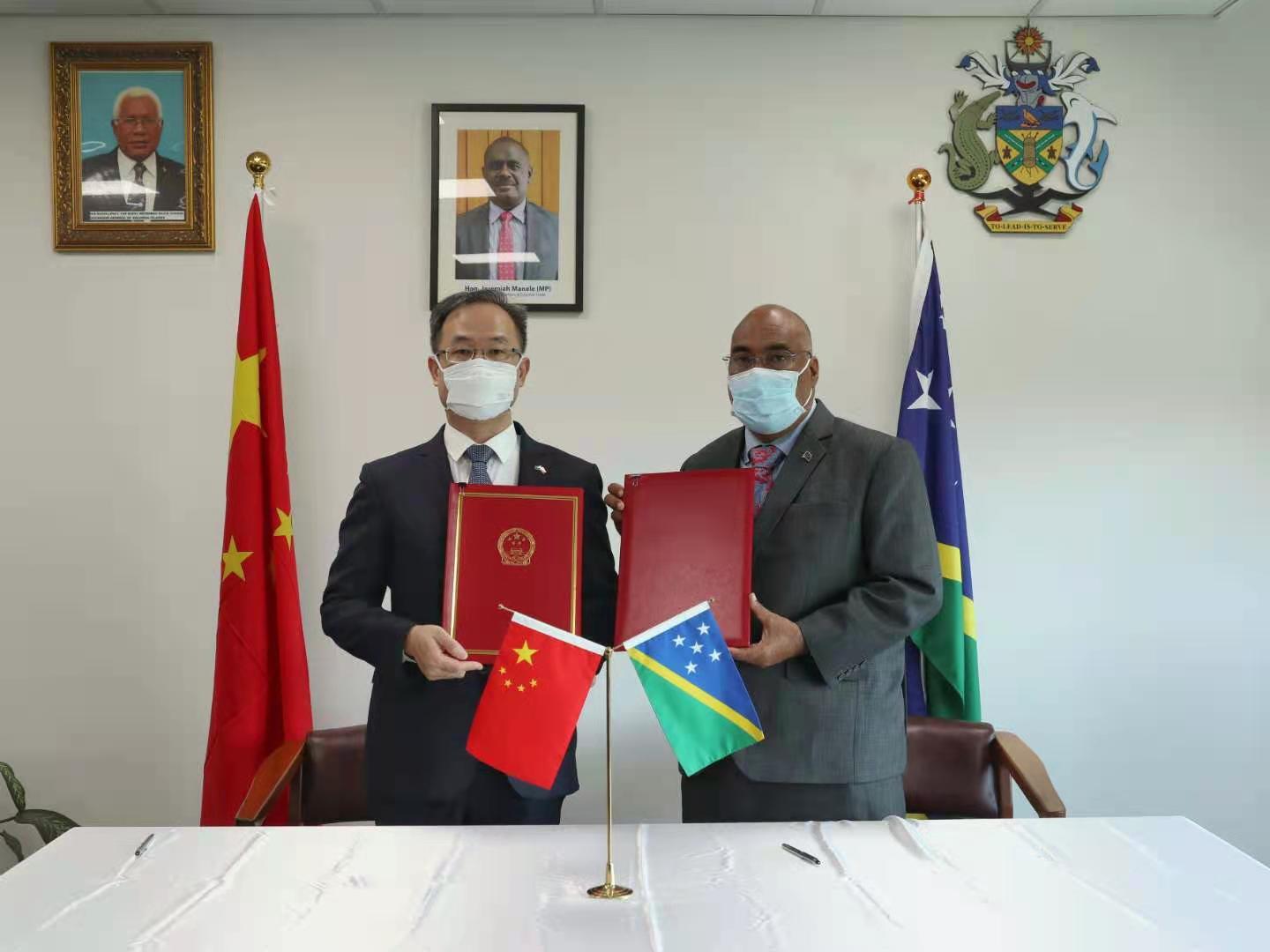
3月30日,中國和所羅門羣島草簽兩國安全合作框架協議。後經外交部證實,兩國已正式簽署正式簽署該協議
**主持人:**周波於2003年至2020年任中國人民解放軍大校,曾任中央軍委國際軍事合作辦公室安全合作中心主任。現任清華大學戰略與安全研究中心(CISS)研究員。他現在北京與我連線。周波大校,很高興與你對話,我們能否談談中國在所羅門羣島的意圖是什麼?是否打算建立一個軍事基地?
**周波:**第一,這是來自所羅門政府的請求,要求我們為其維護安全提供援助,這一要求首先來自所羅門政府。我不認為中國希望在那裏建立一個軍事基地。中國只是在吉布提有一個後勤補給基地,以保障我們在亞丁灣的反海盜行動,在那裏,我們實際上也與澳大利亞進行了反海盜合作。中國沒有必要(在所羅門羣島)建立軍事基地。
**主持人:**然而,大家猜測(中國建立軍事基地)已經有一段時間了。你提到吉布提。當然還有在巴基斯坦的港口。中國對南海有爭議的島嶼提出主權聲索並將其軍事化,人們對中國在太平洋建立軍事基地有很多猜測。那麼,為什麼不會讓人認為中國確實想在所羅門羣島建立軍事存在?
**周波:**答案很簡單,因為中國沒有全球軍事野心,因為中國不想成為一個世界警察。這也是為什麼迄今為止,在海外軍事行動層面,無論是維和、反海盜還是救災等,中國向國外提供的都是人道主義援助。如果你把所有中國的海外軍事行動歸結在一起,你會發現這些行動僅限於人道主義領域。
**主持人:**但是我們討論的是中國的區域目標,而不是其全球抱負。非常清楚的是,中國想成為地區主導性大國。為此,中國加強了南海的軍事存在,不斷增加在台灣(地區)上空的軍事演習,擴大在太平洋的軍事存在。難道不是這樣嗎?
**周波:**你把太多事情攪在一起了。中國根本沒有全球軍事野心,因此不需要在南太平洋建立軍事基地。除了經濟利益之外,中國在南太平洋沒有太多的安全關切。你談的南海實際上就是指中國的領土主權,在南海…(被打斷)
主持人:(中國在南海擁有主權)有爭議,而且根據海牙國際海事法庭的規定,任何一方都不能提出聲索,但中國還是這樣做了。
**周波:**的確是存在爭議,但中國的主張基於歷史,也有對國際法的解讀依據。中國認為南海島礁和附近水域是中國的領土和領海。
**主持人:**周大校,如果真的如你所説,中國不想在所羅門羣島建立軍事基地或軍港,那為什麼還需要簽訂安全協議?為什麼需要為中國創造在這個安全協議下可能部署更多軍事力量的機會?為什麼需要(簽訂)它?
**周波:**其實我想問你一個問題:澳大利亞為什麼這麼擔心這件事?澳大利亞比中國離所羅門羣島更近,如果你們擔心中國同所羅門羣島簽署的安全協議,事實上你們更方便給所羅門羣島提供安全保障。為什麼你們沒這麼做,還反對中國去做?中國這麼做,是應所羅門羣島的要求。我認為所羅門羣島作為小國,之所以這樣做,是和所有小國一樣,想在主要大國間保持一種平衡。對於所羅門羣島而言,澳大利亞是一個大國。
**主持人:**澳大利亞與所羅門羣島關係由來已久,並於不同時期在那裏部署了軍隊,即在保持着長期關係的同時,為所羅門羣島提供援助。澳大利亞總理莫里森(Scott Morrison)的態度非常明確,他説,如果中國確實在所羅門羣島尋求建立軍事基地,那麼這將被視為“紅線”。我想請你解釋一下這意味着什麼?中國是如何看待這條“紅線”的?
**周波:**我不相信澳大利亞政府有何能耐,可以為中國與所羅門羣島的合作劃出“紅線”。讓我再次重申,正如中國政府所言,中國沒有在所羅門羣島建立軍事基地的意圖。我們是兩個主權國家,當然完全有權進行任何我們想要的合作。這與澳大利亞毫無關係。
**主持人:**這確實與澳大利亞有關,因為澳大利亞是一個太平洋國家,澳大利亞與包括所羅門羣島在內的太平洋國家長期交往。顯然,美國也將增加在所羅門羣島的存在。現在澳總理説這是一條“紅線”。請問你認為中國是如何理解“紅線”這種説法的?如果中國確實希望增加在所羅門羣島的軍事存在,這是否意味着潛在衝突?
**周波:**我認為你們做得不夠好,要不然所羅門羣島政府怎麼會捨近求遠,請求中國政府幫忙呢?難道你們不應該深刻反省一下,去探尋這件事發生的原因嗎?實際上你們得地利之便,本應做得更好。為什麼要因為所羅門羣島政府的一個請求,來譴責中國呢?

澳大利亞總理斯科特·莫里森宣稱,中國在所羅門羣島的軍事基地將成為澳大利亞和美國的“紅線”
**主持人:**你還是沒有回答關於“紅線”以及中國如何看待這條“紅線”的問題。這是澳大利亞發出的極為明確的信息,不得越過“紅線”。中國會如何回應?你如何理解澳大利亞所説的不允許越過“紅線”?
**周波:**好吧,斯坦,那麼讓我問你一個問題。你是如何解釋這條“紅線”的?你能向我們説明“紅線”長什麼樣嗎?讓我看看,作為一箇中國人,我們如何才能不越過“紅線”。我不認為澳大利亞政府有任何資格為中國劃定“紅線”。在我看來,這真是荒唐可笑。
**主持人:**周大校,用這樣的語言質疑澳大利亞在太平洋的利益也是很可笑的。當你把這句話與在南海不斷增加的軍事存在、在台灣上空不斷增加的軍事演習、威脅要統一台灣或武統等聯繫起來時,這難道不是證明中國在該地區越來越咄咄逼人了嗎?
**周波:**我不這麼認為。你所説的“紅線”極其荒謬,“紅線”究竟在哪裏?你能在像所羅門羣島這樣的主權國家劃出一條“紅線”嗎?它不是澳大利亞的一部分。所以你怎麼能把主權國家之間的合作描述為(你們的)“紅線”?你談到了台灣問題,包括澳大利亞在內的181個國家承認台灣是中國的一部分。如果我們只是在萬不得已的情況下才使用武力,那有什麼問題嗎?
**主持人:**中國使用武力有什麼問題?當台灣把自己當成一個追求自身利益的國家,有自己的選舉,與世界其他地方建立關係時,你真的在説對台灣使用武力沒有問題嗎?對於台北而言,如果你使用武力沒有問題,而這種武力可能會引發涉及美澳在內的更廣泛的衝突,並可能招致潛在的災難性的生命損失,而你説這沒有問題?
**周波:**首先,你把台灣描述為一個國家是錯誤的…(被打斷)
**主持人:**我沒有把它描述為一個國家,我們都知道有“一箇中國”政策,這一點你是對的,但你明白“一箇中國”有不同解釋。話説回來,你説對台灣使用武力沒有問題?
**周波:**你絕對是誤解了我的意思,我們願以最大誠意、最大努力爭取與台灣和平統一,但如果台灣當局違反了我們的《反分裂國家法》中明確規定的三個條件,那麼武力統一是解決台灣問題的最後保留手段。如果“台獨”勢力宣佈獨立,我們將不得不使用武力;如果有外國勢力利用重大事變插手,導致台灣分離,我們會使用武力;如果大陸認為所有和平統一的條件都已喪失,我們會使用武力。這是《反分裂國家法》明確規定的三個條件。這並不意味着我們會隨意使用武力。
**主持人:**周大校,習近平主席提出的“全球安全倡議”想表達什麼含義?
**周波:**習主席闡述了很多觀點。最引人注目的是他提出該倡議的背景。我認為這次最讓觀察家耳目一新的是,他提到建立平衡、有效和可持續的安全架構。我想他指出的是歐洲,因為俄羅斯和烏克蘭正在打仗。當下歐洲的安全與過去一樣,取決於俄羅斯和歐洲之間的妥協。除非俄羅斯和歐洲甚至北約之間能夠達成協議,歐洲的和平與繁榮就沒有希望。
**主持人:**這一倡議提及對主權的尊重。普京將習近平描述為他最好的朋友,並在冬奧會期間訪問中國,然後在冬奧會結束後的第二天就對烏克蘭發動戰爭。這究竟如何能被看作是對主權的尊重?而尊重主權正是習近平主席在全球安全倡議中所要建立的。
**周波:**這恰恰是為什麼習主席談到要尊重所有國家主權,這正是他強調主權的原因。但與此同時,特別是在這種情況下,我們表達了對俄羅斯合理擔憂北約東擴的理解。
**主持人:**北約並沒有入侵俄羅斯,沒有國家入侵俄羅斯,但俄羅斯卻入侵了烏克蘭。
**周波:**北約並沒有入侵俄羅斯,但自戈爾巴喬夫以來的所有俄羅斯領導人一次又一次地警告北約不得無休止的擴張,但西方根本不理會他們,直到俄羅斯這次出手。所以,我們不應當僅僅談論俄羅斯入侵,而是要防止所有這些事情的發生。你們應該捫心自問,為什麼北約要不斷擴張?或許北約會説這恰恰表明自己很受歡迎。但是,正如我之前所説,“受歡迎”反而會給歐洲的安全帶來風險。歐洲安全必須由俄羅斯和北約來談判協商。
**主持人:**周大校,你認為我們現在正處於新的冷戰嗎?
**周波:**我想在很大程度上是這樣的。事實上,我認為我們已經進入一個世界、兩場冷戰的境地。一個在歐洲,在這場熱戰之後,冷戰情景肯定會在歐洲重現。另一個在亞太地區,人們雖然不公開談論,特別是在官方層面,不過從特朗普開始,美國就大談“大國競爭”,而拜登的政策在很大程度上是繼承了特朗普的衣缽。拜登的對華政策基本上是極限競爭,但不發生衝突。如果競爭已是極限,那不就是冷戰嗎?還能是什麼呢?
**主持人:**最後,關於這一點,中國在其中的作用如何?中國對俄羅斯的支持?中國正在加強軍事化,對台灣威脅的增加?如果我們確實處於一場新冷戰,那在多大程度上是中國造成的?
**周波:**中國會站穩腳跟,堅定不移。中國不是加在俄羅斯一方或者美國一方的砝碼。在冷戰時期,在美蘇雙方都很強大的情況下,如果中國作為砝碼,加到哪一方天平就會向哪一方傾斜。但如今中國在發展壯大,越來越舉足輕重。無論世界上發生了什麼,都不能改變世界政治和經濟向亞太轉移的事實,而中國就站在中心。
**主持人:**周大校,非常感謝你。
**周波:**謝謝你。
【聽譯:中國論壇/祖白地亞、武一琪,核稿:中國論壇/韓樺】
Stan Grant:ZHOU Bo was a Senior Colonel in the People’s Liberation Army from 2003 until 2020, and was director of the Center for International Security Cooperation at the Ministry of National Defense. He is now a senior fellow at the Center for International Security and Strategy at Tsinghua University. He joins me from Beijing. It’s good to have you with us. Senior Colonel Zhou, can we talk about what China’s intentions are in the Solomon Islands? Is the intention to establish a military base?
Zhou Bo:First of all, it’s a request from Solomon government for us to provide kind of assistance for maintaining security. The request first of all is from Solomon government. I don’t believe that it is true that China would wish to establish a military base there. China only has one logistic supply base in Djibouti to facilitate PLA’s counter-piracy operation in the Gulf of Aden in which we actually had cooperation with Australian Navy as well. So there is no point for China to establish a military base.
Stan Grant:And yet this has been speculated about for some time. You mentioned Djibouti. Of course there is also the port in Pakistan. China has claimed and militarized the disputed islands of the South China Sea and there has been a lot of speculation about establishing a military base in the Pacific. Why wouldn’t it then lead people to assume that China does indeed want to establish a military presence in the Solomon Islands?
Zhou Bo:The answer is very simple, because China has no global military ambition, because China doesn’t want to become a global policeman. That is why China so far has only provided humanitarian aid to foreign countries in terms of military operations, be it peacekeeping, counter-piracy, or disaster relief. If you put all Chinese military operations overseas together, you would find they are only in humanitarian areas.
Stan Grant:We’re not talking about a global aspiration. What we are talking about is a regional aspiration. And China has been very clear it wants to establish itself as the preponderant power in the region. That’s why China is increasing a military presence in the South China Sea. That’s why we’ve seen increased military exercises over Taiwan. And that’s why China is increasing its presence in the pacific. Is it not?
Zhou Bo:I think you put too many things together. Because China has no global military ambition, therefore, it doesn’t need to establish a military base in the South Pacific where China,apart from economic benefits, doesn’t have much security concern. When you talk about South China Sea, you are actually referring to China’s sovereign rights, in the South China Sea (interrupted)
Stan Grant:Disputed and also according to the international maritime court in Hague, it was not to be claimed by any party and China did that anyway.
Zhou Bo:It is disputed, that is for sure, but China has its own claims based on history, based on its own interpretation of the international law. So we in China believe that the islands and adjacent waters in the South China Sea are China’s sovereign territory and territorial waters.
Stan Grant:Senior Colonel Zhou, why if indeed, as you say, China does not want to establish a military base or a military port in the Solomons, why the need for the security pact in the first place? Why the need to create an opportunity for China to put more military presence under this security pact, which is potentially one of the outcomes. Why the need for it in the first place?
Zhou Bo:Actually, I would ask you a question: why Australians are so worried about this? Because you are certainly closer to the Solomon Islands than China. If you are worried about China’s security pact with the Solomon Islands, you actually are in a better position to provide security to the Solomon Islands. And why don’t you do that? And why would you oppose to China doing that? And China did it because the Solomon Islands asked for it, and I believe as small nations, they probably would try, as all of them would do, a kind of a balance among major powers. And Australia is a major power for the Solomon Islands.
Stan Grant:Australia has had a long relationship with the Solomon Islands and has deployed military there at various times as well and has a long relationship with aids to the Solomons as well. And Scott Morrison, the Australian prime minister is being very clear. He has said that this is a red line. If China was to indeed pursue establishing such a base, that would be considered a red line. I want your interpretation of what that means. How does China see that - a red line?
Zhou Bo:I don’t believe the Australian government is in any capacity to lay any red line for China’s cooperation with the Solomon Islands. Let me reiterate again, as my government has said, that China has no intentions whatsoever to establish a military base in the Solomon Islands. Besides, we two are sovereign states, and we certainly are fully entitled to have whatever cooperation we want. This has nothing to do with Australia.
Stan Grant:It does have something to do with Australia because Australia is a pacific nation, and Australia has a long relationship with pacific nations and a long relationship with the country like the Solomon Islands. Clearly, the United States is going to increase its presence in the Solomons as well. And now the prime minister is saying this is a red line. Again, I want to ask you, how does China interpret that language? Does that mean the potential conflict? If indeed China looks to increase its military presence in the Solomons.
Zhou Bo:I believe you are not doing good enough. Otherwise, why would the Solomon Islands government asked Chinese to help since you are much closer? So won’t you search your own souls to find out why the situation has actually happened? You should actually be in a better position to do that. You should have done better. And why would you blame China because of a request from the Solomon government?
Stan Grant:Again, you’re not really answering the question about the red line and how China would perceive a red line. That is a message coming very clearly from Australia about a line that cannot be crossed. So how does China respond to that? How do you interpret language that says this is a red line that Australia will not allow to be crossed?
Zhou Bo:Well Stan, then let me ask you a question. So how do you interpret this red line? Would you specify to us what the red line looks like? Let me see then as a Chinese how we can probably not cross the red line. I don’t believe Australian government is in any capacity to lay such things like a red line for China. It is ridiculous, it is laughable for me.
Stan Grant:See, language like that, Senior Colonel Zhou, it is laughable questioning Australia’s interests in the Pacific. When you couple that with increasing military presence in the South China Sea, increasing military exercises over Taiwan, threats to reunify or take Taiwan by force, does that not send a signal of increasing Chinese aggression in the region?
Zhou Bo:I don’t think so. When you talk about the red line, that is extremely ridiculous in that, where is the red line? Could you lay a red line in a sovereign state like the Solomon Islands which is not part of Australia? So how could you describe it as a red line in terms of cooperation between sovereign states? When you talk about Taiwan issue, 181 countries, including Australia, recognizes it to be part of China. What is the problem if we would possibly use force as the last resort only?
Stan Grant:What is the problem if you use force? Are you seriously saying there is no problem if you use forces against Taiwan when Taiwan sees itself as a country pursuing its own interests, it carries out its own elections, it establishes relationships with the rest of the world? From Taipei to say that there is no problem if you use force, force that potentially could trigger a broader conflict involving the United States and Australia and lead to potentially catastrophic loss of life. And you say there is no problem with that?
Zhou Bo:First of all, you are wrong in describing Taiwan as a country…(interrupted)
Stan Grant:I didn’t describe it as a country. There is a One China policy, which you are right, but the One China policy as you know is interpreted in different ways. But you say there is nothing wrong with the use of force against Taiwan, nothing wrong with that?
Zhou Bo:You’ve certainly misinterpreted me, because we would try our most sincere ways to reunify with Taiwan peacefully, but use of force is still maintained as a last possible resort. If Taiwanese authorities violate three conditions that are laid down clearly in our anti-secession law, in these cases: if they declare independence, we will have to use force; if there are major events that are used by foreign forces that cause separation of Taiwan, we will have to use force; and then if mainland China concludes that all the conditions for peaceful reunification are exhausted, we will have to use force. So these are the three conditions that laid down clearly in anti-secession law. It doesn’t mean that we would use force freely or willingly.
Stan Grant:Senior Colonel Zhou, what does Xi Jinping mean when he talks about a global security initiative?
Zhou Bo:Yeah, he talked about many points. And the most interesting thing is because of the background of his talk. I think what is the most refreshing for any observer is when he talked about how security arrangement should be balanced, effective, and sustainable. Actually, I believe he’s referring to the war in Europe, between Russia and Ukraine. Of course, the security in Europe, I believe, now as in the past, is a deal between Russia and Europe, unless until Russia and Europe or even NATO could come to an agreement, the peace and prosperity in Europe is not hopeful.
Stan Grant:He has talked about this initiative as respecting sovereignty. How is Vladimir Putin who has described Xi Jinping as his best friend and visited China during the Winter Olympics and then launched the war against Ukraine the day after the Winter Olympics ended. How on earth could that be seen as respect for sovereignty? The very thing that Xi Jinping says that his global initiative is seeking to establish.
Zhou Bo:And that is exactly why he would say that he talked about respect of sovereignty regardless of which countries involved. So that is exactly how he stressed sovereignty, but at the same time, especially in this case, we talked about the legitimate concern over Russia, over NATO ’s eastward expansions.
Stan Grant:NATO did not invade Russia. No country has invaded Russia, but Russia has invaded Ukraine.
Zhou Bo:NATO didn’t invade Russia, but NATO’s endless expansions were warned time and again by all Russian leaders since Mikhail Gorbachev. but the West simply would not heed them at all until this time when it really backfired. So it’s not that we only talk about invasion, it’s to prevent all these things from happening. You should search your soul to ask yourself why this has happened after all. NATO is growing. It might just claim that its growth demonstrates its popularity. But if the popularity would invite risk to the security of Europe as I said before, any security in Europe has to be arranged between Russia and NATO.
Stan Grant:Senior Colonel Zhou, do you believe that we are now in a new cold war?
Zhou Bo:I think to a great extent, yes. Actually, I believe we have entered into a world with two cold wars. One is in Europe. After this hot war, definitely the cold war scenario will re-emerge in Europe. And in the Asia-Pacific, people do not talk about it openly, especially at the government level. But Donald Trump has actually ushered in this great power competition. And Joe Biden’s policy is very much a follow-up. And Joe Biden’s policy towards China is basically extreme competition short of war. If the competition is already extreme, isn’t it the cold war? What else can it be?
Stan Grant:And just finally on that, what about China’s role in that? China’s support for Russia? China’s increasing militarization, and its increasing threats to Taiwan? If indeed we are in a new cold war, how much is China contributing to that?
Zhou Bo:China can stand tall and firm, because China is not a weight that would be added to the Russian side or to the American side. During the cold war, at that time, if you are weaker than two sides that stronger than you, your weight actually becomes important if it is added to one side. But China now is growing, China is becoming more important. Whatever has happened in the world, it could not change the fact that the world’s political and economic shifts are moving toward the Asia-Pacific with China standing right in the center.
Stan Grant:Senior Colonel Zhou, thank you again for giving us your time.
Zhou Bo:Thank you.
本文系觀察者網獨家稿件,文章內容純屬作者個人觀點,不代表平台觀點,未經授權,不得轉載,否則將追究法律責任。關注觀察者網微信guanchacn,每日閲讀趣味文章。