周波:北約和俄羅斯如何避免核大戰?有這“三步”可走
【文/周波】
俄羅斯一再暗示可能會使用核武器。這或許是虛張聲勢,但萬一不是呢?與二戰中美國向日本廣島和長崎扔下原子彈,迫使日本投降不同, 如果俄羅斯打開另一個核武器的潘多拉魔盒,後果不堪設想。
我們換位思考一下俄羅斯總統普京的內心世界: 這是美國及其西方盟友和俄羅斯軍隊在烏克蘭打的一場代理人戰爭。來自歐洲的各種軍事武器正在湧入烏克蘭。據報道,來自美國的情報支持導致了俄羅斯黑海艦隊的旗艦“莫斯科”號沉沒,以及數名俄羅斯將軍在戰場上犧牲。
美國總統拜登和當年的美國總統肯尼迪不同。1962年,肯尼迪曾大膽又不失謹慎地與蘇聯領導人赫魯曉夫達成協議,美國承諾不入侵古巴,蘇聯則從古巴撤走導彈。而拜登則一直在進行挑釁,稱普京為戰犯,還説“這個人不能繼續掌權”。
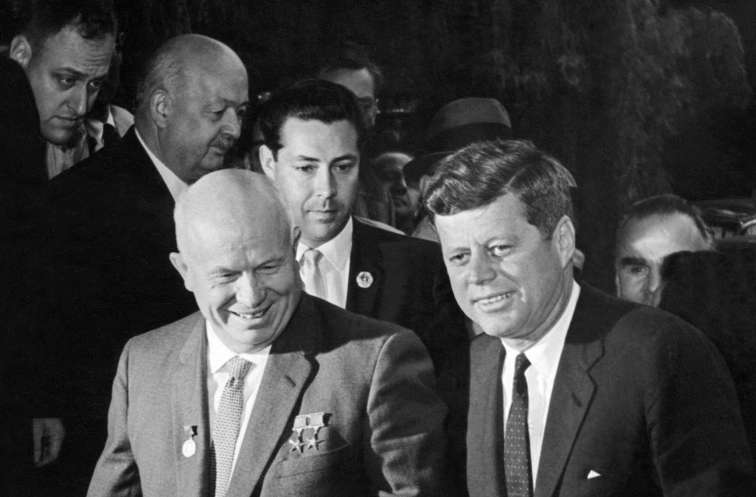
赫魯曉夫與肯尼迪在冷戰期間會晤
相比冷戰時期,現在我們離一場核戰爭更近。沒有人能夠知道普京會在何時何地使用核武器。但是,如果他覺得他必須依靠核武器,來改變俄軍到目前為止表現差強人意的戰局,那麼他使用核武器的可能性就會繼續增加。
正如哈佛大學的斯蒂芬·沃爾特(Stephen Walt)本月在《外交政策》雜誌中所寫的,普京能説到做到。這可以從俄羅斯2008年在格魯吉亞打仗、2014年吞併克里米亞看出來。當然,目前與烏克蘭的衝突更是如此。
如果普京自認為是天選的“屠龍者”聖喬治——俄羅斯國徽中的標誌——他將使用的武器不是長矛,而是核彈。俄羅斯擁有的核彈比其他任何國家都多。他的打擊目標,不一定是烏克蘭,很可能是一兩個歐洲國家,因為烏克蘭是普京所謂“同一民族”的家園,且與俄羅斯近在咫尺。
在連停火前景都看不到的情況下,如何緩解緊張局勢是當下的挑戰。作為第一步,北約可以單方面承諾在任何情況下都不首先對俄羅斯使用核武器。俄羅斯不太可能即刻做出對等回應,但這將是一個善意的姿態,談判可以從此開始。
北約能承受這樣的提議,因為這不會損害其威懾能力。很難想象一個擁有無與倫比的常規作戰能力、包含30個成員的跨大西洋聯盟,需要首先使用核武器來對付一個對手。
而根據五角大樓的説法,美國“只有在極端情況下才會考慮使用核武器來捍衞美國或其盟友和夥伴的重要利益”。這已經接近於“不首先使用核武器”的政策。
第二步,北約應承諾停止進一步擴張,來換取俄羅斯承諾“不首先使用核武器”。莫斯科可能會發現這個提議值得考慮,因為它宣稱的主要關切就是北約東擴。
北約作為軍事聯盟儼然是一個巨無霸,如果芬蘭和瑞典再加入,它就有32個成員國。所有的軍事聯盟就像螞蟥一樣,靠吸附“威脅”而生存。然而,如果北約只因一個國家的威脅而需要不斷擴張,這更多表現了它的無能而不是實力。
北約會輕巧地辯稱,不是它想擴張,而是懼怕俄羅斯的國家想加入它。此話有一定道理,但不能自圓其説。事實上,北約越受歡迎,歐洲就越不安全。
以芬蘭申請加入北約為例。芬蘭總統尼尼斯托告訴普京,俄羅斯對烏克蘭的入侵改變了芬蘭的安全環境。但安全環境並不是安全本身。
八十年來,芬蘭的中立締造了莫斯科和赫爾辛基之間穩定和務實的關係,芬蘭是否非要將此基礎打破?這將使北約與俄羅斯的邊界長度增加一倍以上,也是加深莫斯科不安全感的冒險之舉。
第三步,談判歐洲的新安全安排,包括但不限於為烏克蘭提供安全保證。這可能包括承諾不在俄羅斯周邊地區——莫斯科將其視為自己的勢力範圍——部署核武器,但關鍵是要談判達成一項新的常規武裝力量條約。
1990年簽署的《歐洲常規武裝力量條約》消除了蘇聯在歐洲常規武器方面的數量優勢。它對北約和華約在大西洋和烏拉爾山脈之間可以部署的坦克、裝甲戰車、重炮、戰鬥機和攻擊直升機的數量做出了同等限制。
鑑於當今俄羅斯和北約之間的明顯差距,新條約應該限制北約在歐洲的常規武器的數量優勢。作為條件,北約可以要求俄羅斯減少其核武器數量,因為後者的核武器數量比美國、法國和英國的總和還要多。
烏克蘭戰爭源於北約忽視了俄羅斯對其擴張的反覆警告。如果北約繼續忽視俄羅斯可能使用核武器的警告,那麼一場連冷戰期間都未曾發生的核戰爭,將會見證人類的無限愚蠢。
翻譯:李澤西
核譯:許馨勻 韓樺
翻頁查看原文:
Nato and the West must heed Russia’s warnings to avoid nuclear holocaust
Russia is repeatedly dropping escalatory hints about possibly using nuclear weapons. It might be bluffing, but what if it is not? Unlike the atomic bombing of Hiroshima and Nagasaki that sealed the surrender of Japan in World War II, if Russia opens another nuclear Pandora’s box, everyone can imagine the rest.
Put yourself in Russian President Vladimir Putin’s shoes for a moment. You are convinced this is a proxy war between the United States, its Western allies and Russian forces in Ukraine. Military weaponry of all sorts from Europe is pouring into Ukraine. US intelligence support reportedly helped lead to the sinking of the Moskva – the flagship of Russia’s Black Sea Fleet – and the battlefield deaths of several Russian generals.
Unlike US president John F. Kennedy, who was bold yet careful enough to reach agreement with Soviet leader Nikita Khrushchev on removing Soviet missiles from Cuba in exchange for the US promising not to invade Cuba in 1962, current US President Joe Biden has been provocative. He has called Putin a war criminal and said “this man cannot remain in power”.
We are closer to a nuclear war now than we were during the Cold War. No one can tell when or where Putin might use nuclear weapons. But if he feels he must rely on nuclear weapons as a game-changer in a grinding war in which Russian troops have so far fought poorly, the likelihood he will use them will continue to simply grow.
As Stephen Walt of Harvard University wrote in Foreign Policy this month, Putin has a track record of following through on his warnings. This is seen in Russia’s war in Georgia in 2008, its annexation of Crimea in 2014 and, of course, the current conflict in Ukraine.
If Putin believes he is chosen to be St George who slew the dragon – a symbol that is part of Russia’s coat of arms – the weapon he will use is not a long spear but a nuclear missile, of which Russia has more than anyone. The targets might be one or two European countries rather than Ukraine, which, home to what Putin called “one people”, is also close to Russia.
With no prospect of even a ceasefire in sight, the challenge is how to reduce tensions. As a first step, Nato could unilaterally pledge not to be the first to use nuclear weapons against Russia in any circumstances. It is unlikely that Russia will reciprocate now, but this would be a goodwill gesture and talks could start from there.
Nato can afford to make such an offer as it would not compromise its deterrent capabilities. It is hard to imagine why the 30-member transatlantic alliance with unmatched conventional forces would need to use nuclear weapons first against one adversary.
According to the Pentagon, the US “would only consider the use of nuclear weapons in extreme circumstances to defend the vital interests of the United States or its allies and partners”. This is already close to a “no first use” policy.
As a second step, Nato could pledge to halt any further expansion in exchange for a Russian promise not to use nuclear weapons first. Moscow might find this proposal worth considering since its stated primary concern has been Nato’s eastward expansion.
The alliance – which could grow to 32 members if Finland and Sweden join – is already a juggernaut. All military alliances are like leeches that live on “threats”. However, if Nato has to expand because of the threat from a single nation, that says more about its incompetence than its strength.
Nato could easily argue it is not that it wants to expand but that countries fearful of Russia want to join. There is some truth to that, but it is still not justifiable. The more popular Nato becomes, the more insecure Europe will be.
Take Finland’s application for Nato membership, for example. Finnish President Sauli Niinisto told Putin how Russia’s invasion of Ukraine had altered the security environment for Finland, but the security environment is not security itself.
Does Finland have to break with eight decades of neutrality that has created a stable and pragmatic relationship between Moscow and Helsinki? This move would more than double the length of the alliance’s border with Russia and risk adding to Moscow’s feelings of insecurity.
The third step is to negotiate new security arrangements in Europe, including but not limited to a security guarantee for Ukraine. This might include a pledge not to deploy nuclear weapons in Russia’s periphery, which Moscow sees as its sphere of influence, but the key is to negotiate a new conventional armed forces treaty.
The Conventional Armed Forces in Europe Treaty, signed in 1990, eliminated the Soviet Union’s quantitative advantage in conventional weapons in Europe. It set equal limits on the number of tanks, armoured combat vehicles, heavy artillery, combat aircraft and attack helicopters that Nato and the Warsaw Pact could deploy between the Atlantic Ocean and the Ural Mountains.
The new treaty should set a limit on Nato’s quantitative advantage in conventional weapons in Europe given the apparent disparity between Russia and Nato today. As a condition, Nato could ask Russia to reduce its nuclear stockpile, which is bigger than that of the US, France and Britain combined.
The war in Ukraine stems from Nato’s neglect of Russia’s warnings against its expansion. If Nato also neglects Russia’s warnings that it could use nuclear weapons, a nuclear war that leads to a global disaster the world managed to avoid during the Cold War would be a testimony to infinite human stupidity.
【Senior Colonel Zhou Bo (ret) is a senior fellow of the Centre for International Security and Strategy at Tsinghua University and a China Forum expert】
【原文鏈接:https://www.scmp.com/comment/opinion/article/3178984/nato-and-west-must-heed-russias-warnings-avoid-nuclear-holocaust】
本文系觀察者網獨家稿件,文章內容純屬作者個人觀點,不代表平台觀點,未經授權,不得轉載,否則將追究法律責任。關注觀察者網微信guanchacn,每日閲讀趣味文章。