湯姆·福迪:西方走向新的衰退,卻期望中國崩潰
【文/湯姆·福迪 譯/李碧琪】
西方媒體痴迷於對中國經濟進行負面報道。原因既有政治上的,也有意識形態上的。看到中國過去 40 年的經濟飛速崛起,人們長期以來一直期待和預設這個國家最終“一定”會失敗。當代新聞文章喜歡談論“中國奇蹟的終結”,這是一個更廣泛的主題。這些過度負面的報道誇大了中國面臨的每一個潛在挑戰的潛在影響,然後將其推向關於與美國的地緣政治鬥爭的零和結果。
然而,這種現象遠遠早於這一點。根植於冷戰中的自由主義優越論或“歷史終結論”,中國的衰落長期以來一直被標榜為不可避免,並且通過章家敦2001 年的著作《中國即將崩潰》得到了最好的描述,並且現在經常被模仿。但儘管他個人被證明是錯誤的,但對於那些出於政治偏見、經常對中國前景不屑一顧的報紙來説,它仍然是一個持久的主題。最近最值得一提的是《金融時報》,它最近幾周發表了大量的負面報道,無情地為中國在疫情之下的經濟困境喝彩。
當然,現實是中國在奧密克戎疫情暴發導致上海嚴格封鎖的情況下遭受了損失,但可以預見的是,這種情況被西方主流無情地渲染,以引發對整個經濟的悲觀情緒。在做出這種批評時,各種媒體故意將其與西方的政策對比——其中許多國家完全放棄了對新冠病毒的控制措施,儘管他們繼續發生大量死亡事件(美國超過1百萬),仍然認為西方的模式是優越的,而且他們的經濟前景顯然比中國好。動態清零政策不好,讓病毒肆無忌憚地傳播則是絕妙的。
但這些論點一點都沒有過時,特別是因為它們是基於短視主義的(就像西方整體的做法一樣),到5月,西方國家已經出現了不好的徵兆。隨着全球不確定性增加,多個國家正走向新的衰退,西方經濟從新冠疫情中復甦的歡呼聲非常短暫。最近,美國GDP意外下降1.4%。然後,隨着美聯儲被迫收緊貨幣政策以遏制通脹,美國股市崩盤。在大西洋彼岸,一場類似的通脹危機迫使英格蘭銀行將利率提高至 13 年來的最高水平,並明確告訴公眾經濟衰退正在逼近。這恰逢烏克蘭衝突引發的能源價格飆升。貨幣供應正在緊縮。
儘管必須考慮戰爭加劇的不確定性,但這場迫在眉睫的經濟危機的根源在於西方對新冠疫情災難性的短視主義處理,他們因為考慮到經濟發展問題,經常試圖避免清零策略。這卻反過來導致大規模暴發,而且並不一貫地實施長期封鎖(非常不受歡迎且實施無效),然後試圖通過注入價值數萬億美元的刺激支付和過度的貨幣政策來強行促進經濟。這是由於需求不足和商業環境惡化,而後造成了通貨膨脹的浪潮,給供應鏈帶來了負擔。
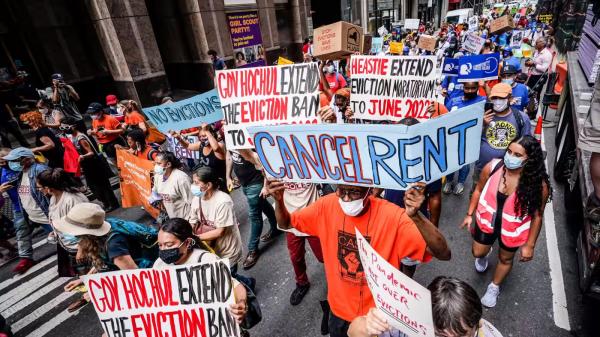
美國紐約抗議通脹下房租上漲的遊行(來源:美聯社)
儘管這一戰略讓西方國家在 2021 年開始復甦,但鑑於此前一些國家經歷了GDP的大幅下滑,這種復甦的經濟優勢被誇大了,而幾乎沒有考慮到這些國家很快就會“迴歸現實”,面臨前所未有的額外挑戰。即使到 2022年5月,很明顯大多數國家的年度GDP增長預測都被誇大了。這一波通脹的規模和持續時間是前所未有的,而美國政府多次將其稱為“暫時性”,這一誤判被證明是一個錯誤,並迫使政府收緊了他們沒有預料到的財政緊縮,造成了意想不到的不利經濟後果。換句話説,復甦甚至在完成之前就已經步履蹣跚。
但中國不在這條船上,儘管西方自信必勝。由於中國實行嚴格、長期和一貫的動態清零政策,旨在通過先發制人地阻止疫情暴發(從2020年到2022年)來維持經濟穩定,因此能夠不依賴極端的刺激性利率或不得不降低的利率,而維持自然的增長。中國在2020年和2021年分別增長2.2%和8.1%。在沒有中斷的情況下,它的目標是在2022年達到5.5%。儘管這些政策導致的消費增長相對疲軟,但這也抵消了通脹陷阱。因此來看中國的經濟前景,是不必制定產生極端風險的經濟政策,以犧牲長期增長選擇為代價尋求短期復甦的。所以,即使奧密克戎是一個挑戰,中國也不必採取極端政策來擺脱這種阻礙其未來增長的局面,而中國銀行似乎已經避免了這種情況。
因此,在中國經歷動盪的同時,西方相對而言正在進入一場新的災難。事實證明,2022年是比任何人預期的都要慘淡的一年,但西方對中國自身經濟的悲觀情緒仍然持續,因為被政治偏見和對中國“不可避免的失敗”的痴迷所矇蔽,未能看到全局。如果中國能夠在2022年繼續增長,而西方國家採取不穩定的、緊縮與刺激性交替的財政政策,在新的衰退邊緣搖搖欲墜,那麼這顯然是對優勢而非弱點的展現和證明。
中國的有利形勢再次被一些新聞媒體不惜一切代價地尋找負面因素所低估,即使他們本國的情況趨於崩潰了。中國將從這種混亂中復甦,但西方通過他們自己考慮錯誤的政策,將再次面臨衰退。
(本文系作者賜稿,英文原文見下頁。)
Looming Western Recessions Reminds us That China is Still in A Better Position
By Tom Fowdy
The western media are obsessed with negative coverage of China’s economy. The causes are both political and ideological. Upon seeing China’s dramatic economic rise across the past 40 years, there has been a longstanding anticipation and assumption that the country “must” fail eventually. Contemporary news articles enjoy talking about “the end of the Chinese miracle” so to speak, a broader theme of excessively negative coverage of which overinflates the potential impact of every potential challenge the country faces, which is then whipped up into a zero-sum conclusion regarding a framed geopolitical struggle with the United States.
Yet the phenomenon far pre-dates that. Rooted in Cold war liberal exceptionalism, or the “end of history” thesis, the potential demise or decline of China has long been touted as an inevitability, and is best depicted and now often parodied through Gordon Chang’s 2001 book “the coming collapse of China”, but despite him being personally proven wrong, continues to be a persistent theme for newspapers who out of political bias, dismiss China’s prospects routinely, most notably of late being the Financial Times, who in recent weeks has produced an insufferable amount of negative stories relentlessly cheerleading China’s perceived economic woes over covid.
Whilst of course the reality is true that China has suffered amidst an outbreak of the omicron variant that led to a strict lockdown in Shanghai, predictably the situation has been targeted relentlessly by the western mainstream to ferment pessimism on the economy as a whole. In making this criticism, various outlets have drawn a deliberate contrast to policies in the west, many of who have abandoned covid restrictions altogether, arguing that the west’s model is superior despite the large number of deaths they continue to occur (with the US surpassing 1 million) and that their economic outlook is apparently better for it than China’s. Zero covid is bad, letting covid spread untamed is brilliant.
But these arguments have not aged well at all, particularly because they have been based on short-termism (as has the west’s approach as a whole) and by May, things are looking ominous for western countries. The cheerleading of western economic recovery from covid has been remarkably short lived as global uncertainties have changed for the worse and multiple nations head for renewed recessions. Last week, US GDP unexpectedly declined by 1.4%. Then as the US federal reserve has been forced to tighten monetary policy to reel in inflation, US stock markets have crashed. Across the Atlantic, a similar inflation crisis has forced the Bank of England to raise interest rates up to the highest in 13 years, explicitly telling the public a recession is looming. This coincides with surging energy prices stemming from the conflict in Ukraine. The money supply is being crunched.
Although uncertainties aggravated by the war have to be taken into account, this looming economic crisis is rooted in the west’s disastrously short-termist handling of the covid-19 pandemic, of which frequently sought to avoid zero-covid strategies in consideration of the economy, leading in turn to massive outbreaks, inconsistently applied long lockdowns (which were deeply unpopular and implemented ineffectively) and then attempts to forcibly kickstart the economy by injecting trillions worth of stimulus payments and excessive monetary policies, which due to suppressed demand and deteriorating business conditions, then created a tidal wave of inflation and placed burdens on supply chains.
Whilst this strategy allowed western countries to bounce back initially in 2021, the economic merits of such recoveries were exaggerated given the sheer size of GDP slumps some countries had endured, with little consideration given that soon these countries would “come back down to earth” and face additional challenges they had not previously. Even by May 2022, it is quite evident that annual GDP forecasts for most countries were overstated. In particular, the size and duration of the inflation wave was not anticipated, which the US government for one repeatedly wrote off as “transitory”, a miscalculation which proved to be a big mistake, and has forced governments towards fiscal tightening they were not anticipating, posing adverse economic consequences that were not anticipated. In other words, the recovery has faltered before it was even completed.
But China is not in this boat, despite the western triumphalism. Because China has consistently applied a strict, long term and consistent zero-covid policy, which sought to maintain economic stability by pre-emptively quashing outbreaks (from 2020 to 2022), the country was able to maintain natural growth without relying on extreme amounts of stimulus or rolling back interest rates. China grew 2.2% in 2020 and 8.1% in 2021. Without disruption, it was aiming for 5.5% in 2022. Although consumer growth because of these policies was relatively soft, this has also offset the inflation trap and has produced an economic picture whereby China did not have to make economic policies which produced extreme risk, seeking short term recovery at the expense of long term growth options. Therefore, even though Omicron is a challenge, China does not have to resort to extreme policies to get out of this situation which will hamper its future growth, and the Bank of China has seemingly avoided such.
Therefore, whilst China has experienced turbulence, the west has in relative comparison is entering a new catastrophe. 2022 is proving all around to be a much bleaker year than anyone expected, yet the western pessimism against China’s own economy aged poorly yet again because blinded by political bias and an obsession with China’s “inevitable failure” it has failed to see the bigger picture. If China can continue to grow in 2022 whilst western countries teeter on the brink of new recessions through unstable and bipolar fiscal policies, then that is a clear display of strength and a vindication, not weakness.
China’s advantageous situation has been underplayed yet again by the obsession of some news outlets to look for the negatives at all costs, even as things started to crumble around them back home. China will recover from this disruption, but the west through their own ill thought policies, will face recession yet again.
本文系觀察者網獨家稿件,文章內容純屬作者個人觀點,不代表平台觀點,未經授權,不得轉載,否則將追究法律責任。關注觀察者網微信guanchacn,每日閲讀趣味文章。