周波:馬克龍聲稱北約已經“腦死亡”,但它現在看起來更像 “活殭屍”
【文/觀察者網專欄作者 周波 翻譯/中國論壇 程澤笠】
在音樂會上,當觀眾聽到歌手唱到最高音時,他們知道這首歌可能已臨近尾聲。北約的未來亦大抵如此:在不久的將來,瑞典和芬蘭加入北約之日,很可能就是由32個成員組成的跨大西洋聯盟的擴張終結之時。
在其他三個北約候選國中,格魯吉亞和烏克蘭申請加入,已遭到俄羅斯的戰爭報復,因此似已無可能。如果波黑繼續採取行動加入北約,莫斯科是否會如它警告的那樣做出反應,尚待觀察,在目睹烏克蘭所發生的衝突後,北約可能也會三思而行。
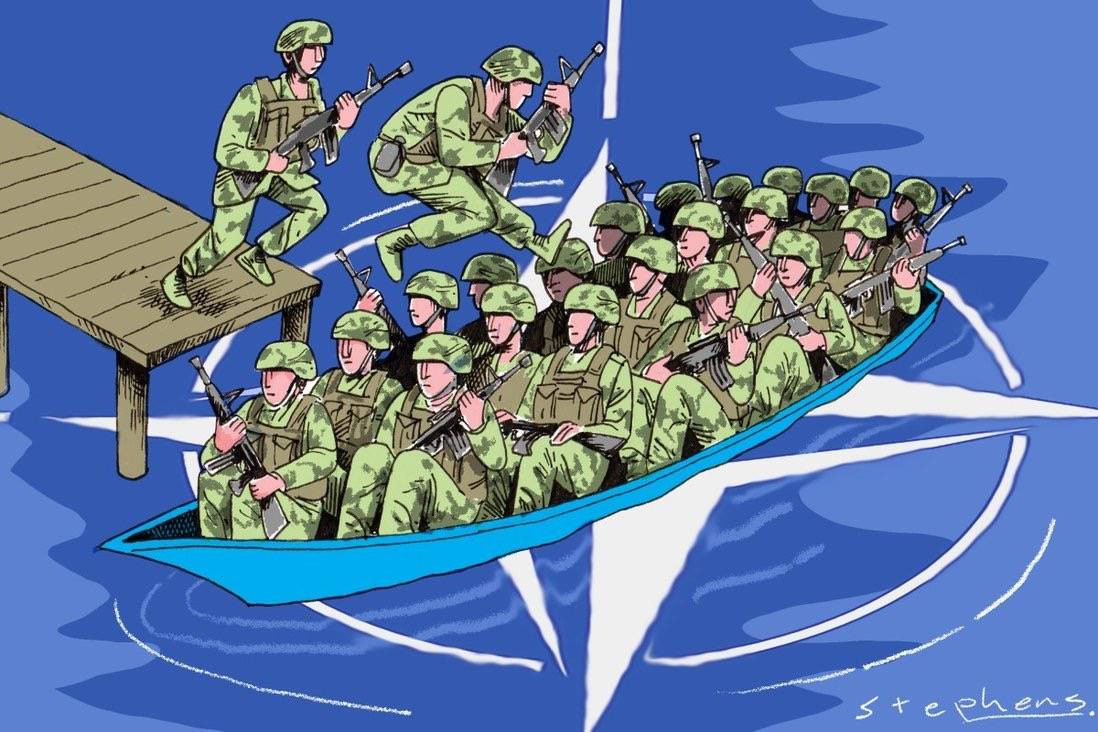
在歐洲,冷戰從未隨着蘇聯的解體而真正結束。烏克蘭戰場不過是北約和俄羅斯之間繼續爭奪勢力範圍的一個擂台而已。
俄羅斯有合法的勢力範圍嗎?如果莫斯科認為有,並願意為之而戰,那麼它就有。回顧1962年蘇聯在美國家門口放置導彈,美國是如何反應的就很容易理解了。古巴導彈危機曾將世界推向全面核戰爭爆發的邊緣。
軍事聯盟靠“威脅”生存。如果他們找不到威脅,就會自己製造威脅。但是,北約這樣的龐然大物要想生存下去,就需要不斷擴張。
北約尋找威脅的例子可以從 1999 年科索沃戰爭期間對貝爾格萊德的 78 天轟炸中看到。同樣,在 2011 年北約領導的聯軍針對利比亞及其統治者卡扎菲的行動中也可以看到這一點。該行動導致卡扎菲下台,利比亞陷入內戰的深淵。
然而,沒有什麼威脅比“俄羅斯威脅”更大,更有用。俄羅斯不是蘇聯,但誰最像蘇聯?只有俄羅斯。戈爾巴喬夫和葉利欽都對俄羅斯加入北約表示過興趣,但不出所料,他們都被拒絕了。俄羅斯加入北約只會讓聯盟失去存在的意義,並從內部瓦解北約。
烏克蘭戰爭增強了北約的團結,但只是一時的。相反,它很可能成為這個聯盟最終解體的一個轉折點。出於對俄羅斯的恐懼,北約中更多歐洲國家會增加國防開支,從而加強歐洲的戰略自主,減少對華盛頓的依賴。
德國是一個典型的例子。俄烏衝突前,這個歐洲最富有的國家的國防開支一直低於其國內生產總值的2%,而這本是北約成員國的義務。但在2月,德國總理朔爾茨宣佈從今往後每年的國防開支將超過2%的國內生產總值。像魔術師突然從帽子裏變出一隻兔子一樣,他宣佈為德國武裝部隊設立1000億歐元(約合1021億美元)的基金。
一旦歐洲戰略自主,美國就可以把歐洲留給歐洲人,從而聚焦於中國,因為美國認為中國是比俄羅斯更大的長期威脅。對美國而言,理想狀態是北約聚焦於歐洲的集體防禦,同時,歐洲盟友支持美國在印太地區遏制中國。
這是白日做夢。迄今為止,英國、法國和德國除了以航行自由的名義在南海象徵性地進行了幾次航行外,並沒有什麼大動作。儘管北約在6月的峯會上首次將中國定性為“系統性挑戰”,但並沒有刻意將中國描述為“威脅”。
對美國的歐洲盟友來説,過於關注中國有可能使北約忽略俄羅斯這個真正的威脅。中國和北約彼此相距太遠。很難想象有朝一日中國會派兵與一個歐洲國家開戰。同樣,也很難想象北約會出兵參與台海的潛在衝突。
儘管北約首次邀請日本、韓國、澳大利亞和新西蘭的非北約盟國領導人出席今年的峯會,但“亞洲版北約”不大可能形成氣候。在印太地區,即使是美國最親密的盟友,也不希望被視為反華俱樂部的一員。
事實上,歷史上的東南亞條約組織就是亞洲版北約的一次嘗試。該組織成立於1954年,被詹姆斯-凱布爾爵士(注:凱布爾 ( 1920 - 2001) 是英國外交官和海軍戰略家)描述為 “美國政策赤裸裸的遮羞布”,其成立目的主要是為了阻止共產主義在東南亞的進一步發展,但它只存在了大約二十年。今天,東盟已是中國的最大貿易伙伴。
只有當中國和俄羅斯結盟,北約才可能會在一場新的冷戰中滿血復活。但從烏克蘭衝突來看,沒有證據表明中俄會結盟。北京已經小心翼翼地在戰略伙伴俄羅斯和烏克蘭之間取得了平衡,後者視中國為最大貿易伙伴之一。
中國精心維持的中立立場可能並非歐洲想要的,但對於那些擔心中俄聯盟的歐洲人來説,這應該是可以被接受的。中國沒有向俄羅斯提供軍事援助應該讓他們長舒了一口氣。
如果小國為了自衞而抱團可以理解。但如果地球上最大的軍事聯盟希望不斷擴張,那就不是為了防衞,而是要用大棒將自己的價值觀強加於人。沒有一個聯盟會千年不倒。只要西方國家繼續衰落,北約必然式微。法國總統馬克龍曾宣稱北約已經“腦死亡”,但它現在看起來也許更像是一具仍在行走的活殭屍。
本文英文全文:
When the audience at a concert hear a singer hitting the highest note, they know the song is probably coming to an end. And Nato’s future will be much the same: when Sweden and Finland join – a sure thing in the near future, the 32-member transatlantic alliance might have reached the end of its expansion.
Of the other three candidates on the waiting list for Nato membership, Georgia and Ukraine’s requests appear doomed by Russia’s warring response. It remains to be seen if Moscow would react as it has warned if Bosnia and Herzegovina takes steps towards joining Nato, but the alliance might also think twice after seeing what has occurred in Ukraine.
The cold war in Europe has never really ended with the fall of the Soviet Union. The battlefield in Ukraine is but a stage of continued rivalry for sphere of influence between Nato and Russia.
Does Russia have a legitimate sphere of influence? If Moscow believes there is one, and would fight for it, then it does. This is easy to understand if one thinks of how the United States reacted when the Soviet Union placed missiles at its doorstep in 1962. The Cuban missile crisis brought the world close to the brink of an all-out nuclear war.
Military alliances survive on “threats”. If they fail to find one, they will create one. But for a juggernaut such as Nato to survive, it needs to constantly expand.
Examples of Nato seeking out threats can be seen in the 78-day bombing of Belgrade in 1999 during the war in Kosovo. It can also be seen in the 2011 operation by a Nato-led coalition against Libya and its ruler Muammar Gaddafi. The operation led to Gaddafi’s ousting and the country was plunged into the depths of civil war.
But no threat is bigger and more useful than a “Russia threat”. Yes, Russia is not the Soviet Union, but who looks most like the Soviet Union? Only Russia. Both Mikhail Gorbachev and Boris Yeltsin expressed interests in Nato membership for Russia, but unsurprisingly they were rejected. Russia’s membership in Nato would render the alliance meaningless and dissolve it from the inside.
The war in Ukraine has strengthened the solidarity of Nato, but only for a while. Instead, it might well become a turning point in the eventual disintegration of the alliance. Out of fear of Russia, more European countries in Nato will most certainly increase their defence spending. This will add to Europe’s strategic autonomy from Washington.
A typical example is Germany. Before the war in Ukraine, the richest country in Europe has consistently spent less than 2 per cent of its GDP on defence, which is an obligation for Nato members. But in February, Chancellor Olaf Scholz announced that Germany would spend more than 2 per cent of GDP on defence every year. Like a magician who suddenly pulls a rabbit out of their hat, he announced a €100 billion (US$102.1 billion) fund for the armed forces.
Europe’s strategic autonomy would allow the US to leave Europe to the Europeans so it can focus on China, which it perceives to be a greater long-term threat than Russia. For Washington, an ideal situation is one where Nato stays focused mainly on collective defence in Europe while at the same time European allies support the US in containing China in the Indo-Pacific.
This is a daydream. So far, Britain, France and Germany have not done much beyond a few symbolic sailings through the South China Sea in the name of freedom of navigation. Although China was identified as a “systemic challenge” for the first time at the Nato summit in June, Nato has yet to explicitly describe China as a “threat”.
For European allies of the US, too much focus on China risks diverting the alliance from the real threat: Russia. China and Nato are too far away from each other. It’s inconceivable that China would one day send troops to fight against a European country. Likewise, it’s hard to imagine that Nato would get directly involved in a potential conflict in the Taiwan Strait.
Even though Nato invited leaders from non-allied partners Japan, Korea, Australia and New Zealand to attend this year’s summit for the first time, an “Asian Nato” is unlikely to take shape. In the Indo-Pacific, even the closest ally of the US might not wish to be seen as a member of the anti-China club.
An Asian Nato has already been tried once in the form of the Southeast Asia Treaty Organization. Founded in 1954 and described by Sir James Cable as “a fig leaf for the nakedness of American policy”, it was primarily created to block further communist gains in Southeast Asia, but it was only in existence for about two decades. Today, ASEAN is China’s largest trading partner.
Only if China and Russia become allies can Nato thrive in a new cold war. But there is no evidence of a Sino-Russian alliance if one watches through the prism of the conflict in Ukraine. Beijing has managed, however painstakingly, to strike a balance between its strategic partner Russia and Ukraine, which has China as one of its largest trading partners.
China’s carefully calibrated neutrality might not be what Europe wants, but it should be acceptable to Europeans who are nervous about a potential Sino-Russian alliance. The fact that China hasn’t provided military assistance to Russia should be a relief.
If small nations get together for self-defence, it is understandable. But if the largest alliance on earth wishes to expand, it is not about defence but enforcing its own values on others with a big stick. No alliance will last forever. As long as the West continues to decline though, Nato will be on the wane. French President Emmanuel Macron called Nato “brain dead”, but perhaps it looks more like a zombie that is still walking.
本文系觀察者網獨家稿件,文章內容純屬作者個人觀點,不代表平台觀點,未經授權,不得轉載,否則將追究法律責任。關注觀察者網微信guanchacn,每日閲讀趣味文章。