周波:中印能在印度洋共存嗎?
【文/觀察者網專欄作者 周波】
印度洋就是印度的洋嗎?無論這一問題看似多麼荒謬,但如果你的交談對象是一個篤信“大婆羅多(Akhand Bharat)”構想(即“不可分割的印度”)的印度教民族主義者,答案可能是肯定的。
在這套話語體系下,不僅印度洋成了“印度教徒的偉大海洋”(Hindu Mahasagar),古婆羅多的地理版圖還包括現如今的阿富汗、緬甸、巴基斯坦、孟加拉國、中國西藏、尼泊爾、不丹、斯里蘭卡和馬爾代夫。
當印度總理莫迪還是古吉拉特邦的首席部長時,他曾在2012年的一次採訪中説,應該在文化統一的背景下看待“大婆羅多”。
然而,這種“大印度”的觀念迄今依然存在,這可能就是德里對周邊弱小鄰國習慣性以“老大哥”自居的原因之一。為嘗試改變這種狀況,莫迪總理在2014年第一個任期開始時,曾提出“鄰國優先”政策,卻未能吸引住印度次大陸的鄰居們。德里自身的行為難辭其咎。
以斯里蘭卡為例。2014年,斯里蘭卡允許一艘中國潛艇在科倫坡停靠,引發了印度的強烈反對。然後,2017年,斯里蘭卡拒絕了一艘中國潛艇停靠科倫坡補給的請求,人們普遍認為這是新德里向斯里蘭卡施壓的結果。
當斯里蘭卡在今年7月12日宣佈允許中國科考船“遠望5號”將停靠漢班託塔港進行補給時,印度又對此提出抗議,聲稱這關係到“印度的安全和經濟利益”。 這導致科倫坡要求中國科考船“遠望5號”推遲其到港計劃。
針對印度媒體關於“遠望5號”是“間諜船”的報道,中國外交部發言人汪文斌表示,“遠望5號科考船進行海洋科考活動符合國際法和國際通行慣例,不影響任何國家的安全和經濟利益。”
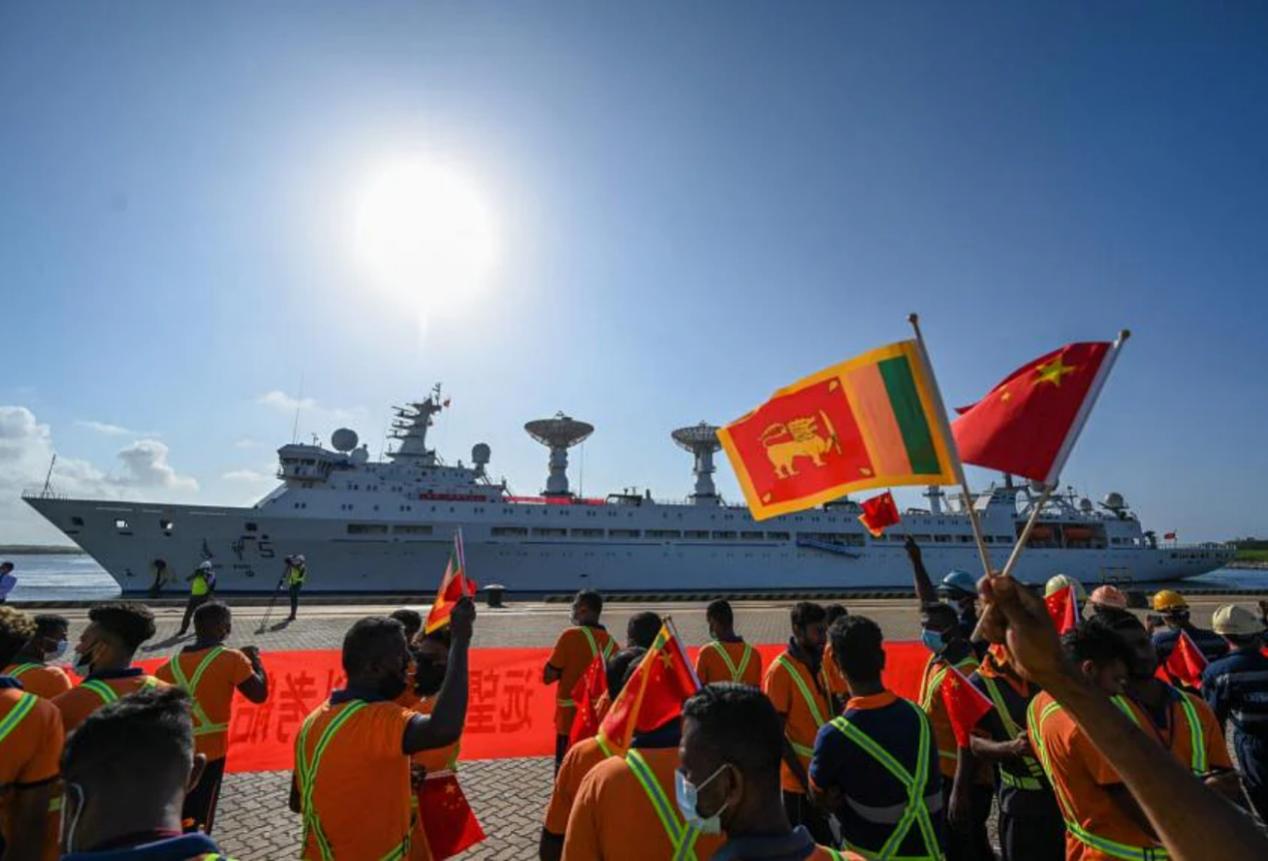
“遠望5號科考船抵達斯里蘭卡的漢班託塔港(圖源:法新社)
雖然科倫坡最終擱置新德里的抗議,允許該船在8月16日至22日泊靠,但令人警惕的是,印度已經一次又一次地反對另一個國家行使主權,為中國船隻進行補給。
這就引出了一個問題:中國和印度能否在印度洋共存?
誓要成為印度洋“淨安全提供者”的印度,顯然不滿於中國在該地區日益增長的影響力。2020年中國和印度士兵在加勒萬河谷發生的致命鬥毆事件,助長了印度的怨恨。一些印度戰略家甚至認為,中國企圖從海上包抄印度。但這樣的分析顯然是對印度重要性的間接的自吹自擂,且顯示其對北京的優先事項解讀並不到位。中國有更緊迫的事務。在美國將中國視為其最大的戰略競爭對手的情況下,中國不得不與充滿敵意的美國抗衡,哪有時間圍堵印度。
中國在印度洋的利益
但這並不是説中國對印度洋沒有興趣。恰恰相反。要知道90%的全球貿易都是通過海路運輸的。作為世界上最大的貿易國,中國自然會關注國際海上通道的安全。此外,中國在包括印度在內的南亞國家有大量投資。2021年,中印雙邊貿易創下了1256億美元的歷史新高。這就解釋了為什麼自2008年底以來,中國海軍一直不停地派出海軍編隊在印度洋進行巡邏。2017年,中國在吉布提建立了第一個海外軍事基地,以保障反海盜行動。
為了維護中國在印度洋不斷增長的利益,擁有世界上最大海軍的中國人民解放軍必須保持甚至加強其在印度洋的存在。因此,中國和印度的海軍艦艇勢必會更頻繁地在海上相遇。
中國航母打擊羣出現在印度洋只是時間問題。屆時印度將如何應對?
或者,設想最壞的情況,中國和印度會有一天在印度洋上發生衝突嗎?這種可能性雖然很低,但並不是零。2017年,中國和印度在中國和不丹之間的爭議地區洞朗對峙長達73天,衝突一觸即發。
印度軍事策略家們一貫認為,儘管本國在中印邊境可能處於劣勢,但鑑於印度的地利之便,它在印度洋上肯定比中國有優勢。
但這並不能保證印度海軍在潛在的衝突中能獲勝。印度不具備與中國進行零和遊戲的物質條件。要知道中國的經濟總量近乎印度的五倍,國防開支是印度的四倍。
印度在美國印太戰略中的角色
那麼印度在美國遏制中國的印太戰略中會扮演什麼角色?印度是“四方安全對話” 的成員國,這是一個由美國領導的俱樂部,還包括日本和澳大利亞,成員氣味相投。由於其他三國已互為盟友,因此四方安全對話是否會在未來演變成一個反華俱樂部,很大程度上取決於印度的態度。到目前為止,印度還算是謹慎的。四方安全對話唯一的軍事部分是在孟加拉灣的馬拉巴爾舉行的海軍演習。不過,最近印度和美國宣佈計劃在10月舉行一次聯合演習,演習地點距離中國和印度的實際控制線只不到100公里。
隨着中美競爭加劇,印度對美國的重要性必定會增加。但是,避免中美在印太地區的對抗,才最符合印度的國家利益。如果中美之間的競爭加劇,印度在印度洋的迴旋餘地就會隨之縮小。
如果印度真的奉行“鄰國優先”,或許它應該首先考慮好如何與更強大的鄰國—中國和睦相處。印度若執意在與中國關係的問題上向周邊國家施壓,只會使這些鄰國與北京走得越來越近。
翻譯:中國論壇 蔣紹澄
核譯:中國論壇 許馨勻 韓樺
本文英文原文:
Is the Indian Ocean India’s ocean? However absurd this question might seem, the answer is probably yes if you talk to a Hindu nationalist who believes in Akhand Bharat (“undivided India”).
According to this concept, not only is the Indian Ocean Hind Mahasagar (an ocean of the Hindus), the geographic expanse of the ancient Bharat extended as far as modern-day Afghanistan, Myanmar, Pakistan, Bangladesh, Tibet, Nepal, Bhutan, Sri Lanka, and the Maldives.
When Prime Minister Narendra Modi was chief minister of Gujarat, he said in a 2012 interview that Akhand Bharat should be seen in the context of cultural unity.
Yet this notion of a Greater India persists and is probably one reason for Delhi’s habitual “big brother” attitude towards its smaller neighbours. Prime Minister Modi’s “Neighbourhood First” policy, introduced at the beginning of his first tenure in 2014, sought to change that. But the policy has not gained traction among India’s subcontinental neighbours and Delhi’s own actions are to blame.
Consider the example of Sri Lanka. In 2014, Sri Lanka allowed a Chinese submarine to dock in Colombo, triggering fierce opposition from India. Then, in 2017, New Delhi was widely believed to have pressured Sri Lanka into rejecting a request from China to let a Chinese submarine dock in Colombo for resupply.
When Sri Lankan announced on July 12 this year that it would permit a Chinese research/survey vessel Yuan Wang 5 to dock at Hambantota Port for replenishment, India protested, saying it has a bearing on “India’s security and economic interests”. This caused Colombo to ask Beijing to defer the arrival of the Chinese ship.
In response to Indian media reports about the Yuan Wang 5 being a ‘spy ship’, China’s Foreign Ministry spokesman Wang Wenbin said the vessel was conducting scientific research “in accordance with international law” and “does not affect the security and economic interests of any country”.
Although Colombo set aside New Delhi’s protests and eventually allowed the ship to berth from Aug 16-22, it is alarming that India has time and again objected to replenishment of Chinese ships by another state exercising its sovereign rights.
This prompts a question: could China and India coexist in the Indian Ocean?
Obviously, India, which vows to become a “net security provider” in the Indian Ocean, is not happy with China’s growing influence in the region. The deadly brawl between Chinese and Indian soldiers in the Galwan Valley in 2020 only added to India’s resentment. Some Indian strategists believe that China wants to encircle India from the sea. But such an analysis is an indirect form of self-praise of India’s importance and is off the mark in its reading of Beijing’s priorities; China has more pressing business. At a time when China has to contend with actions from a hostile United States, which sees it as its top strategic competitor, it would be too busy to encircle India.
CHINA’S INTEREST IN THE INDIAN OCEAN
But that is not to say the Indian Ocean is of no interest to China. It is. Ninety per cent of global trade goes through the sea route. As the largest trading nation in the world, China is naturally concerned over the security of international sea lanes. Besides, China has huge investments in South Asian countries, including India. In 2021, China-India bilateral trade hit a record high of US$125.6 billion. This explains why since the end of 2008, the PLA Navy has been sending naval flotillas non-stop to patrol in the Indian Ocean. In 2017, it established its first military base in Djibouti to facilitate counter-piracy operations.
To safeguard its ever-growing interests in the Indian Ocean, the PLA, which has the largest navy in the world, has to maintain or even strengthen its presence in the Indian Ocean. Chinese and Indian naval vessels are bound to meet more often at sea.
It is only a matter of time before a Chinese aircraft carrier strike group shows up in the Indian Ocean. How will India react then?
Or, in the worst scenario, could China and India clash one day in the Indian Ocean? Such a likelihood is low, but not zero. In 2017, China and India nearly went to war in a face-off that lasted 73 days in Doklam, a disputed area between China and Bhutan.
India’s military planners traditionally believe that although the country may have a disadvantage along the China-India border, it certainly has an advantage over China at sea in the Indian Ocean, given India’s geographic proximity.
But there is no guarantee that the Indian Navy will prevail in a potential conflict. India does not have the material capabilities to engage in a zero-sum game with China. China’s economy is almost five times larger, and its defence spending four times larger than that of India.
INDIA IN AMERICA’S INDO-PACIFIC STRATEGY
And what role would India play in America’s Indo-Pacific strategy of containing China? India is a member of the Quad (Quadrilateral Security Dialogue) – a US-led club of like-minded members that also includes Japan and Australia. Whether it might evolve into an anti-China club in the future depends very much on India since the three other countries are already allies. So far, India is cautious. The only military component of Quad is a naval exercise in Malabar in the Bay of Bengal. Recently though India and the US announced plans to hold a joint exercise in October, less than 100km from the line of actual control between China and India.
With China-US competition expected to intensify, India’s importance to the US will surely grow. But India’s national interests are best served by avoiding China-US rivalry in the Indo-Pacific. Should the rivalry between China and US intensify, India’s room to manoeuvre in the Indian Ocean will be reduced.
If India truly believes in “Neighbourhood First”, perhaps it should consider how to live in amity with its more powerful neighbour first. Pressuring its smaller neighbours on their relations with China will only drive them closer to Beijing.
本文系觀察者網獨家稿件,文章內容純屬作者個人觀點,不代表平台觀點,未經授權,不得轉載,否則將追究法律責任。關注觀察者網微信guanchacn,每日閲讀趣味文章。