周波:中國不是印度洋的新來者,印度要適應中國的“南亞存在”
【文/觀察者網專欄作者 周波】
中國與絕大多數南亞國家友好。展望未來, 中國在南亞的最大挑戰是如何同印度和平相處。具體來説,需要考慮四個問題:1、中印如何在邊界問題沒有解決的情況下保持實控線的和平和安寧; 2、印度如何以開放的心態看待中國在南亞的經濟活動和軍事存在;3、印度會在美國遏制中國的印太戰略中扮演什麼角色;4、在亞洲世紀來臨之際,中印如何為新的世界秩序發揮積極的作用。
一、邊界問題
坦率地説,困擾中印關係的邊界問題在可見的未來不可能解決,原因是邊境地區實際控制線沒有劃定,而中印對如何解決邊界問題有不同的看法。基本上,中國希望採取自上而下的方法,首先確定互諒互讓的政治原則,然後再處理邊界問題;而印度的觀點是採取自下而上的方法,希望通過核定實際控制線來維持現狀。
2020年6月15日發生的加勒萬衝突打破了中印邊境長達四十多年的和平。這雖然極為不幸,但兩隻現代化的軍隊實際上是以石器時代的方式,用石頭和棍棒鬥毆。這意味着他們清楚在任何情況下都不應向對方開槍,也説明中印過去建立信任的措施在一定程度上起到了作用。如果雙方從20個印度士兵和4箇中國士兵死亡中充分吸取教訓,加強風險管控,那麼也許我們可以在今後的四十年甚至更長的時間和平相處。
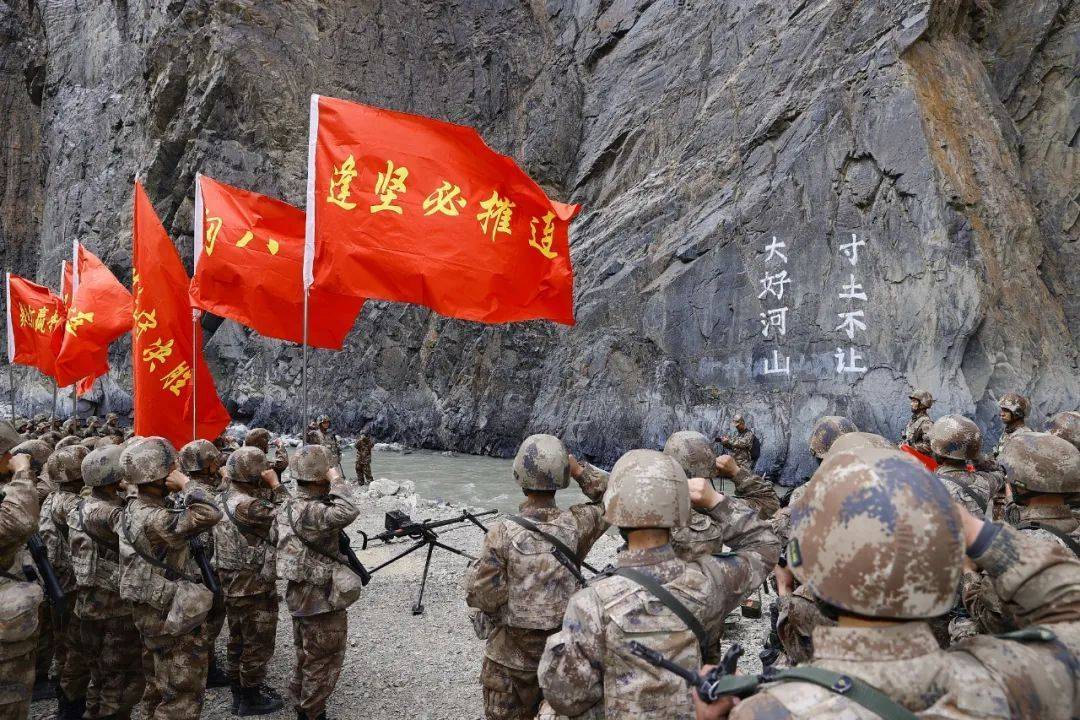
中印加勒萬衝突一度打破了中印邊境的和平(圖片來源:觀察者網)
當下我們應該做什麼?目前雙方都在邊境部署了大量部隊。首先,雙方已經在班公湖和温泉地區等地脱離接觸,這種做法應該在其他地方效仿,使雙方部隊從最危險的地方脱離接觸,維持中印邊境實際控制線地區的和平安寧。
其次,雙方應該很好梳理、落實過去的建立信任措施。中印有五個關於信任的協定和協議,比中國與任何其他國家之間的雙邊信任措施都多,且內容豐富具體。例如,中印在邊境實控線軍事領域建立信任措施協定規定,在實際控制線附近,不應該舉行師級演習,也就是不超過15000人,如果要舉行旅級的演習,也就是5000人,應該事先通知對方,而且不應該在距離實際控制線10公里的近距離內出現軍用飛機。在邊境部隊協議規定,當一方的部隊在巡邏時,另一方不應尾隨。我認為,如果雙方都認真執行了這些規定,中印並不需要建立新的信任措施。
由於加勒萬河谷發生的事情,我認為印度政府仍然處於一種怨恨、情緒化的狀態。蘇傑生外長最近表示亞洲的未來與印中關係的發展相連,邊界的狀態將決定兩國關係的狀態。前半句我同意,但是後半句倒退到印度政府在1988年拉吉夫·甘地訪華前的立場。
邊界問題不是中印獨有的問題,印度也不僅僅是隻同中國有邊界問題。如果巴基斯坦也要求只有解決了克什米爾問題才能發展印巴關係,這聽起來合理嗎?中印邊界問題不應該是兩國關係正常化難以跨越的障礙,況且衝突中中方也有傷亡。加勒萬河谷事件後,在印中資企業處境艱難,但2021年,中印雙邊貿易創下了1256億美元的歷史新高,這説明中印經濟關係的活力已經超越了人為的障礙。
二、中國在南亞的經濟和軍事存在
中國必須保持在南亞的經濟和軍事存在。中國在包括印度在內的南亞國家有大量投資。對於聚焦經濟發展的其他南亞國家而言,“一帶一路”也是難得的機遇。90%的全球貿易都通過海路運輸,印度洋是世界上最主要的交通樞紐和貿易通道之一。作為世界上最大的貿易國,中國自然會關注海上戰略通道的安全。
印度不願意看到中國在南亞擴大影響不是秘密,事實上,許多南亞國家同中國的雙邊關係都在不同程度遭到印度的干涉和打壓。2017年,中國和印度在中國和不丹爭議地區洞朗對峙長達73天。2014年,斯里蘭卡允許一艘中國潛艇在科倫坡停靠,引發了印度的強烈反對。2017年,斯里蘭卡拒絕了一艘中國潛艇停靠科倫坡補給的請求,人們普遍認為這是新德里向斯里蘭卡施壓的結果。當斯里蘭卡在今年7月12日宣佈允許中國科考船“遠望5號”將停靠漢班託塔港進行補給時,印度又對此提出抗議,導致科倫坡一度要求中國科考船推遲其到港計劃。
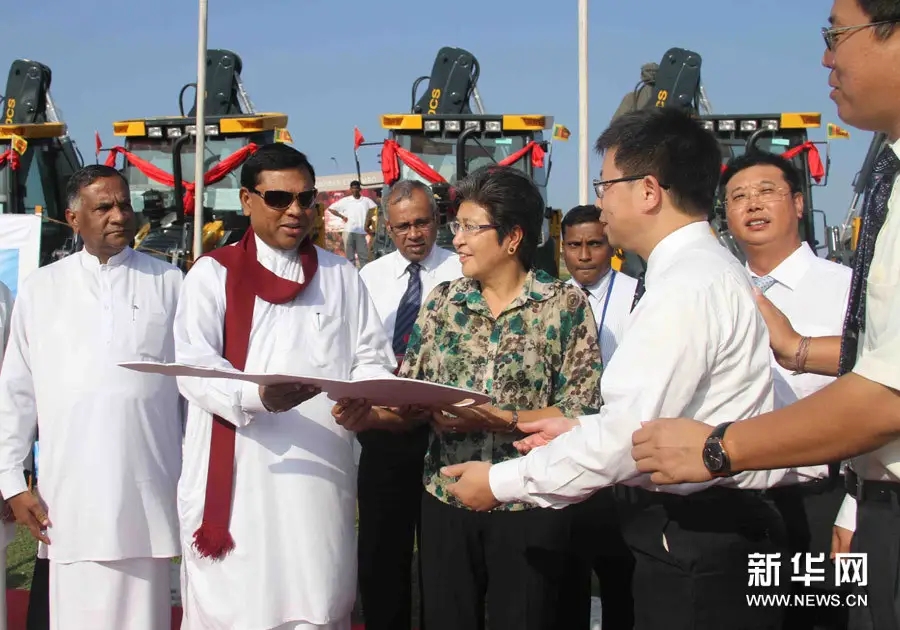
中國企業向斯里蘭卡交付大型工程機械(圖片來源:新華網)
2014年莫迪政府上台後推出對其南亞鄰國的“鄰國優先”政策,如果這一政策是印度對過去自己以老大哥的心態習慣性地干涉其弱小鄰國事務的反省和調整,那麼我認為該政策應該包括印度對其鄰國發展與中國關係的尊重,印度不應該干涉其南亞鄰國主權,逼其在中印之間選邊站隊。
相比之下,中國從來沒有阻撓印度的“向東看”或者“向東行動”計劃。東南亞對中國地緣環境重要,但是中國從來沒有干涉印度同東南亞任何國家發展政治、經濟和軍事關係。印度總是抱怨中國向巴基斯坦提供軍事裝備,但是中國從來沒有抱怨俄羅斯向印度提供軍事裝備。2017年,中國以寬厚的胸襟接納印度和巴基斯坦同時加入上合組織。
我想無須提醒大家,明朝時,鄭和艦隊—世界上最強大的艦隊就7下西洋,所以中國不是印度洋的新來者。為了維護中國在印度洋不斷增長的利益,維護海上戰略通道的安全,中國海軍必須保持甚至加強其在印度洋的存在。中國航母打擊羣出現在印度洋只是時間問題。
自2008年底以來,中國海軍一直不停地派出海軍編隊在印度洋的亞丁灣和索馬里盆地進行巡邏。2017年,中國在吉布提建立了第一個海外軍事基地,以保障反海盜行動。但沒有任何例子可以證明中國在印度洋的軍事存在給印度造成安全損害。事實上,雙方有過卓有成效的合作。2011年5月,中印兩國海軍曾與北約合作,營救了被索馬里海盜劫持的中國“富城”號商船。今後,中國和印度的海軍艦艇勢必會更頻繁地在印度洋海上相遇。如果印度以“大婆羅多(Akhand Bharat)”心態認為印度洋是“印度教徒的偉大海洋”(Hindu Mahasagar) 或者印度是印度洋“淨安全提供者”,雙方之間的摩擦甚至衝突就有可能發生。
三、美國的印太戰略
美國的印太戰略以遏制中國的發展為中心,為此,印度對美國的重要性必定會增加。公平地説,印度儘管希望限制中國在南亞的存在,但迄今為止抵擋住了把四國安全對話機制(Quad)變成一個反華俱樂部的誘惑。在Quad中,其他三個國家都已經是盟友,所以印度的態度對機制的生存和發展至關重要。有人稱Quad為“亞洲版北約”,我不這麼認為。Quad實際上正在朝向許多其他方向,如基礎設施建設、氣候變化或向東南亞國家聯合分發疫苗等發展。就其軍事內容而言,目前僅有一個名為“馬拉巴爾”的軍事演習。
如果印度選擇投入美國的懷抱,不僅中印關係將惡化,印俄關係也會下滑。同中國一樣,俄羅斯也被美國視為戰略競爭對手之一。俄羅斯是印度最大的武器供應國,佔據了印度一半以上的市場份額。印度對於美國的任何示好都會引起俄羅斯的警覺,結果是印度的戰略自主性和在大國間的迴旋餘地將大大萎縮。
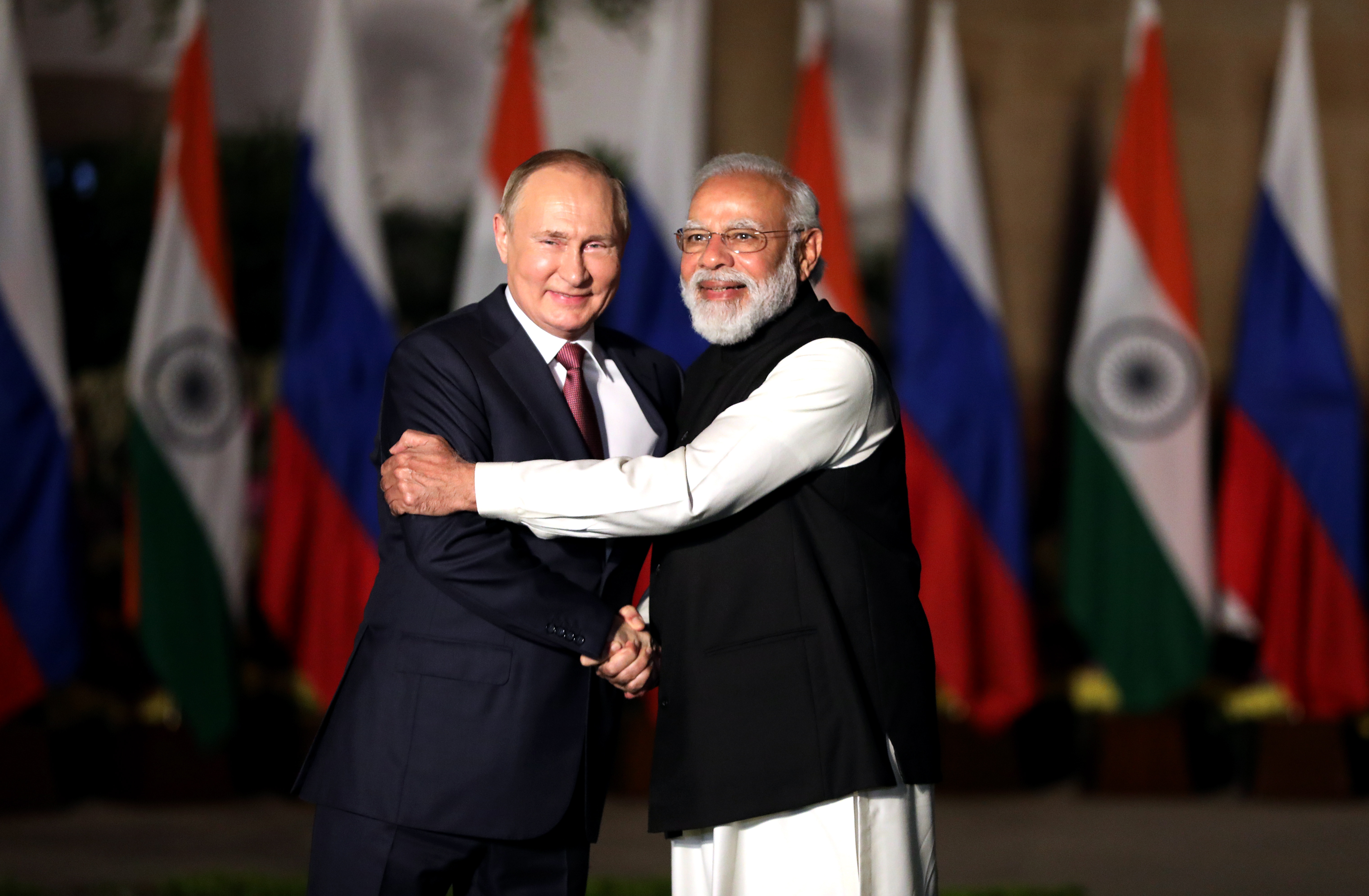
印度總理莫迪與俄羅斯總統普京(圖片來源:ICphoto)
作為不結盟運動的創始國之一,中立公正的立場而不是權宜之計最符合印度的國家利益。在過去幾年中,印度幾乎在以美國的口吻地談論“自由開放的印太”,問題是印度的立場實際上與中國的更像,而不是與美國的更近。中國和印度都反對外國在自己的專屬經濟區的軍事活動。印度法律規定,當有外國軍艦進入印度的專屬經濟區進行軍事演習時,如果涉及彈藥和爆炸物,印度政府會要求他們首先徵得印度政府的同意。這與中國的相關法律相比更嚴苛。中國在2006年即根據《公約》第298條將涉及海洋劃界、歷史性海灣或所有權、軍事和執法活動等方面的爭端排除出《公約》強制爭端解決程序,同中國一樣,印度也對《聯合國海洋法公約》第298條持有保留。
真正在印度洋挑戰印度權益的是美國。2021年4月,美國約翰·保羅·瓊斯號驅逐艦駛入了印度西南部的專屬經濟區,美國海軍第七艦隊發表書面聲明稱這樣做是因為美國將挑戰印度的“過度海洋主張”,印度為此抗議。印度專屬經濟區佔印度洋的三十分之一。換言之,美國挑戰印度的主張意味着,至少在美國人眼裏,1/30的印度洋是因為印度才不自由、不開放的。
最近印度和美國宣佈計劃在10月舉行一次聯合演習,演習地點距離中國和印度的實際控制線只不到100公里。我不清楚為什麼印度要跟美國在中印邊境附近搞這種象徵意義大於實際內容的演習。難道印度是想讓中國相信,如果中印邊境再次爆發戰爭,美國會出兵幫助印度嗎?如果不是,這種姿態顯然並不明智。
四、亞洲世紀
在可見的將來,國際秩序將是混亂的多極。在歐洲,俄烏戰爭不知道會持續多久,但是之後肯定會迎來另一場冷戰,因為歐洲的安全説到底是俄羅斯如何和北約共處的問題。在亞洲,美國的印太戰略清晰地以遏制中國為目標,中方沒有奢望中美關係將會大幅改善。
21世紀最大的問題不是中國是否能夠崛起。如果中國保持5.5%的增長率,這個問題將於10年內中國成為世界第一大經濟體劃上句號。最大的問題是美國的衰落是相對的還是絕對的?雖然結論尚早,但是美國已經從二戰後佔世界GDP的1/2下降到今天大約25%。考慮到美國國內族羣不可調和的矛盾、兩黨沒有底線的相互攻訐和民眾普遍對未來甚至打內戰的擔憂,如果説美國已經失去了方向感,恐怕並不為過。美國對印太的關注其實是其全球實力下降後收縮的必然反映,但是打壓一個完全融入國際體系的中國不僅是美國自911以來最嚴重的戰略誤判,也是徒勞無益的,很難得到其他國家的支持。
1988年鄧小平會見拉吉夫·甘地時説:“中印兩國不發展起來就不是‘亞洲世紀’。真正的‘亞太世紀’或‘亞洲世紀’,是要等到中國、印度和其他一些鄰國發展起來才算到來”。國際社會普遍認為國際地緣政治和經濟重心正在向亞洲轉移,到2030年,中國會成為世界第一大經濟體,而印度會超過日本成為亞洲第二大經濟體。所以亞洲的崛起是包括中印在內廣大亞洲國家集體的崛起,但是如果中印都發展起來,卻彼此關係緊張,這也不能説明亞洲世紀已經到來。
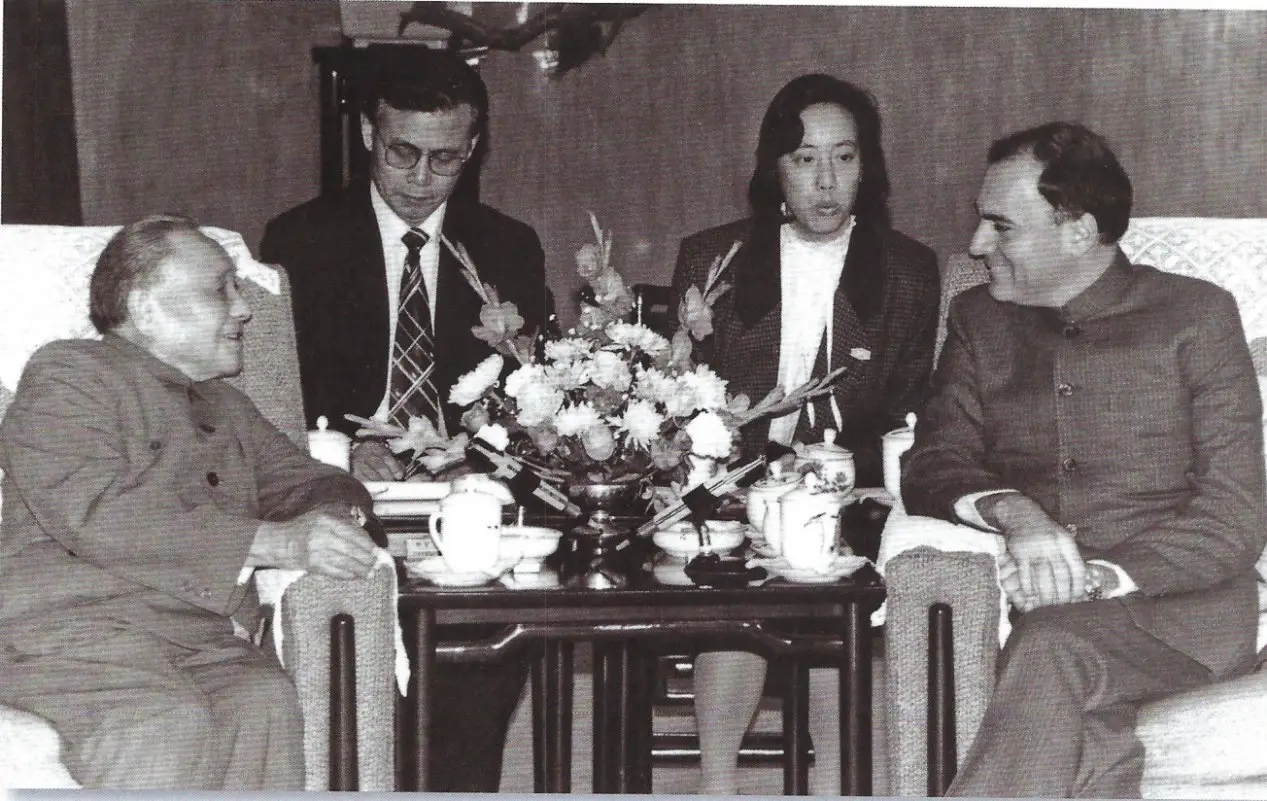
1988年鄧小平會見拉吉夫·甘地(圖片來源:網絡)
由於目前中印關係的氛圍不佳,印度政府對中國採取了一些看似強硬的態度以試圖吸引公眾輿論。例如,在俄烏衝突中,中印立場高度相似,雙方不約而同保持中立。但印度政府刻意試圖表現其立場上如何與中國不同。坦率地講,雙方的區別可能是兩隻蘋果之間的差別,而不是一個蘋果和一個梨子之間的差別。
在過去相當長的一段時間內,中國有不少人認為中國同美國的關係是“好也好不到哪裏去,壞也壞不到哪裏去”,現在估計很少人這麼想了。那麼中印關係是不是也是“好也好不到哪裏去,壞也壞不到哪裏去”呢?如果聽天由命,這種態度不僅是不負責任的, 而且真的可能促使雙方關係朝壞的方向發展。中印社會制度不同,但都是全球化的受益者,都是新興經濟體,都支持世界多極化和國際關係民主化。在世界秩序更加不確定的時代,如果中印以開放的心態看待對方的發展,管控彼此的分歧,這一重要的雙邊關係可以成為世界的穩定器。
作者發言原文:
Can China and India coexist in South Asia?
China is on friendly terms with the vast majority of South Asian nations. In the years ahead, China’s biggest challenge in South Asia is how to live peacefully with India. Specifically, four issues need to be considered: 1. how China and India can maintain peace along the Line of Actual Control where the border dispute has not yet been resolved; 2. how India can view China’s economic activities and military presence in South Asia with an open mind; 3. what role India will play in the American Indo-Pacific strategy to contain China; 4. how China and India can play a positive role in the new world order at the dawn of the Asian century.
1.The Sino-Indian Border Dispute
Frankly speaking, the border dispute plaguing China-India relations cannot be resolved in the foreseeable future due to the lack of demarcation of the Line of Actual Control and the different views China and India have on border dispute resolution. Essentially, China hopes to take a top-down approach by first agreeing on the political principles of mutual understanding and mutual accommodation before dealing with the border dispute, while the Indian perspective consists a bottom-up approach, which involves an intent to maintain the status quo by verifying the Line of Actual Control.
The Galwan clash on June 15, 2020 shattered more than 40 years of peace in the Sino-Indian border. While this is extremely unfortunate, the two modern militaries actually fought in Stone Age fashion, with stones and clubs. This meant that they knew they should not shoot at each other under any circumstances, and also revealed that past confidence-building measures between China and India have worked to a certain extent. If the two sides can fully learn from the deaths of 20 Indian soldiers and 4 Chinese soldiers and strengthen risk management, it is possible that we can live in peace for the next 40 years or even more.
So, what should we do now? Both sides are currently deploying large numbers of troops along the border. First, both sides have already disengaged in areas such as Pangong Lake and Hot Spring, and this practice should be followed in other places to disengage both nations’ militaries from the most dangerous places and maintain peace and tranquility along the Line of Actual Control in the Sino-Indian border areas.
Second, the two sides should tease out and implement past confidence-building measures. China and India have five agreements and protocols on confidence--more than any other bilateral confidence measures between China and other countries, and they are rich and specific. For example, the Agreement between India and China on Confidence-Building Measures in the Military Field along the Line of Actual Control in the India-China Border Areas stipulates that division-level exercises should not be held near the Line of Actual Control, that is, they should not involve more than 15000 personnel. If brigade-level exercises are to be held, that is, if they involve 5000 personnel, the other side should be notified in advance, and military aircrafts should not be present within a close range of 10 kilometers from the Line of Actual Control. The Agreement stipulates that when troops from one side are patrolling, the other side should not trail behind closely. I do not think there is a need for new confidence-building measures between China and India if both sides are serious about implementing these established provisions.
Because of what happened in the Galwan Valley, I think the Indian government is still in a state of resentment and affect. Indian Minister of External Affairs S. Jaishankar recently stated that “the future of Asia is linked to the development of India-China relations and the state of the border will determine the state of the relationship.” I agree with the first half of the statement, but the second half goes back to the Indian government’s position before Rajiv Gandhi’s visit to China in 1988. Border disputes are not unique to China and India, and India does not only have border disputes with China. If Pakistan also requires that the Kashmir issue to be resolved before developing India-Pakistan relations, does that sound reasonable? The Sino-Indian border issue should not be an insurmountable obstacle to the normalization of relations between the two countries, not to mention that the Chinese side also suffered casualties in the clash. After the Galwan skirmish, Chinese-funded enterprises in India were in a difficult situation, but by 2021, bilateral trade between China and India rose to a record $125.6 billion USD, demonstrating that vitality of China-India economic relations has surpassed man-made obstacles.
2.China’s Economic and Military Presence in South Asia
China must maintain an economic and military presence in South Asia. China has substantial investments in South Asian countries, including India. For other South Asian countries focusing on economic development, the Belt and Road Initiative is also a rare opportunity. Up to 90% of global trade is transported by sea, and the Indian Ocean is one of the most important transportation hubs and trade routes in the world. As the world’s largest trading nation, China naturally pays much attention to the security of strategic sea lanes.
It is no secret that India does not want to see China’s expanding influence in South Asia. In fact, the bilateral relations between many South Asian countries and China have been interfered with and suppressed by India to varying degrees. In 2017, China and India faced off for 73 days in Doklam, a disputed region between China and Bhutan. In 2014, Sri Lanka allowed a Chinese submarine to dock in Colombo, triggering strong opposition from India. In 2017, Sri Lanka rejected a request by a Chinese submarine to dock in Colombo for replenishment, and the rejection was widely believed to be the result of New Delhi’s pressure on Sri Lanka. When Sri Lanka announced on July 12 this year that it would allow the Chinese research vessel Yuanwang-5 to dock in the Hambantota Port for replenishment, India protested again, leading Colombo to request the Chinese research vessel to delay its planned arrival at the port.
After the Modi government came into power in 2014, it launched a Neighborhood First policy for its South Asian neighbors. If this policy is a retrospection and adjustment of India’s past tendency to interfere in the affairs of its weaker and smaller neighbors with a big brother mentality, then I think this policy should also include India’s respect for its neighbors in developing relations with China, and India should not interfere with the sovereignty of its South Asian neighbors and force them to take a side between China and India. In contrast, China has never thwarted India’s “Look East” or “Act East” policy. Southeast Asia is important to China’s geographical environment, but China has never interfered in India’s development of its political, economic, and military relations with any Southeast Asian country. India always complains about China’s provision of military equipment to Pakistan, but China never complains about Russia’s provision of military equipment to India. In 2017, China accepted India and Pakistan into the Shanghai Cooperation Organization with openness and generosity.
I do not think it’s necessary to remind everyone that during the Ming Dynasty, Zheng He’s fleet, the most powerful fleet in the world, went to the Indian Ocean seven times. Therefore, China is not a newcomer to the Indian Ocean. To safeguard China’s growing interests in the Indian Ocean and maintain the security of strategic sea lanes, the Chinese navy must maintain or even strengthen its presence in the Indian Ocean. It is only a matter of time before a Chinese carrier strike group appears in the Indian Ocean. Since the end of 2008, the Chinese navy has been sending naval formations to patrol the Gulf of Aden and the Somali Basin in the Indian Ocean. In 2017, China established its first overseas military base in Djibouti to safeguard anti-piracy operations. But there is no instance of Chinese military presence in the Indian Ocean causing security damage to India. In fact, the two sides have had fruitful cooperation. In May 2011, the Chinese and Indian navies cooperated with NATO to rescue the Chinese merchant vessel Full City, which was hijacked by Somali pirates. In the future, Chinese and Indian naval vessels are bound to meet more frequently in the Indian Ocean. Friction and even conflict between the two sides is possible if India, with an Akhand Bharat mentality, regards the Indian Ocean as the “Great Ocean for Hindus” (Hindu Mahasagar) or India as a “net security provider” for the Indian Ocean.
3.The Indo-Pacific Strategy of the United States
The American Indo-Pacific strategy centers around containing Chinese development, and to that end, India’s importance to the U.S. is bound to increase. To be fair, India, despite its desire to limit China’s presence in South Asia, has so far resisted the temptation to turn the Quadrilateral Security Dialogue (Quad) into an anti-China club. Within the Quad, the other three nations are already allies, so India’s attitude is crucial to the survival and development of the Quad. Some call the Quad the “Asian NATO.” But I don’t think so. The Quad is actually heading in many other directions, such as infrastructure development, climate change, and the distribution of vaccines to Southeast Asian countries. In terms of its military dimension, there is currently only one military exercise—the Malabar Exercise.
If India chooses to fall into the arms of the United States, not only will China-India relations deteriorate, India-Russia relations will also decline. Like China, Russia is also seen by the United States as one of its strategic competitors. Russia is India’s largest arms supplier, accounting for more than half of India’s market share. Any gesture of favor by India to the United States will arouse Russia’s alarm, resulting in the reduction of India’s strategic autonomy and room for maneuver among major powers.
As one of the founding nations of the Non-Aligned Movement, India has an interest in taking a stance of neutrality and impartiality rather than expediency. For the past few years, India has been talking about a “free and open Indo-Pacific” almost in the language used by the United States, but the problem is that India’s position is actually more like that of China than that of the United States. Both China and India oppose foreign military activities in their exclusive economic zones. Indian law stipulates that when foreign warships enter India’s exclusive economic zone for military exercises and ammunition and explosives are involved, the Indian government will require them to obtain the consent of the Indian government first. This is more stringent than the corresponding relevant laws in China. In 2006, China excluded disputes involving maritime delimitation, historic bays or ownership, and military and law enforcement activities from the compulsory dispute settlement procedures of the United Nations Convention on the Law of the Sea (UNCLOS) in accordance with Article 298 of the Convention. Like China, India also has reservations on Article 298 of the UNCLOS.
The real challenger to India’s rights and interests in the Indian Ocean is the United States. In April 2021, destroyer USS John Paul Jones sailed into the exclusive economic zone in southwest India. The US Navy’s Seventh Fleet issued a written statement saying it did so because the US would challenge India’s “excessive maritime claims,” which was met with Indian backlash. India’s exclusive economic zone covers one-thirtieth of the Indian Ocean. In other words, the United States’ claim to challenge India means that, at least in the eyes of Americans, 1/30 of the Indian Ocean is not free and open because of India.
India and the United States have recently announced plans to hold a joint exercise in October, at a location less than 100 kilometers from the Line of Actual Control between China and India. I am not sure as to why India is engaging with the US in exercises that are more symbolic than substantive near the Sino-Indian border. Does India want China to believe that if war breaks out again along the Sino-Indian border, the United States will send troops to help India? If not, the gesture is clearly unwise.
4. The Asian Century
In the foreseeable future, the international order will be chaotic and multipolar. In Europe, it is uncertain how long the Russo-Ukrainian war will last. However, there will definitely be another Cold War following that, because the security of Europe is ultimately a question of how Russia and NATO intend to coexist. In Asia, the American Indo-Pacific strategy clearly aims to contain China, and China has no high hopes that China-U.S. relations will improve drastically.
The biggest question of the 21st century is not whether China can rise. If China maintains a growth rate of 5.5%, this question will come to an end within 10 years of China becoming the world’s largest economy. Rather, the biggest question is, will America’s decline be relative or absolute? Although it is too early to conclude, the United States has fallen from one-half of world GDP after World War II to about 25% today. Considering the irreconcilable tensions between racial groups in the United States, the willingness of the two political parties to criticize each other to no limit, and the general public’s worries about the future or even a civil war, it would not be an exaggeration to say that the United States has lost its sense of direction. The American focus on the Indo-Pacific is actually an inevitable reflection of its shrinking global power. Suppressing a China that is fully integrated into the international system is not only the most serious strategic miscalculation by the U.S. since 9/11; it is also a futile plan that has difficulty attracting support from other countries.
When Deng Xiaoping met with Rajiv Gandhi in 1988, he said: “There will not be an ‘Asian century’ unless if China and India develop. The real ‘Asia-Pacific century’ or ‘Asian century’ will wait until China, India, and some other neighboring countries have developed and risen.” The international community generally believes that the international geopolitical and economic center of gravity is shifting to Asia. By 2030, China will have become the world’s largest economy, while India will have surpassed Japan to become the second largest Asian economy. Therefore, the rise of Asia entails the collective rise of a vast number of Asian countries, including China and India. However, if both China and India develop but their relations are tense, this will not mean that the Asian century has come.
Due to the current poor outlook of Sino-Indian relations, the Indian government has taken some seemingly tough stances towards China in an attempt to attract public attention. For example, in the Russia-Ukraine conflict, the positions of China and India are considerably similar, and both sides have maintained neutrality. But the Indian government is deliberately trying to demonstrate how its position differs from that of China. Frankly, the differences between the two nations are similar to the differences between two apples, not to the differences between an apple and a pear.
For quite a long time in the past, many people in China believed that relations between China and the United States were “not going to get much better, and not going to get much worse.” However, few people would think this way now. So, are China-India relations also “not going to get much better, and not going to get much worse”? If left to fate, such an attitude is not only irresponsible but can also push China-India relations in a deleterious direction. China and India have different social systems, but they are both beneficiaries of globalization. They are both emerging economies, and both nations support world multi-polarization as well as the democratization of international relations. In an era of increasingly uncertain world order, if China and India view each other’s developments with an open mind and are able to manage their differences, this important bilateral relationship can become a stabilizer for the world.
本文系觀察者網獨家稿件,文章內容純屬作者個人觀點,不代表平台觀點,未經授權,不得轉載,否則將追究法律責任。關注觀察者網微信guanchacn,每日閲讀趣味文章。