馬凱碩:當我們步入“亞洲世紀”時,必須擺脱對西方思想的依賴
【文/觀察者網專欄作者 馬凱碩】
我很驚喜能來到台上給大家講幾句。三天前,我接到郝福滿(新加坡國立大學東亞所所長)的電話,邀請我到論壇講幾句話,我以為是在一個小房間裏和五到十個人對話,我沒準備好對這麼多人講話。我想,我被受邀來今天的“思想亞洲”智庫論壇上發言,是因為24年前我出版的一本名為《亞洲人會思考嗎?》的書。令人驚訝的是,這本書在24年後還在印刷出版。儘管我沒有做什麼準備,還有點驚訝與困惑,但我希望盡我所能,在分配給我的15分鐘裏,把我的一些想法與經驗和大家分享。
首先,我想説,在這個時間點召開“思想亞洲”論壇非常、非常及時。當我們進入一個完全不同的新世界時,我們早應開始認真思考亞洲的問題。我們人在亞洲,卻一直在許多方面依賴西方的許多大思想,我們的確從許多偉大的西方思想中受益。但是,我們不能再繼續這麼做了。我來説下為什麼。

11月2日,首屆“思想亞洲”論壇在新加坡舉行(圖源:清華大學戰略與安全研究中心)
我們的世界在三個方面發生了根本性的變化。首先,我們正目睹着由西方主宰世界歷史時代的終結。隨着亞洲國家迴歸其在全球經濟中的歷史地位,一個不同的時代已經開啓。亞洲的迴歸是一個根本性的全球轉變。
第二個根本性轉變是地緣政治的改變——眾所周知,這將會帶來非同尋常的變化。例如,東南亞發展如此成功的原因之一是,在冷戰期間,美國和中國進行了密切的合作,以加強東南亞,加強東盟,使我們從中受益。有這兩個大國的支持,東盟當然做得很好。
很少有人能對未來做出有把握的預測,但我在寫了《中國贏了嗎?》一書後,可以有把握地預測,美中關係在未來10年將變得更糟,會非常棘手,我們需要為此做好準備。10天前我在紐約時,我設法瞭解了當下美國的情緒。有人告訴我,現在美國對中國的看法有分歧,有鷹派的聲音,也有不負責任的鷹派的聲音,但在中國問題上沒有鴿派。所以對我們所有人來説,這將是一段艱難的旅程。
第三——這是關鍵的一點——西方國家的許多關鍵區域正在遠離全球化。從某種意義上説,西方引領了當前這種全球化的創造過程。然而,現在許多西方的聲音都在説,是時候關上大門了。顯然,塑造西方思想的重大理念正在發生變化。
既然西方的思潮在轉向,我們還要像過去那樣繼續追隨西方嗎?或許我們應該開始獨立思考,想一想,有哪些西方思想可以幫助亞洲,哪些不再有幫助?畢竟,我們正在進入一個不同的世界、一個不同的時代。出於這個原因,你們的會議非常及時。
我提三個切實可行的建議,讓所有人去思考亞洲在21世紀的作用,希望為本次論壇做些貢獻。坦白説,也給自己的書做一點宣傳。我很高興地告訴大家,這本書是免費的,叫《亞洲21世紀》,我不靠這本書賺錢,你們可以從網上免費下載。今年1月出版時,我的德國出版商預計該書會有2萬次下載,他説這將是非常棒的。到目前為止,在十個月內,《亞洲21世紀》已經獲得了來自160個國家的200萬次下載。
我説這個數字不是為了自我吹噓。200萬的下載量表明,不僅在亞洲、在世界其他地區,如非洲和拉美,人們都意識到這將是亞洲的世紀。但是,如果這真的是亞洲世紀,我們亞洲人就必須開始提供智力引領,這是我們不習慣做的。過去,我們複製西方的思想,因為我們從拿來中受益,尤其從西方拿。我們應該要感謝日本人始於19世紀60年代的明治維新,這是日本成功的原因,它是第一個發展起來的亞洲國家,就是因為他們複製了西方的思想。我們其他國家也搬來了西方的道路,也都做得很好。但是,複製時代已經過去了,屬於亞洲人的創造時代已經到來。這並不容易,我可以告訴你,可以説非常難。但我們要開始嘗試,並且在某種意義上開啓創造亞洲思想的過程。我將向大家提出三個建議——請注意,這些都是非常臨時的建議,畢竟,我只有三天時間來思考並提出這些建議。
第一個試探性建議是,我們亞洲人必須要放棄對西方的心理依賴,這一點很關鍵。這樣説可能有點令人沮喪,因為正如我之前所説,我們曾受益於西方。但是,很多亞洲學者對西方出版物網有一種奴性依賴,他們熱衷引用西方的出版物、西方的思想、西方的事物。的確其中有很多想法在過去是舉世無雙的,但是現在,坦率地説這些思想已經不再厲害了,也不再適用於一個從單極變為多極、從單一文明變為多元文明的世界。現在是一個不同的世界,它已經成為一個小型的、相互依存的、有許多人共同生活的地球村,我們必須應對前所未有的多樣性。
特別是——這裏我要提出一個非常敏感的觀點,請不要誤解——在西方,人們傾向於用非黑即白的方式看待一切,無論對與錯、民主與專制,一切都是非黑即白。但世界是彩色的,這些非黑即白的視角錯誤地塑造了我們的觀念。再給大家舉個非常敏感的例子,烏克蘭正在發生一場重大戰爭,這很不幸,令人悲哀。作為(新加坡)前駐聯合國大使,我要明確説,俄羅斯入侵烏克蘭是非法的,違反了國際法,這點非常清楚,毫無疑問。但與此同時,當有人説戰爭的唯一原因就是俄羅斯的入侵,我們都知道,地緣政治其實非常複雜。比如,毫無疑問的,是希特勒發動了第二次世界大戰,但,是什麼力量推動了希特勒呢?我們知道,這源於一戰後令人痛苦的賠款。我們必須明白,這些事情非常複雜。所以,我對我的亞洲同胞説的第一點就是,放棄這種非黑即白的視角。
我的第二點建議是向東盟學習。如果你想了解為什麼,比如説東南亞和東亞發展得很好,有很多因素在起作用。我已經説了一個:美國和中國之間的合作所創造的穩定的地緣政治環境。但另一個對我們地區非常重要的事實———這也是亞洲發展歷史上最被忽視的貢獻之一——是東盟,即東南亞國家聯盟的貢獻。東盟是一個最好的例子,説明為什麼我們需要擺脱對西方的心理依賴。糟糕的是,你從西方讀到的任何關於東盟的信息都是負面的。西方一直説東盟是一個弱勢聯盟,這是事實。但悖論在於,東盟的優勢正來自於它的弱勢,這就是,東盟獲得了所有人的信任。為什麼所有領導人都會來參加兩週後的東亞峯會?因為沒有人覺得會受到東盟的威脅,他們都會來,這反而讓東盟有了其他國家所沒有的號召力。
但我要強調一點,如果你深入研究東盟,就像我在《東盟的奇蹟》一書中試圖做的那樣,你會發現東盟內部隱藏着巨大的力量。作為一個參加了33年東盟會議的人,我可以這樣告訴你,1971年我第一次參加東盟會議時,會場上充滿了不信任的氣氛。20年後,這種不信任感已經煙消雲散,會場裏滿是信任,我們做成了一件奇蹟般的事情。其中有幾個關鍵人物:李光耀和蘇哈托之間的友誼發揮了很大作用,還有像印尼前外交部長阿里·阿拉塔斯,泰國空軍元帥西提·薩維斯拉等等。
作為一個長期參加東盟會議的人,我還可以告訴你,印尼文化中有一種特殊的力量叫做協商(musyawarah)與共識(mufakat)。神奇的是,我不知道印尼人是怎樣做到把這種文化注入東盟的。這就是為什麼在東盟內部,你會注意到我們從不進行投票,因為我們有共識。我相信,東盟這種“協商”和“共識”的文化正在傳遞給亞洲其他國家,並最終影響到世界和平。實際上令人驚歎的是,儘管相比歐洲國家,我們在亞洲有更激烈的地緣政治和其他競爭,但自冷戰結束以來的所有重大戰爭,都發生在歐洲而不是亞洲的邊界附近。這不可能只是因為運氣,也離不開東盟做出的正確選擇。
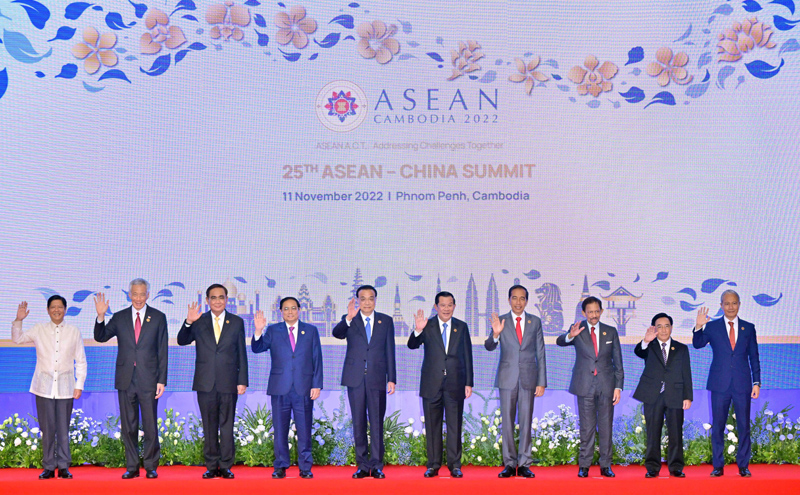
11月11日下午,國務院總理李克強在柬埔寨金邊出席第25次中國-東盟(10+1)領導人會議。新華社記者 嶽月偉 攝
因此,我希望“思想亞洲”在今後的工作中,能夠認真思考東盟問題,去了解我們如何能使東盟成為一個新的、和平的亞洲秩序的核心支柱。幸運的是,我們無需從頭開始。東盟有自己的機制流程、文化和活力,可以與世界其他國家分享。而且,對東北亞人民來説,可能也是一個教育過程。我想指出,“東北亞”這個詞是相當矛盾的。日本、韓國和中國的經濟總量要比東盟經濟總量大得多、先進得多,因此從邏輯上講,應該有一個“東北亞國家聯盟”(ANEAN),以呼應東南亞國家聯盟(ASEAN)。但50年後的今天,東北亞國家聯盟並沒有建立起來。中國、日本和韓國儘管很先進,但三國之間缺乏信任,而東南亞國家儘管落後許多,卻有這一成功聯盟。因此,東盟有一些隱藏的魔力,我們必須瞭解、提取並向世界揭示。
我最後要説的是,如果説在21世紀亞洲還能做出什麼巨大貢獻,那就是要承擔起全球化領導者的責任。我這樣説是因為很多西方的領導者正在遠離全球化,這讓我感到很沮喪。説到底,如果你想解讀東亞國家的非凡成功——如果你想了解東亞奇蹟——其中很大一部分是由於亞洲國家決定投身於全球化的海洋。我非常清晰地記得,2017年1月習近平主席在達沃斯所做的演講,他説,“中國勇敢邁向了世界市場。在這個過程中,我們嗆過水,遇到過漩渦,遇到過風浪,但我們在游泳中學會了游泳。這是正確的戰略抉擇。”這就是我們亞洲所做的事情。
跳入全球化的海洋是困難的。但當你成功時,你會做得非常非常好。新加坡就是一個最好的例子。世界上沒有其他國家的貿易總額是其國民生產總值的3.5倍。為什麼我們的貿易規模是國民生產總值的3.5倍?因為全球化。現在,西方國家正在從全球化中撤退、並譴責它,全球化需要新的領導者。而新的領導者必須來自亞洲,因為我們最終將成為全球化的最大受益者。
因此,我想留給大家的關鍵點是,當我們邁入亞洲的21世紀時,我們必須放棄對來自其他地方思想的依賴。我們必須專注於產生我們自己的想法,並與世界其他地區分享這些想法。非常感謝大家。
翻譯:中國論壇武一琪、許馨勻 核譯:韓樺
原文:
I’m actually very surprised that I’m standing up here talking to all of you. When I got a phone call from Bert Hofman 3 days ago inviting me to make some remarks, I thought I was going to speak with five or ten people in a small room. I was not prepared to address such a large group. I think Bert probably wanted to invite me to speak at the Think Asia Conference because 24 years ago, I published a book called Can Asians Think? Surprisingly, the book is still in print after 24 years. In any case, even though I’m unprepared, surprised and bewildered to be here, I will try to be helpful by making a small contribution to all of you in the 15 minutes assigned to me.
I want to begin by saying that it is very, very timely to hold a conference called “Think Asia” at this point in time. It is past time for us to start thinking seriously in Asia as we move into a very different new world. In many ways, we in Asia have relied on the West for many of our big ideas, and we have benefited from many big Western ideas. But I want to explain why we can no longer do that.
There are three fundamental ways in which our world has changed. Firstly, we are seeing the end of the era of Western domination of world history. A different era has begun as Asian countries are returning to their historical place in the global economy. This return of Asia has been a fundamental global shift. The second fundamental shift is in geopolitics—which, as you all know, is going to be very, very different. For example, one reason why Southeast Asia has been so successful is that during the Cold War, both the United States and China cooperated very closely to strengthen ASEAN, to strengthen Southeast Asia, and we benefited from it. With two great powers supporting it, of course ASEAN was going to do well. There are very few confident predictions one can make about the future, but having written the book Has China Won?, I can confidently predict that relations between the US and China will get worse in the next 10 years. In fact, they will get very difficult. We need to be ready for this. As I was just in New York 10 days ago, I managed to get a sense of the current mood in the US. I was told that in the US today, there is a division of views on China between the hawkish voices and the irresponsibly hawkish voices. There are no doves on China. So it’s going to be a rough ride for all of us.
Thirdly—and this is a critical point—many key constituencies in the West are turning away from globalization. In a sense, the West led the way in creating globalization in its current form. Yet, now, many Western voices are saying it’s time to close the doors. It is clear that the big ideas shaping thought in the West are changing.
Since the big ideas in the West are changing, should we continue to follow Western thought as we did in the past? Or should we now start to think for ourselves and see which Western ideas will help Asia, and which will no longer help Asia? After all, we are entering a different world, a different era. And for that reason, your conference is very timely.
I hope to contribute to it by making three practical suggestions to all of us who are trying to think about Asia’s role in the 21st century. And, full disclosure, I might do some marketing of my latest book in the process. But I’m happy to inform you that the book I’m marketing is a free book. It’s called The Asian 21st Century. I make no money from the book, and you can download it for free from the Internet. When it was published in January this year, my German publisher expected 20,000 downloads of the book. He said that would be very good. So far, in 10 months, there have been 2 million downloads of The Asian 21st Century in 160 countries.
I’m not bringing these numbers up to flatter myself. What the 2 million downloads show is that not just in Asia, but also in other parts of the world such as Africa and Latin America, there is an awareness that this will be the Asian century. But if it’s going to be the Asian century, we Asians have to start providing intellectual leadership. That is something that we’re not used to doing. We’ve gotten used to copying ideas, because we’ve benefited from copying ideas, especially from the West. We must thank the Japanese for this. It began with the Meiji Restoration in the 1860s and is the reason why Japan succeeded. Japan was the first Asian country to develop because it copied Western ideas very well, and the rest of us copied their approach and we all did very well. But the era of copying is over. The era of creating has now arrived for Asians. It won’t be easy. I can tell you that it’s not going to be easy at all. But in an effort to try, and in a sense start the process of creating Asian ideas, I’m going to make three suggestions to you all—with the caveat that these are all very tentative suggestions, okay? After all, I only had 3 days to come up with them.
The first tentative suggestion, which is a critical one, is that we in Asia have to give up our psychological dependence on the West. I say this with some sadness, because as I said, we have benefited from the West. But there is a kind of slavish dependence by Asian scholars on Western publications. They love to cite Western publications, Western ideas, Western things. Many of these Western ideas, which were world-beating ideas, are no longer world-beating—and frankly, also not suitable for a world which is changing from a unipolar world into a multipolar world, from a uni-civilizational world into a multi-civilizational world. It’s a different world. It’s become a small, interdependent, global village with many people living together. And we have to deal with a level of diversity that we have never had to deal with before.
In particular - this is a very sensitive point I’m going to make; please don’t misunderstand me - in the West, there’s a tendency to see everything in black and white terms. Right or wrong. Democracy or autocracy. Everything is black and white. But the world is no longer black and white; it’s multicolored. These black and white perspectives shape our psychology. I’m going to give you another very sensitive example of this. It is, very sadly, the major war that is happening in Ukraine. It’s sad. And let’s be very clear: speaking as a former ambassador to the UN, the Russian invasion of Ukraine is illegal. It violates international law. That’s very clear. There’s no doubt about that. But at the same time, when people say that the one and only cause of the war is the Russian invasion—we all know that in geopolitics, everything is complicated. For example, we know that Hitler started World War II; there’s no question of that whatsoever. But what were the forces that generated Hitler? We know that they stemmed from the painful reparations after World War I. We’ve got to understand that these things are incredibly complex. My first point to my fellow Asians is thus to start walking away from black and white perspectives.
My second suggestion to you is to learn from ASEAN. If you want to understand why, for example, Southeast Asia and East Asia have done well, there are many factors at play. I’ve given you one already: the stable geopolitical environment created by the collaboration between the US and China. But the other fact that was very important for our region—and this is the one of the most underappreciated contributions in Asian history—is the contribution of ASEAN, the Association of Southeast Asian Nations. ASEAN is a prime example of why we need to get away from our psychological dependence on the West. If you read anything from the West on ASEAN, it’s all negative. It’s terrible. The West keeps saying that ASEAN is a weak organization. It’s true. ASEAN is a weak organization, but the paradox of ASEAN is that its strength lies in its weakness. It’s why everybody trusts ASEAN. Why do you think all the world leaders are going to come to the East Asia Summit in 2 weeks’ time? Because nobody feels threatened by ASEAN, they all come, and that gives ASEAN a convening power that others don’t have.
But—and I want to emphasize this—if you study ASEAN deeply, as I’ve tried to do in my book, The ASEAN Miracle, you’ll find that there are areas of tremendous strength hidden inside ASEAN. I can tell you this as someone who attended ASEAN meetings for 33 years. When I first joined an ASEAN meeting in 1971, the room was full of distrust. 20 years later, the distrust had evaporated, and the room was full of trust. We did something miraculous. There were several key people involved in this miracle. There was a friendship between Lee Kuan Yew and Suharto that made a big difference. We had exceptional foreign ministers, like Ali Alatas of Indonesia, Air Chief Marshal Siddhi Savetsila of Thailand, and so forth. As a longtime attendee of ASEAN meetings, I can also tell you that the Indonesians have a specific strength in their culture called musyawarah and mufakat. Musyawarah and mufakat are two Indonesian words that mean consultation and consensus. Magically, I don’t know how, the Indonesians infused that culture into ASEAN. And that’s why within ASEAN, you’ll notice that we never have votes. We have consensus. I believe that this ASEAN culture of musyawarah and mufakat is now being shared with the rest of Asia, and is also influencing peace. And it is actually quite surprising that even though we have many more bitter geopolitical and other rivalries in Asia, more so than in Europe, all the major wars since the end of the Cold War have taken place near the boundaries of Europe and not Asia. That cannot just be due to luck. It has to be due to something else that ASEAN has been doing right.
So, in its future iterations, I hope that Think Asia will think very hard about ASEAN and try to understand how we can make ASEAN the central pillar of a new, peaceful, Asian order. Fortunately, we don’t have to start from scratch. ASEAN has its own institutional processes, culture, and dynamic that it can share with the rest of the world. And it will also be, by the way, an educational experience for some people in Northeast Asia. Let me just point out that the term “Northeast Asia” is quite paradoxical. The economies of Japan, South Korea and China are much bigger than the ASEAN economies, much more advanced. So, logically, you should have an Association of Northeast Asian Nations, ANEAN, to complement the Association of Southeast Asian Nations, ASEAN. But after 50 years, no ANEAN has been created. There is no trust between China, Japan and South Korea, even though they are much more advanced, while Southeast Asia, which is much less advanced, has this amazingly successful organization. So there is some hidden magic in ASEAN that we have to understand, extract and reveal to the world.
My final point is that if there’s one other big contribution that Asia can make in the Asian 21st century, it’s to take on the responsibility of becoming the champion of globalization. I say this because I feel very sad that so many of the leading minds of the West are walking away from globalization. At the end of the day, if you want to explain the extraordinary success of East Asian countries—if you want to explain the East Asian miracle—a large part of it is due to the decision by Asian countries to plunge into the ocean of globalization. There is one speech I remember very vividly, because I was there in the room when President Xi Jinping spoke in Davos in January 2017. In that speech, he said: When China made a decision to plunge into the ocean of globalization, we encountered choppy waters, we swallowed water, we struggled to swim, but then we became stronger. That’s what Asia has done. Jumping into the ocean of globalization is difficult. But when you succeed, you do very, very well. Singapore is a prime example. No other country in the world has a total trade figure 3.5 times the size of its GNP. Why do we have trade 3.5 the size of our GNP? Because of globalization. Now that the West is retreating from globalization and denouncing it, globalization needs new champions. And its new champions have to come from Asia, because we, at the end of the day, are becoming its biggest beneficiaries.
So therefore, the key point that I want to leave with all of you is that as we march into the Asian 21st century, we have to give up on our dependence on ideas from elsewhere. We have to focus on generating our own ideas and sharing them with the rest of the world. Thank you very much.
本文系觀察者網獨家稿件,文章內容純屬作者個人觀點,不代表平台觀點,未經授權,不得轉載,否則將追究法律責任。關注觀察者網微信guanchacn,每日閲讀趣味文章。