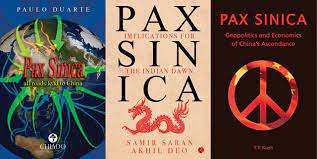
【翻譯】為什麼中國治下的和平(Pax Sinica)比美國治下的和平更好?_風聞
樱落网-海外看世界翻译网站02-08 15:47
Xamba Yangzoim
Armchair General (2015-present)
誇誇其談(2015年至今)
我認為,如果美國退出而由中國接手這個世界,對世界上的普通公民來説將是相當好的。另一方面,對於那些挑起衝突,靠從別人的眼淚和鮮血中牟利的人來説,則是相當糟糕的。
因為東西方在心態、世界觀、治理世界的方式等方面存在較大的差異。
-
**歐洲人:**在過去兩千年的大部分時間裏,歐洲人都沉浸在猶太教和基督教這樣的一神教之中。善與惡,對與錯的問題是如此重要,以至於傳教成了他們的第二天性。儘管歐洲人或西方人現在不那麼信教了,但同樣的思想還是被延續到了其他問題上,比如獨|裁與民|主、GC|主義與資本主義這樣的概念。因此,在這種二分法的世界觀中,你“要麼支持我們,要麼就是反對我們”。
只要這種心態不改變,戰爭就不可避免。在中世紀,我們有類似十字軍東征這樣的宗教戰爭。最近,我們在朝鮮和越南打過意識形態戰爭。而在當今時代,我們正在開啓向世界的黑暗角落輸出自|由和民|主的戰爭。
西方相信先發制人的戰爭,因為他們認為一旦他們的生活方式被傳播到世界各地,世界將從此和平,每個人都可以幸福地生活。
但現實的情況大不相同。世界上存在許多文化和民族,西方只能消滅像美國印第安人這樣的弱者。而像伊|斯|蘭世界這樣強大的對手將會與西方展開激烈的鬥爭,並引發一場又一場戰爭。由於西方希望通過戰爭帶來和平,世界將變得更加暴力。
而且,一旦每個人都接受了西方的生活方式,這個世界就會和平的想法也是一種幻覺。第二次世界大戰就是在歐洲國家之間進行的,對基督教的共同信仰並沒有阻止天主教徒與新教徒之間的血腥衝突,也沒有阻止浸禮會教徒、摩門教徒和耶和華見證人之間的分歧。
由於這種對佈道的執着,西方管理的世界是一個充滿流血衝突的世界。
-
**中國:**中國人基本上是無神論者,他們沒有善惡對立,沒有福音可傳。在中國人看來,一切事物都處在兩個極端之間,他們厭惡走極端。因此,他們沒有徵服世界的慾望。
中國人是世俗的,喜歡賺錢和過美好的生活,這就是為什麼中國認為和平與和諧是最高的美德。戰爭只會帶來毀滅,他們的夢想是不戰而勝。所以,中國傾向於使用外交手段而不是暴力來解決問題。
中國想通過銷售更多的產品和更昂貴的產品來賺更多的錢,這意味着買家也需要有錢。因此,中國想幫助別人致富並在同時幫助自己。畢竟,佔世界20%的人口不太可能生活得比世界平均水平好很多,這促使中國提出“一帶一路”戰略,使世界普通公民變得更加富裕。
當世界上的普通公民,尤其是經濟貧困地區的年輕人有更多的機會通過自己的勞動改善生活時,他們就不太可能把自己的生命奉獻給原教旨主義、狂熱主義和恐怖主義,世界上的衝突將會減少併成為一個更加和平的地方。這就是中國人打擊恐怖主義的方式,它不如美國的“震懾與敬畏”的方式動靜大,但它將更為治本和持久。
-
另一個值得一提的鮮明對比是種族認同與文化認同。我們必須承認,各國人民之間確實存在分歧。西方傾向於認為這種差異是種族造成的,因此是不可改變的。種族主義在美國存在了240年之後仍然存在,這一事實證明了這種看法。
而另一方面,中國人不是一個單一的種族,南北方的漢人差異很大,一個來自中國東北的人和一個來自廣東的人長相有很大的區別,説話也不一樣,行為也不一樣,但他們屬於同一個種族。因此,中國人的身份不是基於種族而是基於文化。
文化認同比種族認同具有更強的同化力,這就是為什麼儘管中國幅員遼闊,生活在不同地區的人民有着巨大的差異,但它是一個統一的國家。
舉個例子:滿族人在入侵中國之前,無論是口頭語言還是書面語言、服飾還是風俗習慣都與中國人截然不同。但兩百年後,他們和中國人就沒什麼區別了。
-
.
原文較長有刪節,查看更多譯文可點擊:櫻落網
.
-
原文:
Xamba Yangzoim, Armchair General (2015-present)
Originally Answered: If China becomes the sole superpower in the world, how would the world become different from today?
I think if the U.S. withdrew from the world and China took over, it will be quite good for the average citizen of the world. On the other hand, it will be quite bad for people who instigate conflicts and profit from other people’s tear and blood.
There is a large difference in the mentality, worldview, and the way to govern the world between the east and the west.
Europeans: During most time in last two millennia, the Europeans were immersed in monotheistic Judeo-Christianity. The issue of good vs evil, the right vs wrong is so important that evangelism becomes their second nature. Although Europeans or westerners are less religious now, the same mentality is carried over onto other issues such as dictatorship vs democracy, communism vs capitalism. Therefore in this dichotomic worldview, “you are either with us or against us”.
As long as this mentality does not change, war is inevitable. In medieval times we had religious wars like crusade. In the recent past, we had ideological wars fought in Korea and Vietnam. In current times, we have wars of exporting freedom and democracy to dark corners of the world.
The west believes in preemptive war because they thought once their way of life is spread out across the world, the world peace will reign supreme, and everyone can live happily ever after.
The reality is very different. There are many cultures and peoples in the world. The west can only eliminate the weak ones such as American Indians. But the strong ones such as Islamic world will put up a fierce fight. War begets wars. The world will be more violent due to the desire of the west to bring peace through wars.
Also this notion that the world will be peaceful once every people adopted western way of life is an illusion. WW2 was fought among European nations. The common belief in christianity did not prevent the bloody conflicts of catholics vs protestants, or the disagreement between baptists, Mormons, and Jehovah’s Witness.
The world managed by the West is a world full of bloodshed due to this single-minded evangelism.
China: Chinese are largely atheists. There is no good and evil. There is no gospel to be spread. Everything falls into a spectrum between two extremes, and Chinese are averse to the extreme. As a result, they don’t have the desire to conquer the world.
Chinese are secular, into making money and living good life. That is why China consider peace and harmony is the highest virtue. War only brings destruction. They dream about winning without fighting. Therefore, China prefer to use diplomacy to solve problem instead of violence.
China wants to make more money by selling more products and more expensive products, which means the buyers need to have money too. Therefore China wants to help others getting rich in order to help himself. After all, it is very unlikely that 20% of world population can live significantly better than the world average. This motivates China to propose OBOR that will make the average citizens of the world more prosperous.
When average citizen, especially the young people in economically deprived area, have more opportunities to improve their lives through their own labor, they will be less likely to devote their lives to fundamentalism, fanaticism , and terrorism. The world will have less conflicts and become a more peaceful place. This is Chinese’s way of fighting terrorism. It is less glorious than American’s way of “shock and awe”, but it will be more fundamental and more lasting.
Another stark contrast worth mentioning is racial identity vs culture identity. We have to admit peoples do have differences among them. The West tend to think the difference is due to race, thus it is immutable. The fact that racism still exists in America after 240 years of existence attests to this understanding.
On the other hand, Chinese is not a single race. Han people varies greatly from north to south. A person from Northeast China looks very different, talks differently, and behaves differently from a person from Canton. It is a stretch that they should all belong to the same race. Therefore the identity of Chinese is not a racial identity but an identity based on culture.
Culture identity is a much stronger assimilating force than racial identity. That is why China is a unified country although it has a vast area, vast differences among peoples living in different regions.
Case in point: Manchu was very distinctive from Chinese, be it spoken or written language, clothes, or customs before their invasion into China. After two hundred years, they become indistinguishable from Chinese.