海底電纜可能對海洋生物造成什麼影響?_風聞
龙腾网-02-15 18:03
正文翻譯
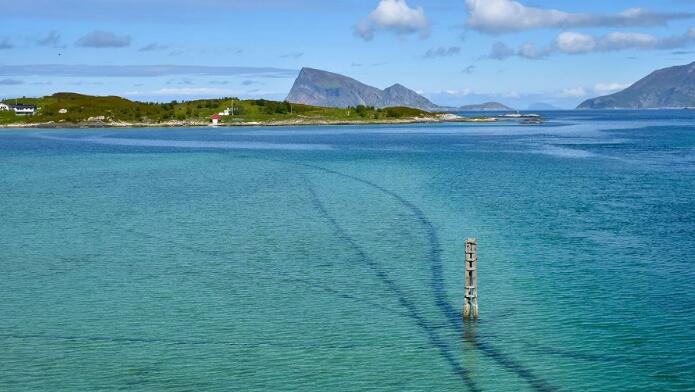
Submarine cables carry electricity and information across vast oceans and seas, but we’re only beginning to understand their possible impact on delicate marine life.
海底電纜傳輸的電力和信息穿越浩瀚的海洋,但我們只是初步認識到,海底電纜對脆弱的海洋生物造成的潛在影響。
Tens of thousands of miles of cables crisscross our deep seas, ferrying data between continents and carrying renewable power from offshore energy platforms to the land. These snaking, artificial structures can serve as shelter to a vast array of bottom-dwelling sea life: anemones, sponges, corals, sea stars, urchins, worms, bivalves, crabs and other invertebrates have been found to take up residence on or near undersea cables.
數萬英里的電纜在我們的深海里縱橫交錯,在各大陸間傳輸數據,將海上能源平台的可再生能源輸送到陸地。這些蜿蜒的人工設施會成為大量底棲生物的居所:海葵、海綿、珊瑚、海星、海膽、蠕蟲、雙殼貝、螃蟹及其他無脊椎動物都被發現棲息在海底電纜的上面或附近。
But marine scientists believe we need a greater understanding of how electromagnetic fields (EMF) generated by submarine power cables might affect some of these delicate creatures, many of which rely on their own internal sense of magnetic north to navigate or use electric fields to help them hunt. Given that the number of submarine cables will only multiply as the marine renewable energy sector grows, what threats do they pose to life underwater, one of the last spots on Earth largely untouched by humans?
然而海洋科學家認為,我們需要深入瞭解海底電纜產生的電磁場對某些脆弱生物可能造成的影響,許多生物依靠自身對磁北的感知來進行導航,或者利用電磁場幫助他們捕捉獵物。考慮到隨着海洋可再生能源行業的發展,海底電纜的數量只會有增無減,它們對海底生物構成什麼威脅?海底是地球上基本尚未被人類探索的最後盲區之一。
Undersea cables can be divided into two broad categories: telecommunication cables and high-voltage power cables. Telecommunications cables are laid on the surface of the seabed where they cross deep seas, while power cables, which tend to be found closer to shore, are typically buried under sediment for protection. Today, around 380 underwater telecommunications cables are in operation around the world, spanning a length of over 1.2 million kilometres (745,000 miles). This map shows all active subsea fibre-optic telecommunications cables – many of them featuring whimsical names like Apricot, Concerto, Topaz, Polar Express or Meltingpot.
海底電纜可分兩大類:通信電纜和高壓電力電纜。通信電纜鋪設在海牀表面並穿越深海,電力電纜一般比較靠近海岸,通常埋設在沉積物下面得到保護。當今世界約有380條海底通信電纜投入使用,全長超過120萬千米(745000英里)。這張地圖顯示了所有活躍的海底光纖通信電纜,其中許多被冠以稀奇古怪的名字,例如杏子、協奏曲、黃玉、極地特快、坩堝。
Telecommunications cables provide the information pathways for more than 95% of international data. And offshore wind and hydrokinetic power plants also rely on submarine cables. Over the past few decades, as renewable energy projects proliferate, researchers have begun studying their environmental effects.
通信電纜為95%以上的國際數據提供信息通道,離岸風力發電廠和水力發電廠也有賴於海底電纜。過去幾十年來,隨着可再生能源項目日益增多,研究人員開始研究海底電纜的環境影響。
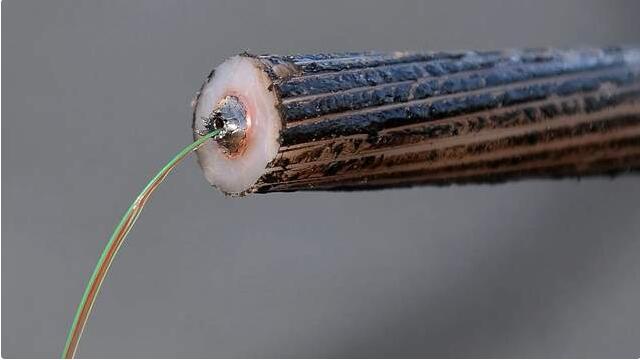
For most of its journey along the ocean floor, a telecommunications cable is about as wide as a garden hose, its digital data-carrying filaments no larger in diameter than a human hair. Power cables are generally larger in size (between 7-30 cm/2.75-12in) and are sheathed in a few layers of metal for enhanced protection. Subsea cables are carefully routed to avoid hazards that could damage them, such as earthquakes and underwater landslides. To minimise any accidental damage that may occur in shallower waters (for example, damage caused by human activities such as fishing, ocean trawling and anchoring), cables must be buried below the seafloor.
海牀上的大部分通信電纜約有花園澆水軟管那麼粗,傳輸數據的光纖絲不超過人類頭髮的直徑。電力電纜通常尺寸更大(7-30釐米/2.75-12英寸),表面覆蓋多層金屬來增強保護。海底電纜的鋪設路線受到精心規劃,以避免自然災害對它們造成破壞,例如地震和海底滑坡。為了儘可能減少淺水區可能發生的意外破壞(例如釣魚、拖網捕魚、拋錨等人類活動造成的破壞)電纜必須鋪設在海牀下面。
In shallower water, boats may be prohibited from coming near cables, which can result in healthier fish stocks.
在淺水區,可以禁止船隻靠近電纜,使魚類資源更加健康。
“During subsea installation, companies will try to bury a [power] cable beneath the sediment to protect it,” says Bastien Taormina, a researcher at the Norwegian Institute of Marine Research in Bergen. “This has a much bigger impact on the surrounding habitat.” Taormina is the lead author of an oft-cited study on the effects of artificial structures on marine ecosystems, published in the Journal of Environmental Management. Over a span of five years, he and his team studied the submarine power cable of a tidal energy test, taking pictures of species that colonised the cable and associated structures.
“在鋪設海底電纜過程中,公司會將電力電纜埋設在沉積物下面來獲得保護”,卑爾根的挪威海洋研究所的研究人員巴斯蒂安·陶爾米納説道。“這對周圍的棲息地有很大影響”。陶爾米納主筆過一篇關於人工設施對海洋生態系統的影響的研究報告,並發表在《環境管理雜誌》上。在五年時間裏,他和他的團隊研究了潮汐能試驗中使用的海洋電力電纜,研究了棲息在電纜和相關設施上的物種。
Installation of a cable disturbs the surrounding seabed. Somewhat paradoxically, that can lead to greater initial biodiversity, says Taormina. “Opportunistic species will survive, but that doesn’t mean it’s a good ecosystem, because these species, while diverse, won’t stick around.” This phenomenon is what’s known as ecological succession: the process by which communities gradually replace one another until a “climax community” – such as a mature coral reef – is reached, or until a disturbance, like a fire (or in this case an electrified submarine cable), occurs.
鋪設電纜會干擾周圍的海牀,但有些矛盾的是,這可以促進初期的生物多樣性,陶爾米納説道。“機會物種能夠存活,但並不意味着這是良好的生態系統,因為儘管這些物種是多樣性的,但不會固定不變”。這種現象稱為生態演替:一個羣落逐漸替代另一個羣落,最終達到“頂級羣落”,例如成熟的珊瑚礁;或者最終發生生態失調,例如火災(我們探討的情形是通電的海底電纜)。
With nearly all of the world’s internet and banking transactions conducted over underwater cables, there is growing concern about their vulnerability.
由於世界上幾乎所有的網絡交和銀行交易都經由海底電纜來完成,海底電纜的脆弱性越來越令人擔憂。
Another possible consequence of undersea power cables is their generation of electromagnetic fields (EMF). The intensity of EMF is a direct function of the current passing through a cable and the depth at which it is buried, as well as the distance between cables (if multiple cables are running in close proximity, for example). EMF can distort the natural geomagnetic field that marine organisms rely on to navigate, particularly if they swim or drift 10 metres near the cables.
海底電力電纜造成的另一個潛在後果是電磁場。電磁場的強度取決於電纜中的電流強度、埋設電纜的深度、電纜的間距(例如多條電纜靠近彼此)。電磁場會干擾海洋生物賴以導航的天然地磁場,尤其是當它們在距離電纜10米內遊弋或漂泊的時候。
“There is a need to further study electro-magnetically susceptible species,” says Michael Clare, leader of Marine Geosystems at the National Oceanography Centre. “What’s the threshold at which EMF presents a problem for these sea creatures?” Most institutions and scientists (including Clare) are hesitant to make any causal lix between subsea cables and the behaviour of marine organisms.
“我們需要深入研究那些容易受到電磁影響的物種”,國家海洋學中心海洋地理系統部門的負責人邁克爾·克萊爾説道。“電磁場給這些海洋生物造成麻煩的閾值是多少”?大多數機構和科學家(包括克萊爾)不願在海底電纜和海洋生物的行為之間建立因果聯繫。
“It has been suggested that behavioural movements in organisms such as skates and lobsters can be affected by EMFs, but whether they are affected by the EMF intensities generated by power cables remains unclear and the subject of ongoing research,” Clare adds.
“有人認為,鰩魚和龍蝦等生物的行為運動會受到電磁場的影響,但尚不清楚它們會不會受到電力電纜產生的電磁場的影響,這個課題還需進一步研究”,克萊爾繼續説道。
After completing several impact studies, the US Department of the Interior noted that “brief lingering activity near undersea cables have been observed, the data do not currently support a finding that overall navigational capabilities in fish are impaired”. Much of the available peer-reviewed field studies performed to date also support this statement.
美國內政部在完成多次影響研究後指出,“觀察到海底電纜周圍有短暫的徘徊行為,但當前數據不支持魚類的總體導航能力受損的研究結果”。迄今經過同行評審的大部分實地研究也支持這種説法。
原創翻譯:龍騰網 http://www.ltaaa.cn 轉載請註明出處
Telecommunications cables provide the information pathways for more than 95% of international data.
通信電纜為95%以上的國際數據提供了信息通道。
In experimental studies performed in aquariums, marine organisms sensitive to magnetic fields have been shown to exhibit behavioural responses to EMF, although at exposure levels far larger than those emitted by power cables. But sharks, rays and chimaeras, for example, are known to have evolved organs that are exquisitely sensitive to electrical fields: the ampullae of Lorenzini. These electroreceptors form a network of mucous-filled pores in the skin of cartilaginous fish – highly specialised organs optimised to detect prey, and that have a threshold sensitivity of less than a single microvolt.
在水族館進行的試驗性研究中,對磁場敏感的海洋生物對電磁場表現出行為反應,只是接觸強度遠大於電力電纜釋放的電磁場強度。但鯊魚、鰩魚、銀鮫等生物擁有一種進化而來的器官對電場極其敏感:勞倫氏壺腹。這些電感受器在軟骨魚類的皮膚表面形成一張由充滿粘液的孔隙組成的網狀物,這種極其特殊的器官可用來探測獵物,對電場的閾靈敏度不到1微伏。
“Future field studies – particularly that represent a collaboration between ocean researchers and cable operators and owners – will help further our understanding,” says Clare. Taormina’s study suggests animals that migrate along the continental shelves might be affected by a cable’s electromagnetic field, moving either inshore or offshore away from their normal path, but he also agrees that more study on EMF is needed.
“未來的實地研究——尤其是在海洋研究人員和電纜運營商及用户之間開展合作——將有助於深化我們的認識”,克萊爾説道。陶爾米納的研究表明,沿着大陸架遷移的海洋生物可能受到電纜的電磁場影響,使它們從正常路線向沿岸或近海偏離,但他也同意應該對電磁場進行更多的研究。
While studies of the deep sea are expensive, time-consuming and resource-heavy, they can help fill that information gap. Almost two decades ago, researchers at the Monterey Bay National Marine Sanctuary, in collaboration with the National Oceanic and Atmospheric Administration (NOAA), conducted a survey of a seamount thermometry cable on the deep seafloor off the coast of central California – a survey considered unique at the time for investigating the biological impact of subsea cables. Remote operated vehicles (ROVs) carried electronic cable-tracking systems into the deep waters of Half Moon Bay, allowing researchers to find parts of the cable that had been buried under sediment (the cable was initially laid down in 1995 as part of an experiment to detect changes in ocean temperature by monitoring the speed of sound waves in the deep sea). As the ROVs scanned the cable’s roughly 95-kilometre (59-mile) length, scientists collected sediment samples, video and still images of animals living on or near the cable.
儘管深海研究昂貴耗時,需要投入大量資源,但有助於填補這個信息缺口。大約20年前,蒙特雷灣國家海洋保護區與國家海洋和大氣管理局展開合作,研究了加州中部沿海深處的海底山測温電纜,當時被視為針對海底電纜生態影響的獨有研究。無人遙控潛水器攜帶電纜追蹤電子設備潛入半月灣的深海,使研究人員找到埋設在沉積物下面的部分電纜(1995年開始鋪設這條用於試驗的電纜,通過監測深海聲波的速度來探測海洋温度的變化)。隨着無人遙控潛水器掃描了長度約95千米(59英里)的電纜,科學家收集了沉積物的樣本,對棲息在電纜上面或附近的動物拍攝了視頻和靜態照片。
In silty areas, the most obvious biological effects of the cable were the neat lines of sea anemones that researchers discovered growing on the cable itself. Frequently, these sea anemones were attached directly to parts of the cable that had been buried under mud or silt. Researchers concluded that these anemones likely would not have been able to colonise such soft-bottom areas without the presence of the seafloor cable, which provided a firm footing for the animals. Removal of such cables would therefore affect a small ecosystem of marine creatures who call that cable home.
在粉砂區域,研究人員發現電纜上生長着排列整齊的海葵,這是電纜對生態造成的最明顯影響。這些海葵經常直接依附在被埋設在淤泥或粉砂下面的部分電纜上。研究人員的結論是,如果不是海底電纜為海葵提供了堅實的立足之地,它們可能無法移居到這種軟質的海底區域。因此,拆除這種電纜會影響海洋生物的小型生態系統,它們把電纜當成了家園。
原創翻譯:龍騰網 http://www.ltaaa.cn 轉載請註明出處
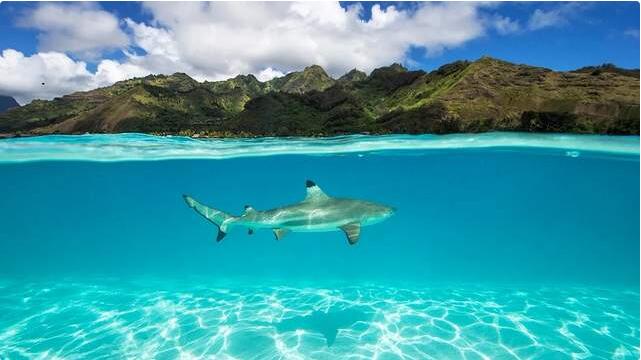
Certain sea creatures, such as sharks and rays, seem to be more sensitive to the electrical signals sent out by some cables.
某些海洋生物,例如鯊魚和鰩魚,似乎對電纜發出的電信號比較敏感。
Beyond localised habitat damage or loss, submarine power and communication cables may temporarily or permanently impact the marine environment through heat, turbidity (during cable burial), risk of entanglement and the introduction of artificial substrates. Still, areas through which cables pass are often designated as protected, meaning anchors, bottom trawls and even fishing can be restricted. The Cook Strait Cable Protection Zone (CPZ) in New Zealand, for example, restricts fishing near cables, effectively creating a reserve and thus improving fish stocks.
除了局部棲息地受損或消失,海底電力和通信電纜可能對海洋環境造成暫時或永久性影響,原因包括熱量、渾濁(在埋設電纜期間)、纏繞風險、人工海底。然而,鋪設電纜的地方通常被定為保護區,這意味着船錨、海底拖網、甚至釣魚受到限制。例如,新西蘭的“庫克海峽電纜保護區”限制電纜附近的釣魚活動,有效形成了保護區,從而改善魚類資源。
And submarine cables do not pollute: they are stable, inert structures that can even be recovered and recycled after they’ve served their time (about 20-40 years, on average). “The carbon footprint is actually relatively low compared to most of the internet’s infrastructure,” says Nicole Starosielski,associate professor at NYU. Her book, The Undersea Network, examines the cultural and environmental dimensions of transoceanic cable systems, and she adds an important social science perspective to the discussion. “We’ve actually advocated for more cables, connecting large onshore data centers on renewable grids, in order to minimise fossil fuel consumption.”
海底電纜不會造成污染:它具有穩定惰性的結構,使用壽命結束後甚至能被找到和回收利用(平均壽命大約20-40年)。“海底電纜的碳足跡其實低於大多數互聯網基礎設施”,紐約大學副教授妮可·斯塔羅斯基説道。她的著作《海底紐約》從文化和環境層面考察了跨洋電纜系統,在論述中新增了重要的社會科學視角。“我們其實提倡鋪設更多的電纜,與可再生能源電網上巨大的陸地數據中心相連,以達到儘量減少使用化石燃料的目的”。
Indeed, small developing island states are crucially tethered to these elaborate cable systems, without which they would struggle to obtain green energy, telecommunications, remote-work technology, e-medicine and other digital services. Ocean life – and its often-complex interaction with human activities – is riddled with unknowns; for ecologists worried about environmental conservation, these subsea cables remain a serpentine question mark.
事實上,小島嶼發展中國家與這些複雜的電纜系統至關重要地捆綁在一起,否則他們難以獲取綠色能源、通信、遠程辦公技術、電子醫療及其他數字化服務。海洋生物——及其與人類活動之間的複雜互動——充滿了謎團;對於擔心環保的生態學家來説,這些海底電纜仍是一個曲折的問號。
But, as Clare explains: “There is value in the research, which will help industry leaders, policy-makers, cable companies and other parts of the wider Blue Economy strive to ensure any development of the seafloor is as sustainable as possible.”
但正如克萊爾所言:“這方面的研究是有價值的,有助於行業領袖、決策者、電纜企業、以及藍色經濟(循環經濟)的其他參與者儘量確保海牀的可持續性發展”。