南德智庫報告假設的美中系統性低烈度戰爭情景_風聞
陶勇求索之路平坦心-求索之路平坦心官方账号-学而不思则罔,思而不学则殆。探索真理、关心社稷。10-06 00:47
陶勇 求索之路平坦心 2023-10-06 00:34 發表於四川
在南德智庫報告《大國戰爭的迴歸-美中兩國系統性衝突情景》(The Return of Great Power War——Scenarios of Systemic Conflict Between the United States and China)一共分為八章,共約七萬字(英文)。在第六章中,對未來美中之間可能發生的軍事衝突——低烈度戰爭進行了假設預想,以下筆者摘取一些段落跟大家分享。
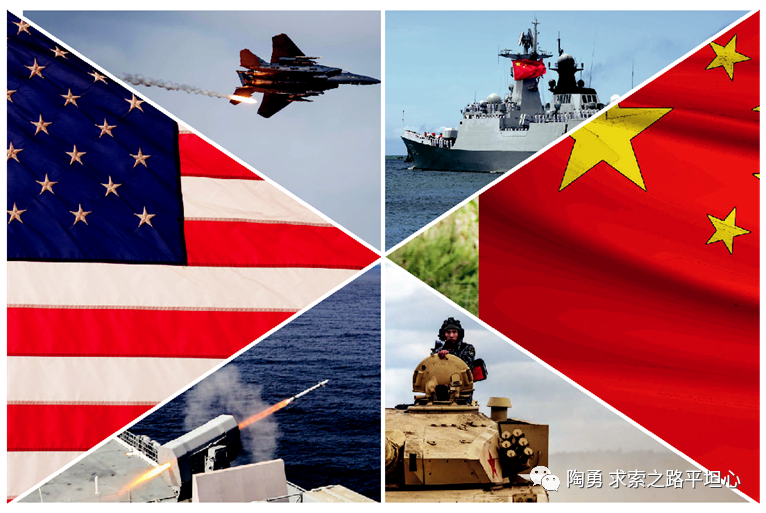
有意思地是,報告第六章開篇敍述基本契合美中關係當前態勢:
總結第五章我們可以發現,地緣政治背景是兩國都進入了敵對狀態。也就是説,彼此都把對方定為"敵國",認為對方有意圖和能力危害自己的基本安全。因此,無論是否需要正式宣戰,兩個國家的政府均會重新調整國家和安全戰略,以優先考慮這場確定衝突。這種決定將使多年來不斷升級的緊張局勢達到頂峯,兩國在廣泛的經濟、政治、安全、技術和其他問題上經常發生爭吵。此外,美中競爭與其他國家的競爭和爭端重疊的趨勢也將達到高潮,其中一些國家保持或加強了與敵對大國結盟的國家之間的爭鬥。按照以往的先例,其他國家的參與會使美中緊張局勢的升級更加難以解決,因為它為衝突的持續提供了重要的國際支持。這反過來又會刺激兩國的政府在自己的鬥爭中利用這種多邊爭鬥來獲取利益。在這種情況下,由兩個大國組成的多邊組織很可能會因為僵局而瓦解,導致國際社會在面對集體威脅時無所作為。蔓延的國際混亂可能會通過引入或加劇對國際安全的多重威脅而使對抗更加複雜。它還會提高競爭的利害關係,因為雙方都會有動力去指責對方,並可能利用一些混亂來損害對方的利益。這反過來又會加重人們對威脅的看法,並鼓勵雙方的政府更加努力地爭取對“敵國”的決定性優勢。
To summarize the findings of Chapter Five, the geopolitical context is one in which both countries have entered a state of hostilities. That is to say, each nation has designated the other as an “enemy” state that it regards as having both the intent and ability to endan-ger its own basic security. Regardless of whether this entailed a formal declaration of war, both capitals would reorder their national and security strategies to prioritize the conflict. The decision would culminate years of escalating tension in which the two nations regu-larly feuded over a broad range of economic, political, security, technological, and other issues. Moreover, it would culminate trends in which the U.S.-China rivalry overlapped with rivalries and disputes involving other countries, some of which maintained or stepped up their own feuds with countries aligned with the rival great power. Following past prec-edent, the involvement of other countries would add to the intractability of escalating U.S.-China tension by providing a significant international constituency for the continua-tion of the conflict. This could in turn incentivize both capitals to exploit such multilateral feuds for advantage in their own struggles. In such a situation, multilateral organizations featuring both powers would likely have broken down due to gridlock, resulting in interna-tional inaction in the face of collective threats. Spreading international disorder could com-plicate the rivalry by introducing or aggravating multiple threats to international security. It could also elevate the stakes of the contest, since both sides would be incentivized to blame the other and possibly exploit some of the disorder to harm the interests of the other. This in turn would aggravate threat perceptions and encourage both capitals to drive even harder to achieve a decisive advantage over the other.
不結盟是中國的一貫方針,無論中俄、中朝還是其他……
隨着衝突的開始,可以預期華盛頓和北京將擴大其國防建設並加強建立聯盟的活動。中國可能出於政治原則而避免命名正式聯盟,但它會建立提供類似安全利益的夥伴關係。正如兩次世界大戰和冷戰時期一樣,世界各地的國家和非國家行為者將利用美中競爭來實現自己的目標,向其中一方尋求庇護。其他國家選擇支持美國或中國的原因可能是希望通過對一方的忠誠來獲得利益,也可能是對兩個對手之一的同情或歷史關係,或者是上述因素的某種組合。一系列嚴重的軍事化危機會加速所有這些趨勢。在這種動盪不安的情況下,即使是一個相對較小的事件,也足以使緊張的關係超過崩潰點,拉開低烈度戰爭的序幕。
As conflict begins, Washington and China could be expected to expand their defense buildups and intensify alliance-building activities. China might refrain from naming formal alliances out of political principle, but it would establish partnerships that offer similar secu-rity benefits. As in the two World Wars and the Cold War, countries and nonstate actors around the world would exploit the U.S.-China rivalry to achieve their own goals by appeal-ing to one side or the other for patronage. Other countries could choose to support the United States or China due to a desire to gain benefits by demonstrating loyalty to one side or the other, some sympathy or historic relationship with one of the two rivals, or some com-bination of the above. A series of serious militarized crises could accelerate all these trends. In such a volatile and unstable situation, even a relatively minor incident could be sufficient to tip the strained relationship past the breaking point, kicking off the low-intensity war.
關於美中博弈、此消彼長的論述
在經濟上,中國作為全球和地區的領導者,最有能力以滿足自己和客户的需求的方式安排和引領經濟活動。在安全方面,享有全球首要地位的中國可能會面臨來自美國、日本和其他國家等對手的平衡影響,但它也可能會從世界各地尋求中國支持的國家那裏獲得更多的擁護。中國也將更有能力處置周邊地區的熱點問題,而不必擔心美國和外國的軍事幹預。在政治上和聲望上,似乎接近於超越美國成為世界上最強大國家的中國可以在國內和國際上獲得相當大的支持。
根據這一邏輯,我們假設北京已經調整了國家戰略,要求將打敗美國力量作為實現中國夢的必要條件。打敗美國是一個雄心勃勃的國家目標,需要更明確的界定。在這種情況下,中國沒有野心,也沒有可行的方法來考慮征服和佔領美國。相反,我們假設北京的目標集中在擊敗美國阻礙中國實現其國家振興目標的努力上。北京所期望的最終狀態是接受美國作為一個國家繼續存在,但在大大減少和削弱的條件下。實際上,中國的最終狀態將設想其上升到全球領先的地位,同時將美國的地位降為美洲的區域性大國。美國在世界其他地區的存在主要以中國認為可以接受的條件進行。在這種情況下,儘管存在間接衝突,但如果緊張局勢能夠得到控制,中美仍有希望保持貿易關係。
Economically, China as a global and regional leader would be best positioned to arrange and lead economic activity in a manner that privileged its own needs and those of its clients. Security-wise, a China that enjoyed global primacy might face balancing influences from rival states such as the United States, Japan, and others, but it would probably also gain much more support from countries around the world that sought the benefits of Chinese patronage. China would also be better positioned to manage flash points along its periphery with less fear of U.S. and foreign military intervention. Politically and in terms of prestige, a China that appeared close to eclipsing the United States as the world’s most powerful nation could enjoy a considerable boost in domestic and international support.
In accordance with this logic, we assume that Beijing has adjusted its national strategy to require defeat of U.S. power as a necessary condition for achieving the China Dream. Defeat of the United States is an ambitious national objective that needs to be more clearly defined. In this scenario, China has no ambition and no feasible way to contemplate conquest and occupation of the United States. Instead, we assume Beijing’s goal centers on the defeat of U.S. efforts to stymie China’s realization of its national revitalization goals. Beijing’s desired end state accepts the continuation of the United States as a nation, but in a much diminished and weakened condition. In effect, China’s end state would envision its ascent to a position of global preeminence and the concomitant downgrading of the status of the United States to that of a regional power in the Americas. The U.S. presence in the rest of the world would largely be on terms that China would regard as acceptable. China could in this situation hope to maintain a trading relationship, despite the indirect conflict, if tensions could be managed.
中國人民崇尚和平不好戰
因此,中國希望的最終狀態是讓美國採取服從於中國力量的立場。與中國對理想的 “新型大國關係 “的描述有些類似,中國理想的最終狀態是在名義上平等的條件下實現和平——但實質是美國要服從中國這個新的全球主導力量。
與美國的間接敵對行動之開始可能伴隨着廣泛的非軍事鬥爭和敵對政策。鑑於兩國在經濟上的相互依賴和在多邊機構中的共同參與,以及中國目前對通過非軍事手段進行國際鬥爭的偏好,經濟、外交和信息鬥爭甚至可能是重頭戲。
Beijing’s desired end state would thus be one in which the United States adopts a position of subordination to Chinese power. Somewhat similar to Chinese descriptions of an ideal “new type of major power relationship,” the ideal end state for China would be a conclusion of peace on terms of nominal equality but de facto U.S. deference to China as the new global leading power.
The onset of indirect hostilities with the United States could be accompanied by exten-sive nonmilitary struggle and hostile policies. Given the two nations’ economic interde-pendence and shared involvement in multilateral institutions, as well as China’s current preference for waging its international struggles through nonmilitary means, the economic, diplomatic, and informational struggles would perhaps even be foremost.
擦槍走火可能存在
中國作為大國的信譽和威望。雖然沒有被正式列為中國的核心利益之一,但已接近全球霸主地位的中國將有強烈的動機維護其作為領袖大國的信譽和威望。維護自身地位的願望可能會促使中國投入更多資源,以確保在一場遙遠的衝突中取得勝利,而這在其他情況下似乎是不合理的。
雖然解放軍可能會執行保護和捍衞自身利益的任務,並在一定程度上保護和捍衞其客户的利益,但它同時也肩負着削弱和降低美國及其盟國的意志和能力的使命。
如果交戰雙方成功地避免了衝突升級,並將衝突維持在較低水平,貿易和投資可能會蓬勃發展,從而形成長期、半穩定的雙邊關係和間接戰爭狀態。但是,意外升級的風險仍然很大,因為任何一方都可能厭倦優柔寡斷的僵局,冒險採取更具侵略性的行動來奪取重大勝利優勢。
China’s credibility and prestige as a great power. Although not formally listed as one of China’s core interests, a China that has neared global primacy would have a strong incen-tive to uphold its credibility and prestige as a leading power. The desire to maintain its status could motivate China to commit more resources to ensure victory in a distant conflict than might otherwise appear justified.
While the PLA may carry out missions to protect and defend its interests and, to a lesser extent, those of its clients, it would also have the mission to weaken and downgrade the will and capacity of the United States and its allies.
If the combatants successfully avoided escalation and maintained the conflict at a low level, trade and investment might flourish, resulting in a long-lasting, chronic state of semistable, bilateral ties and indirect war. But the risk of unintended escalation would remain substantial, since either side could tire of the indecisive stalemate and risk more aggressive actions to seize a major advantage.
不過,預測中國積極支持俄羅斯失準
在低烈度戰爭的情況下,中國也可能願意在與北約國家和美國的對抗中成為俄羅斯更積極的支持者。
雖然間接戰爭為中國政府提供了以低成本對抗衝突的優勢,但其缺點是對美國實力的損害可能也相當有限。結果可能是長期、慢性的間接敵對狀態。如果中美關係相對穩定,貿易關係持續發展,雙方都能補充間接衝突中損失的資源,那麼對抗持續的時間可能會更長。在這種情況下,以避免災難性大規模戰爭的方式削弱美國的力量對中國政府的目標可能至關重要,但實現這一結果可能會被證明是渺茫或虛幻的。
In a scenario of low-intensity war, China might also be willing to become a more active supporter of Russia in confrontations with NATO countries and the United States.
While indirect war offers the advantage to Beijing of fighting a conflict at low cost, the downside is that the damage against U.S. power might also be fairly modest. The result could be a long-lasting, chronic state of indirect hostilities. The war could last even longer if accompanied by relatively stable U.S.-China ties and the continuation of trade relations, which would enable both sides to replenish resources lost through indirect conflict. Break-ing U.S. power in a manner that avoids catastrophic major war could be essential to Beijing’s goals in this scenario, but achieving that outcome could prove elusive or illusory.