周波:面對歐洲核威脅,中美應達成“不首先使用核武器”
【文/觀察者網專欄作者 周波】
沒有人知道俄烏衝突還會持續多久,但所有人都知道,最可怕的夢魘是俄羅斯決定使用戰術核彈。俄羅斯領導人曾多次暗示過這樣的想法。現在,連卡拉加諾夫(Sergei Karaganov)和特列寧(Dmitri Trenin)這樣的俄羅斯著名學者也開始鼓譟核戰,呼籲對北約國家(如波蘭)發動戰術核武器襲擊,以“瓦解西方的意志”,讓他們相信俄羅斯的核威脅絕非虛張聲勢。
如果俄羅斯使用核武器的威脅確實只是虛張聲勢,那麼這種策略已經奏效,畢竟,外界爭論俄羅斯是否會使用核武器,本身就是威懾成功的體現。但如果這不是虛張聲勢呢?西方正在蠶食自己的紅線,許多它們一開始聲稱不會輸送的武器,現在已源源不斷輸送給基輔。
既然如此,大家憑什麼確信俄羅斯就不會最終使用核武器呢?現在,俄烏戰場陷入僵局,連莫斯科也遭到烏克蘭多次無人機襲擊;烏克蘭總統澤連斯基還聲稱戰爭正在“重返俄羅斯”。
要想消除人類可能面臨的這一巨大浩劫的威脅,我們也許可以另闢蹊徑:中國和美國達成不首先使用核武器的協議,英國、法國隨後加入,俄羅斯最後一併加入。這有過先例:1998 年印巴核試驗後,中美兩國罕見地團結一致, 迅速發表聯合聲明,宣佈不再將核武器瞄準對方。這促使五個核大國家於2000年發表聯合聲明,宣佈它們的核武器不針對彼此或其他任何國家。
2022年1月,也就是俄烏衝突爆發前一個月,五個核大國發表聯合聲明,一致認為“核戰爭打不贏也打不得”。既然核戰爭確實無法打贏,那麼他們為什麼就不能承諾不首先使用核武器呢?不首先使用核武器,並不排除核反擊的選擇,因此也不會削弱核大國的威懾能力。
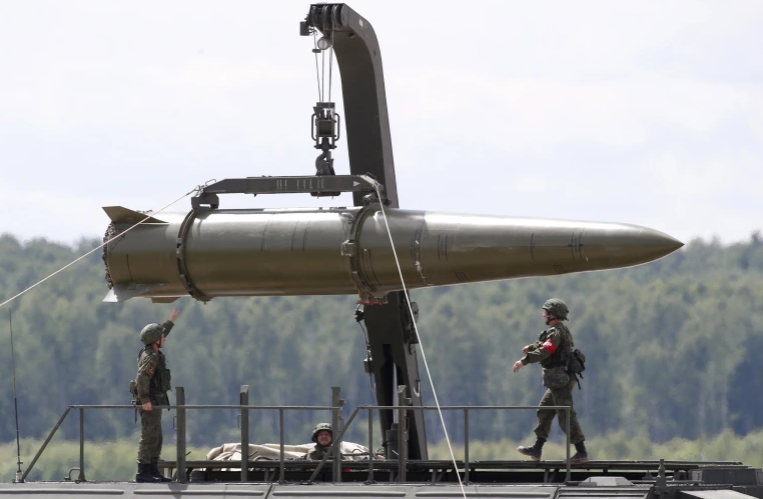
俄羅斯裝備的“伊斯坎德爾”戰術彈道導彈,既可以使用常規彈頭,也可以使用核彈頭。圖自路透
對中國而言,自1964年首次核試驗成功以來,不首先使用核武器是一貫政策。因此,這一歷久彌新的政策,不會因為中俄友誼而改變。拜登政府宣稱,美國只會“在極端情況下考慮使用核武器,以捍衞美國或其盟國和夥伴的重大利益”,這一政策與中國的政策其實相去不遠。
美國比其他任何國家都更有“本錢”承諾不首先使用核武器。美國擁有壓倒性的常規軍事力量的優勢,幾乎沒有美國用常規軍事武器無法完成的任務。
美國需要核武器來保衞盟友的説法也值得商榷。事實擁核的朝鮮,是迄今為止唯一一個不斷進行核訛詐的國家,甚至在新法律中正式宣佈會先發制人進行核打擊。但這只是一種吸引眼球的策略。除非金正恩政權岌岌可危,否則很難想象他會對韓國或日本發動自殺式核打擊,因為這必將招致毀滅性的報復。整個朝鮮半島只有1100公里長,揮之不去的放射性塵埃將把任何勝利化為灰燼。
2001年,俄羅斯和中國達成協議,約定不首先對對方使用核武器。如果中國和美國能達成類似協議,那麼美國的盟國英國和法國也完全可能與中國達成同樣的協議。
最大的挑戰是,如何説服俄羅斯加入這一協議,不過這並非完全不可能。 普京應該知道, 核武器並不能實質性改變戰爭局面。即便核武器貌似威力無比,它們也沒有幫助美國贏得越戰、伊拉克戰爭和阿富汗戰爭,或幫助蘇聯贏得阿富汗戰爭。現在,俄羅斯的核武器也沒能消磨烏克蘭的強烈抵抗。
這或許就是為什麼,普京只隱晦暗示而從未公開威脅使用核武器。相反,他在習近平主席3月訪俄的中俄聯合聲明中重申“核戰爭打不贏也打不得”。
如果美國領導的北約最擔心普京或將使用核武器,那麼他們就需要為普京提供一個台階,即北約先承諾在任何情況下都不首先對俄羅斯使用核武器。這對北約來説完全可以承受:北約是世界上最大的軍事同盟,擁有31個成員國、3個核武器國家,其常規軍事力量遠超俄羅斯,很難想象它為什麼要首先對俄羅斯發動核打擊。
化解歐洲核威脅的終極之道,或許還在於北約想所不能想, 即承諾在瑞典加入後不再擴員。北約成員僅限於歐洲國家,在瑞典加入之後,還在排隊的國家已寥寥無幾,等待加入的國家只有三個,即波黑、格魯吉亞和烏克蘭。
顯然,波黑不會明顯增強北約的軍事實力;格魯吉亞已經與俄羅斯發生了戰爭,部分原因就是格魯吉亞希望加入北約。沒有人知道俄烏衝突將如何結束,但北約不需要捫心自問就應該知道,與一個核大國進行“永遠的戰爭”是致命的危險。
英文原文:
No one knows how long the war in Ukraine will last. But everyone knows the worst nightmare is Russia decides to use a tactical nuclear bomb. Russian leaders have repeatedly hinted at this. Now some prominent Russian scholars such as Sergei Karaganov and Dmitri Trenin have joined the choir. They called for tactical nuclear weapons attacks on a NATO country, say, Poland, to “break the will” of the West and convince it that Russia’s nuclear threats are not a bluff.
If Russia’s warning on using nukes is a bluff, this tactic has already worked in that letting people mulling over if Moscow will use nuclear weapons or not is successful deterrence itself. But what if this is not a bluff? The west is nibbling away its own redlines, however gradually, by sending more and more sophisticated weapons to Kyiv that were considered taboos in the beginning, so why one can rest assured that Moscow won’t use nuclear weapons, eventually? The battlefield is in a stalemate.
Kyiv’s drone attacks were found in Moscow. Ukrainian President Zelensky warned that the war is “returning to Russia”.
Now that the threat of an unspeakable horror against humanity looms larger, perhaps a short-cut is China and the US reaching an agreement of no first use of nuclear weapons that will be joined by Britain and France and finally, Russia. Here is a lesson learnt. In the wake of the Indo-Pakistan nuclear tests in 1998, in a rare move to show solidarity, China and the US quickly came to a joint declaration of de-targeting their nuclear weapons against each other. This led to a joint statement among the five nuclear-weapon states in 2000 that their nuclear weapons are not targeted at each other or at any other states.
Similarly, in a joint statement issued by the five nuclear powers in January, 2022 -- a month before Russia’s invasion of Ukraine, they agreed that “a nuclear war cannot be won and must never be fought”. If indeed a nuclear war cannot be won, then why can’t they pledge no first use of nukes in the first place? No first use doesn’t exclude nuclear retaliation; therefore, it won’t neutralize a nuclear power’s ability in deterrence.
For China, no first use of nuclear weapons is an iron-clad policy since its detonation of a nuclear device in 1964. Therefore, such a time-honored policy won’t change because of its rapprochement with Russia. The Biden administration declared that it would only “consider the use of nuclear weapons in extreme circumstances to defend the vital interests of the United States or its allies and partners.” Such a policy is not so far away from that of Beijing.
The US can afford to make a no first use commitment more than any other countries. Today, the United States has overwhelming conventional military superiority. One can hardly cite a mission that the United States could not accomplish with conventional weapons.
The assertion that US needs nuclear weapons to defend its allies is questionable too. So far, DPRK- a de facto nuclear weapon state, is the only country that has repeatedly played with nuclear blackmails. It has even officially declared to use preemptive nuclear strikes in a new law, but this is a strategy of drawing attention. Unless the survival of Kim Jong-un ’s regime is in jeopardy, it is hard to understand why he would launch a suicidal nuclear attack on South Korea or Japan that will surely invite devastating retaliation. The whole Korean peninsula is only 1100 kilometers. The lingering radioactive dust will make any victory meaningless.
In 2001, Russia and China agreed not be the first to use nuclear weapons against each other. If Beijing and Washington agree on no first use, then it is entirely possible for Britain and France, two American allies, to reach the same deal with China.
The challenge is how to get Russia in, but it is not entirely impossible. President Putin should know nuclear weapons are not really game changers. No matter how formidable they seem, they didn’t help the US in Vietnam, Iraq, and Afghan wars. They didn’t help the Soviet Union in Afghan war. They haven’t helped Russia in mitigating Ukraine’s strong resistance against Russia’s invasion, either.
This probably tells why in spite of his thinly-veiled hints, Putin has never overtly threatened to use nuclear weapons. Instead, he reiterated in a China-Russia joint declaration during President Xi Jinping’s visit to Moscow in March that “a nuclear war cannot be won and must never be fought”.
If the deepest concern of the US-led NATO is Putin might eventually resort to use of nuclear weapons, it needs to offer him an off-ramp, that is, NATO unilaterally promise no first use against Russia in any circumstances now. This is affordable for NATO. The largest military alliance in the world has 31- member states, three nuclear weapon states and its conventional forces far outnumber that of Russia. It is hard to imagine why it should launch a nuclear strike on Russia first.
Perhaps the final solution to defuse nuclear threats in European continent lies in NATO’s thinking of the unthinkable: a pledge of no further expansion after Sweden joins NATO. NATO membership is confined to European countries. After Sweden’s entry into NATO, there aren’t many countries queuing in line anyway. Only three countries, namely, Bosnia and Herzegovina, Georgia and Ukraine are found on the waiting list.
Apparently, Bosnia and Herzegovina won’t add much weight to the military strength of NATO. Georgia already had a war with Russia, in part because of its wish to join NATO. At a time when no one can tell what is the endgame, NATO doesn’t need soul searching to know a “forever war” with a nuclear power is lethally dangerous.
本文系觀察者網獨家稿件,文章內容純屬作者個人觀點,不代表平台觀點,未經授權,不得轉載,否則將追究法律責任。關注觀察者網微信guanchacn,每日閲讀趣味文章。
