周波:印度自詡“世界的老師”,這個口號讓人很困惑
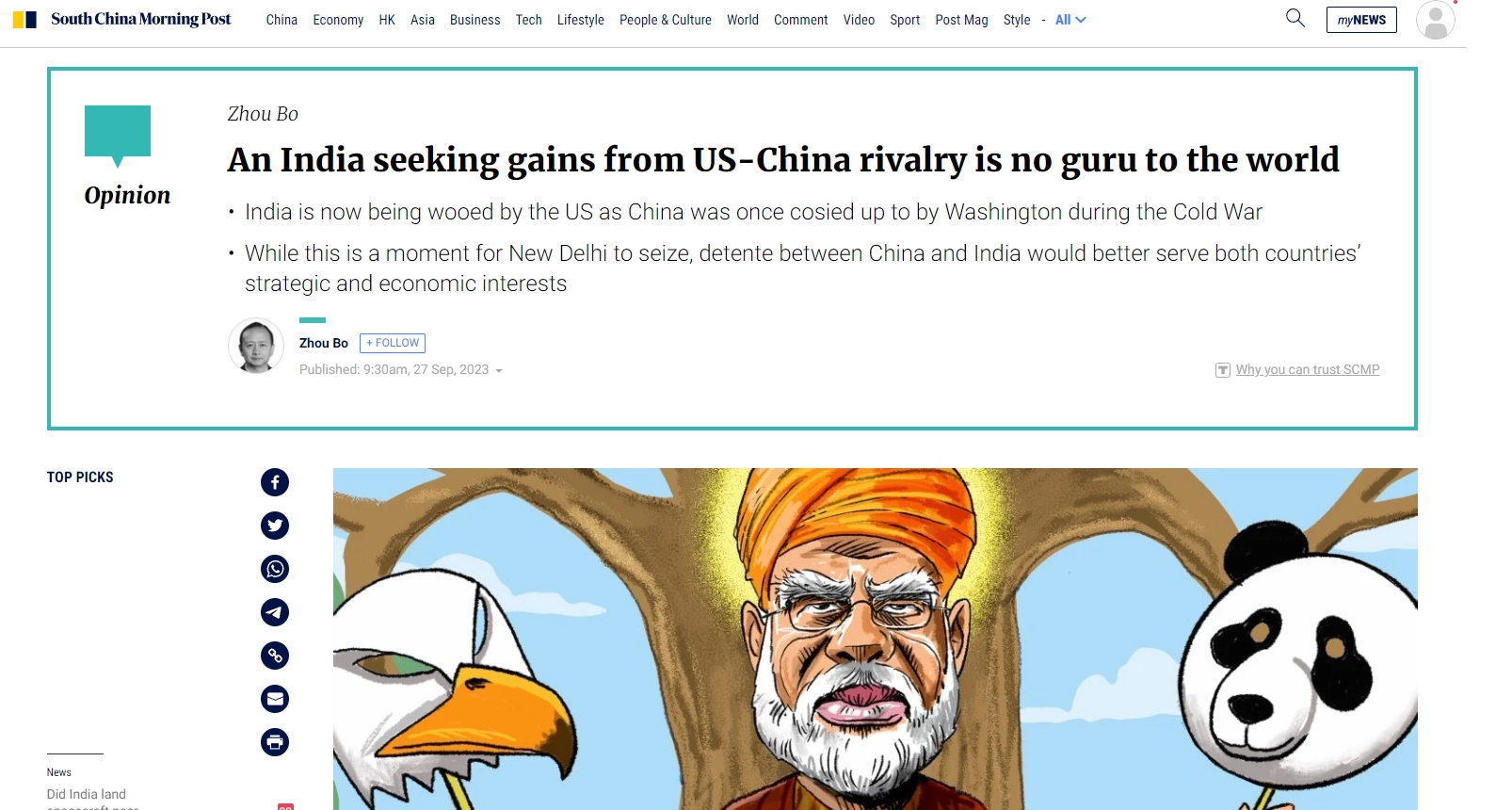
《南華早報》文章截圖
【文/觀察者網專欄作者 周波,翻譯/李澤西,核譯/韓樺】
印度的重要性正與日俱增,但到底能有多重要?在20國集團新德里峯會召開前夕,印度各大城市的主要報紙、廣告牌和公交車站都宣稱印度是“Vishwaguru”, 即“世界的老師”。
這個口號讓人困惑。印度能教給世界什麼?印度一直以“世界上最大的民主國家”自居,但是莫迪總理領導的印度政府正被越來越多人批評為“獨裁”和“專制”。9月18日,加拿大總理特魯多在加拿大議會上宣佈,有“可信的指控”説明一名加拿大裔著名錫克教徒被殺與“印度政府特工”有關。
儘管印度已成為世界第五大經濟體,其發展速度也不容小覷,但即使印度經濟能保持5%年增長率,到2050年,印度的人均國內生產總值也只能達到美國的30%左右,大致相當於今天中國的水平。與此同時,中國已在過去40年間幫助數億人擺脱了貧困。毋庸置疑,中國在實現經濟發展的道路方面有更多經驗可以與其他發展中國家分享。
今年1月,莫迪邀請125個發展中國家舉辦了一個線上“全球南方之聲”峯會,但沒有邀請中國、巴西和南非。這大概是因為,如果這三個重量級發展中國家也在場的話,印度可能不好意思標榜自己為“全球南方之聲”。
印度的真正優勢在於,作為一箇中等強國,它可以在大國競爭中坐收漁利。在俄烏衝突問題上,中國和印度都採取了審慎的中立態度,但美國選擇忽略對印度的不滿,因為美國的長期戰略需要拉攏印度,抗衡中國。印度就是藉此成功説服美國和歐洲同意,淡化G20聲明中的俄烏衝突部分。顯然,如果中國是G20東道主,這種共識將更難達成。
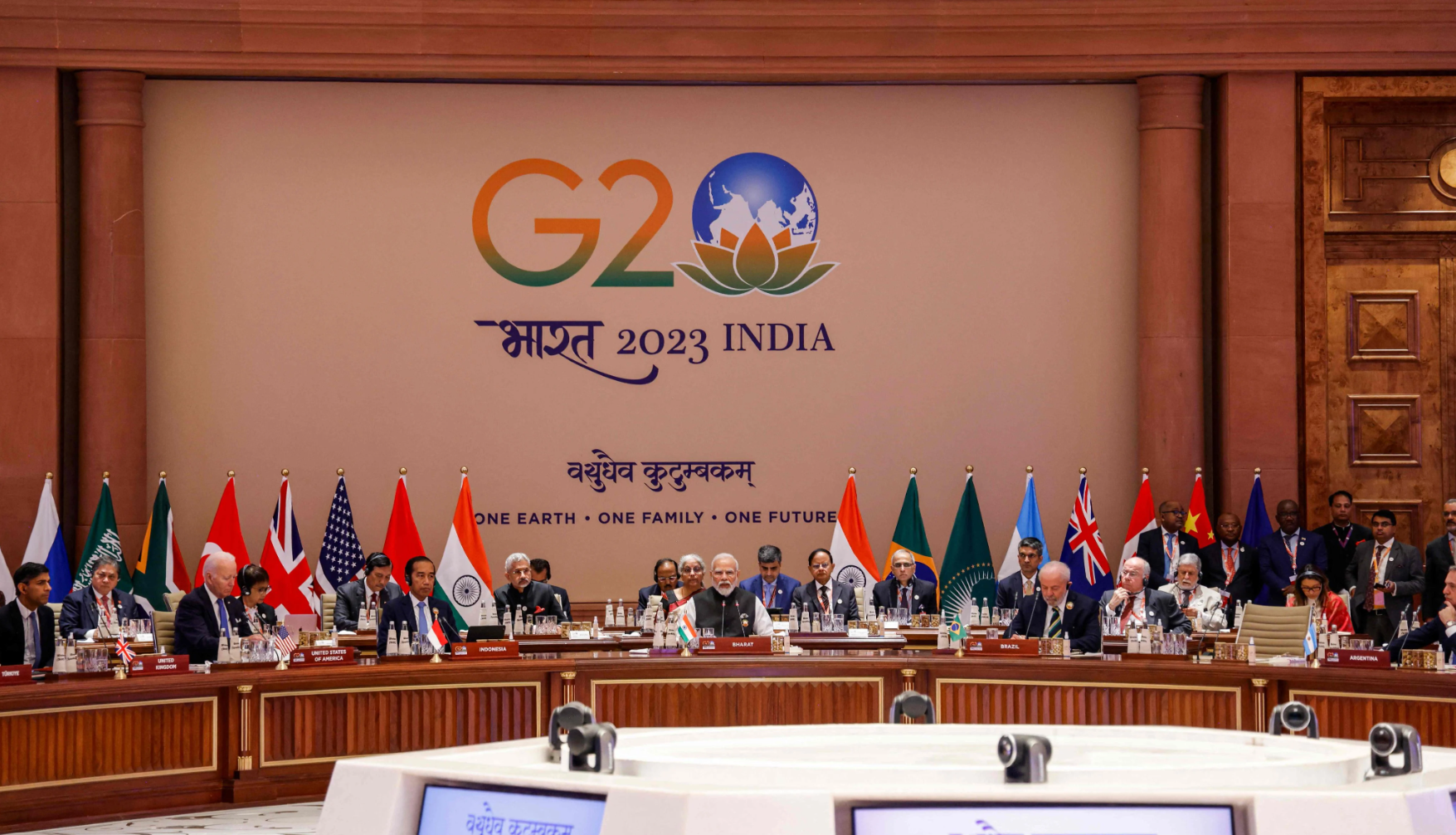
印度9月舉辦2023年G20領導人峯會(圖源:南華早報)
儘管意大利總理梅洛尼曾提出印度可以在促進俄烏衝突結束方面發揮“中心作用”,但這是不可能的。目前已經有幾項和平計劃擺在桌面上,包括中國提出的立場文件。但除非是莫斯科和華盛頓,而不是莫斯科和基輔,能達成協議,否則這些計劃都不會奏效。如果説俄羅斯會聽取誰的意見,那一定是中國而不是印度。
印度依賴俄羅斯提供武器裝備和能源。但是卡內基俄羅斯歐亞中心主任加布耶夫(Alexander Gabuev)認為,即便是在普京離任後,俄羅斯也將繼續依賴中國。中國將長期成為俄羅斯的商品出口市場、核心技術進口來源以及最重要的外交夥伴。
從長遠來看,印度與俄羅斯的關係正處於下降趨勢,儘管不會中斷。未來幾十年,印度仍將需要從俄羅斯進口石油和天然氣,但會減少進口俄羅斯武器佔比。由於俄烏衝突,俄羅斯向印度交付塔爾瓦級隱形護衞艦的計劃已經延遲了。
美國顯然非常樂意讓印度擺脱對俄羅斯的依賴。加強美印軍工合作能否真正增強印度的武器製造能力,還是會使印度軍工系統變成一鍋更大的大雜燴,我們拭目以待。
印度面臨的最大挑戰,是如何與遠在天邊的美國合作獲得最大收益,同時又不激怒其更強大的鄰居中國。當下,印度正在受到美國的青睞,一如冷戰期間,美國曾主動親近中國以對抗蘇聯。對新德里來説,這無疑是一個應該抓住的好時機。如果裝蒜是一門藝術,那麼莫迪堪稱首屈一指的大師。
例如,儘管印度在海洋法問題上的立場相對更接近中國,莫迪仍附和美國“自由開放的印太”這一説法。美國海軍曾在中國和印度的專屬經濟區內開展“航行自由”行動。不同的是,中國海軍一定會做出反應,而印度海軍則裝作什麼都沒發生。
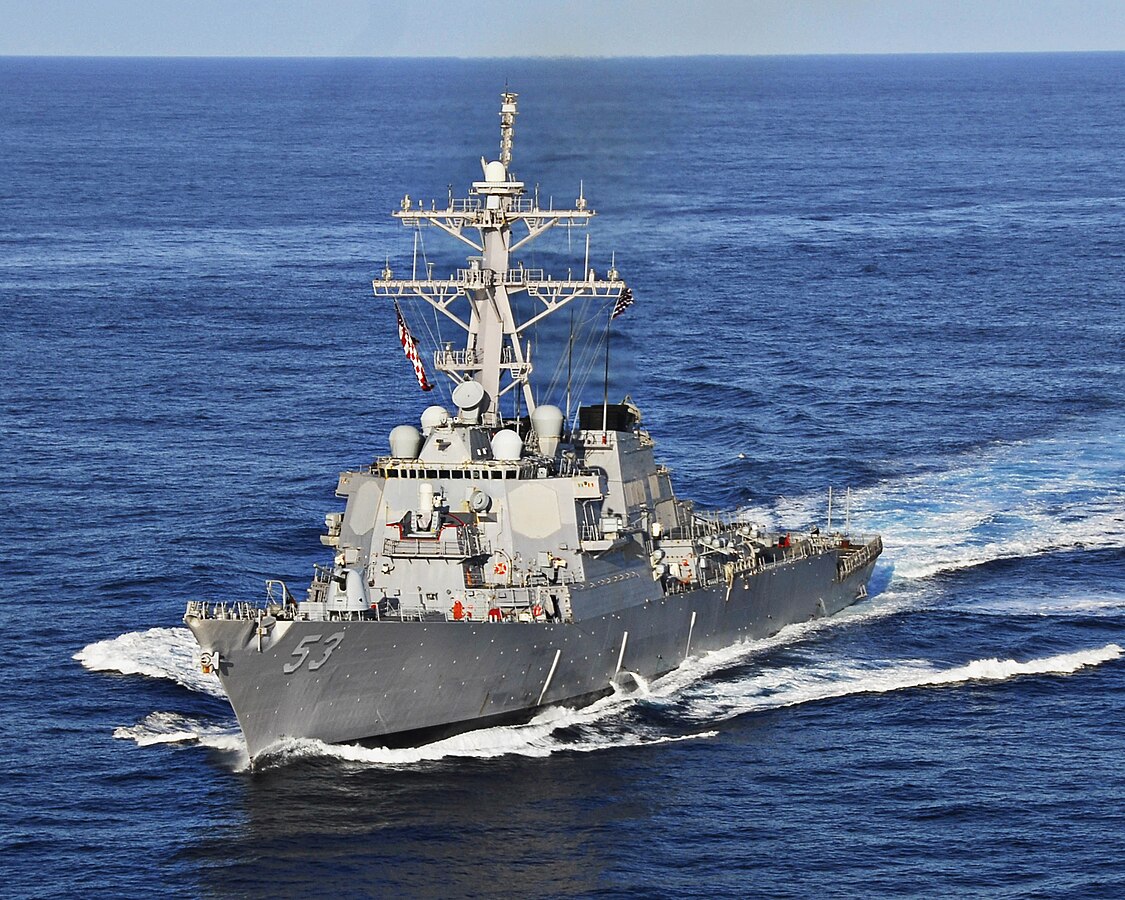
2021年4月7日,美國約翰·保羅·瓊斯號驅逐艦在印度專屬經濟區內開展“航行自由”行動(資料圖圖源:美國海軍)
中印關係緩和符合兩國的利益。以印度重要出口產業的製藥業為例,其中70%的活性成分來自中國,同樣,印度也是中國的一個巨大市場。這就是為什麼中國公司儘管對印度的營商環境不滿,但仍考慮在當地投資。
除非中印邊境爆發戰爭,否則印度不會甘心成為美國的棋子。中印發生衝突的可能性很低。雖然2020年6月雙方確實在加勒萬山谷發生了致命的鬥毆,但這是40多年來中印邊境唯一發生人員傷亡的事件。
事實上,兩國士兵在上述鬥毆中只使用了石頭和棍棒。這告訴我們,雙方都知道在任何情況下都不應該向對方開槍。如果真的能吸取教訓,雙方完全有可能至少再維持邊境地區四十年和平。
印度外交政策往好了説是實用主義,往壞了説就是機會主義。但印度左右逢源、八面玲瓏的做法不可能使它成為“世界的老師”。相反,印度看上去更像是伊索寓言中的蝙蝠,對即將發生的鳥獸之戰首鼠兩端,一會兒説自己是飛鳥,一會兒説自己是走獸。印度這樣的做法也並不罕見。隨着大國競爭愈演愈烈,世界上出現的蝙蝠遠比飛鳥或走獸更多。
以下為英文原文:
India is growing in importance. But how much more important will it become? In the lead-up to the Group of 20 summit in New Delhi, major newspapers, billboards and bus stops in every Indian city proclaimed India as a “Vishwaguru”, or teacher to the world.
This is baffling. What would India teach the world? It has never been shy to describe itself as the world’s largest democracy. But the Indian government, led by Prime Minister Narendra Modi, is increasingly being criticised as authoritarian and repressive. On September 18, Canada’s Prime Minister Justin Trudeau told the country’s parliament of “credible allegations” that linked the killing of a prominent Canadian Sikh to “agents of the government of India”.
While the advance of what is now the world’s fifth-largest economy has been impressive, even if India could sustain annual growth of 5 per cent, its gross domestic product per head would reach about 30 per cent of the United States’ levels, roughly where China’s is today, in 2050. Meanwhile, Beijing has lifted hundreds of millions out of poverty in four decades. Needless to say, China has more to share with other developing countries on ways of achieving economic development.
In January, Modi hosted a virtual Voice of Global South Summit for 125 developing countries, but didn’t invite China, Brazil or South Africa. Presumably, in the presence of these leading developing nations, India would have felt embarrassed to describe itself as the voice of the Global South.
India’s real advantage is that, as a middle power, it can capitalise on major-power competition. With regard to the war in Ukraine, while both China and India have adopted a studied neutrality, Washington has set aside its frustration at New Delhi because of its long-term strategic need to draw India closer and counter China. This is how India succeeded in persuading the US and Europe to agree to a softened G20 statement on the Russian invasion of Ukraine. Clearly, such a consensus would have been harder to reach with China as G20 host.
However, India is unable to play a “central role” in facilitating an end to the hostilities in Ukraine, despite what Italian Prime Minister Giorgia Meloni suggested. There are already several peace plans on the table, including one from China. None of them will work unless Moscow and Washington, rather than Moscow and Kyiv, can agree a deal. If Russia will listen to anyone, it is more China than India.
India depends on Russia for weaponry and energy. But, according to Alexander Gabuev, director of the Carnegie Russia Eurasia Centre, Russia’s reliance on China will outlast Vladimir Putin, in that Russia is increasingly dependent on China as a market for its commodities, as a source of critical imports, and as its most important diplomatic partner.
In the long term, the Indian-Russian relationship is on a downward trend, although it won’t break. For decades to come, India will still need Russian oil and gas, but it will reduce its dependence on Russian arms. Due to the war in Ukraine, Russia has already fallen behind schedule in delivering Talwar-class stealth frigates to India.
Washington would be only too happy to wean New Delhi off Russian dependency. It remains to be seen whether increasing US-India defence industrial cooperation can really bolster New Delhi’s defence manufacturing capabilities, or if India’s defence sector will end up a bigger hodgepodge of everything from everywhere.
New Delhi’s biggest challenge is maximising gains from its relations with a faraway Washington without irking Beijing, its stronger neighbour. India is now being wooed by the US as China was once cozied up to by the US against the Soviet Union during the Cold War. This is certainly an opportune moment for New Delhi to seize. If pretending is an art, then Modi is a guru second to none.
For example, he has echoed the US’ call for a “free and open Indo-Pacific”, even though India’s position on maritime law is closer to China’s than the US’. Both China and India have been challenged by the US Navy with its freedom of navigation operations in their exclusive economic zones. The difference is that the Chinese Navy will definitely react, while the Indian Navy will pretend nothing has happened.
Detente between China and India would serve both countries’ interests. For instance, India’s pharmaceutical industry, a big exporter, gets 70 per cent of active ingredients from China. Likewise, India is a vast market for China. This explains why, in spite of complaints about India’s domestic environment, Chinese companies are still considering investing in India.
Unless there is a border war between China and India, New Delhi won’t be a willing pawn for Washington. The likelihood of a conflict between China and India is low. While it is true that the two sides had a deadly brawl in the Galwan valley in June 2020, it was the first case with casualties in over 40 years.
The fact that the soldiers from both sides were fighting with stones and clubs tells us that they knew they shouldn’t shoot at each other in any circumstances. If a lesson has truly been learned, it is entirely possible for both sides to maintain peace in the border area, at least for four more decades.
India’s foreign policy is at best pragmatic and at worst opportunistic, but trying to be all things to all people won’t make India a “Vishwaguru”. Instead, India comes across more as the bat from Aesop’s fable, which describes itself as a bird or a beast depending on its assessment of an impending war between birds and beasts. But India is not alone in this. In a world of intensifying major-power competition, there are more bats than birds or beasts.
本文系觀察者網獨家稿件,文章內容純屬作者個人觀點,不代表平台觀點,未經授權,不得轉載,否則將追究法律責任。關注觀察者網微信guanchacn,每日閲讀趣味文章。
