《金融時報》發文稱,西方需要對“即將到來的中國芯片洪流”制定計劃_風聞
马上就好咕咕咕-昨天 14:53
英國媒體金融時報(Finacial Times)在當地時間1月28日的時候發佈了一篇報道,標題為《西方國家需要對“即將到來的中國芯片洪流”制定一個計劃》。
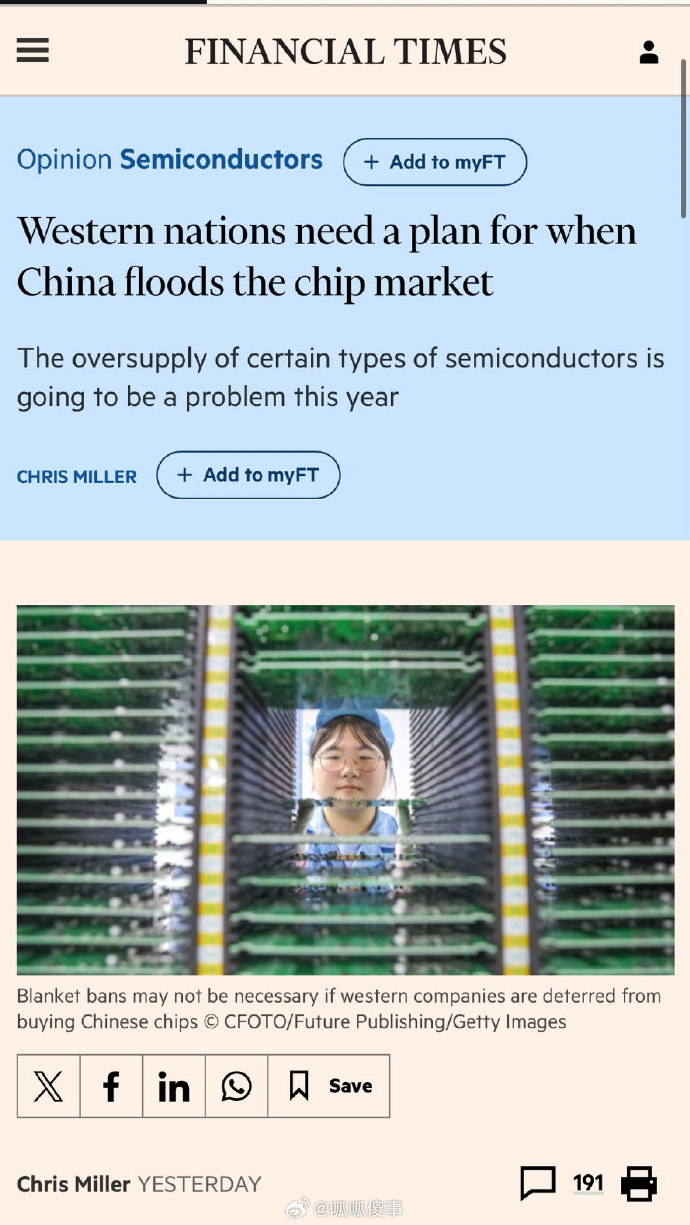
根據相關信息顯示,這篇文章的作者是曾寫出《芯片戰爭》的美國塔夫茨大學教授、經濟學家克里斯·米勒。
根據文章內容的描述,事情的起因源自於中芯國際公司在某一次季度財報電話會議上,表示該公司未來生產的半導體產品可能會出現全球供應過剩的情況,但即使如此,中芯國際仍然宣佈要增加75億美元的支出來提高自己的產能。
On a recent quarterly earnings call, the chief executive of Semiconductor Manufacturing International Corporation, China’s leading chipmaker, predicted a “global supply glut” in the types of semiconductors his company produces. Simultaneously, he announced a $7.5bn increase in capital expenditure.
原文相關段落
同時,美國的一家諮詢公司表示,未來三年,中國的芯片產能可能會增加60%,甚至還會在未來五年內翻一番。
文章中還提到,由於西方對中國施加的芯片製造方面的限制,中國無法生產最先進的芯片處理器。所以目前中國能大量生產的,都是被用在汽車、家庭用品和消費設備上的基礎芯片。
而部分西方的分析師則將中國提高芯片產能的舉動與中國大量投資太陽能電池板的舉動作類比,擔心一旦中國的芯片產能過剩,將會對西方的芯片製造廠商造成衝擊。
Since western restrictions on the exports of chipmaking equipment to China mean that it can’t produce the most advanced processor chips, much of this production will be of foundational processor chips, which are widely used in cars, household goods and consumer devices.
The most pessimistic analysts see China’s investment in solar panels as an analogy, worrying that the country’s chipmaking investment will drive down prices — and western companies’profits.
原文相關段落,主要意思是擔心中國芯片一旦湧入市場,會把芯片價格打下來,這會導致西方芯片生產商的利潤受到衝擊。
克里斯還表示,美國共和黨已經有議員呼籲政府應該施加關税,來防止中國藉此獲得對世界經濟的“過度影響力”,但因為許多成品設備中的芯片來源難以追查,所以這一措施要實施起來,恐怕是有些難度。
On January 8, Republican congressman Mike Gallagher called on the Biden administration to use tariffs if necessary to prevent China gaining “excessive leverage” over the world’s economy.
They face complex trade-offs. Tariffs are the usual tool for dealing with dumping, but the west doesn’t directly import large volumes of Chinese chips; they’re embedded inside finished devices. Foundational chips often constitute a tiny fraction of a product’s cost. Some companies don’t even know the origin of chips inside their components.
原文相關段落,裏邊提到許多公司甚至都不知道他們買來的設備裏的芯片是哪裏生產的。
對此,克里斯認為現在仍然存在兩種應對方法,第一種是給芯片生產商補貼,讓許多企業不需要使用含有中國芯片的設備,第二種是允許特定的中國進入市場,並且對於中國芯片的用途進行嚴格限制。
Given the administrative complexity of tariffs, officials are exploring alternatives. One approach is to subsidise the use of non-Chinese chips, though this would require governments to find new funds. A second option is to limit the market access of specific Chinese companies.
As governments ramp up investigations of potential overcapacity in China, companies elsewhere will realise that they, too, could be asked to explain the security implications of their reliance on cut-price Chinese chips.
不知道各位如何看待這件事?