學術中氣愛:PNAS最新!我國的減排加劇了太平洋另一邊的一系列極端熱浪_風聞
熊猫儿-28分钟前
自2010年以來,東北太平洋發生了多次破紀錄的極端暖海表面温度(SST)事件(也稱暖斑或海洋熱浪)。研究表明,東北太平洋SST在過去100餘年間並未對温室氣體強迫導致的全球變暖有顯著響應。但是自2010年代以後,東北太平洋SST增暖呈現出顯著加速的趨勢,並帶來了多次極端暖異常事件。現在,研究者們指出了這一現象一個令人驚訝的原因:中國在遏制空氣污染方面的成功。中國海洋大學王海副教授等人近日發表在《美國國家科學院院刊》(PNAS)上的研究文章指出:2010年至今中國工廠和發電廠排放的氣溶膠(硫酸鹽等微小空氣顆粒)急劇下降,似乎加劇了太平洋另一邊的一系列極端熱浪,推動了這些熱浪期間温度上升的30%。
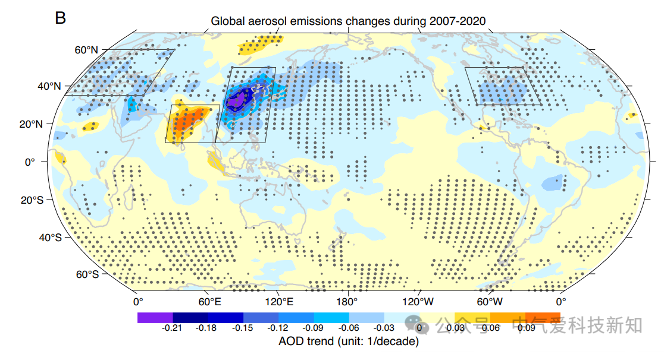
中國迅速下降的氣溶膠排放量明顯可見
從2013年底少數破紀錄的熱浪中的第一次襲擊了阿拉斯加附近的北太平洋開始,這些温暖的“斑點”在過去十年中發生了四次,有時會比正常水平高出2°C以上。它們引發了整個海岸的有毒藻類大量繁殖,導致數千頭座頭鯨失蹤死亡,清空阿拉斯加鱈魚漁民的漁網,並在北美海灘上留下飢餓的海鳥屍體。
氣溶膠可以像小鏡子一樣,將陽光反射回太空並減少到達地球表面的數量。上個月的一篇文章指出(鏈接附後補充),在2001年至2019年期間,更清潔的空氣可能是導致全球變暖的熱量增加的40%的原因。在2006年至2017年期間,中國二氧化硫的排放量減少了70%,而二氧化硫在大氣中反應形成的硫酸鹽顆粒就是氣溶膠的成因之一。研究人員使用了十幾個計算機模型,以瞭解這兩個現象是否可能相互關聯。計算機模擬顯示,人為氣溶膠排放變化則在2010年前後分別減緩和加劇了增暖的幅度。這説明與温室氣體強迫的長期增暖效應不同,人為氣溶膠強迫對海洋增暖速率的影響主要反映在年代際的調整上。
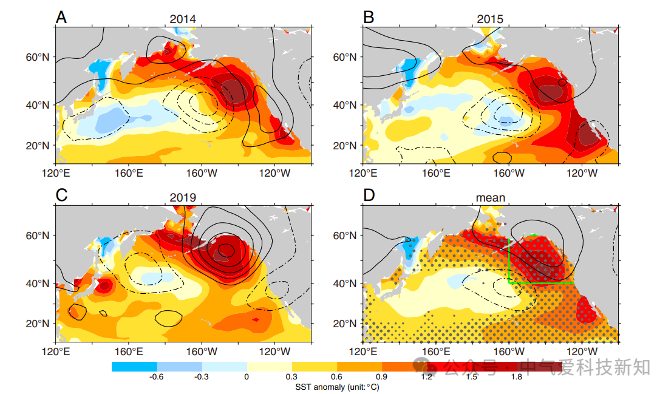
明顯變暖的東北太平洋
因此,要減緩海洋長期增暖及其帶來的災害,温室氣體的減排是“治本”之法,而人為氣溶膠排放的變化則是精準預估和應對要考慮的重要因素之一。本研究揭示了人為氣溶膠排放變化的大尺度氣候效應,為理解人類活動影響海洋提供了新的視角,同時也為未來氣候變化預估提供了重要理論依據。
論文信息:
Hai Wang, Xiao-Tong Zheng, Wenju Cai, Zi-Wen Han, Shang-Ping Xie, Sarah M. Kang, Yu-Fan Geng, Fukai Liu, Chuan-Yang Wang, Yue Wu, Baoqiang Xiang, Lei Zhou. (2024). Atmosphere teleconnections from abatement of China aerosol emissions exacerbate Northeast Pacific warm blob events. Proceedings of the National Academy of Sciences of the United States of America, 121 (21): e2313797121.
Atmosphere teleconnections from abatement of China aerosol emissions exacerbate Northeast Pacific warm blob events
Hai Wang , Xiao-Tong Zheng [email protected], Wenju Cai, , and Lei Zhou
Significance
The period of 2010 to 2020 has witnessed the warmest Northeast Pacific (NEP) sea surface temperatures ever recorded, with several prolonged extreme ocean warming events. Though year-to-year internal climate variability may partially explain the appearance of these events, why they occurred dramatically more frequent remains elusive. We find that the rapid aerosol abatement in China triggers atmospheric circulation anomalies beyond its source region, driving a substantial mean surface warming in the NEP, which provides a favorable condition for extreme ocean warming events. Our findings provide an important insight into the mechanisms of the North Pacific ocean-atmosphere changes, highlighting the need to consider the exacerbated risks arising from a reduction in anthropogenic aerosol emissions in assessment of climate change impacts.
Abstract
During 2010 to 2020, Northeast Pacific (NEP) sea surface temperature (SST) experienced the warmest decade ever recorded, manifested in several extreme marine heatwaves, referred to as “warm blob” events, which severely affect marine ecosystems and extreme weather along the west coast of North America. While year-to-year internal climate variability has been suggested as a cause of individual events, the causes of the continuous dramatic NEP SST warming remain elusive. Here, we show that other than the greenhouse gas (GHG) forcing, rapid aerosol abatement in China over the period likely plays an important role. Anomalous tropospheric warming induced by declining aerosols in China generated atmospheric teleconnections from East Asia to the NEP, featuring an intensified and southward-shifted Aleutian Low. The associated atmospheric circulation anomaly weakens the climatological westerlies in the NEP and warms the SST there by suppressing the evaporative cooling. The aerosol-induced mean warming of the NEP SST, along with internal climate variability and the GHG-induced warming, made the warm blob events more frequent and intense during 2010 to 2020. As anthropogenic aerosol emissions continue to decrease, there is likely to be an increase in NEP warm blob events, disproportionately large beyond the direct radiative effects.