非國大的統治落幕了嗎?_風聞
北京对话-北京对话官方账号-34分钟前
**提要:**5月29日,南非舉行種族隔離制度結束後的第七次全國大選。執政黨非洲人國民大會(非國大ANC)未能獲得議會過半數席位,結束其30年來的單獨執政地位。這一結果被國際媒體認為是南非政治發展中的“歷史性分水嶺”。
南非國家行政學院院長恩卡韋尼在《星期日時報》(Sunday Times)上發表題為《非國大未來何去何從?看看世界上其他政黨怎麼走的》(A Time for Renewal and Regeneration of the African National Congress: Unmandated Reflections)的評論,對非國大的未來進行了深入的思考。文章通過對比分析巴西、玻利維亞、馬來西亞、瑞典、新加坡等國家的政黨案例,為非國大的未來發展提供了參考,並鼓勵其黨員以新的動力和清晰的方向繼續推動正義平等。
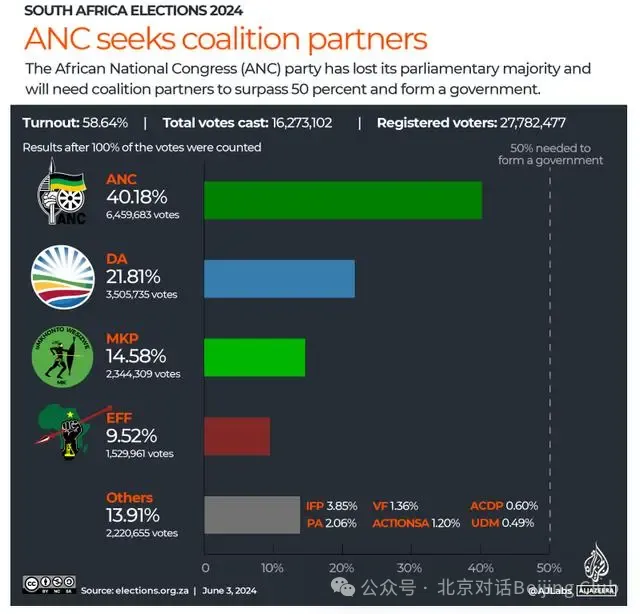
2024年南非選舉結果,非國大僅佔據40.18%的席位,需要聯盟合作伙伴以超過50%的選票並組建政府。圖源:半島電視台
在這個反思的時刻,我們有許多需要考慮的;我們應該以科學的態度謹慎行事,而不是感情用事或懷舊。
也許我們應該立即研究巴西最近的趨勢和瑞典社會民主黨的遭遇,並從中參照到一些切實可行的前行方案。這些案例之所以重要,是因為它們都詮釋出導致當下情況的根本原因:在位之“罪”。
我們還可以參考英國工黨的情況:他們哪怕重新掌權都不容易,更不用説以有力的方式反擊英國脱歐所帶來的右翼衝擊;歐洲大陸和拉丁美洲的許多其他進步力量也是如此。亞洲也有值得關注的案例,特別是近年來馬來西亞的情況。
選擇有很多,但我們可以通過考慮主要問題進行篩選:我們為誰而存在,我們存在的目的是什麼,如何才能最好地實現這一目的?
基於此,我們就可以進而決定是否組建一個執政聯盟(選擇也不多),還是允許反對派聯盟來執政,這樣我們有機會像巴西的盧拉和瑞典的社民黨那樣進行重建。
在第二種情況下,我們就把未來 5 年變成一個“間歇期”,在此期間對政治運動進行徹底改革,重新構想結構和運作程序,並根據國內和國際形勢制定明確的國家長期發展議程。羅莎·盧森堡(Rosa Luxemburg)曾説,“那些不動的人,不會注意到身上的枷鎖”。
我們可能遭遇的最壞情況就是非洲大陸和拉丁美洲發生的情況,在那裏,失去國家權力的進步運動淪為歷史。這種情況極有可能發生,因為我們中的一些人已經在尋找替罪羊,誤導公眾,比如議會主席格威德·曼塔什(Gwede
Mantashe)放棄了理性分析,將我們在誇祖魯-納塔爾省的潰敗歸結為“部落主義”。列寧告誡我們,“沒有革命形勢,就不可能發生革命,而且並不是任何革命形勢都會引起革命”。
我們需要深入瞭解當前形勢,從而恰當地回答列寧的問題:“該怎麼做”。如果説存在部落主義,那麼這源自我們運動肆無忌憚的派系鬥爭,以及我們設計和實施了 30 多年的教育體系。(相反,我們應該問,鑑於領導層優先考慮派系鬥爭而非公共服務,導致誇祖魯-納塔爾省德班市的公共服務因遭忽視而急劇下降,我們憑什麼期望得到選民的投票?分析工具……)
回到主題,我仍在思考這個問題;更糟糕的是,我們自一月份開始在國際法院起訴以色列以來就積攢了不少政治資本,但我們卻沒能加以利用。
在這一關鍵的歷史時刻,全球南方國家還有更多的例子可以作為我們的寶貴經驗。
正如我所説的那樣,在巴西,盧拉同志領導的工人黨在經歷了多年的政治鬥爭和醜聞之後,成功地重新贏得了人民的信任。盧拉擔任總統期間,注重社會項目、消除貧困和建立聯盟,標誌着巴西社會和經濟取得了重大進步。
我還可以引用一個我不太熟悉的案例: 玻利維亞。在玻利維亞,社會主義運動在路易斯·阿爾塞(Luis Arce)的領導下,繼埃沃·莫拉萊斯(Evo Morales)之後成功重新掌權。這次東山再起得益於重新關注基層動員和解決土著居民需求。
在坦桑尼亞,革命黨通過不斷適應不斷變化的政治環境,同時堅持其社會主義和自力更生的基本原則,始終與時俱進。通過專注於經濟發展、反腐敗措施以及與農村社區保持緊密聯繫,革命黨成功地保持了其作為坦桑尼亞主導政治力量的地位。他們仍然是全球南方最可靠的盟友。
在馬來西亞,包括民主行動黨在內的民聯通過強調治理改革、反腐敗措施以及促進多元文化和包容社會的發展,展現出了頑強的生命力。他們在 2018 年大選中的勝利是一個重要的里程碑,儘管隨後的政治動盪帶來了挑戰。他們動員基層民眾。最近,一位前總統在那裏受到了法律的嚴懲。
越南共產黨也是與我們最貼切的案例。該黨在革新方面取得了成功,保持其核心地位的同時推動了經濟改革,“革新開放”就是他們正在實施的推動結構性改革的一種方式,迄今已有 30 多年的歷史。與中國一樣,他們擁有以社會主義導向的市場經濟,國有企業和私營企業都是重要的參與者,這導致了外國直接投資的流入(固定投資,而不是我們通常説的資金流入)。就在最近,在對非常高級別的政治家和官員提出指控後,他們進行了一些嚴肅的政治變革。
回到瑞典的案例(他們的一些領導人曾説過,我們需要從他們身上吸取慘痛的教訓),社民黨通過務實的政策調整和建立聯盟,得以重建並重新掌權。在 2000 年代初因自滿情緒而失去支持後,他們重新調整了方向,以解決人民對不平等和停滯不前的擔憂。通過與其他進步力量和綠色政黨結盟,社民黨成功重返執政,並強調了對社會公正、環境可持續性和包容性經濟增長的承諾。
新加坡的人民行動黨也有很多值得參考的東西:建立一個任人唯賢、勇於創新的國家,建設一個充滿活力的經濟,在社會各方面具有絕對權威,這就是為什麼他們嚴厲打擊一切腐敗行為,不管被指控的是誰。在新加坡,只要被指控有不法行為,就足以斷送你的政治生涯。中國共產黨所取得的相當部分成就得益於從新加坡吸取的經驗教訓。中國共產黨的改革方案滾動式地滲透到整個社會。他們及時處理流氓,將“拉幫結派”現象視為人民公敵。中國共產黨衡量其業績的標準不是口號和意識形態,而是社會經濟成果:增長和小康。
正如許多人指出的那樣,這次選舉使我們更加緊密地團結在一起。無賴們離開了,而那些致力於推進運動的人留下來併為勝利而奮鬥。前領導人(祖馬)的競選活動是一個重要的時刻,我們應在此基礎上團結一致,埋葬舊的競爭,建設未來。在此基礎上,我們必須繼續前進,並將人民放在第一位,當然還有國家和資本。是的,包括資本。我們畢竟是一個聲稱相信混合經濟體系的運動,而我們的政策已經使南非的資本急劇增加。一個強大的國家通過與資本密切合作來實現其主要目標,使資本能夠創造價值,並在必要時通過規則和透明的程序進行約束。我們必須考慮任何舉措對企業的影響,同時也必須認真思考我們的舉措是否可能破裂本已脆弱的國家。
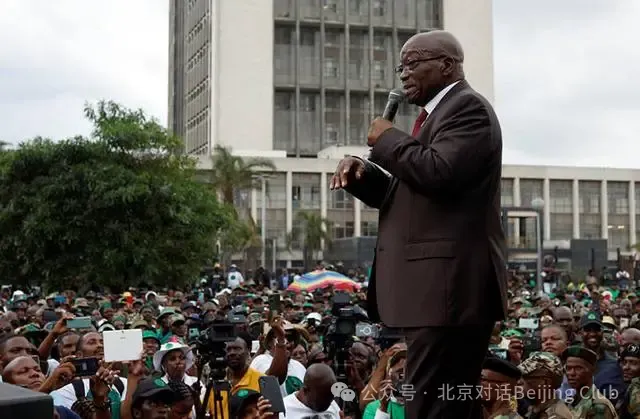
當地時間2024年3月27日,南非德班,南非前總統祖馬在高等法院外向支持者發表講話。圖源:Rogan Ward/澎湃影像
全球進步力量和反動勢力都在關注着我們。對某些人來説,這一刻使南非特殊論破產了:我們和其他人一樣,我們將回到新自由主義的利爪之下。我們可能很快就會有一位當白宮走狗的總統,放棄巴勒斯坦,背棄全球南方。隨着不平等繼續加劇,國家將進一步陷入混亂,新的種族衝突也將出現。如果這種情況發生,我們這場運動,將不得不承擔責任,因為當我們有機會埋葬派別紛爭、建設國家能力並專注於為人民服務時,我們卻陷入了道德誘惑和倫理困境,因為權力。切·格瓦拉曾告誡我們,“革命不是熟透了的蘋果。你必須做點什麼,它才會掉下來”。 我們祈禱經濟增長和犯罪結束,但我們本應該採取果斷干預措施。
出於對民主進程的忠心,我必須承認這對於我們所有人來説都是內心成長的一刻,需要我們走向成熟,為了國家利益而放棄個人利益。正如世界其他地方的兄弟黨所做的那樣,如果最終結果不利於我們,我們絕不能成為反叛運動。我們必須讓我們廣泛的贊助網絡崩潰,為成員找到其他謀生途徑,並接受政治要求微妙處理矛盾,即使這些矛盾需要我們為了國家利益而遏制慾望。
同志們,我們前進的道路必須以國際友人的教訓、革命先輩的智慧和人民的願望為指導。我們必須確保以新的活力和清晰的思路繼續為正義和平等而奮鬥。
(翻譯:李澤西)
英文原文:
A Time for Renewal and Regeneration of the African National Congress: Unmandated Reflections
By Busani Ngcaweni
During this moment of reckoning, there many things to consider. However, I think we should proceed and act with scientific caution, not emotion or nostalgia.
Perhaps we should immediately study recent trends in Brazil and what happened to the SDP in Sweden and from that emerge with some practical steps forward. The cases matter because their combination is what brought us here - sins of incumbency.
There is also the case of the Labour Party (in the UK) that we can look at. In their instance, they are struggling to return let alone emerge with a cogent counter to the right wing onslaught consolidated by Brexit, as has been the case with many other progressive forces in the continent and in Latin America. There are cases in Asia too that are worth looking at, especially what has happened in Malaysia in recent years.
The options are many, but they narrow down as we answer the principal questions: for whom do we exist, what is our purpose and how can it be best served?
From the latter we can then proceed to decide whether we form a coalition (the options are few there also) or allow the moonshot pact (by the way, EFF is part of it and they do favor it!) to govern whilst we rebuild like Lula in Brazil and the SDP in Sweden.
In that scenario, we will call the next 5 years an interregnum period in which we do a complete overhaul of the movement, re-imagine structures and operating procedures and define a clear long-term national development agenda informed by national and international realities. Was it Rosa Luxemburg who said to us: “Those who do not move, do not notice their chains.”
The worst that could happen to us is what has happened in the continent and in Latin America where losing state powers banishes progressive movements into the archive. That is highly possible as some among us are already searching for scapegoats, gas-lighting the public, as we have seen the National Chair abandon all tools of analysis at his disposal to reduce our KZN misfortunes to tribalism. Lenin warned us: “a revolution is impossible without a revolutionary situation; furthermore, not every revolutionary situation leads to revolution.”
We need deep dives to understand the contemporary moment, and from that answer, appropriately, Lenin’s question: “what is to be done.” If there is tribalism, we bred it as the movement through unchecked factionalism and taught it through the education curriculum we designed and implemented over 30 year. (Instead we should be asking, on what scientific basis do we expect the people of Ethekwini to vote for us given the dramatic decline of the city and its services, overlooked by the leadership for factional instead of service delivery considerations? Tools of analysis…)
But I divert, I am still pondering your metaphor my Comrade, made worse by our inability to harvest the political capital we have cultivated in the WC since January when we embarked on the ICJ mission.
There are further examples from the global south that can serve as valuable lessons for us at this critical historical moment.
As I have said, in Brazil the Workers’ Party under the leadership of Comrade Lula managed to regain the trust of the people after years of political struggle and scandals. By focusing on social programmes, anti-poverty initiatives and coalition-building, Lula’s presidency marked a period of significant social and economic progress for Brazil.
I can quote a case I am less familiar with also (excuse me if I get the facts wrong my leader): Bolivia. There, the Movement for Socialism successfully returned to power with Luis Arce after Evo Morales. This comeback was facilitated by a renewed focus on grassroots mobilization and addressing the needs of the indigenous population.
In Tanzania, the Chama Cha Mapinduzi party has remained relevant by continuously adapting to the changing political landscape while maintaining its foundational principles of socialism and self-reliance. By focusing on economic development, anti-corruption measures, and maintaining strong connections with rural communities, the CCM has managed to retain its position as the dominant political force in Tanzania. And they remain the most reliable ally of the global south.
In Malaysia, the Pakatan Harapan coalition, which includes the Democratic Action Party, has shown resilience by emphasising governance reforms, anti-corruption measures, and promoting a multicultural and inclusive society. Their victory in the 2018 elections was a significant milestone, though subsequent political turbulence has posed challenges. They mobilise grassroots. A former president faced the full mighty of the law there in recent times.
The Communist Party of Vietnam is our most relevant case study too. The party has been successful in its renewal efforts, retaining its hegemony whilst driving economic reforms. Sorry I can get this wrong but is something like Đổi Mới or renovation in English that they are implementing as a way of driving structural reforms for well over 30 years now. Like in China, they have a socialist-oriented market economy where the both the state sector and the private sector are big players, leading to FDI flows (fixed investment, not the inflows that we often obsess about). Just recently, they have done some serious political changes after allegations were raised about very senior politicians and officials.
Back to the Sweden case (I recall some of their leaders saying we need to learn hard lessons from them), the SDP were able to rebuild and win back power through a combination of pragmatic policy adjustments and coalition-building. After losing support due to complacency in the early 2000s, they reoriented addressed the concerns of the people over inequality and stagnation. By forming alliances with other progressive forces and green parties, the SDP successfully returned to power, emphasizing a commitment to social justice, environmental sustainability, and inclusive economic growth.
A short trip to Singapore will teach us a lot about 3 things from the People’s Action Party there: building a meritocratic and innovative state, building a vibrant economy and regaining hegemony in society why dealing harshly with all acts of corruption regardless of who is accused. Mere allegations of wrong doing in Singapore and enough to end your political career. Most of what the CPC of China has achieved is thanks to lessons learnt from the island (Singapore). The CPC is a rolling programme of reforms that permeates the whole of society. They deal with rogues promptly and factionalism is regarded as the enemy of the people. The CPC measures its performance not by slogans and ideology but by socioeconomic outcomes - growth and moderate prosperity.
These elections brought us closer, together, as many have observed. Rogues left and those committed to the movement stayed and campaigned for victory. The campaign by former leaders was a significant moment from which we should build to close ranks, bury old rivalries and build into the future. That is a basis upon which we must proceed and keep the people at the center of all our considerations, and of course the state and capital. Yes, I said it: capital. We are after all a movement that claims to believe in the mixed economy model and our policies have seen a dramatic increase in capital in this country. A strong state achieves its key objectives by working closely with capital, enabling it to create value and disciplining through rules and transparent processes where necessary. We have to factor in what will happen to business in our calculations, as much as we must think hard the rupture that might happen to the already fragile state.
We are being watched globally, by progressive and reactionary forces alike. For some, this moment collapses the South African exceptionalism theory - we are like everyone else and we will return into the sharp jaws of neoliberalism. We might soon have a President who swings in the POTUS chair at the White House, abandon Palestine and turn our backs on the global south. As inequality continues bites, the country slides further into chaos and new racial conflicts arise. And it will be us, the movement, who will have to take responsibility if this scenario materializes because when we had a chance to bury factionalism, build state capacity and focus exclusively on serving the people, we got entangled in moral temptations and ethical dilemmas because, yeyi, kumnandi kwi power! Che warned us: “The revolution is not an apple that falls when it is ripe. You have to make it fall.” We prayed for growth and crime to end when we should be decisively intervened.
I will be dishonest to the democratic project if I fail to emphasise that this is a moment of growth for all us, calling for maturity and divorcing personal interests for national good. As other fraternal parties have done elsewhere in the world, if the final outcomes disfavour the movement, we must not become a rebel movement. We must allow our wide patronage networks to collapse, find alternative livelihoods for members and accept that political life is about delicate managing contradictions, even if they result in the subordination of desires in the best interest of the nation.
Our path forward Comrades must be guided by the lessons of our international friends, the wisdom of our revolutionary forebears and the wishes of the people we exist to serve. We must ensure that our struggle for justice and equality continues with renewed vigor and clarity.