張建敏:中美過去靠“求同存異”走到一起,今天仍是如此
guancha
(編者按)1月24日,美國加州聯邦俱樂部亞太事務主席卡利迪普博士,邀請中國駐舊金山總領事張建敏,就中美元首舊金山會晤、中美關係、加州角色、綠色發展、人文交流和舊金山APEC等話題,進行爐邊對話。
張建敏指出,中美關係出現任何緊張情形,可能對全球經濟帶來至少2%的負增長。此時此刻,中美需要合作,來恢復全球經濟增長。中國過去靠“求同存異”走到一起,今天仍是如此。
加州聯邦俱樂部成立於1903年,是美國曆史最悠久、規模最大的公共事務論壇之一。
北京對話和觀察者網受權翻譯和獨家發佈中文如下:
(翻譯:李澤西,核譯:韓樺)
**卡利迪普:**自古以來,中國就一直在世界歷史上扮演着舉足輕重的角色。自華夏文明於黃河邊誕生以來,中國就一直吸引着世界的想象力。當代中國的崛起尤為驚人,在近代史上可謂絕無僅有:中國超過8億人擺脱了貧困,這佔全球原貧困人口的75%。1990年,中國75%的人口生活在農村地區;現在,75%的人生活在城市。
還有一個驚人的數字:在2010年至2013年間,中國澆築的混凝土量比美國在整個20世紀澆築的混凝土量還要多,這太不可思議了。除了建築領域,中國在其他行業也取得驚人成就:正當加州在放棄對可再生能源的補貼時,中國卻在向前推進,全球電動汽車50%的產能和市場都在中國,全球太陽能和風能50%的產能和市場也在中國。
然而,未來仍有挑戰。中國正在擺脱長時間的新冠疫情封控後果,現在的問題是,這對中國經濟產生了什麼影響?與此同時,中國人口首次不增反減,人口正在老齡化,這又對中國產生怎樣的影響?這些情況又將如何波及影響世界其他地區、美國和我們所在的加利福尼亞州?
因此,我們非常高興和榮幸,張建敏大使同意向我們介紹,他認為中國將如何應對這些挑戰。張大使,歡迎來到加州聯邦俱樂部。請向我們介紹一下您自己,以及您是如何走到今天這一崗位的。
**張建敏:**謝謝你的熱烈歡迎。也感謝現場和線上觀看的加州聯邦俱樂部會員們,感謝你們對中國和中國文化的關注。首先,請允許我向你們致以龍年春節的美好祝願。這是一個非常吉祥的年份,希望它能給我們所有人帶來好運。
就我本人而言,我擔任中國駐舊金山總領事已有一年零八個月。在此之前,我在中國駐捷克大使任上工作了3年半。我於1990年加入中國外交部。1994年我首次到訪美國。2009年至2011年,我在中國駐華盛頓大使館工作過。

張建敏總領事與加州聯邦俱樂部亞太事務主席卡利迪普舉行爐邊談話 圖自:中國駐舊金山總領事館
在中國外交部工作期間,我有幸參加了許多重要的訪問和討論。因此,我希望自己能利用好這些經驗,為促進中美兩國,尤其是中國和加利福尼亞州之間的相互瞭解和友誼做好工作。
**卡利迪普:**在加州期間,有什麼令你感到驚訝的嗎?你對加州和西海岸有什麼新認識?
**張建敏:**我感覺很幸運,因為美國西海岸與中國的來往與合作歷史悠久。這裏最近舉辦了亞太經合組織(APEC)峯會,有着如此優秀、勤勞的華人社區,為這一地區的繁榮做出了重要貢獻。
自從我來到這裏,加州和中國之間的合作交流讓我深受鼓舞。例如,我們即將迎來龍年春節。2022年9月,紐森州長簽署法律,將春節定為公共假日,這是美國第一個將春節定為公共假日的州。您剛才在開場白中提到了新冠疫情,紐森州長也是疫情過後第一位訪華的美國州長,訪問圍繞氣候變化。我認為他的訪問非常成功。
美國西海岸曾舉辦過兩屆亞太經合組織峯會。第一屆亞太經合組織峯會於1993年在西雅圖舉行,而去年,舊金山也非常成功地主辦了亞太經合組織峯會;兩次會議,中國國家主席都出席了。在舊金山,兩國元首舉行了一次非常成功的峯會,使人們對兩國關係未來有了亟需的信心。
**卡利迪普:**讓我們談談兩國關係的未來。2024年是美中友好關係的第45個年頭,期間並非一帆風順。您如何看待中美關係的現狀?
**張建敏:**正如你所説,今年是中美建交45週年,中美關係並非一帆風順。但從總體上看,中美關係取得了重大進展,為兩國人民帶來了許多實實在在的福祉,也為全世界的和平、穩定與繁榮做出了貢獻。我常常回想起1972年尼克松總統與基辛格博士的破冰之旅。在此期間,尼克松總統還訪問了我的家鄉—杭州,在那裏進行了《上海公報》的大量談判。事實上,《上海公報》是在杭州定稿並在上海簽署的。杭州離上海不是很遠。
我想補充的是,尼克松總統訪問杭州時,代表美國送給杭州一些禮物—五棵紅杉樹苗。在過去50多年裏,這些小樹苗在杭州植物園和西湖邊,長成了參天大樹,這見證了中美關係在過去幾十年中的演進:1979年中美正式建交時,雙方幾乎沒有任何雙邊投資;但去年,雙邊投資規模達到2600億美元。1979年,我們的貿易額不到25億美元;而去年,這一數字已增至近7600億美元。
因此,我們的關係幾乎在各個方面都有緊密交織:文化交流、人員交流、經濟交流。正如人言,中美現在作為兩大經濟體,任何一方都無法忽視另一方。
我認為,兩國關係的進展是實實在在的。任何人帶着客觀公正的視角,都會認識到這種關係的進展對兩國乃至全世界的積極影響。
世界上許多國家實際上也在關注中美關係的好壞,因為中美的互動之道也會影響到他們的生活和工作之道。這就是為什麼人們如此高興地看到兩國領導人相互交談,並在許多重要問題上達成重要共識。這次,兩國領導人實際上就展開對話、進行更多交流等重大議題達成了一致。
中國領導人特別希望,美方與中方共同努力,確保兩個大國能夠好好相處。中方的建議是,作為兩個大國,我們需要相互尊重、和平共處、合作共贏。我認為,合作是唯一的出路,有利於我們兩國,也有利於全世界。
**卡利迪普:**國際貨幣基金組織IMF最近發佈的報告稱,兩國關係中出現的任何緊張情形,都將影響全球經濟。您對此有何看法?
**張建敏:**沒錯。這就是為什麼人們如此關注中美關係緊張情形的原因。一旦中美關係出現緊張局勢,這可能對全球經濟增長帶來2%的負面影響。十多年來,中國一直是世界經濟增長的關鍵引擎,每年為全球經濟的增長做出30%的貢獻。
因此,如果中國和美國這兩個主要經濟體不合作,那麼就會破壞供應鏈和產業鏈的穩定。此時此刻,我們需要這種合作來恢復全球經濟增長,緊張局勢實際上會給全人類帶來災難。

中國美國商會發布報告:半數在華美企將中國列為前三投資地 圖自:中國美國商會
**卡利迪普:**儘管如此,美國人的擔憂依然存在。事實上,芝加哥外交事務委員會(Chicago Council of Foreign Affairs)去年10月進行的一項民意調查顯示,60%的美國人認為中國作為全球大國的崛起是對和平的威脅。您將如何消除這些擔憂?
**張建敏:**我認為他們對中國文化、中國人民和中國政府的政策不夠了解。在某種程度上,這可能是因為新冠疫情;過去三年裏,雙方的交流並不多,人們不再互相訪問,因此造成了很多誤解,沒有足夠的機會向對方解釋自己的真實想法。在新冠疫情之前,我們每年有500萬人次的互訪,中美之間每週有300多架直飛航班飛越太平洋。因此,我們還有很多工作要做,以彌補新冠疫情造成的損失。當然,這其中也有其他因素在作祟。
在我看來,坦率地説,我認為這也與美國的所謂“政治正確”有很大關係。一些政客傾向於將一切問題政治化。因此,他們散佈這些恐懼,進行無端和錯誤的指責。這就是為什麼中國國家主席習近平最近在與美國總統拜登會談時説,我們需要共同努力做幾件事,首先就是樹立正確認知。美國應將中國視為夥伴而非敵人,應將中國的發展視為機遇而非威脅。我們非常樂意與世界其他國家分享增長和繁榮帶來的機遇。
你提到了中國在可再生能源、新能源汽車、太陽能等方面的進步。在中國上海,連續六年的每年11月,我們都邀請來自世界各地的人們,包括加利福尼亞州、舊金山灣區委員會的人們,參加進口博覽會,這是世界上首次。我們希望利用中國的發展,與世界其他國家共享繁榮和發展機遇。
**卡利迪普:**讓我們非常簡短地談談亞太經合組織會議。首先,祝賀你組織參與了一次非常成功的亞太經合組織會議。你提到了習近平主席,他確定了與美國合作的五大支柱。APEC會議取得了什麼樣的成果?五大支柱包括了民間交流,你如何看待自己在促進這些合作支柱方面的作用?
**張建敏:**謝謝你提到五大支柱。我已經提到了第一條,即共同樹立對彼此的正確認知。接下來是共同有效管理分歧,共同推進互利合作,共同承擔大國的國際責任,以及共同促進人文交流。因此,我認為這是一項繁重的工作,一項艱鉅的任務,但我很樂意盡我所能,履行中國總領事的職責。
人文交流至關重要。習近平主席在舊金山發表演講時,邀請5萬名美國青年在未來5年間訪問中國。我認為,當你能親眼看到並體驗真實的中國,就能得出自己的結論,看看與新聞、報紙或政客對中國的描述是不同還是相符,這一點非常重要。
正如我所説,中國與美國有大量貿易往來。貿易基本上是互惠互利的,為消費者提供了更多選擇,創造了就業機會,提高了生活水平。因此,合作共贏確實有助於穩定兩國關係。
當今世界面臨着許多緊迫的挑戰:氣候變化、疫情、地緣政治緊張局勢等。中國和美國都是聯合國安理會常任理事國,兩國都應發揮作用,讓世界變得更加美好。因此,我認為五大支柱確實非常重要。現在的當務之急是中美兩國共同努力,落實兩國總統達成的共識,而不是説一套做一套,那就可能會導致非常令人沮喪的挫折。
**卡利迪普:**加州和加州華人有着悠久的歷史。事實上,有些人可能會説,加州就是在中國勞工的支持下建立起來的。大多數人不知道的是,中國是加州最大的貿易伙伴。您提到紐森州長訪華,能否向我們介紹一下這次訪問的情況、成果以及意義?
**張建敏:**紐森州長於10月率領氣候變化代表團訪問中國。他從香港開始行程,在那裏發表了關於氣候變化的演講;隨後,他訪問了深圳,中國最早進行改革開放的城市之一。在那裏,紐森州長參觀了比亞迪的電動汽車和電動巴士。隨後,他前往廣州,與廣州簽署了氣候變化合作協議。順便提一下,加州與廣東、江蘇、內蒙古、四川都是友好省州。他此行期間還訪問了上海、江蘇。當然,他還訪問了北京。
在北京,他還與許多同行舉行了會議,並召開了氣候變化研討會。最重要的是,他與中國國家主席進行了會晤。習主席在會見紐森省長時説,兩國關係的活力在地方。因此,中方歡迎紐森州長來訪。中方願加強地方政府層面的交流,即中美各省和各州之間,以及各縣和各市之間的交流。
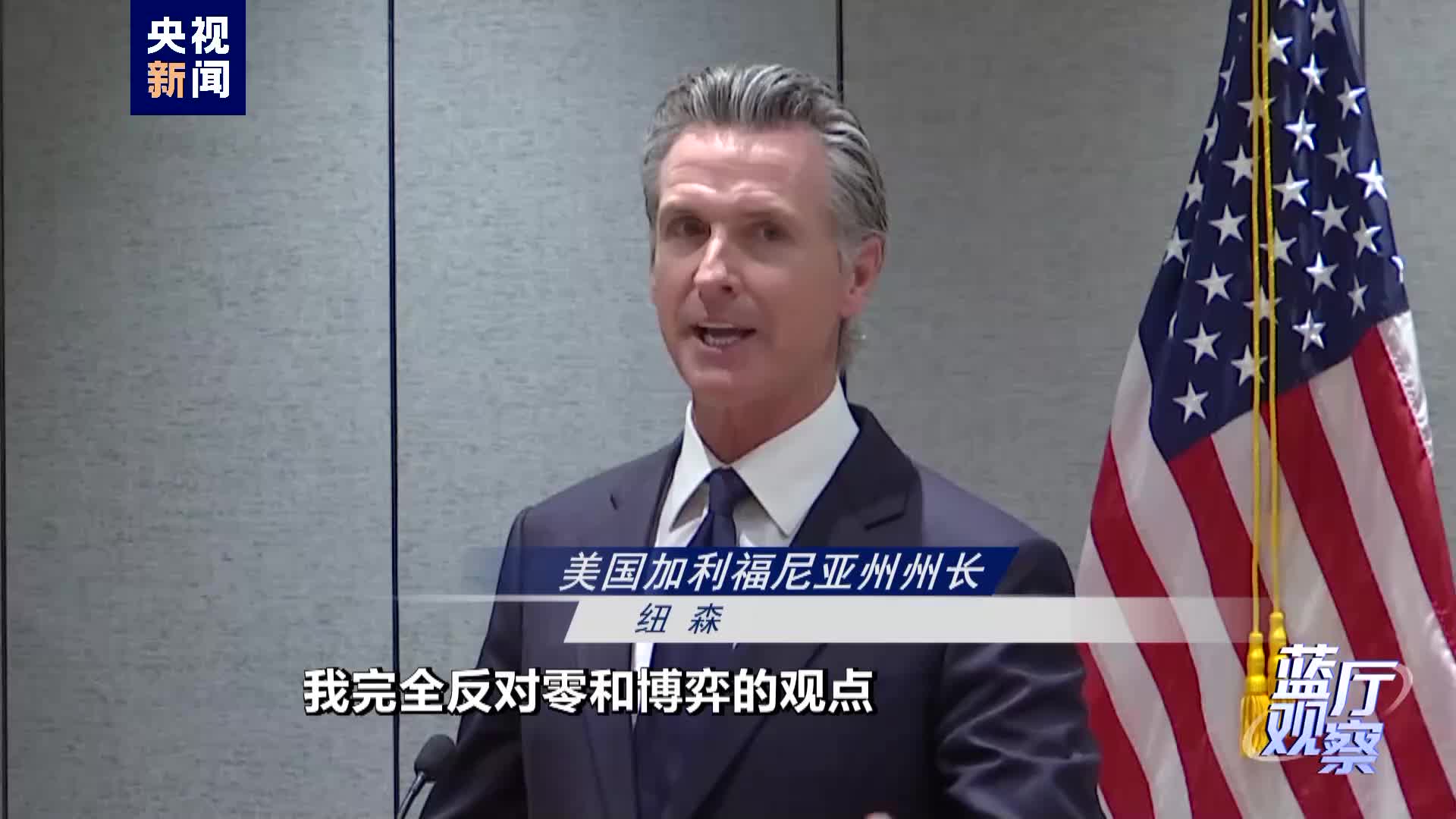
美國加州州長紐森去年10月訪華
我覺得兩國省州長和市長們關注的議題是一致的,因為在日常工作中,他們必須處理同樣的問題:就業、環境、食品、住房。因此,我認為,如果我們能讓兩國省州長和市長們經常見面,那麼你剛才提到的那種誤解就會消失;也許不會完全消失,但不會阻礙推進互利合作的努力,畢竟分歧總是存在的。
尼克松訪華時,中美兩國存在巨大差異,但我們通過求同存異走到了一起。我認為今天仍是如此。
**卡利迪普:**就加州而言,中國1949年建國前,只有20%的人口受過教育,即四億人口中的一億,而現在這一比例接近百分之百。您認為,加州系大學的教育體系如何在推動教育交流中發揮作用?
**張建敏:**加州在教育領域實力雄厚。比如,你們有斯坦福大學、伯克利大學、加州大學戴維斯分校,還有許多其他優秀的大學。當我還是學生的時候,我的老師告訴我,如果你有一個蘋果,我有一個蘋果,我們交換蘋果,最後我們還是隻有兩個蘋果;但如果你有一個想法,我有一個想法,我們交換想法,就可以有更多的想法。我認為教育也是如此,人們走到一起,分享想法、交換意見、相互學習。中國學生也會賦能加州的課堂,因為他們會帶來中國文化、中國思維方式、中國哲學,這都可以發揮作用,會給美國學生和其他國家的學生帶來靈感。同時,這裏的中國學生也會從其他文化背景的同齡人身上汲取靈感。
因此,我們希望看到更多的教育交流。但遺憾的是,我覺得由於政治正確,我們在這種交流中遇到了一些障礙。我們現在正在簡化簽證申請程序,致力於成為交流友好型總領館,也就是説,我們是隨時開放的。如果你遇到了問題,如果你需要幫助,我們隨叫隨到,辦公室隨時開門,滿足你的需求,為你的簽證申請提供便利。但對於在中國申請(赴美)簽證的人來説,排隊時間太長了。我們向公眾承諾,將在4個工作日內為您提供簽證,且無需提前預約。我們希望美方也能做得更多,以滿足有意留學美國的學生的需求。
**卡利迪普:**讓我們談談思想交流。很多聽眾可能不知道,正如張大使剛才提到的,世界上最大的電動汽車製造公司不是特斯拉,而是比亞迪。中國的獨特之處在於,它控制着從鈷礦開採到機器人制造電動汽車的整個供應鏈。中國曾經從加利福尼亞和美國學到了很多清潔能源的政策,這也是張大使最關注的話題之一。但現在情況發生了變化,學生變成了老師。加州能從中國的綠色政策中學到什麼?
**張建敏:**我認為這是一個相互學習的過程。每一方都會帶來自己獨特的優勢。我認為,如果我們有這種相互學習的積極態度,雙方都會受益。
我們一直非常積極地提出綠色能源要求。例如,在海南省,所有汽車都必須是零排放的。因此,我認為在這一領域,相互學習的空間確實很大。
**卡利迪普:**現在讓我們來談談氣候變化的一些有趣的事實。1990年,中國農村每百户大約有兩台冰箱,現在是90台。1990年,中國每100户家庭約有15台空調,現在是150台。這對電力消耗和温室氣體排放帶來了重大影響。美國和中國排放的温室氣體合計佔世界總量的40%以上。我已經談了很多關於可再生能源、太陽能的問題,但中國60%的電力來自煤電廠也是事實,而且隨着人口的不斷增長,能源耗量還在增長。
從你的角度來看,鑑於你本人對氣候變化問題的關注,你認為像中國這樣的國家如何平衡現代化的需求?顯然世界上其他國家會把中國視為處理這些問題的榜樣。
**張建敏:**經濟增長很重要,因為它直接關係到就業和人民的生活水平,但環境保護也很重要,而且越來越重要,如何平衡兩者確實是一項艱鉅的工作。
就中國而言,我們已經宣佈了實現碳中和與碳達峯的目標。實際上,和其他工業化國家相比,中國實現同樣目標所需的時間要短。
我引以為豪的是中國在降低單位GDP能耗方面的成績。過去幾年,中國經濟大幅增長,但平均下來,在GDP年增長6%的情況下,中國能源消耗年均只增長約3%,這意味着我們正在以一種更加環保的方式增長。因此,我認為中國人民現在越來越意識到環境保護和氣候變化的必要性。
當我回鄉探親和訪問中國其他城市時,我注意到的最大變化之一就是環境,河裏的水變得乾淨多了。我小時候在一條小河邊長大,這條河是大運河的一支。那裏離紡織廠很近,離造紙廠也很近,所以河水的顏色一直在變。當時,我對環境保護瞭解不多。儘管河水很臭,但我看到河水變色,覺得還挺浪漫。現在,我回到家鄉,看到人們在河邊釣魚。所以這真是一個巨大的變化。

資料圖:青海省海南藏族自治州生態光伏園 圖源:IC photo
中國的全國人民代表大會將在每年3月舉行年度會議,而省一級人代會通常在春節前開會,所以這幾天,你可以看到中國各省都在召開省級人代會。近日,我在電視上看到福建省長重申,如果他發現某個經濟發展項目與環境保護需要之間存在矛盾,他會優先考慮環保;如果他對該項目是否影響環境心裏沒底,那麼他寧可不要該項目,也要保持良好的環境。我認為這反映了中國發展重點的變化、優先次序的變化。因此,儘管中國在環境保護方面仍有許多工作要做,但我們現在比以往任何時候都更有決心取得更好的平衡。
**卡利迪普:**我開頭還提到了中國的人口問題。去年,中國人口首次不增反減。您認為這對中國經濟有何影響?
**張建敏:**我有時會想想我兒子,他結婚後願意生幾個孩子?我有兩個姐姐,而我妻子和我只有一個孩子。由於之前的政策,人口減少並不奇怪。現在,我們正在對政策進行調整,鼓勵年輕夫婦多生,最好是兩娃,三個更好。
然而,年輕人生育率低並不是中國獨有的問題。我理解,年輕人的生活節奏很快,他們的工作或生活壓力比我們或我父母那一代人更大。但是,儘管中國的人口在減少,我們仍然需要認識到,中國受教育的人口、有效勞動力和人才儲備並沒有真正減少那麼多。因此,從總數量上看,中國人口確實在減少,但由於教育的進步,中國人才仍在增長。
當然,中國也出現了人口老齡化的趨勢。例如,由於我和妻子在這裏工作,我的妻妹作為一名教授也很忙,如何照顧我的岳母對我們來説就是一項艱鉅的任務;我想其他中國家庭可能也面臨着同樣的困境。我們需要更多的養老設施,需要進一步發展中國的醫療服務,確保老有所養。我們也在學習其他國家的經驗,這也可以成為中美對話、分享經驗和相互學習的一個領域。這不僅是中國面臨的挑戰,也是許多其他國家面臨的挑戰。
**卡利迪普:**的確如此。事實上,張大使,最常被舉例的是日本,它在20世紀90年代也經歷了類似的過程。日本是否已經度過了這一階段?你們從日本經驗中學到了什麼,日本是如何解決這個問題的,中國又可以如何解決這個問題?
**張建敏:**正如我所説,中國人口在老齡化。我剛才提到,我們需要更積極地發展養老設施,我們還需要做好社保,需要發展更多的保險。中國有“老有所養”的理念。因此,這不僅是政府的一項重要任務,也是普通公民的一項重要任務。
**卡利迪普:**中國正在由世界製造業中心向創新中心轉型;有些人可能沒有意識到這一點,他們的刻板印象是,美國做什麼,中國就抄什麼。但現在似乎也出現了相反的情況。
我舉個例子,Facebook抄襲了微信:微信很早就推出了付費功能,Facebook在五年後也抄襲了微信,但沒有人對此指手畫腳。大家都熟悉TikTok,幾年後Instagram推出了自己的TikTok。你提出了一個非常重要的觀點,即人口正在老齡化,但受教育的人口數量仍在增長。他們如何在推進中國創新更上一層樓中發揮作用?
**張建敏:**中國人為我們歷史上的創新而自豪:造紙技術、指南針、火藥等等。當下,中國擁有40多萬家高科技公司;中國的獨角獸企業數量位居世界第二,創新在中國變得越來越普遍。過去幾十年,中國經濟持續增長,由於改革開放,我們曾有過超兩位數的經濟增速。而現在,經濟規模已經變得如此之大,我們正在由注重體量的增長轉向注重質量的增長。因此,我們必須依靠創新。中國得益於對外交流和開放。
同時,中國也在通過自己的創新為其他國家人民的福祉做出貢獻。中國對知識產權的保護並不是因為其他國家希望我們這樣做,實際上是出於我們自身的利益,我們必須執行知識產權法律法規,我們設立了知識產權法庭。中國的專利申請和版權保護案件的數量是非常鼓舞人心的。
加利福尼亞州在許多領域都是創新先鋒。因此,對於中國年輕人來説,與美國同行一起工作,集思廣益,互相汲取靈感,總是互惠互利的。
**卡利迪普:**在APEC亞太經合組織峯會上的一個話題是中國的“一帶一路”倡議。您能向大家解釋一下什麼是“一帶一路”倡議嗎?
張建敏:“一帶一路”倡議中的“一帶”是中國與西部內陸國家的合作,此外還有“海上絲綢之路”。這一倡議已經提出了10年,獲得了沿線國家的大力支持,大家共同創建了基礎設施項目和生產項目,創造了就業機會,提高了沿線人民的生活水平。我們希望將“一帶一路”打造為一項公共產品倡議,希望其他國家有機會借鑑中國的經驗。我認為我們做得很好。
我們已經就“一帶一路”倡議舉行了多次峯會。由於這一倡議向所有國家開放,我們非常歡迎任何有興趣的國家加入我們。
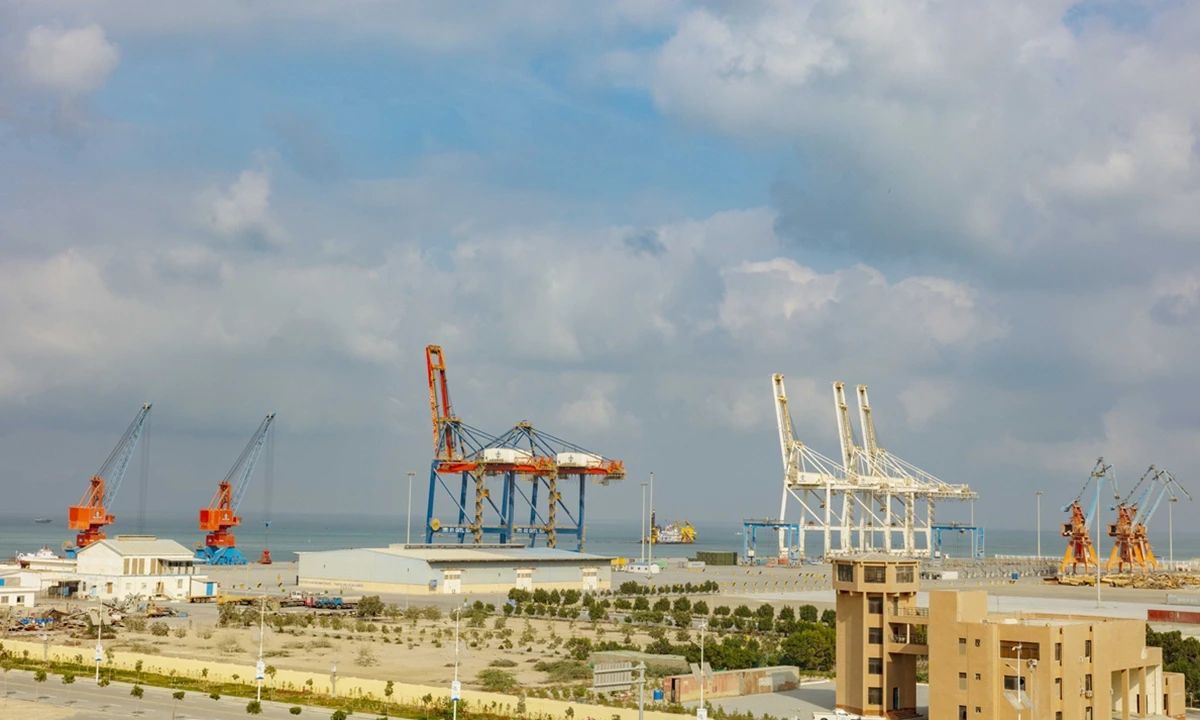
巴基斯坦瓜達爾港 圖自:視覺中國
**卡利迪普:**中國在“一帶一路”倡議中如何與加州的城市社區合作?其中是否有潛在的機會?
**張建敏:**我認為智慧城市是一個非常好的合作議題,加州和中國城市管理部門可以共同研究如何建造更節能的公寓等。我認為城市規劃是一個非常重要的話題,有很多內容可以討論,比如公共交通。人工智能也是每天都會出現在頭條的話題,這也是各國人民、工程師和學生可以進行更多討論的一個領域,因為人工智能發展得非常快,吸引了大量投資,具有革命性意義,肯定會影響我們生活的方方面面。
但如何對其進行管理?對AI進行適當的管理,以便我們能夠最大化它的正面作用,並防範其潛在的風險和危險,我想這是每個人都在思考的問題。因此,這也可以是大家能共同努力的議題。
**卡利迪普:**接下來的問題需要用到您的外交技巧了。美國大選在即,不同的候選人會帶來怎樣的變化?在您所處的位置,您將如何應對這一局面?
**張建敏:**首先,這是美國的選舉,我們不干涉他國內政。當然,中美關係非常重要,影響到我們所有人。因此,我們當然希望人們投票的是能有助於改善中美關係的人。讓我感到高興的是,回顧過去45年的中美關係,發展良好的中美關係是美國兩黨的共識。1972 年,是(共和黨)尼克松總統訪華打破了僵局,而正式建交的則是(民主黨)卡特總統。從那時起,來自兩黨的歷任總統都與中國領導人進行過交流。
兩國建立穩定的合作關係符合兩國人民和全世界人民的利益。我認為全世界都期待被選出的總統承擔起責任,努力改善兩國關係。
**卡利迪普:**您提到紐森州長對中國的訪問,但這是建立在之前共和黨州長訪華的基礎之上的。大家提出的一個問題是,您對加州與中國下一階段的發展有何建議?
**張建敏:**我們有很多工作。比如,讓我們從學生交往開始。習主席邀請五萬名美國青年在未來五年內訪問中國。我們相信,在這五萬人中,加利福尼亞州將佔很大比例。我們也希望加州和中國之間能有更多的直飛航班。舊金山灣區委員會每年都代表加州的企業在上海國際進口博覽會運營加州館。因此,我們希望舊金山灣區委員會也能做得更多,向中國介紹更多的美國產品和服務。
未來五年,中國將從世界各地進口總額達十七萬億美元的商品和服務。像中國這樣一個不斷增長的經濟體的市場需求是巨大的,而隨着生活水平的提高,中國人民也希望享受更多的納帕谷葡萄酒、更多的新奇士橙子。因此,我認為我們可以擴大貿易,在氣候變化方面推進更多的合作,共同應對這些緊迫的全球性挑戰。
**卡利迪普:**加州對朝鮮軍事實力的擔憂與日俱增,加州人民認為他們就在朝鮮導彈射程之內。考慮到這對世界和平的影響,中國在確保安全方面能發揮什麼樣的作用,有何責任?
**張建敏:**朝鮮是一個主權國家,為自己的行為負責。中國和朝鮮是近鄰,我們有着正常的友誼與合作,關係非常密切。因此,我們希望他們的經濟能夠增長,我們希望他們的人民能夠享受美好的生活。
與此同時,由於朝鮮與一些國家之間的緊張關係,不時會出現事件和緊張局勢。但對中國來説,我們始終呼籲和平解決爭端,我們始終呼籲有關各方進行對話。我參與過六方會談,從一開始是四方會談時就曾參與。我們希望朝鮮半島實現永久和平與穩定,但這需要每一個利益相關方的切實努力。因此,我們希望美國也能在這方面發揮更具建設性的作用,以穩定局勢。
**卡利迪普:**對話開始時,你提到了人工智能的興起,我們談到了假新聞,你則提到了(媒體)渠道和政治環境,以及政治環境如何影響我們在美國獲得的新聞。如果你是一名在場觀眾,你會看哪些信源來獲取關於中國的準確信息?
**張建敏:**我當然會看中國自己的新聞。我們有許多優秀的新聞機構,如新華社、中國日報、人民日報、CGTN、中央電視台,它們現在都非常國際化。我也會參考一些可信的新聞機構。但最重要的是,你需要根據事實情況來核實你所讀到的內容。有時你會看到假新聞,我們在CGTN有一個節目叫做“頭條直擊”,會揭露謬誤。有些媒體會使用過時的圖片,有些會用來自一個國家的圖片來談論另一個國家發生的事情,這非常具有誤導性。我認為,人工智能被指責為“深偽技術”的罪魁禍首,這對我們所有人來説都是一個挑戰。因此,如何共同努力,確保以負責任的方式使用人工智能,不讓人工智能誤導人們,是需要非常認真考慮的問題。
**卡利迪普:**灣區的許多人不習慣看到外交官。這裏有不少華裔。您如何鼓勵人們沿着您的足跡進入外交領域?
**張建敏:**作為一名外交官,為國效力是我的榮幸。在舊金山,每個人都以金門大橋為榮。外交實際上就是搭建橋樑,而不是設置壁壘。我們確實能解決問題,但我們是通過搭建橋樑、避免衝突、作出必要的妥協、增進相互理解來解決問題的。因此,我認為這是一份崇高的工作,沒有什麼比代表自己的國家更崇高的榮譽了,不僅為自己同胞的利益服務,還為地球上全人類的共同利益服務。
如果你不從事外交工作,有時當我們談論世界和平穩定等宏大概念時,聽起來是那麼遙遠和空洞,但如果你多年從事外交工作,那麼你確實會感到自己肩負着沉重的責任,你的所作所為或多或少影響着世界的未來。我曾為領導人峯會擔任過翻譯。當我回首往事時,我總是覺得,作為促進兩國和兩國人民之間相互理解的橋樑,非常榮幸。

中美交流基金會組織今年首批美國大學生代表團訪華 圖自:中美交流基金會
其實,我回國後,經常會被我們的人事部門邀請去跟大學生們交流,跟他們分享我的故事,以及年輕人擁有一個通過外交來報效祖國、服務人類的夢想是多麼重要。
我們需要更多的人加入。畢竟,無論人工智能如何進步,人們仍然需要依靠人類的智慧,我們仍然需要面對面的對話來解決問題,在互利互惠的事情上取得進展。
**卡利迪普:**最後一個問題,這將非常考驗你的外交技巧:舊金山動物園怎麼樣才能獲得幾隻大熊貓?你説過要搭建橋樑,要取得成果。
**張建敏:**習主席談到了熊貓是如何受到美國人民,尤其是孩子們的喜愛。中國外交部長王毅已經宣佈,熊貓將回到加州。我參觀過舊金山動物園,那是一個非常漂亮的動物園,靠近海洋海灘。讓我們拭目以待。我知道這裏的市長、州長和副州長都非常希望看到熊貓回到加州。我也很期待看到這一切的發生。
**卡利迪普:**太好了。我們希望大使兑現承諾。
**張建敏:**我們共同努力。
**卡利迪普:**讓我們感謝大使的光臨,感謝他的慷慨,為我們提供了一場精彩的龍年盛宴。
以下為英文原文:
Kalidip Choudhury: China has always played an outsize role in the history of the world. Ever since its civilization began on the banks of the Huanghe River, China has been capturing the imagination as few countries have. But the rise of modern China is especially astonishing, it is without parallel in modern history. More than 800 million people have been lifted out of poverty, 75% of the world’s global poor. In 1990,75% of China lived in rural areas. Now, 75% are urban.
And here’s another astonishing number for you: between 2010 and 2013, more concrete was poured in China than in the entire 20th century of the United States. That’s a mind boggling number. But it’s not just concrete and steel alone. Just when California is backing away from a subsidy on renewable energy, China is now moving ahead. 50% of the world’s electrical cars are either manufactured or consumed in China, 50% of the world’s solar and wind energy is manufactured and consumed in China.
But there are challenges ahead. China is emerging from a long covid lockdown and the questions remain, what impact will that have on its economy? And for the first time, China’s population is contracting rather than expanding. It is an aging population. How will that affect China? And therefore, how will those ripples affect the rest of the world, affect the United States, and affect us here in California?
And so we are very pleased and honored that Ambassador Zhang Jianmin has agreed to join us onstage and present us his views on how China plans to address those challenges. Ambassador Zhang, welcome to the Commonwealth Club of America. Please tell us a little bit about yourself and how you got to this position.
Zhang Jianmin: Thank you, Khalidip, for your warm welcome. And thank you, members of Commonwealth Club, both here on site and online, for your interest in China and Chinese culture. Let me start by extending to you the best wishes for the Chinese New Year, the year of the Dragon. It’s a very auspicious year and hope it will bring all of us the best of luck and good fortune.
As far as myself is concerned, I’ve been in this job as Chinese Consul-General Based in San Francisco for one year and eight months now. And before that, I served as Chinese ambassador to the Czech Republic for three and a half years. I joined the Chinese Foreign Service in the year 1990. My first visit to this country was in 1994. I also served in the Chinese Embassy in DC from 2009 to 2011.
In my job working in the headquarters of the Chinese Foreign Ministry, I’ve had the good fortune of serving many important visits and discussions. So I hope I could put all these experience into good use and do a good job in promoting more mutual understanding and friendship between China and US as a whole, and in particular between China and California.
Kalidip Choudhury: Have there been any surprises? What have you learned about California, what have you learned about the West Coast during your time here?
Zhang Jianmin: I feel I’m very lucky because in the west coast, it has a longer history of exchanges and cooperation with China. It recently hosted APEC, and has such a wonderful, hard-working Chinese community, which made important contributions to prosperity of this part of America. Ever since I arrived, I’ve been very encouraged by the cooperation exchanges between California and China. For instance, we are about to celebrate the year of the Dragon, the Chinese Spring Festival. And in September 2022, Governor Newson signed into law that Spring Festival will be honored as a public holiday, being the first state to designate Spring Festival as a public holiday. And you mentioned the pandemic earlier in your opening remarks. Governor Newson was also the first US governor to visit China in the wake of the pandemic, with a focus on climate change. And I think the visit was a great success.
The west coast has served as the host city for two APECs. The first APEC took place in Seattle in 1993, and last year, San Francisco played very successful host to APEC; Chinese presidents came. The two presidents had a very successful summit, which gave people much needed confidence in the future of our relationship.
Kalidip Choudhury: Let us talk about the future of your relationship. 2024 marks the 45th year of friendship between the United States and China. It has not been without its challenges. How do you perceive the current state of affairs with China, with the United States?
Zhang Jianmin: This year marks, as you said, the 45th anniversary of China US relationship. It has not been without challenges, ups and downs. But viewed as a whole, the relationship has made significant headway. It has brought lots of tangible benefits to the people of the two countries. It has also contributed to peace, stability and prosperity throughout the world. I often recall the ice breaking visit by President Nixon in 1972 together with Dr Kissinger. President Nixon also visited my hometown, Hangzhou, where much of the negotiation on Shanghai Communique was done. It was finished actually in Hangzhou, but signed in Shanghai, Hangzhou is not very far from Shanghai.
What I want to say is that when President Nixon visited Hangzhou, he gave Hangzhou some gifts on behalf of the United States. The gifts were five planted saplings of Redwood trees. Over the past five decades and more, the tiny saplings have grown into tall trees in the Botanic Garden and in the parks around the West Lake. I think this illustrates the evolution of China US relationship over the past decades. When we established formal diplomatic ties in 1979, there was hardly any mutual investment. But last year, two-way investment amounted to $260 billion. In 1979, our trade was less than $2.5 billion. And last year, the figure already increased to nearly $760 billion.
So our relationship has been intertwined in almost every aspect: cultural exchanges, people to people exchanges, economic exchanges. As someone told me, we are two major economies now. Neither can ignore the other side.
I think the progress of the relationship has been real. Anyone who has an objective view and fair-minded people would recognize the positive impacts of the progress of our relationship, to the two countries and to the whole world.
Many countries around the world actually are also concerned about the health of China US relationship. Because the way the two countries interact would also affect their way of life and work. So that’s the reason why people were so happy to see our two presidents talking to each other, reaching important consensus on so many important issues. This time, the two presidents actually agreed on having dialogue, having more exchanges are important subjects.
The Chinese president, in particular, wanted the US side to work together with China to make sure that the two major countries can get along well with each other. The Chinese proposal was and continues to be that as two major countries, we need to show mutual respect, we need to live together in peace and we need to engage in win-win cooperation. I think cooperation is the only way forward, for the benefit of our two countries and in the interest of the whole world.
Kalidip Choudhury: As you know, the IMF recently released a report that said any strains in the relationship will affect the global economy. Your thoughts on that?
Zhang Jianmin: Exactly. That’s also the reason why people are so concerned about tension in the relationship. Once there is tension in China US relationship, it could affect, I think, two percentage points of economic growth. For more than a decade, China has been a key engine of world economic growth. We have contributed to 30% of economic growth globally every year. So if China and the United States, as the two leading economies, are not cooperating with each other. then it would disrupt the stability in supply chain, in industrial chain. So just at the time when we need such cooperation to restore economic growth around the world, tension would actually bring about disaster for the whole humanity.
Kalidip Choudhury: But nevertheless, a fear persists here in America. And in fact, a poll conducted in last October by the Chicago Council of Foreign Affairs that said 60% of Americans feel that China’s rise as a global power is a threat to peace. How do you in your role address those concerns?
Zhang Jianmin: I think they don’t understand Chinese culture, Chinese people, Chinese government’s policy well enough. In part, it’s perhaps because of the covid pandemic; over the past three years, there were not much exchanges. People stopped visiting each other. So this has given rise to lots of mutual misunderstanding. People didn’t have enough opportunity to explain to each other what they really think. Before the pandemic, we had 5 million mutual visits every year, more than 300 direct flights per week across the Pacific between China and United States. So we have a lot of catch up work to do to make up for the losses caused by the pandemic, but there are also other factors at play.
To me, forgive my bluntness, I think this has also got a lot to do with political correctness in this country. Some politicians tend to politicize everything. So they’re spreading those kind of fear, and unwarranted and wrong accusations. That’s reason why when Chinese President Xi Jinping talked to President Joe Biden recently, he said that we need to work together to do several things. The very first one is to develop a correct perception of each other. China should be viewed as a partner rather than an enemy, and China’s development should be viewed as opportunity rather than a threat. We are more than happy to share with the rest of the world the opportunity of growth and prosperity.
You mentioned China’s progress in renewable energy, in zero emission cars, in solar energy, etc. For six years in a row in Shanghai, every November, China would invite people around the world, including from California, the Bay Area Council, to take part in the first ever Import expo, I don’t think other countries have ever done something like that. We want to take advantage of China’s growth to share in the prosperity and opportunity of growth with the rest of the world.
Kalidip Choudhury: Let us touch on APEC very briefly, because first of all, congratulations to you for organizing a very successful APEC. And you mentioned President Xi Jinping. He had identified five pillars of cooperation with the United States. How did the APEC conference conclude? As for the five pillars of cooperation, which also includes people to people contact, how do you see your role in facilitating those pillars of cooperation?
Zhang Jianmin: Yes, thank you for mentioning the five pillars. I already mentioned the first one, that is to jointly develop a right perception of each other. Then it’s jointly manage the differences in an effective way, jointly advance mutually beneficial cooperation, jointly shoulder international responsibilities as major countries, and last but not least, jointly promote culture and people to people exchanges. So for me, I think this is a lot of work, a very demanding task, but I’m happy to do my best to fulfill my duty as the Chinese Consul-general.
People to people exchanges is of utmost importance. President Xi Jinping, in his speech during his stay in San Francisco extended an invitation to 50,000 American youths to visit China in the next five years. I think when you see China with your own eyes, it could give you exposure to the real China and you could make your own conclusion, how does your own observation differ from or match with the information you get from watching news, or reading some of the newspapers, or hearing the remarks from some politicians? So it’s very important.
And China is, as I said, doing a lot of trade with the United States. And trade basically is mutually beneficial, giving consumers more choice, creates jobs, improves living standards. So win-win cooperation is really something that can help stabilize the relationship.
And today’s world is confronted with so many urgent challenges: climate change, pandemic, geopolitical tensions. Both China and United States are permanent members of the UN Security Council. Both have a role to play in making the world a better place for all. So I think the five pillars are really very important. The priority now is for both China and United States, to work in concert to implement what the two presidents have agreed, rather than saying one thing but doing another. And then it could lead to very frustrating setbacks.
Kalidip Choudhury: California and the Chinese people have a very long history. In fact, some might argue that the California was built on the back of Chinese labor. What most people don’t know is that China is California’s largest trading partner. You mentioned that Governor Newsom had been to China. Could you tell us a little bit about that visit and what the outcomes were and what it means to the audience.
Zhang Jianmin: Governor Newson led climate change delegation to China in October. And he started his trip from Hong Kong, where he gave a talk on climate change. Then he visited Shenzhen, one of the first cities that opened up and conducted reform economically. There, Governor Newson visited the electric car, electric bus by BYD. He then went to Guangzhou where he signed agreement and climate change cooperation with Guangzhou. By the way, California enjoys sister state province relationship with Guangdong, with Jiangsu, with Inner Mongolia, with Sichuan. And he also visited Shanghai, visited Jiangsu. And he, of course, he visited Beijing.
In Beijing, he also had meetings with many counterparts to have a seminar on climate change. Most important of all, he had a meeting with Chinese President. President Xi in his meeting with Governor Newson said that the vigor and vitality of our relationship comes from sub-national exchanges. So China welcomes the visit by Governor Newson. And China is prepared to strengthen sub-national exchanges, meaning between the provinces and the states in the United States and between the counties and the cities.
I feel that the governors and mayors speak alike. Because in their everyday work, they have to deal with the same issue: jobs, environment, food, housing. So I think if we can enable the governors, the mayors of the two countries to meet each other often, then the kind of misunderstanding that you mentioned earlier could disappear; maybe not totally disappear, but will not stand in the way of efforts to advance mutually beneficial cooperation, because differences are always there.
When Nixon visits China, China and US were so different, but we were able to come together by finding common ground. I think this remains true today.
Kalidip Choudhury: Quick question, which is relevant to California, before the revolution in 1949, 20% of China’s population was educated, one hundred million out of four hundred million, now it’s close to a hundred percent. How can California’s university’s educational system play a role in helping with that educational exchange?
Zhang Jianmin: California is very strong in education. For instance, you have Stanford, you have Berkeley, you have UC Davis, you have many other wonderful universities. When I was a student, my teacher told me that, if you have an apple, I have an apple, we exchange, then still you have only two apples. If you have an idea, I have an idea, then we can have, you know, more ideas. So I think this is the same with education. If people can come together to share ideas, to compare notes and learn from each other, the Chinese students would also enrich the classroom here, because they will bring with them Chinese culture, Chinese way of thinking, Chinese philosophy, which might also prove useful, and give American students and students from other countries inspiration. At the same time, the Chinese students here would also draw inspiration from their peers from other cultures.
So we want to see more robust educational exchanges. But unfortunately, I feel that because of the political correctness, we have come across some obstacles in such exchanges. For one thing, we are simplifying visa application procedures. My office committed to be exchange friendly, meaning we are 24/7. You know, if you have an issue, if you request assistance, then we would open our office to meet your need and facilitate your visa application. But for the Chinese applicants in Beijing and other Chinese cities, the queue is too long. And now we promise to the public that will be able to give you visa in 4 working days, and no need for prior appointments. And we hope that the US side can also do more to meet the needs of the aspiring students.
Kalidip Choudhury: Let us talk about the exchange of ideas, what many people in our audience might not be aware, as Ambassador Zhang just mentioned, the world’s largest electrical car manufacturing company is not Tesla, it’s BYD. And China is unique is that it controls the entire supply chain from cobalt mining to robots manufacturing electrical cars. It is also true that once upon a time, China learned, which is one of the ambassador’s favorite subjects, green policy; it learned a lot about green policy from California and from the United States. But now the table has switched. The student has now become the teacher. What can California learn from China and green policy?
Zhang Jianmin: I think that it’s a two-way learning process. Each will bring to the table its unique strength. And I think if we have this kind of positive learning from each other, this kind of positive attitude to learn from each other, both sides will benefit.
We have been very aggressive in imposing requirements on a green energy. So for instance, in Hainan province, all the cars have to be without emission. So I think in this field, there’s really a lot of room for mutual learning.
Kalidip Choudhury: Let us now talk about climate change and interesting facts. In 1990, there were about two refrigerators for every hundred households in rural China, and that number is now 90. In 1990, there were about 15 air conditioners for every 100 households in China. That number is now hundred and fifty. This has a severe effect on electricity consumption and on emission of greenhouse gases. The United States and China together emits more than 40% of the world’s greenhouse gases. I’ve talked a lot about renewable energy, solar energy, but it is also true that 60% of China’s electricity comes from coal plants and that is growing as it meets the demand of its ever growing population.
How do you see from your perspective, given your own passionate cause in climate change, how do you see a country like China balance the needs of a modernizing population? Because obviously the rest of the world will see China as an example in how China is dealing with these issues.
Zhang Jianmin: Economic growth is important, because it has a direct bearing on jobs and people’s living standards. But environmental Protection is also important and increasingly so. How to balance is really a demanding job.
As far as China’s concerned, we’ve announced our goals to achieve carbon neutrality and the carbon peak. Actually China spends less time than what it would take other industrialized countries to achieve the same target.
What I’m proud of is China’s track record in reducing per unit GDP energy consumption. For the past years, China’s economy has grown significantly. But for on average, for 6% of GDP growth, the energy consumption actually grew at only above 3%, meaning we are growing in a more environmental friendly way. So I think the Chinese people are now more and more aware of the needs of environmental protection and climate change.
When I go back to visit my hometown and visit other Chinese cities, actually one of the biggest change I’ve noticed is the environment. The water in the river has become much cleaner. When I grew up, when I was a little boy, I grew up near a small river, a tributary of the Grand Canal. It was very near to a textile mill and very close to papermaking factory. So the color of the water in the river kept changing. At that time, you know, I didn’t know much about environmental protection. Even though it smelled, I thought it was quite romantic to see the color change. But now when I go back, I saw people fishing, you know, in the same river. So this is really a very big change.
For the time being, China’s national parliament will have its annual session in March. At the provincial level, the provincial legislatures usually meet before the Spring Festival. So in these days, you can see that various provinces are having their provincial parliamentary session. And I tuned in TV one day and I heard one governor from Fujian reiterating their commitment, that if he finds there are contradiction between a certain project of economic development and the need of environmental protection, he would give more priority to environment. So if he couldn’t feel comfortable that the project will not hurt the environment, then he would rather not have the project and keep the environment in good shape. I think this reflects the change of focus, change of priority. So even though China still have a lot of work to do progressing in its environmental Protection endeavor, we are now more determined than ever to strike a better balance.
Kalidip Choudhury: I also started by talking about China’s population. For the first time in recorded history, China’s population is shrinking rather than expanding. How do you feel that this has an effect on China’s economy?
Zhang Jianmin: I sometimes think of my son, how many children would he be willing to have after he gets married? You know, I have two elder sisters, my wife and I,we have only one child. So it’s not surprising that the population is shrinking because of the policy over the past years. Now we are introducing readjustment to the policy, and we are encouraging the young couples to have more than just one, better two, three even better.
However, it’s not an issue exclusive to China that the young people are not that enthusiastic in having many children. I understand that they lead a fast-paced life, and they are working or living under more pressure than we or my parent’s generation. But still, even though China’s population is shrinking, we need to recognize that in terms of its educated population, it’s an effective workforce, it’s a pool of talents, it’s not really shrinking that much. So number-wise it’s shrinking, but talent wise, it’s still growing thanks to progress in education.
But of course, we are seeing the aging population. And for instance, because my wife and I are working here, and my sister-in-law, as a professor, is also very busy, how to take care of our mother-in-law is a demanding task for us; I think other Chinese households probably face the same dilemma. We need to develop more elderly care facilities. We need to further develop China’s medical service so that when people age, they can still be well taken care of. I think we are also learning from the experience of other countries. And this can also be an area where China and the US can have dialogue, share experience and learn from each other. It’s not just a challenge for China, it’s also a challenge for many other economies.
Kalidip Choudhury: It is. In fact, Ambassador Zhang, the example that is most usually thrown out is the example of Japan, which in the 1990s went through a similar process. And the question remain, has Japan advanced beyond that stage? So what have you learned from your studying of history is how Japan addresses that and how China can address that.
Zhang Jianmin: As I said, we see the population aging. I mentioned earlier that we need to develop more aggressively the elderly care facilities, and we also need to do a better job in Social security arrangements to develop more insurance. I think we in China have a philosophy of taking care of the elderly. So it’s a very important task for not just the government but also ordinary citizens.
Kalidip Choudhury: As China is making the transition from being the manufacturing center of the world to perhaps the center of innovation, I think there are some that might not be aware of this, because there’s a feeling that whatever the United States does, China copies. But now it seems that the reverse is also happening. And I’ll cite a couple of examples, that Facebook copied Wechat. Wechat very early on had a payment option for a session and Facebook copied that five years afterwards and no one raised an eyebrow. Everyone is familiar with TikTok, and obviously a few years later, Instagram came up with its own module for TikTok. You’ve raised a very good point on that the population may be aging, but more and more educated people are coming to the fore. How do they play in this innovative to drag China into the next century?
Zhang Jianmin: People in China are proud of their innovation in the past, paper making technology, the compass, the fireworks, etc. And today, China is home to more than 400,000 high tech companies. China has the second largest number of unicorns. So innovation is getting more and more prevalent in China. China enjoyed sustained economic growth over the past decades. We used to have double digit growth as a result of opening up and reform. And now the size of the economy has become already so big that we are making a shift from quantity focused growth to a quality focused growth. So we have to rely on innovation. China has benefited from exchanges and opening up with outside world.
And the same time, China is also making contribution to the well-being of people in other countries through our own innovation. Talking about intellectual property rights protection, it’s not because other countries want us to do this, it’s actually out of our own interests, we have to enforce intellectual property rights, laws and regulations. We have set up tribunals on intellectual property rights. So if you look at the number of application of patents, copyrights protection cases, the number is very encouraging.
Here, California, is a pioneer in innovation in a so many areas. So it’s always mutually beneficial for the Chinese young people in particular to work together with their American counterparts and have brainstorming and draw inspiration from each other.
Kalidip Choudhury: A subject that has come up, also at the APEC conference, is your belt and road initiative. Could you explain to the audience what the belt and road Initiative is?
Zhang Jianmin: The Belt and Road initiative is about China’s cooperation with the countries from the hinterland to the west, so that’s the belt part, and also on the sea, we have the maritime Silk Road. So this initiative has been there for 10 years, and it has actually drawn lots of support from countries along the routes. And together, they have created infrastructure projects, production projects, which create jobs and lift the living standards of the people along the routes. We want this Belt and Road Initiative to be a public good initiative. And we want to give the opportunity to other countries to use China’s experience for reference. And I think we’re doing a good job.
We have had several summit meetings about the Belt and Road initiative. And since this initiative is open to all, for anyone who is interested in joining, they are more than welcome to join us.
Kalidip Choudhury: How can China work in its belt and Road Initiative with perhaps some of the urban communities in California? Is there a potential opportunity for that?
Zhang Jianmin: I think smart city would be a very good topic where the urban dwellers and the Chinese city management can work together on how to build more energy saving apartments, for example. I think city planning is a very important subject and there’s so much to discuss, public transport, for instance. One subject that is in headline every day is artificial intelligence. I think this is also an area where people, engineers, students in different countries can have more discussion because artificial intelligence is growing very fast. It’s attracting so much investment and it’s revolutionary and it will definitely affect every aspect of our lives. But how can it be governed? How can they be properly managed so that we can maximize the positive impacts and prevent potential risks and dangers. I think this is on everybody’s mind. So this could also be a subject where people can work together on.
Kalidip Choudhury: I will now depend a lot on your diplomatic skills to answer the next question. Elections in the United States are coming up very shortly. How does the paths change with different candidates? How do you, in your position, address that?
Zhang Jianmin: First of all, for China, it’s your election and we don’t interfere in other countries’ domestic politics. Having said that, China US relationship is so important that it affects us all. So we certainly hope that people vote for someone who would contribute to a better China US relationship. And I think what makes me happy is that if you look back on the past 45 years of China US relationship, it has been the consensus of both parties to develop a good China US relationship. Nixon broke ice by visiting China in 1972. And it was the President Carter who formally established diplomatic ties. And since then, you’ve had presidents from both parties having exchanges with their Chinese counterparts.
It’s in the interests of people of the two countries and the people of the whole world for our two countries to have a stable and cooperative relationship. And I think the whole world expects responsibility from elected officials to work towards a better relationship.
Kalidip Choudhury: You mentioned Governor Newsom’s visit to China, but that was built on previous visits starting from Republican governors who have visited China to build up this. One of the questions from the audience is, what is your suggestion for the next stage of development between California and China?
Zhang Jianmin: I think we have a lot to do. For instance, let’s start with the student exchanges. President Xi invites 50,000 American young people to visit China in the next five years. And we believe California could account fo many out of the 50,000. And we also hope that there will be more direct flights between California and China. Bay Area Council, every year, runs the California Pavilion on behalf of the entities or businesses from California in the International Import Expo in Shanghai. So we hope that it can also do more to introduce more American products and services to China. In the next five years, China will import a total of seventeen trillion dollars of goods and services from the rest of the world. So the market demand from a growing economy like China’s is huge, and the Chinese people, as they improve their living standards, also want to enjoy more Napa Valley wine, more sunkist orange. So I think we can do more trade, and we can have more cooperation on climate change and work together on those pressing global challenges together.
Kalidip Choudhury: There’s an increasing concern in California about North Korea’s military might and people in California especially feel that they are within range of the missile program that North Korea has. What is China’s role, what is China’s responsibility in ensuring the safety, given how that affects peace in the world?
Zhang Jianmin: North Korea is a sovereign country. So it’s responsible for its own conduct. China and the DPRK are close neighbors and we have normal friendship and cooperation, very close ties. So we want their economy to grow, and we want their people to enjoy a good life.
At same time, you know, because of the tension between the DPRK and some other countries, you see incidents, you see tension emerge from time to time. But for us, we always call for a peaceful settlement of disputes. And we always call for dialogue between the parties concerned. I’ve been involved in, at the beginning, it was four party talks, then it was six party talks. We want to bring about permanent peace. And we want there to be peace and stability on the Korean Peninsula. But it depends on real efforts from each and every one of the stakeholders. So we hope that United States would also play a more constructive and helpful role in this regard to stabilize the situation.
Kalidip Choudhury: Early on when you first started, you mentioned the rise of artificial intelligence. We talked about potentially fake news. You also talked about getting access. You talked about the political environment and how that affects the news that we get here in America. If you were an audience member, what source would you rely on to get an accurate description on China?
Zhang Jianmin: Of course, I would rely on China’s own news. We have many good news agencies like Xinhua News Agency, China Daily, People’s Daily, CGTN, CCTV, they’re very international now. And I also draw on credible news agencies. But most important thing is you need to check what you read with the facts on the ground. Sometimes you do see fake news and we have one program in CGTN and actually it’s called headline busting. You know, it would expose the fallacies. Some correspondence use outdated pictures and some would use a picture of one country to talk about things happening in another country. And that could be very misleading. And artificial intelligence, which has been blamed for deepfakes, I think is a challenge for all of us. So how to work together to make sure that AI could be used in a responsible way, not to let AI be used in such a way that it will mislead people, misguide people is something that needs to be taken very seriously.
Kalidip Choudhury: Many people here in the Bay Area are not used to seeing people from the foreign service or the diplomatic service. There are quite a few people over here of Chinese origin. How do you encourage people to follow in your footpath to get in the foreign service, such as yourself.
Zhang Jianmin: It’s my honor to serve my country as a diplomat. Here in San Francisco, everyone is proud of the Golden Gate Bridge. And diplomacy is actually about building bridges rather than erecting barriers. We do solve problems. But we solve problems by building bridges, by avoiding conflicts, by making necessary compromise, through bringing about better mutual understanding. So I think it’s a noble job. There’s no higher honor than representing your country and serving not just the interests of your own countrymen, but also the common interests of the people on this planet. If you are not in foreign service, sometimes when you talk about some big jargons like world peace, stability, it sounds so distant and hollow. But if you have been engaged in diplomacy for years, then you do feel the sense that you shoulder the heavy responsibility, what you do one way or another does affect the future of the world. I’ve served in my job as interpreter between summit meetings. And when I look back, I always feel that, what an honor to serve as a bridge in a promoting mutual understanding between the two countries and between two peoples.
Actually, when I go back to China, I often get invited by our human resources department to talk to university students, to share with them my story and how it is important for the young people to have a dream of serving the country and serving mankind through a foreign service.
We need to have more people. After all, you know, no matter how advance AI get, people still need to rely on human intelligence, and we still need to have face to face dialogue to solve problems and to make progress on mutually beneficial things.
Kalidip Choudhury: So one last question, and this will severely test your diplomatic skills, is how does the San Francisco Zoo get access to a couple of pandas? You’ve talked about building bridges. You’ve talked about building results.
Zhang Jianmin: President Xi, in his remarks, talked about how pandas are loved by people in this country, especially the children. And Chinese Foreign Minister Wang Yi has already announced that panda would be coming back to California. I’ve visited San Francisco Zoo. It’s a very nice zoo near Ocean Beach. So let’s wait and see. And I know the mayor and the governor and lieutenant governor are all very enthusiastic about getting panda back into California. So I’m also looking forward to seeing that happen.
Kalidip Choudhury: Wonderful. And we will hold the ambassador to his promise.
Zhang Jianmin: Let’s work together.
Kalidip Choudhury: We thank the ambassador for his presence, and thank him for his generosity for providing a wonderful feast outside to celebrate the year of the Dragon.
本文系觀察者網獨家稿件,文章內容純屬作者個人觀點,不代表平台觀點,未經授權,不得轉載,否則將追究法律責任。關注觀察者網微信guanchacn,每日閲讀趣味文章。
