徐坡嶺:金磚國家如何建立“經濟集體防禦機制”?
guancha
**按:**10月22日中午,中國國家主席習近平抵達喀山,出席金磚國家第16次領導人會晤。
此前,中國社會科學院俄羅斯東歐中亞研究所俄羅斯經濟室主任、北京對話特約專家徐坡嶺指出, 反次級制裁的合作是金磚國家合作的重要任務。中俄兩國在貿易領域的合作雖持續展現穩健態勢,但投資合作的步伐卻顯得相對遲緩。他主張向多邊拓展,以更廣闊的視野和更豐富的資源來推動中俄合作的全面深化。以下為講話摘錄:
徐坡嶺:
我有兩點感悟。
首先,相較於對安全形勢的評估,專家們對於經濟前景的預測顯得更為樂觀。在構建新的安全架構、維護既有和平秩序方面,都是比較悲觀的。大國間的對抗和小國的選邊站隊,使得在各種紅線被跨越的情況下,建立新的安全秩序顯得尤為迫切。
在經濟方面,雖然金磚國家之間的合作還面臨很多的困難,但每個發言人都提出了實現合作與發展的建議或者方案。我想安全和經濟的共同邏輯在於:在衝突中,大國對抗和小國選邊站隊的風險很高。然而,在建立合作體系,尤其是在美元體系之外建立新的合作體系時,小國或許可以兩邊獲利。金磚機制在經濟方面的努力,説明了經濟是持續發展的動力。金磚在經濟方面的前景是光明的。
我們一直主張,金磚不應該成為對抗的組織,而應成為替代性選項。這種替代性選項能夠在多大程度上為發展中國家、特別是全球南方國家提供發展機遇,將決定金磚合作的深度、廣度,以及成功的可能性和發展進程。金磚框架內的合作旨在建立一個替代性系統,這個替代性系統在初期可能效率不高。因為人們在現有體系中已經舒適地生活了很長時間,突然轉變體系會帶來挑戰。這種低效率需要共同的理念的支持——必須要國家從上往下提供支持,這樣才可能在低效率的時候抵消企業參與合作的成本、降低風險。
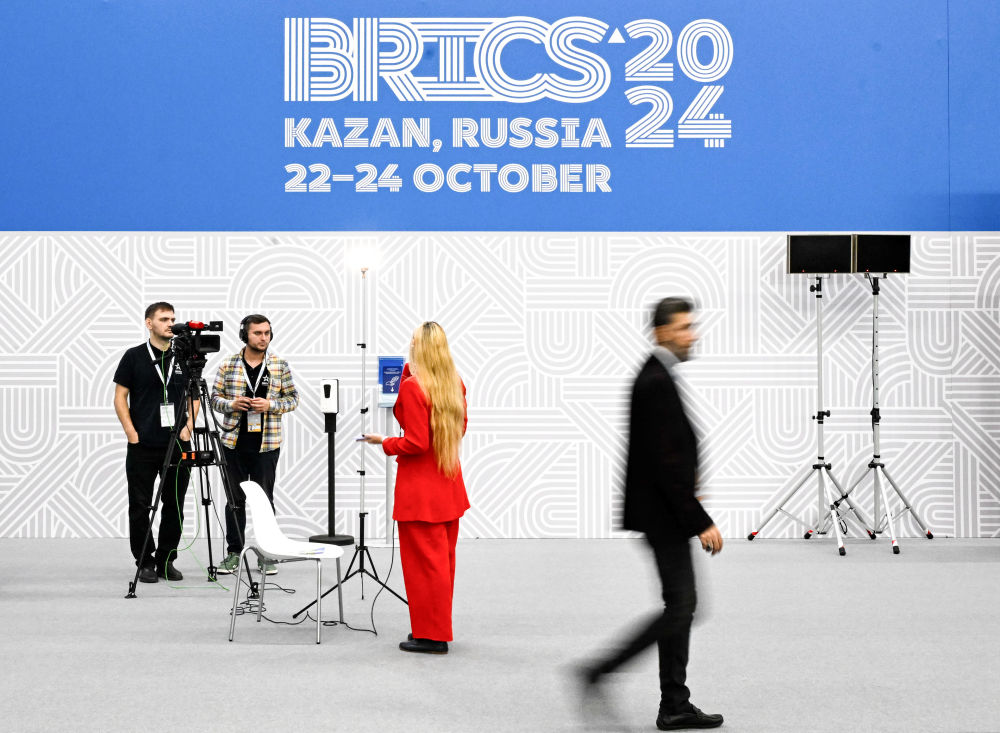
10月22日至24日,金磚國家領導人第十六次會晤在俄羅斯喀山舉行,各國媒體齊聚喀山,聚焦“金磚”。 新華社
第二,所有專家提出的方案實際上都遵循了從易到難、從具體到細節的邏輯。我們不應一開始就追求完全替代性的結算性共同貨幣,因為共同貨幣的權重和定價機制極為複雜。我們可以像唐曉陽主任講的那樣,先實現短期利益,吸引各國參與,在此基礎上推動相互合作和結算體系的發展。全球南方通過金磚機制的合作實際上是一場革命,金磚實際上是革命的平台,旨在解決當前直接制裁和次級制裁對我們發展機會的剝奪和威脅。對中國和俄羅斯而言,直接制裁不是問題,然而,美國基於其權力網絡建立的次級制裁體系,構成了一張剝奪發展中國家的優勢的網。因此,關於中俄經貿合作的水平和目前的變化的公開數據,大部分都不太準確。
實際上,中國海關提供的數據很多時候低估了中俄貿易。去年中俄經貿合作的貿易總額是2401億美元,但是這一數字並不包括通過吉爾吉斯斯坦、哈薩克斯坦、亞美尼亞、烏茲別克斯坦、土耳其、阿聯酋等國轉口至俄羅斯的貿易額,如果把這些貿易額納入統計,總額可能接近3000億美元。去年,俄羅斯對外貿易72%來自亞洲,其中許多亞洲國家和中國的直接貿易、間接貿易,以及中間的生產貿易緊密相連。這表明中俄經貿合作的規模可能比現有數據所顯示的更龐大。
今年1至7月,儘管中俄經貿合作總額呈現增長趨勢,但中國對俄羅斯的出口是負增長(-1.2%)。8月,俄羅斯對中國能源出口有所下降,但管道氣和液化氣的貿易額仍然遠超去年,這是因為俄羅斯在第一季度和第二季度加速對中國的出口。8月的變化與中國國內的經濟形勢有關係,但是影響有限,最主要因素仍是中國對俄出口的結算問題。
中俄經貿合作雙邊層面上也有好消息。2022年之前,中俄經貿合作模式主要以政府為主導、大企業執行項目、小企業跟進,這是是以安全為主導的貿易模式。2022年之後,民營企業家抓住機遇,積極參與貿易,讓中俄貿易就從單一的安全主導向安全和市場雙重主導轉變。這種雙輪驅動是2022年、2023年,乃至2024年中俄貿易額急速增長的源泉。
此外,中俄貿易長期面臨的主要問題是,雖然貿易合作順利,但是投資合作相對滯後,部分由於中俄2006年簽訂的《中華人民共和國政府與俄羅斯聯邦政府關於促進和相互保護投資協定》。今年,李強總理正式訪問俄羅斯,在聯合聲明中表示,該談判已基本結束,有關協議將於今年年底簽署。如果投資合作項目得以實施,以投資帶動貿易,產量將大幅增長,這是好消息。
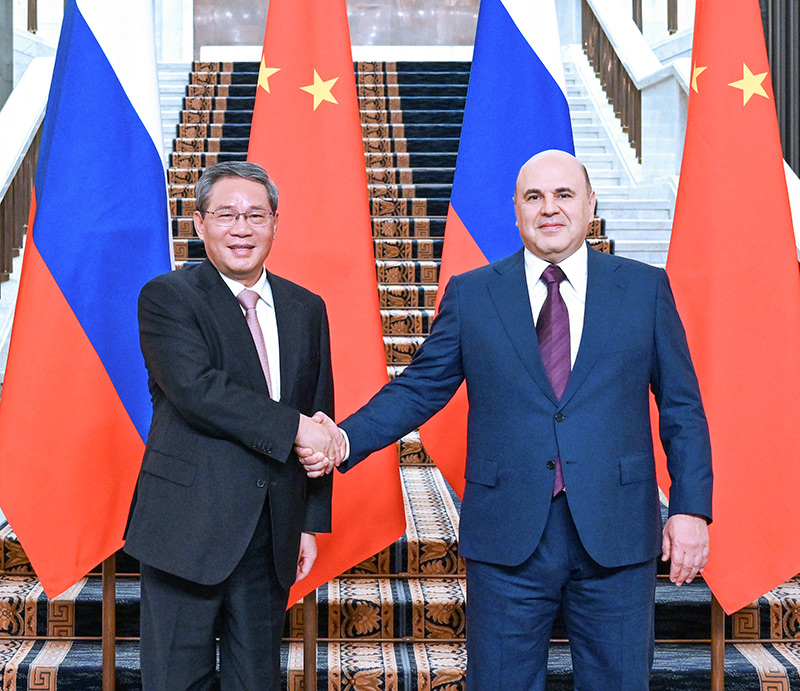
2024年8月21日上午,國務院總理李強在莫斯科同俄羅斯總理米舒斯京共同主持中俄總理第二十九次定期會晤。 新華社
實際上,中俄合作的需求和解決內部問題的途徑,在雙邊層面上已經難以解決了,必須走向多邊。中俄面臨的內外部挑戰和合作條件相對嚴峻。就合作的外部條件而言,中美現在的競爭實際上是決戰式的。美國通過在中國周邊“搞事兒”來遲滯遏制中國的發展。中國通過開放和聯合其它國家,推動再全球化,以應對美國的打壓。然而,目前全球秩序正處於一種混沌狀態,處於後冷戰時期與新秩序形成之前的過渡期。正如去年兩國首腦在討論中指出的,“百年大變局”正在發生,我們需要共同推動其發展。最關鍵的是,儘管美國的霸權地位正在衰弱,但我們不能期待其快速崩潰,因為美國是有韌性的。中國在成長,俄羅斯也在重回大國之路,但是我們還不能決定未來政策主導。
俄羅斯和中國實際上都面臨一些內部挑戰,我們都需要一個和平的發展環境來調理內部問題。俄烏衝突持續延宕,俄羅斯現在還在隧道里,還沒看到曙光。美、西方的制裁是會越來越緊的,對推動經濟增長帶來了嚴峻的挑戰。
中國現在也面臨諸多挑戰,國內經濟不確定性導致了民間投資下降。儘管1至7月中國總投資增長3.6%,出口增長7%,PMI(採購經理人指數)逐步上升,但是民眾和企業家普遍覺得賺錢更為困難,對於未來的預期比較弱。很多南方企業家在對西方的出口下降的時候,轉而開拓俄羅斯市場。佛山今年上半年出口負增長24.6%,我看到這一數據時特別吃驚。
中國處於經濟結構調整和解決問題的關鍵時期。雖然我們面臨預期減弱的問題,但最主要的挑戰還是中美競爭正處於關鍵時期。怎麼解決這個問題?中俄合作為對方的發展提供了條件。過去兩年,俄羅斯運用中俄的經貿合作平台實現了增長,而中國一些商人也通過開發俄羅斯市場獲得了豐厚的回報。但是這種雙邊合作現在遇到了問題,這些問題在雙邊層面上難以解決。

2024年1月29日,中俄代表進行集中籤約136億元合作項目。 新華社
中國在整體戰略佈局上,設立了五年期限,到2029年基本建成高質量的中國特色社會市場經濟體系。我們將通過改革解決內部問題,以擴大開放解決外部挑戰。簡而言之,就是決戰2029。
走向開放和多邊合作的過程中,我們需要注意,中俄各自的側重點有所不同,但我們在許多方面有着共同目標。中國現在的多邊合作機制主要集中在亞太經貿框架內,包括上合、金磚、東盟和RCEP。我們還在發展中亞5+1合作機制,推動中非合作。俄羅斯基本盤是歐亞經濟聯盟、集安條約組織和上合。現在,俄羅斯正重點推動金磚合作,也重視G20和中非合作。普京總統還提出了歐亞安全新框架。
中國和俄羅斯在解決自己內部問題和建立國際聯盟方面,雖然存在差異,但我們在反對美國霸權、推動世界多極化,形成全球南方國家合作機制方面有着共同的目標。在這個機制上,我們可以在多邊平台上反對次級制裁聯盟,否則我們無法解決中俄經貿合作的結算問題,也無法實現我們對其它發展中國家提供機會的承諾。因此,我認為我們從雙邊走向多邊,推動全球秩序的變化,塑造一個對我們雙方都有利的國際環境,是解決這個問題的最佳途徑。
以下為英文譯文:
Abstract: Chinese President Xi Jinping arrived in Kazan to attend the 16th BRICS leaders’ meeting. Earlier, Xu Po Ling, Director of the Russian Economy Room at the Institute of Russian East European and Central Asian Studies of the Chinese Academy of Social Sciences and a senior fellow with Beijing Club for International Dialogue, pointed out that cooperation against sub-sanctions is an important task for BRICS cooperation. Also, although the cooperation between China and Russia in the field of trade continues to show a solid trend, the pace of investment cooperation is relatively slow. He is in favor of expanding to the multilateral level to promote the comprehensive deepening of China-Russia cooperation with a broader vision and richer resources.
I have two points to make in this session. First, compared to the assessment of security, experts seem more optimistic about economic prospects. There is a rather pessimistic outlook when it comes to building new security structures and maintaining existing peace orders. The escalating confrontations among major powers, coupled with the pressure on smaller countries to choose sides, underscore the urgent need to establish a new security order as numerous red lines are being crossed.
On the economic front, although cooperation among BRICS countries still faces many challenges, each speaker proposed suggestions or plans for achieving collaboration and development. I believe that the common logic between security and economics lies in the fact that in conflicts, the risks of major power confrontations and small states choosing sides are very high. However, when establishing cooperative frameworks, especially those outside the U.S. dollar system, smaller nations can benefit from both sides. The efforts of BRICS in the economic sphere illustrate that the economy is a driving force for continued development, and the economic prospects of BRICS appear bright.
We have always advocated that BRICS should not become an antagonistic organization but rather serve as an alternative option. The extent to which this alternative can provide development opportunities for developing countries, particularly those in the Global South, will determine the depth, breadth, and potential success of BRICS. Cooperation within the BRICS framework aims to build an alternative system that may initially be less efficient. As people have comfortably lived within the existing system for a long time, the sudden systemic changes pose challenges. This initial inefficiency requires the support of a shared vision—nations must offer top-down support to offset the costs of business participation and mitigate risks during periods of low efficiency.
Second, all the proposals put forward by the experts follow a logical progression of “from simple to complex” and “from the specific to the detailed”. We should not rush to establish a fully alternative settlement currency at the outset, as the weighting and pricing mechanisms of a common currency are highly complex. Instead, as Director Tang Xiaoyang suggested, we can first achieve short-term gains to attract countries to participate, lay the foundation for further cooperation and the development of settlement systems. Cooperation among the Global South through the BRICS mechanism is, in fact, a revolution. BRICS serves as a revolutionary platform aimed at addressing current direct sanctions and secondary sanctions that deprive us of and threaten our development opportunities. For China and Russia, direct sanctions are not the main issue; rather, the web of secondary sanctions established by the U.S. through its power network poses a significant threat, as it deprives developing countries of their advantages. Thus, countering secondary sanctions is a crucial task for BRICS cooperation.
I believe one possible approach is to establish clauses that ask Western companies and banks that conduct business in Global South markets to be subject to exclusive clauses. Companies that participate in sanctions against BRICS countries should be barred from profiting in the markets of Global South nations. This would ensure that BRICS countries are willing to build a coalition against secondary sanctions. This is an essential and long-term mission.
Public data on the level and recent changes in China-Russia economic and trade cooperation are often inaccurate. In fact, data provided by Chinese customs frequently underestimates the volume of China-Russia trade. Last year, the total trade volume between China and Russia was reported as $240.1 billion, but this figure does not include re-exports to Russia via countries such as Kyrgyzstan, Kazakhstan, Armenia, Uzbekistan, Turkey, and the UAE. Including these would likely bring the total trade volume closer to $300 billion. Last year, 72% of Russia’s foreign trade came from Asia, many of which trade with China through direct and indirect ways, as well as intermediary production. This suggests that the scale of China-Russia economic and trade cooperation could be much larger than the current data indicates.
From January to July this year, although the total trade volume between China and Russia showed a growth trend, China’s exports to Russia declined slightly (-1.2%). In August, Russia’s energy exports to China decreased, but trade volumes of pipeline gas and liquefied natural gas still far exceeded those of last year due to Russia’s accelerating exports to China in the first and second quarters. August’s changes are related to China’s domestic economic situation, but the impact is limited; the main factor remains the settlement issues related to China’s exports to Russia.
On the bilateral level, there is good news for China-Russia economic and trade cooperation. Before 2022, China-Russia economic and trade cooperation mainly followed a government-led model with large enterprises executing projects and small enterprises following suit. This is a security-driven trade model. After 2022, private entrepreneurs seized opportunities and actively engaged in trade, shifting the China-Russia trade model from a purely security-driven approach to one driven by both security and market forces. This dual-driver approach is the source of the rapid growth in China-Russia trade volumes in 2022, 2023, and likely 2024.
However, a long-standing issue in China-Russia trade is that while trade cooperation proceeds smoothly, investment cooperation lags behind, partly due to the 2006 Agreement between the governments of China and Russia on promoting and mutually protecting investments. This year, during Premier Li Qiang’s official visit to Russia, the joint statement noted that negotiations on this agreement are essentially concluded, with the new agreement expected to be signed by the end of the year. If investment cooperation projects are implemented, trade will be driven by investment and the output will increase significantly—this is positive news.
In reality, the need for China-Russia cooperation and resolving respective internal issues are increasingly difficult to address on a bilateral level, necessitating a shift towards multilateral level. The internal and external challenges and conditions for cooperation faced by China and Russia are relatively severe. Regarding external conditions, the U.S.-China competition is effectively a showdown. The U.S. attempts to stymie China’s development through a series of actions in China’s surrounding regions, while China responds by opening up and aligning with other countries to promote re-globalization as a counter to U.S. suppression. However, the current global order is in a state of flux, transitioning between the post-Cold War period and the formation of a new order. As the two leaders from both sides noted in their discussions last year, the world is undergoing “great changes unseen in a century” and we need to jointly promote its development. The key point is that although U.S. hegemony is in decline, we should not expect a rapid collapse because its economy is resilient. China is growing, and Russia is reclaiming its status as a major power, but neither can yet play the leading role in future policymaking.
Both Russia and China face internal challenges and require a peaceful development environment to address domestic issues. Specifically, the ongoing Russia-Ukraine conflict persists without an end in sight. Sanctions from the U.S. and the West are tightening, presenting severe challenges to economic growth.
China faces numerous challenges, with domestic economic uncertainties leading to a decline in private investment. Although China’s overall investment grew by 3.6% and exports by 7% from January to July, and the Purchasing Managers’ Index (PMI) has been gradually rising, people and entrepreneurs generally find it harder to make profits, and expectations for the future remain weak. Many entrepreneurs in Southern China have turned to the Russian market as exports to the West decline. I was particularly surprised to see that exports from Foshan City, Guangdong Province, in the first half of this year decreased by 24.6%.
China is at a critical stage of economic restructuring and problem-solving. Although we face weakened expectations, the primary challenge is that the U.S.-China competition is at a crucial point. How can this problem be solved? China-Russia cooperation offers opportunities for their respective development. Over the past two years, Russia has utilized the China-Russia economic and trade cooperation platform to achieve growth, while some Chinese businesses have also gained substantial returns by exploring the Russian market. However, bilateral cooperation now faces problems that are difficult to resolve at the bilateral level.
China has set a five-year goal in its overall strategic layout to establish a high-quality, socialist market economy with Chinese characteristics by 2029. We plan to address internal issues through reform and external challenges through expanded opening-up. In short, it can be described as “fighting the battle of 2029.”
As we move towards openness and multilateral cooperation, we must recognize that China and Russia have different focal points, but we share many common goals. China’s current multilateral cooperation mechanisms mainly focus on Asia-Pacific economic and trade frameworks, including the SCO, BRICS, ASEAN, and RCEP. We are also developing the Central Asia 5+1 cooperation mechanism and promoting China-Africa cooperation. Russia’s core platforms include the Eurasian Economic Union, the Collective Security Treaty Organization, and the SCO. Currently, Russia is focusing on promoting BRICS cooperation and values G20 and China-Africa cooperation. President Putin has also proposed a new Eurasian security framework.
While China and Russia have different ways of addressing internal issues and enhancing ties with international partners, we share common objectives in opposing U.S. hegemony, promoting multipolarity and forming cooperation mechanisms among Global South countries. As such, we can oppose the secondary sanctions alliance on multilateral platforms; otherwise, we cannot resolve settlement issues in China-Russia economic and trade cooperation, nor fulfill our commitments to providing opportunities to other developing countries. Therefore, I believe that moving from bilateral to multilateral cooperation is the best way to address this issue, as it can drive changes in the global order and shape an international environment beneficial to both of us.
(發言摘自徐坡嶺教授在9月11日舉行的“中俄合作:推動多極世界”對話會上的發言。來自中俄兩國的20多位專家學者齊聚莫斯科,深入討論了全球政治安全格局、金磚國家合作、全球南方發展以及中俄關系等重要議題。此次對話會由北京對話和俄羅斯國際事務委員會聯合主辦)