比利亞娜·萬科夫斯卡:“為什麼選舉本身也會成為一種安全威脅?”
guancha
【文/觀察者網專欄作者 比利亞娜·萬科夫斯卡,翻譯/ 薛凱桓】
著名的弗朗西斯·福山(Francis Fukuyama)在最近一篇文章中,簡要論述了2024年這個“選舉年”。事實上,統計數據顯示,今年大多數國家都舉行了某種形式的選舉。我瀏覽了一下這篇文章,看看有沒有提到我的國家北馬其頓(畢竟我是總統候選人),但並沒有。
與大多數其他分析家一樣,福山關注的焦點是美國的“哈姆雷特式選舉”。公民們會選擇唐納德·特朗普還是將成為首位女總統的副總統卡馬拉·哈里斯?這似乎是美國和國際社會爭論的焦點問題,似乎世界的命運取決於誰入主白宮。在全球危機四伏、全人類有可能迎來悲慘結局的時刻,這種情緒尤為強烈。然而,儘管這一事件備受關注,但並非所有人都認為它將決定所有人的命運。
上海復旦大學的張維為教授提出了一個有趣的觀點。他認為這出美國大戲(或者可以稱為美國悲劇,因為這兩個人在政治上是唯一的選擇)反映了美國體制的弱點,其特點是奇葩化、兩極化、侮辱性和全民標籤化。他還指出,這種情況在中國是不可能發生的——不是因為中國是一黨制國家,而是因為黨內高層領導的選拔過程非常嚴格,無論誰領導國家,都能確保他們是在為公眾利益服務方面久經考驗的人。
來自德黑蘭的穆罕默德·馬蘭迪(Mohammad Marandi)教授也發表了有趣的評論,他提到《紐約時報》的一篇分析文章認為伊朗插手甚至直接干涉美國選舉。他説,伊朗人絕不會支持這兩個“瘋子”中的任何一個,因為他們都同樣支持種族滅絕。
諾姆·喬姆斯基(Noam Chomsky)曾對美國兩大政黨有過一個著名的描述:美國公民不得不在百事可樂和可口可樂之間做出選擇,這實在令人羨慕。傑弗裏·薩克斯(Jeffrey Sachs)最近在劍橋大學的一次演講中,也表達了同樣的觀點,甚至有過之而無不及。
他表示,雖然他傳統上傾向於民主黨,但他再也無法原諒他們了,因為他們對烏克蘭和巴勒斯坦問題——這一威脅全球和平與安全的兩大危機負有直接責任。但是,大多數人——即使是在學術界——出於純粹的絕望,會選擇他們認為較輕的邪惡,而哈里斯似乎在受過教育的人當中佔了優勢。
我同情他們,也理解他們,但令我惱火的是,他們甚至還在美化較輕的邪惡(實質上,這仍然是邪惡——他們對此心知肚明)。我有一位在加利福尼亞州從事和平問題研究的同事,我在他的社交媒體個人主頁上對此發表了評論,結果卻被取消了好友關係。顯然,我觸動了他的神經,因為我的評論(當然我要為此道歉,儘管這個國家在巴爾幹半島給我們帶來了很多苦難)得到了他的一些粉絲的支持。無論如何,與美國社會未來的發展相比,這只是一個小插曲。
在這裏我們不難得出這樣的結論:無論(選舉)結果如何,都將導致(美國的)合法性危機,並給已經兩極分化的美國社會帶來內部動盪。我記得小布什贏得第二任期時,儘管他推行了災難性的政策,但我們中的許多人安慰自己,認為這是朝着結束那些不可持續的政策邁出的一步,也許也是朝着帝國衰落邁出的一步。
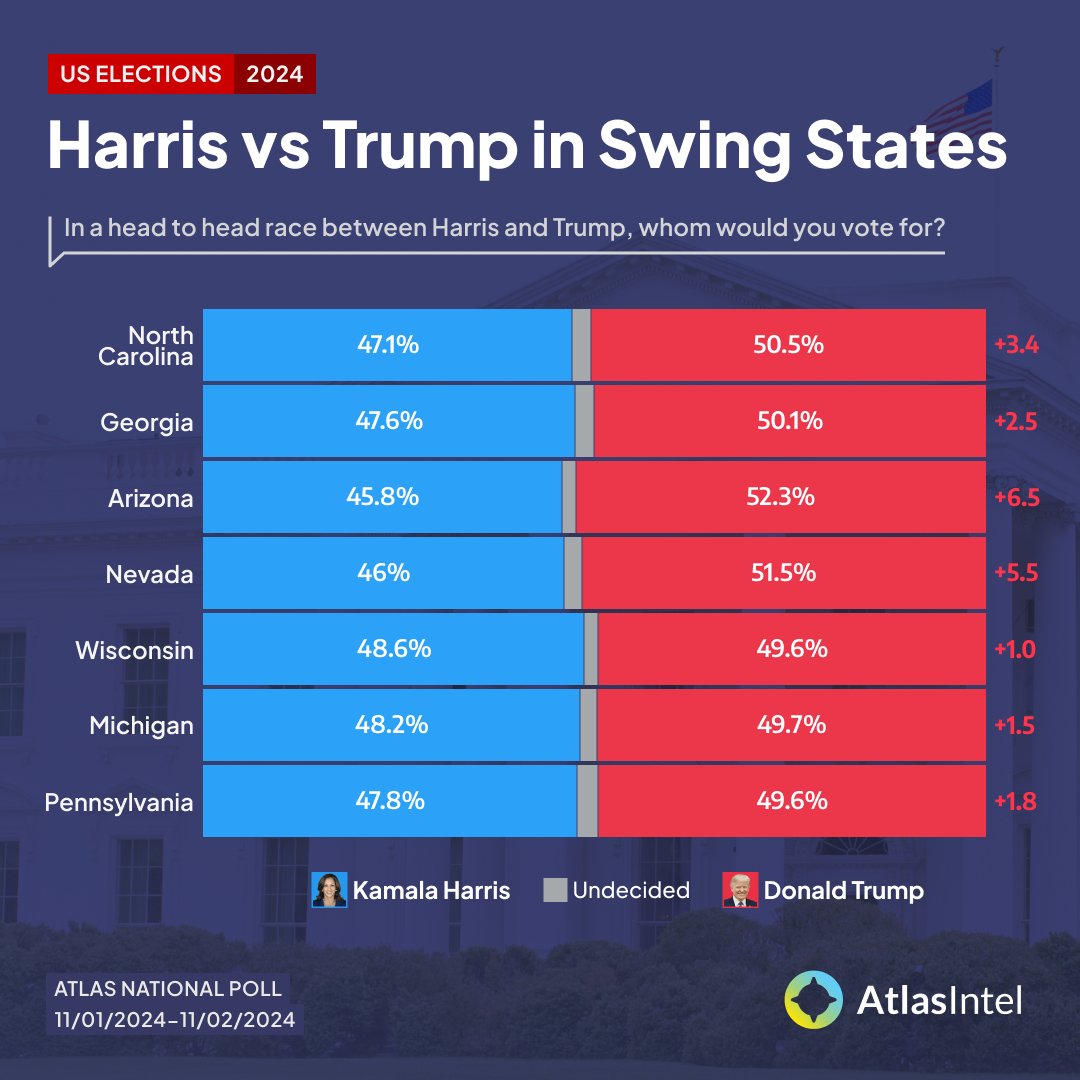
巴西民調機構AtlasIntel發佈的11月初七大搖擺州民調數據AtlasIntel
但這樣的過程——就像建立不同的世界秩序一樣——是漫長的,我們永遠無法準確預測這個過程何時或如何結束,以及會產生什麼樣的後果……這些後果將不可避免地以同心圓的方式向外漣漪,從國家舞台蔓延到全球舞台。
熟悉美國政治的人(在此我要再次提到傑弗裏·薩克斯,他幾十年來一直與政治精英們保持着密切聯繫,受到他們的尊敬)都知道,儘管有這麼多奇特現象,但美國總統並不是真正的權力中心。國家是由其他人管理的,而公眾關注的是總統個人和其性格特徵。這種“民族安全國家”(一個西方學術概念,與“民主國家”相對立,通常被用於標籤化或污名化與西式民主不同的國家體制)或者説軍工-媒體-學術複合體,正是美國缺乏真正民主的根本原因。
儘管美國是這個世界上最富裕的國家,其關於社會凝聚力以及在公共福利等關鍵問題上的社會契約都處於混亂狀態,但政府機構卻能確保自身的生存和延續。仔細分析不難發現,拜登政府在許多方面只是延續了特朗普第一任期的政策。同樣,如果特朗普現在獲勝,也很難指望他會帶來任何重大的、積極的變化,尤其是在外交政策方面。
儘管民主黨意識到了體制的裂痕和變革的必要性,但他們還是想盡一切辦法來維持這個功能失調的體制,甚至不遺餘力地對其進行軍事化,乃至到了自我毀滅的集體歇斯底里的地步。就在大選前幾天,他們還派出了一支強大的軍事特遣隊去“保衞”以色列,彷彿戰爭是他們的擋箭牌,就像試圖攻擊他們的競爭對手一樣(常常被拿出來説事)。我認識一些德高望重的民主黨支持者,他們對拜登和哈里斯的最新舉動感到沮喪,甚至在問自己:這些人到底還想不想贏?
然而,美國教授弗拉基米爾·戈爾茨坦(Vladimir Goldstein)等更明智的分析家,則不太關注對選舉的預測和對賭,而是更注重研究當前氣氛背後的深層原因,即為什麼選舉本身已經快要被視為一種安全威脅?
戈爾斯坦道出了特朗普吸引美國社會底層民眾的秘密。在特朗普大量未經思考的言論中(通常來自一個支離破碎的頭腦),每個人都能聽到自己想要的東西。最重要的是,他所傳遞的信息能引起普通選民的共鳴,其中包括針對移民的國家安全呼聲、孤立主義、以美國自身為中心等議題,以及通貨膨脹、住房稀缺、資助外國戰爭和國家的預算消耗等問題。
戈爾斯坦抓住了普通美國人的核心困境:為什麼我們要在國外打仗,而不是在國內再造繁榮?然而,高薪聘請的、往往是偽專家的分析師們卻堅持認為,美國有責任進行海外干預,而不應優先考慮國內事項。
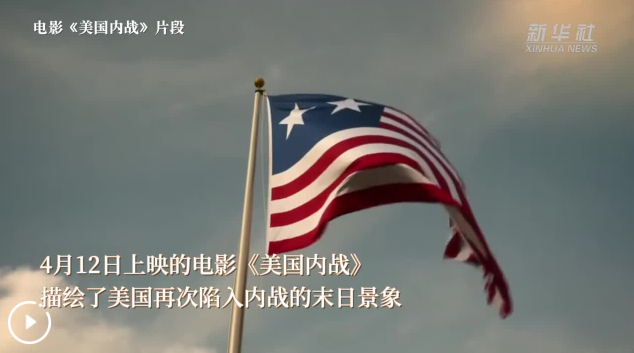
圖片來源:新華社
長期以來,任何對此提出質疑的人,都會被貼上法西斯主義者、狂熱分子或是“無知大眾”等標籤。這種受精英主義驅使、被意識形態矇蔽的自由主義偽民主精英,對特朗普或類似人物所體現的(民粹)反彈負有直接責任。但凡還有一絲常識,就還有人會傾聽憤怒者、被遺棄者、失望者和底層窮人的聲音,重新考慮美國外交和國內政策的優先事項——以免為時已晚。
美國的制度就像一條古老的大蛇,在獵物氣味的誘惑下吞食着自己的尾巴,對自我毀滅的後果熟視無睹。這種對權力和控制的慾望壓倒了理性判斷,使系統陷入自我毀滅的循環。有些人認為這會導致美國的自我毀滅;有些人則認為這是一個無休止的生死輪迴,但無論如何,結果都不會太好。這次選舉不會使美國成為一個更宜居、更體面的公民居住地,也不會誕生一個更明智的全球政治參與者。相反,它只會成為美國悲劇下一階段的前奏。
帝國不會無聲無息地消亡,它們會試圖掙扎、反抗,並試圖掌權到最後,結果往往會留下滿目瘡痍——擁有巨大影響力的美國也不例外。它的內部分裂和兩極分化顯而易見,但其全球影響力意味着其鬥爭不可避免地會影響到其國界以外的地區。隨着其他地區和大國的崛起,我們目睹了全球力量的重組變化,問題不僅在於美國的發展軌跡,還在於世界其他地區將如何經受這些震盪,並重塑自身以做出回應。
因此,無論我們是否願意,我們都不僅僅是旁觀者,而是深深地捲入了帝國衰落的動態發展之中。歷史告訴我們,帝國很少會安靜地進入黑夜。
英文原文:
In a recent article, (in)famous Francis Fukuyama briefly discusses 2024 as the “year of elections.” Indeed, statistics show that this year, most countries have held some kind of election. I browsed through the article to see if there was any mention of my country Macedonia (after all I was a presidential candidate); in vain. Like most other analysts, Fukuyama focuses on the “Hamletian choice” in the U.S.
Will the citizens choose Donald Trump or Vice President Kamala Harris, who would become the first female president? This appears to be the pivotal question in both American and international debates, as if the world’s fate hinges on the individual who enters the White House. This sentiment is particularly intensified in a time of global crisis, which threatens to bring about a tragic end for all humankind. However, while the event is of high interest, not everyone considers it to be decisive.
The rest of the world (the global majority) has already decided not to tie its fate to the chaos and political fervor in the U.S. Professor Zhang Weiwei from Fudan University in Shanghai offered an interesting perspective. He sees this American drama (or American tragedy, with these two figures posing as the only political options) as a reflection of the system’s weaknesses, characterized by spectacle, polarization, insults, and the labeling of entire populations.
He rightly points out that such a scenario would be impossible in China—not because it’s a one-party state, but because the selection process for high party leadership is so rigorous that, whoever heads the country, it’s assured that they are someone proven in serving the public good.
Professor Mohammad Marandi from Tehran also offered an interesting comment, referring to a New York Times analysis that suggested Iran was rooting for or even meddling in American elections. He remarks that Iranians would never favor either of these “maniacal figures,” as both equally support genocide.
It’s hard to envy American citizens for having to choose between Pepsi and Coca-Cola, as Noam Chomsky once famously described the two major parties. In a recent talk at Cambridge, Jeffrey Sachs echoed the same sentiment, even taking it a step further. He stated that although he’s traditionally leaned toward the Democrats, he can no longer forgive them, as they are directly responsible for the two major crises threatening global peace and security: Ukraine and Palestine.
But most people—even within academia—out of sheer desperation, choose what they perceive as the lesser evil, and it seems Kamala has the edge among the educated.
I sympathize with them, I understand them, but what irritates me is the need to beautify even the lesser evil (which, in essence, remains evil—and they know it well). I commented on this on a California peace studies colleague’s social media profile—and ended up getting unfriended.
Apparently, I hit a nerve, as my comments (apologizing, of course, for interfering in another country’s elections, though that country has caused us plenty of grief here in the Balkans) began receiving support from some of his followers. Anyway, this is a minor episode compared to what lies ahead for American society.
It’s not hard to conclude that whatever the outcome, it will lead to a legitimacy crisis and internal instability in an already polarized society. I recall when George W. Bush won his second term, despite the disastrous policies he pursued. Many of us consoled ourselves, thinking that this was a step toward ending those unsustainable policies and perhaps a step closer to the fall of the Empire.
But such processes—just like the building of a different world order—are lengthy, and we can never predict with certainty when or how they will conclude. And with what consequences… which will inevitably ripple outward in concentric circles, from the national to the global stage.
Those familiar with American politics (and here I’ll again mention Jeffrey Sachs, a man who has spent decades closely connected with, or respected by, the political elite) know that, despite all the spectacle, the U.S. president is not the true center of power.
The country is managed by others while the public focuses on personalities and character traits. This “national security state” or the military-industrial-media-academic complex is the very reason for the lack of genuine democracy. Although social cohesion is in disarray, along with the social contract on key issues of public welfare in one of the world’s wealthiest nations, the apparatus that governs ensures its own survival and continuity.
A closer analysis would easily reveal how, in numerous ways, the Biden administration has simply extended Trump’s policies from his first term. Likewise, it’s hard to expect that if Trump wins now, he would bring any significant (positive) changes, especially in foreign policy.
Although aware of the fractures in the system and the necessity for change, the Democrats have done everything possible to sustain this dysfunctional system, even to the point of a self-destructive collective hysteria with their relentless militarization.
Just days before the election, they’re sending a strong military contingent to “defend” Israel, as if war were their trump card, just as attempted attacks on their rival candidate were. I know respected Democrat supporters who are disheartened by Biden and Harris’s latest moves and are even asking themselves: do these people even want to win?
However, wiser analysts, such as American professor Vladimir Goldstein, focus less on predictions and bets and more on examining the deeper reasons behind the current climate—namely, why the election itself is perceived almost as a security threat. Goldstein speaks to the secret of Trump’s appeal to the lower social classes in American society.
Amid the flood of unfiltered statements from Trump (often from a fragmented mind), each person hears what they want. Above all, his messages that resonate with the average voter include calls for national security against migrants, an isolationist, self-centered agenda, and issues like inflation, housing scarcity, and budget drain for funding foreign wars and countries.
Goldstein captures the core dilemma of the average American: why do we fight wars abroad instead of securing prosperity here at home? Yet well-paid, often pseudo-expert analysts insist that the U.S. has a duty to intervene overseas, dismissing domestic priorities.
Anyone who questions this has long been labeled a fascist, a fanatic, or simply part of the “ignorant masses.” This liberal, quasi-democratic elite—driven by elitism and blinded by ideology—is directly responsible for the backlash embodied by Trump or similar figures.
If there was even a shred of common sense left, someone might listen to the voices of the angry, the abandoned, the disappointed, and the poor at the bottom, and reconsider the priorities of both foreign and domestic policy—before it’s too late.
The American system is ensnared, resembling the ancient Ouroboros, a serpent that, lured by the scent of its prey, consumes its own tail, oblivious to the self-destructive consequences. This lust for power and control overrides rational judgment, trapping the system in a self-defeating cycle. Some see this as leading to self-destruction; others view it as an endless cycle of life and death. Either way, the outcome is grim.
Tomorrow’s election won’t turn the U.S. into a more livable, decent place for its citizens, nor will it produce a more sensible global player. Instead, it will serve merely as a prelude to the next phase of the American tragedy.
Empires do not fade quietly; they thrash, resist, and attempt to hold on to power until the end, often leaving devastation in their wake. The United States, with its vast influence, is no exception. Its internal fractures and polarizations are evident, yet its global reach means that its struggles inevitably affect regions far beyond its borders.
As we witness shifts in global power, with other regions and powers rising, the question becomes not only about the trajectory of the U.S. but about how the rest of the world will weather these tremors and reshape itself in response.
Thus, we are not just spectators but are deeply involved, whether we like it or not, in the unfolding dynamics of a declining empire. And as history has shown us, empires rarely go quietly into the night.

本文系觀察者網獨家稿件,文章內容純屬作者個人觀點,不代表平台觀點,未經授權,不得轉載,否則將追究法律責任。關注觀察者網微信guanchacn,每日閲讀趣味文章。