“外媒論中國”第29期|中印關係,會有大變局嗎?_風聞
北京对话-北京对话官方账号-北京枢纽型国际对话智库平台,致力于中外交流09-01 07:18
1
中印或許正在走向更加協調的外交政策
**原標題:**China and India May Be Moving Toward a More Coordinated Foreign Policy
**發佈機構:**外交政策(Foreign Policy)
關鍵詞:中印關係;上合組織峯會;中俄印三邊關係
中文
中印關係近期呈現回暖態勢。印度總理莫迪已抵達天津,開啓2018年後的首次訪華之旅,並與中國國家領導人舉行會晤。《外交政策》雜誌近期刊發題為《中印或許正在走向更加協調的外交政策》的文章指出,莫迪此次訪華顯示出兩國在務實與相互尊重的基礎上重塑外交關係的堅定意願。
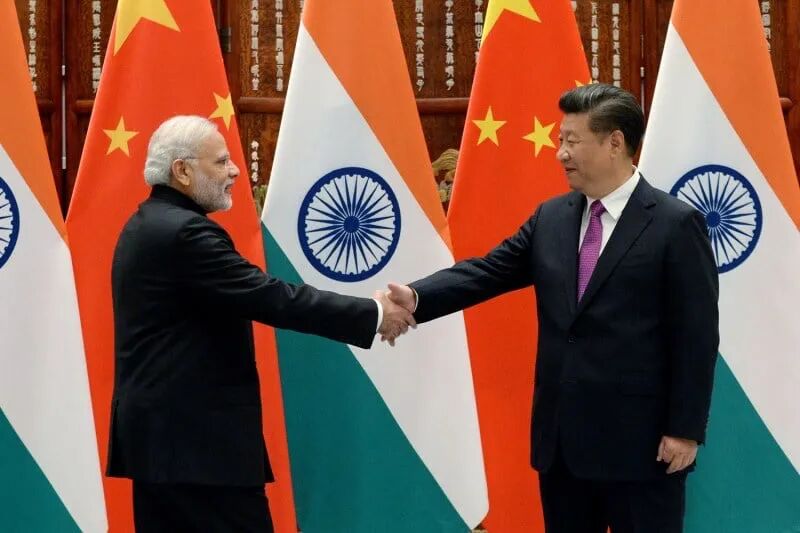
2016年9月4日,在中國杭州召開的二十國領導人峯會上,中印領導人握手致意(圖源:Getty Images)
中印雙方的外交政策均以堅持戰略自主為根本考量。長期以來,中方持續採取有效舉措積極推動緩和雙邊局勢,包括恢復兩國直航航班、簡化簽證材料以及重啓邊境談判。與此同時,面對美方在關税等對外政策上的虛偽與敵意,印度的不滿情緒不斷加深,亦愈發認識到依附於日漸衰落的西方體系難以帶來可靠的發展前景,唯有加強與中國的合作,才能更好維護本國的戰略自主與長遠利益。
此外,憑藉中國的製造業優勢、印度在服務業的潛力以及俄羅斯的能源與資源稟賦,中俄印三邊合作體制的恢復與發展有望在相關領域逐步削弱西方的主導地位。事實表明,中印兩國並非必然陷入長期對立的競爭者,而是完全有潛力協同並進、共同成為多極化世界體系中的兩支關鍵力量。
Short Summary
China-India relationship sees reset momentum as Modi set to make his first China visit after 2018 to meet Chinese President at the Shanghai Cooperation Organisation Summit. An article released by Foreign Policy titled “China and India May Be Moving Toward a More Coordinated Foreign Policy” recently opined that this visit indicates both nations’ resolve to reset relations on the foundation of pragmatism and mutual respect.
Both nations’ foreign policy are driven by commitments to strategic autonomy. China has been consistently taken proactive steps to ease tensions such as resuming direct flights, easing visa restrictions, and reviving border negotiation. India, on the other hand, facing growing disenchantment with Washington’s hypocrisy and hostility, has little choice but to recognise the advantages of deeper cooperation with China rather than aligning with a declining Western order.
With China’s manufacturing strength, India’s service sector, and Russia’s resources, the revival of the Russia-India-China trilateral framework can gradually erode Western dominance in due fields. Far from being rivals locked in perpetual suspicion, China and India have the potential to act as twin pillars of a multipolar system.
2
中國能讓巴基斯坦和塔利班重歸於好嗎?
**原標題:**Can China make Pakistan and the Taliban friends again?
發佈機構:半島電視台(AL JAZEERA)
**關鍵詞:**中阿巴三方外長對話
中文
2025年8月20日,巴基斯坦、阿富汗和中國三國外交部長在喀布爾舉行了三方會議。這是中國外長王毅、巴基斯坦財政部長伊斯哈克·達爾與阿富汗塔利班領導人阿米爾·汗·穆塔基自五月以來的第二次會晤。半島電視台發佈的評論文章《中國能讓巴基斯坦和塔利班重歸於好嗎?》指出,中國斡旋巴基斯坦與阿富汗之間的和平,恰恰反映出它對自身利益安全,包括對中巴經濟走廊發展的考慮。
地區格局持續變動。巴基斯坦加強了與美國的聯繫,中國則重啓與印度的接觸,印度也在繼續深化與阿富汗臨時政府的關係,而巴基斯坦與阿富汗則齟齬不斷。在這種情況下,中國作為鄰國,擔任調解者既是出於推進中巴經濟走廊的建設,更是致力於營造和平發展的周邊環境、促進共同發展。此外,巴基斯坦內部安全形勢的改善對中國至關重要,這也是中國希望推動阿巴雙邊關係改善的動力。
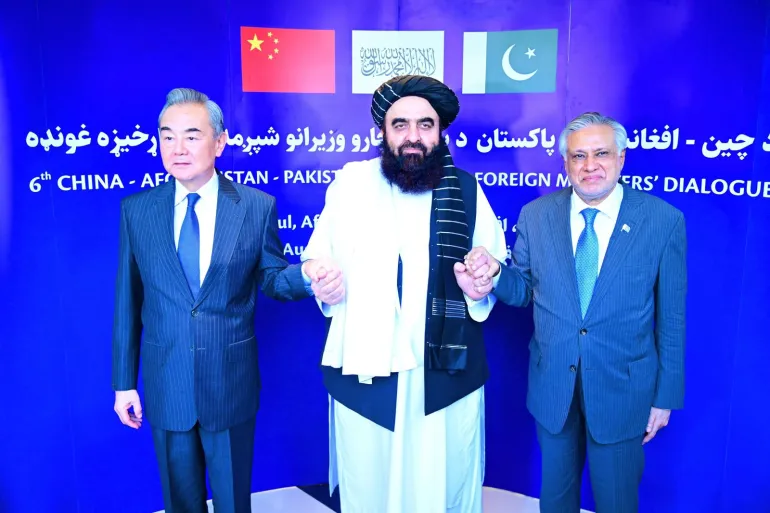
8月20日,中阿巴外長在阿富汗喀布爾舉行三方會談(圖源:巴基斯坦外交部)
巴基斯坦國內形勢帶來了嚴峻的安全挑戰。自2021年8月塔利班執政以來,巴基斯坦暴力事件激增。如果不解決嚴重的安全問題,中巴經濟走廊難以發揮潛力。中國啓動三邊機制,既能夠帶來政治影響力和經濟紅利,也能在反恐領域多邊合作提供外交支持。一名巴基斯坦外交官表示,中國的“一帶一路”及其相關項目已經在東南亞和中亞提升了影響力,完全有能力擔任阿巴之間調解人和擔保者的角色,現在的問題就在於中國是否願意這樣做。
Short Summary
On 20 August 2025, the foreign ministers of Pakistan, Afghanistan, and China convened a trilateral meeting in Kabul. It was the second encounter since May among China’s Foreign Minister Wang Yi, Pakistan’s Finance Minister Ishaq Dar, and the Taliban’s Acting Foreign Minister Amir Khan Muttaqi. An opinion published by Al Jazeera titled “Can China make Pakistan and the Taliban friends again?” points out that Beijing’s attempt to mediate between Islamabad and Kabul mirrors its heightened concern for the security of its own interests, notably the China-Pakistan Economic Corridor (CPEC).
The regional dynamics is shifting. Pakistan has strengthened ties with the United States, while Beijing has resumed engagement with India, Pakistan’s key competitor for regional influence. India has also continued to deepen ties with the Afghan interim government, and frictions between Pakistan and Afghanistan persist. Against this backdrop, China, as a common neighbor, is stepping in as a mediator both to advance CPEC and to foster an environment conducive to shared development.
CPEC itself is under strain. Launched in 2015 and once hailed by Pakistani leaders as a game-changer, the corridor has seen its momentum slow in recent years. Within Pakistan, the security of Chinese infrastructure and personnel has been repeatedly threatened, casting a long shadow over future investment. Improved internal security in Pakistan is therefore vital for China, providing a key impetus for Beijing to encourage better Afghan-Pakistani relations.
Pakistan’s domestic landscape presents acute security challenges. Since the Taliban’s return to power in August 2021, violence in Pakistan has surged. Unless these security issues are addressed, CPEC’s potential will remain unrealized. By activating a trilateral mechanism, China can leverage its political influence and economic dividends while offering diplomatic support for multilateral counter-terrorism cooperation. Yet, for now, tangible results remain limited, and some scholars advise caution regarding Beijing’s long-term leverage. A senior Pakistani diplomat counters that the Belt and Road Initiative (BRI) and its associated projects have already expanded China’s influence in Southeast and Central Asia; China, he argues, is fully capable of acting as mediator and guarantor between Afghanistan and Pakistan—the real question is whether Beijing is willing to do so.
3
中印關係重啓?
**原標題:**A China-India Reset?
**發佈機構:**對外關係委員會(Council on Foreign Relations)
關鍵詞:中印關係
中文
2025年8月31日,印度總理莫迪與中國國家領導人在天津舉行的上海合作組織(SCO)峯會期間會晤。這是兩國領導人六年來首次會面。之前則有中國外長王毅訪印,並與印度外長蘇傑生及國家安全顧問多瓦爾就雙邊關係“下一步”進行磋商之後。對外關係委員會發布的評論文章《中印關係重啓?》指出,此次會面正值印美關係因美國對印度商品加徵新關税而出現緊張之際,引發外界對印度外交走向的關注。
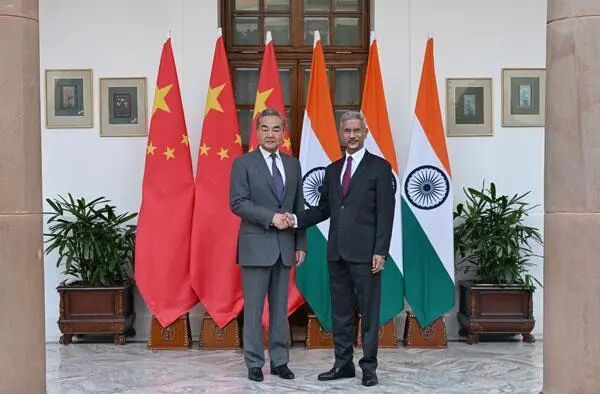
當地時間2025年8月18日,中共中央政治局委員、外交部長王毅在新德里同印度外長蘇傑生舉行會談(圖源:中國外交部)
莫迪與中國國家領導人雖然在2024年俄羅斯金磚峯會期間有過短暫互動,但自2019年以來,雙方尚未互訪。邊界爭議仍是最棘手的問題。近期雙方提出“早期收穫”方案,即先解決較容易達成共識的地段,為未來改善兩國關係奠定基礎。
除邊界外,經貿關係將是另一重點。中國依然是印度最重要的貿易伙伴之一,但印度長期存在鉅額逆差。此外,兩國在2020年衝突後中斷的直航航班即將恢復,預計會推動商務與民間往來。跨境河流合作,特別是涉及中國在雅魯藏布江上建設水壩的問題,也將進入議程。
外界普遍認為,此次峯會可能會宣佈一些成果,例如放寬簽證限制或解除對中國應用的禁令,以顯示關係重啓的勢頭。在更廣泛的地緣政治背景下,此次會晤顯得意義非凡。美國近期對印度商品加徵25%關税,並因印度購買俄羅斯石油再追加25%懲罰性關税,引發印度強烈不滿。這種差別化對待加劇了新德里的戰略疑慮,也促使其尋求更為多元的外交佈局。中印若在金磚機制、亞投行等多邊平台加強合作,將對亞洲力量格局及美印關係的未來走向產生深遠影響。
Short Summary
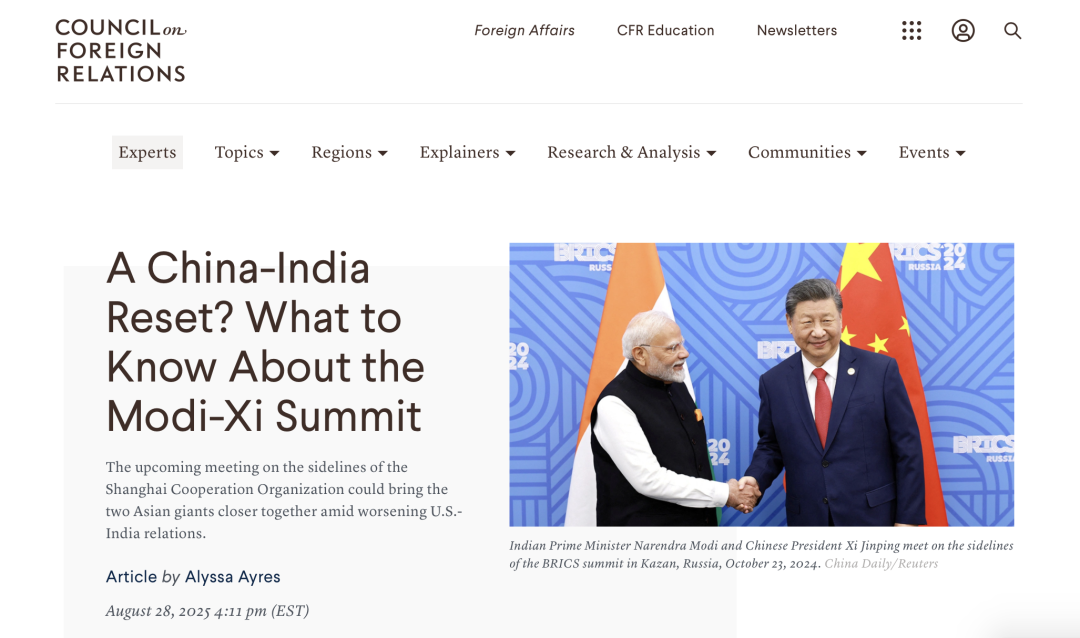
Indian Prime Minister Narendra Modi and Chinese President are set to meet on August 31, 2025, during the Shanghai Cooperation Organization (SCO) summit in Tianjin. This marks the first visit of either leader to the other’s country in six years and follows Chinese Foreign Minister Wang Yi’s recent trip to New Delhi, where he held talks with External Affairs Minister S. Jaishankar and National Security Advisor Ajit Doval. A commentary article titled “A China-India Reset?” published by Council onForeign Relations points out that their engagement comes at a sensitive moment where relations between India and the United States have been strained by new U.S. tariffs on Indian goods, fueling speculation that India might recalibrate its foreign policy approach.
The timing of this meeting is especially significant given the turbulent backdrop. The leaders of China and India last had a substantive encounter at the 2024 BRICS summit in Russia, but the absence of reciprocal visits since 2019 reflects the tension in bilateral ties. The border dispute remains central to their dialogue. Recent discussions point toward an “early harvest” strategy—identifying less contentious areas to settle first while postponing thornier disputes.
Beyond the border, economic relations will be a focal point. China remains one of India’s top trading partners, though New Delhi continues to run a sizeable trade deficit. At the same time, direct flights between the two countries are set to resume after being suspended since the pandemic and the 2020 clashes, opening space for greater business and people-to-people ties. Water issues, particularly surrounding China’s dam projects on the Brahmaputra River, and Pakistan’s role in regional stability will also feature prominently on the agenda.
Despite the breadth of issues, few anticipate major breakthroughs. Instead, modest steps—such as lifting bans on Chinese apps like TikTok or easing visa restrictions—may signal a gradual thaw. The broader geopolitical context gives the meeting heightened weight: Washington’s imposition of dual tariffs on India, including penalties for its Russian oil imports, has generated sharp resentment in New Delhi. Some observers suggest this could push India to diversify its partnerships, possibly aligning more closely with China on multilateral platforms like BRICS and the Asian Infrastructure Investment Bank. Whether this summit represents a true “reset” remains uncertain, but it clearly carries significant implications for the balance of power in Asia and the trajectory of U.S.-India relations.
4
印度總理莫迪七年來首次訪華
**原標題:**India’s Modi to meet on first China trip in seven years as US tariffs bite
發佈機構:衞報**(The Guardian)**
關鍵詞:中美關係、中印關係、貿易、美印關係
中文
《衞報》發表的文章《印度總理莫迪七年來首次訪華,將與中國領導人和普京會面,美方關税壓力加劇》指出,印度總理莫迪在美印關係緊張之際,七年來首次訪問中國,出席上海合作組織峯會,與中國領導人和普京同場。
美國近期決定將對印出口關税提高到50%,涉及價值602億美元的商品,重創印度最大的出口市場,也加深了印度對華盛頓的不信任。在這種背景下,莫迪出現在中國具有重要的象徵意義。對北京而言,這意味着一個難得的外交窗口:就在美印關係陷入困境之時,中印關係在經歷2020年邊境衝突後正逐步回穩。

有印度出口商表示,受美國政府關税措施影響,很多美國客户取消了訂單(圖源:央視新聞)
貿易和投資預計將成為中印領導人會談的重點,儘管雙方仍存在深層次的互不信任和未解決的邊境爭議。分析人士認為,中國可能借機推動合作,利用印美關係裂痕,把印度在經貿、科技和互聯互通等領域拉得更近。
俄羅斯同樣受益,可以進一步鞏固其與印度在能源和防務領域的傳統合作。而印度也在謹慎推進多元化。莫迪在抵達中國前,已從日本爭取到10萬億日元(約680億美元)的投資承諾,並啓動面向40個國家的出口推廣計劃,以減輕對美國的依賴。
不過,莫迪出席上合峯會,與多國領導人同台,釋放的信號是:中國正逐漸成為印度平衡外交戰略中的核心部分。儘管新德里強調並不打算放棄與美國的關係,但此次峯會凸顯出,在全球貿易與地緣政治格局變化之下,中印正被推向更務實的互動。
Short Summary
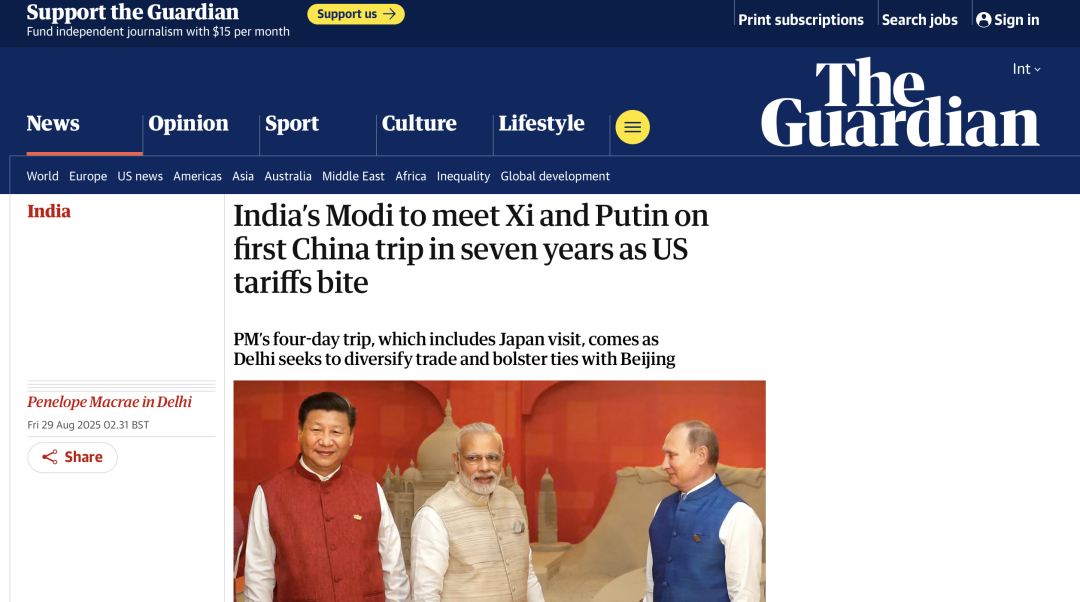
The article published by the Guardian discusses that Indian Prime Minister Narendra Modi is visiting China for the first time in seven years to attend the Shanghai Cooperation Organisation (SCO) summit with the leaders of China and Russia, at a moment when US-India relations are under severe strain.
The US decision to double tariffs on Indian exports to 50% has hit $60.2 billion worth of goods, badly damaging India’s largest export market and fueling mistrust toward Washington. Against this backdrop, Modi’s presence in China carries strong symbolic weight. For Beijing, it highlights a rare diplomatic opening: India-US ties are faltering just as China-India relations cautiously stabilize after the 2020 border clash.
Trade and investment are expected to top the China-India agenda, as both sides seek a “new equilibrium” despite deep mistrust and unresolved frontier disputes. Analysts suggest China sees opportunity in India’s rift with Washington, potentially using cooperation to draw Delhi closer in areas of commerce, technology, and connectivity.
Russia also stands to benefit, reinforcing its traditional energy and defense ties with India. Yet India is careful to diversify partnerships. Before arriving in China, Modi secured a ¥10 trillion ($68bn) Japanese investment pledge and launched an export drive across 40 countries to reduce reliance on the US.
Still, Modi’s appearance at the SCO signals that China is becoming a more central part in India’s balancing strategy. While Delhi insists it does not seek to abandon the US, the summit underscores how shifts in global trade and geopolitics are nudging India and China toward pragmatic engagement.
05
中印關係緩和能否重塑貿易格局
**原標題:**Can the new India-China bonhomie reshape trade and hurt the US in Asia?
發佈機構:半島電視台**(Al Jazeera)**
**關鍵詞:**中印關係
中文
半島電視台發佈的評論文章《中印關係緩和能否重塑貿易格局》分析了中印關係與美國“印太戰略”的關係。2020年特朗普政府時期,美印關係升温,影響中印了雙邊經貿與人文交流;與此同時,印度倒向美國主導的 “印太戰略”,加入四方安全對話,增加了地區地緣政治博弈的複雜性。
如今,受特朗普政府對印加徵關税、親近巴基斯坦及地緣格局變化影響,中印關係趨緩,雙方恢復直航、簡化簽證、推進邊境貿易便利化,探討邊境問題 “早期收穫” 方案,印度總理莫迪也將出席上合組織天津峯會。此外,中印關係緩和將影響美印關係及 “四方安全對話”(Quad),也為亞洲貿易格局調整帶來可能,但雙方合作仍存競爭與供應鏈風險等侷限。
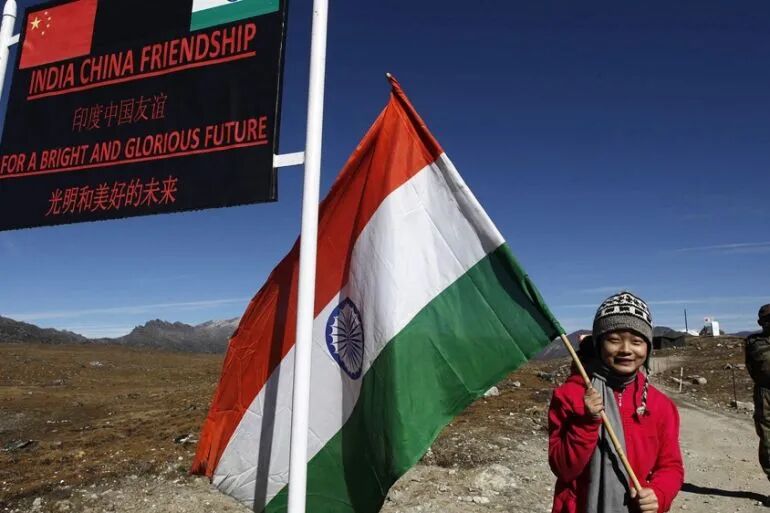
2012年10月21日,在印度阿魯納恰爾邦的布姆拉中印邊境,一名印度女孩手持印度國旗擺姿勢拍照**(圖源:美聯社)**
當前中印關係緩和,對中國而言機遇顯著。一是經貿層面,中國向印度開放市場、擴大印度商品准入,可緩解印度對華貿易逆差,提升雙邊貿易規模,同時助力中國企業拓展印度市場,減少美國關税對中國外貿的間接衝擊;二是戰略層面,中印關係改善能削弱美國 “印太戰略” 根基,降低印度在“四方安全對話”中對中國的對抗性,提升中國在全球治理中的話語權;三是邊境安全層面,雙方關係穩定有利於減少邊境衝突風險,為中國西南地區發展營造了良好外部環境。
未來,中印關係對中國的影響呈雙向性。潛力方面,若雙方深化供應鏈合作、推進 “亞洲主導” 貿易 bloc 建設,將助力中國構建更自主的貿易網絡,推動 “一帶一路” 倡議在南亞的落地,增強中國在亞太經濟圈的核心地位;風險方面,中印在戰略自主、供應鏈去依賴化等問題上仍存分歧,印度可能在中美之間搖擺,若美印關係回暖,或對中印合作產生衝擊。但總體而言,中印關係穩定發展符合中國利益,有望為中國帶來更多戰略與經濟收益。
Short Summary
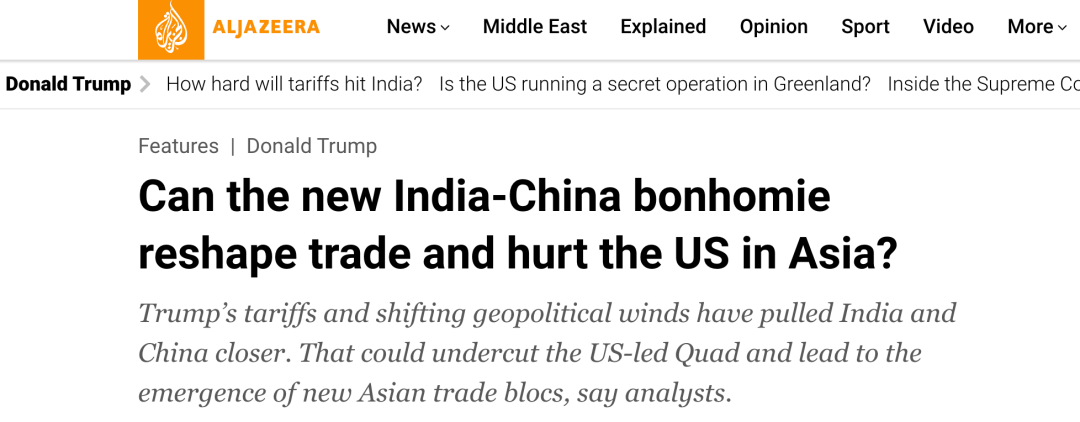
The article published by Al Jazeera notes that, during the Trump administration in 2020, U.S.-India relations warmed up, while China-India relations were tense due to border issues and other factors. Now, affected by the Trump administration’s imposition of additional tariffs on India, its friendly stance towards Pakistan, and changes in the geopolitical pattern, China-India relations have eased. The two sides have resumed direct flights, simplified visa procedures, promoted border trade facilitation, discussed an “early harvest” plan for border issues, and Modi will attend the SCO Tianjin Summit. At the same time, the relaxation of China-India relations has impacted U.S.-India relations and the “Quadrilateral Security Dialogue” (Quad). However, there are still limitations such as competition and supply chain risks in bilateral cooperation.
In the past few years, China-India relations were tense. Especially after the Galwan clashes, the border standoff escalated, posing pressure on China’s southwest border security and affecting bilateral economic, trade and people-to-people exchanges. At the same time, India leaned towards the U.S.-led “Indo-Pacific Strategy” and joined the Quad, which posed challenges to China’s strategic environment in the Asia-Pacific region and increased the complexity of geopolitical games in the region.
At present, the relaxation of China-India relations brings significant opportunities to China. Firstly, in terms of economy and trade, China’s opening up of its market to India and expansion of access for Indian goods can ease India’s trade deficit with China, increase the scale of bilateral trade, and at the same time help Chinese enterprises expand into the Indian market and reduce the indirect impact of U.S. tariffs on China’s foreign trade. Secondly, in the strategic aspect, the improvement of China-India relations can weaken the foundation of the U.S. “Indo-Pacific Strategy”, ease China’s strategic pressure in the Asia-Pacific region, and enhance China’s voice in global governance. Thirdly, in terms of border security, the stable border situation between the two sides reduces the risk of border conflicts and creates a good external environment for the development of China’s southwest region.
In the future, the impact of China-India relations on China is two-way. In terms of potential, if the two sides deepen supply chain cooperation and promote the construction of “Asia-led” trade blocs, it will help China build a more independent trade network, promote the implementation of the “Belt and Road” Initiative in South Asia, and enhance China’s core position in the Asia-Pacific economic circle. In terms of risks, there are still differences between China and India on issues such as strategic autonomy and supply chain de-dependence. India may waver between China and the United States. If U.S.-India relations warm up, it may have an impact on China-India cooperation. However, in general, the stable development of China-India relations is in line with China’s interests and is expected to bring more strategic and economic benefits to China.