周波:美國將軍們絞盡腦汁,猜測中國是否會使用武力?
guancha
**編者按:**日前,YouTube播出美國獨立記者丹尼·海防(Danny Haiphong)對清華大學戰略與安全研究中心研究員周波的專訪,已獲超10萬觀看。專訪中,海防就中國人民解放軍的軍隊建設及目標、中菲關係、南海、台海局勢等問題向周波提問採訪。丹尼·海防是美國頗具知名度和影響力的左翼媒體人之一。他以獨立記者身份在YouTube運營視頻節目,發佈對知名人士的專訪,已經有超過37萬訂閲者。現由北京對話將採訪第一部分實錄翻譯如下:
【翻譯/王樟宸、李澤西;核譯/ 劉松瑀】
**海防:**非常感謝周波先生今天接受採訪。對於可能不太瞭解您的觀眾,您目前在清華大學戰略與安全研究中心擔任研究員,曾經是中國人民解放軍的大校。今天我們有許多問題需要探討,尤其是對於美國和西方的觀眾來説,在中美關係以及中國在全球角色的問題上,仍然存在很多誤解,特別是在地緣政治和軍事層面。
我們先從南海和菲律賓的問題談起。最近一段時間,西方媒體多次提到南海局勢緊張,包括中國與菲律賓的衝突和對峙。我想請您談談,您如何看待這些緊張局勢?中國在南海的立場是什麼?中國和菲律賓之間究竟發生了什麼?
**周波:**謝謝。你提了幾個很好的問題,確實不容易用簡單幾句話回答,但我會盡量簡明扼要。
首先,當像中國這樣的大國和像菲律賓這樣的小國發生矛盾時,人們往往本能地會對小國產生更多同情。這是人之常情,就像人們總覺得小黃瓜或小番茄更加可愛、更具吸引力一樣。我理解這種感受。但是,讓我告訴你一個鮮為人知的事實:菲律賓曾在2000年、2006年和2013年三次殺害來自大陸和台灣的中國漁民,而中國在這些事件中從未對菲律賓使用過武力。如果人們瞭解這些事實,也許他們的看法會有所改變。
1999年,菲律賓政府故意將一艘二戰時期的老舊軍艦擱淺在仁愛礁。中國對此提出了抗議,儘管菲律賓政府做出了各種承諾,但始終以“技術困難”為藉口未能將其移走,導致這一問題至今未得到解決。 想想看,考慮到中國人民解放軍的強大軍力,如果我們真打算通過武力來解決這個問題,豈不是輕而易舉的事?簡單來説,如果中國政府和軍隊沒有保持克制,菲律賓海軍陸戰隊的士兵怎麼可能在那艘擱淺的軍艦上待上整整25年?
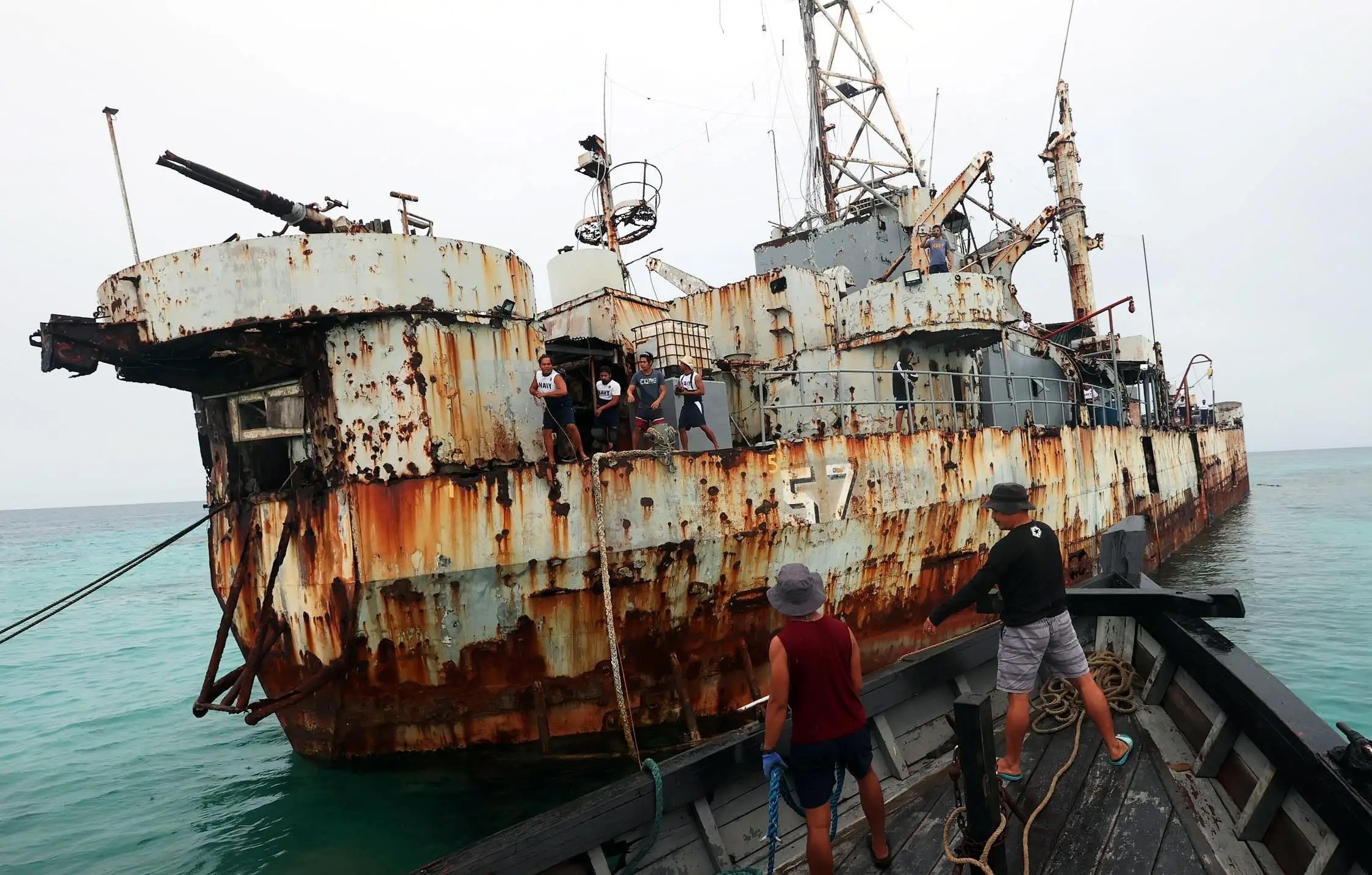
1999年,菲律賓政府故意將一艘二戰時期的老舊軍艦擱淺在仁愛礁 資料圖
的確,中國海警船曾經使用過水炮。從電視轉播上看,這種畫面可能會顯得非常“激烈”,尤其是當對方是一個小國時。然而我想強調的是,這恰恰是因為中國不想動用武力,所以才採取了這種威懾手段,目的是阻止菲律賓海岸警衞隊向擱淺軍艦運送物資,防止其被加固成一個永久性的基地。
**海防:**您這個視角與我們在西方媒體中看到的敍述有很大不同。西方輿論常常描述中國在南海抱有“侵略性的野心”,並且由於中國是大國,爭端的責任常常被完全歸咎於中國。然而,這些爭議充滿誤導,我認為普通美國人可能並不瞭解其中的真相。對此,您有什麼看法?
**周波:**西方媒體常常聲稱中國想把南海變成“中國的內湖”,但這並不屬實。中國政府的立場是,南海的所有島嶼和岩礁都是中國的領土。憑藉這些領土,中國自然可以根據國際法主張領海、毗連區和專屬經濟區的權利。但這並不意味着我們主張擁有全部南海。這才是中國的立場。
此外,西方常用“侵略性的”和“脅迫性的”這樣的詞來形容中國的行為,但事實上沒有任何證據表明中國在南海使用過武力,甚至連威脅使用武力的行為都沒有。中國和東盟國家正在就南海行為準則進行談判。儘管這一進程比預期的慢,但我認為這不是任何一方的錯。並且人們常常忽視一個事實:東盟聲索國之間本身就存在爭議。一旦討論南海問題,人們就立即將其視為中國與其他聲索國之間的問題,我認為這是不公平的。
**海防:**您提到過中國海警使用水炮的情況,並在以往接受採訪時強調,中國此舉是為了防止更大的衝突產生,而不是推動局勢升級。然而也有報道提到像菲律賓和中國船隻發生碰撞這樣的事件。像CNN這樣的西方媒體通常將這些事件描述成中國在加劇衝突。您對這些事件瞭解多少?
**周波:**當兩艘船靠得很近時,總有碰撞的風險。如果一艘船試圖阻止另一艘船前進,也會發生碰撞。我不會指責是哪一方導致了碰撞,因為雙方都在努力阻止對方實現各自的目標。
不過,退一步來看,我認為南海不會發生很嚴重的衝突。這在一定程度上是因為中國在軍力上具有壓倒性優勢,讓我們能夠控制局勢。此外,中國已經承諾不在南海使用或威脅使用武力,其他聲索國也做出了類似的承諾。
因此,我最希望的是大自然的“不可抗力”會最終解決這些問題。以仁愛礁那艘擱淺軍艦為例,如果雙方都不動武,隨着時間推移,這艘船會自然生鏽和解體,這種結果可能會符合所有人的利益。
**海防:**您提到中國的軍事力量具有壓倒性優勢。西方對中國的軍事實力存在很大誤解,常常將其描述為一種“威脅”。作為一名退役的中國人民解放軍大校,您能否談談中國的軍事實力?是否如西方媒體所描述的那樣構成了威脅?
**周波:**這是個很有意思的問題,有時候我自己也很難給出明確的結論,還需要思考一下。中國人民解放軍的發展當然是非常迅速的,但自1979年以來,解放軍就沒有打過仗。這就引出了一個關鍵問題:解放軍能打勝仗嗎?
答案是肯定的。自中華人民共和國成立以來,中國幾乎每十年都打一次仗,直到1979年對越自衞反擊作戰,這是最後一次。之後,中國的重心就轉向了經濟發展。這種轉變實際上為中國增強軍事力量提供了經濟資源。
為了更直觀地理解,我們可以把中國人民解放軍與俄羅斯軍隊進行比較。在俄烏衝突前,世界普遍認為俄羅斯的軍隊是僅次於美國的第二強大軍隊,甚至在某些方面不相上下。然而,解放軍的預算是俄羅斯的三倍,儘管仍然是美國的四分之一。解放軍還擁有世界上規模最大的常備陸軍和艦艇數量最多的海軍。
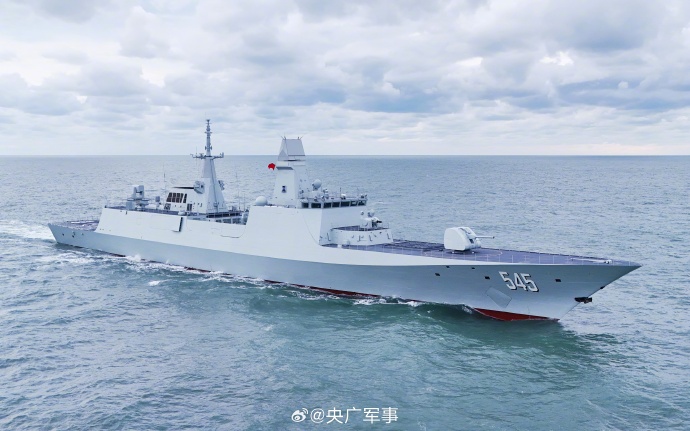
054B首艦正式服役 央廣軍事
中國正在不斷研發最先進的武器,其中一些的先進程度甚至超過了俄羅斯。總的來説,中國提出打造“世界一流軍隊”的目標是合乎邏輯的,並且已經宣佈,計劃在2049年實現這一目標,現在我們正在加速推進這一進程。
這裏還有兩個問題:什麼是“世界一流軍隊”?中國如何在國防預算僅佔GDP 1.5%的情況下(低於北約2%的GDP標準)實現“世界一流軍隊”的目標?
對於第一個問題,在我看來,“世界一流軍隊”的定義因人而異。如果我們認為僅有美國是“世界一流軍隊”,那麼中國還有很長的路要走。然而,如果“世界一流軍隊”不止一支,那麼許多人已經將中國人民解放軍視為其中之一。
我們暫且假設只有美軍是“世界一流軍隊”,而中國還有很長的路要走;即便如此,解放軍也有許多優勢。首先是中國上下一心,眾志成城打造“世界一流軍隊”的政治決心,這也不是什麼秘密。其次,中國的軍費開支是可持續的,並且是俄羅斯的三倍,總額為全球第二,且中國軍隊背靠全球最大的工業製造國。中國的造船能力是美國的200倍以上。因此我們滿懷信心。
儘管如此,還存在一個根本性的困境:在不參與衝突的情況下,如何證明中國人民解放軍的“世界一流”水平?我認為道理很簡單:假如你有一把利劍,你當然會希望它很鋒利,但你不會去砍掉別人的頭來測試它的鋒利。中國正是因為40多年的和平,才得以實現經濟增長,讓8億人擺脱了貧困。這種和平是無價的,也是我們努力維護的目標。
這對世界來説意義重大;縱觀世界歷史,鮮有如此和平的新興強國。西方稱中國具有“侵略性”和“脅迫性”,但給不出任何實例。唯一的一起事件是中印士兵在邊境發生衝突,但這場衝突是以石器時代的方式鬥毆,雙方都知道不能朝對方開槍。
**海防:**當我們提起戰爭的時候,往往會討論勝算率。然而,中國長期的和平確實讓評估軍事實力變得更加困難。這就引出了另一個問題。近年來,與美國軍方關係密切的智庫,比如蘭德公司和新美國安全中心進行了許多涉及中國的戰爭推演。您如何看待中國的戰備情況,尤其是與美國潛在的衝突?這些戰爭推演通常指向更為悲觀的結果,您如何看待這些戰爭推演及其意義?中美之間可能會在哪裏爆發衝突?
**周波:**我知道美國智庫進行的這些戰爭推演,但我建議大家不要輕易相信推演的結果;不能因此就假設中國軍事一定佔優。
在討論中美潛在的衝突場景時,主要涉及兩個區域:南海和台灣海峽。在這兩者中,我認為南海的風險更高;我在南華早報發表的文章《是南海,笨蛋!》中寫過相關內容。
美國在南海頻繁地活動,例如進行海軍巡邏、抵近偵察和“航行自由”行動,中國在完全控制局勢方面面臨挑戰,即中國無法制止這些活動。這些行動經常被媒體炒作放大,實際上美國每年對大約15個國家開展此類行動約20到21次,其中只有1到2次是針對中國的。
儘管如此,無論在海上還是空中,頻繁的抵近偵察和監視活動都會增加危險對峙的風險。中國將這些行為視為對主權和領土完整的威脅,而美國則認為這是行使航行自由的常規行動。2013年我曾帶領中國代表團赴五角大樓與美方官員討論相關法律問題,但我們始終未能達成共識。國際海洋法的模糊性足以讓雙方找到合理化各自立場的依據,有時甚至互相援引同一條例唇槍舌戰。
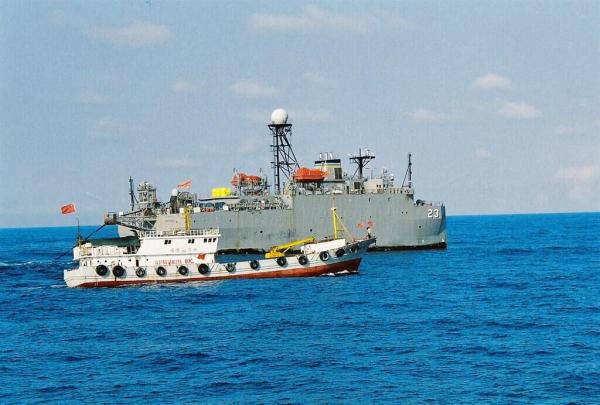
美國海軍“無瑕號”監聽船和中國漁民對峙 資料圖
如果解放軍實力持續增強,中國對這些被視為挑釁行為的容忍度可能會降低。五角大樓的報告顯示,兩年來有超過180次攔截事件,即大約每四天就發生一次。儘管我希望能夠通過和平方式解決問題,但不排除又有一次碰撞事件為雙方敲響警鐘。
在南海,這些事情是難以避免的。台灣海峽的問題則不同。台灣無法搬走,隨着中國人民解放軍的發展壯大,無論台灣當局如何繼續其分裂主義行徑,我相信時間在我們一邊。
核心問題是,美國是否會進行干預。鑑於美國實行戰略模糊政策,我給不出答案。不過,對美國來説,中國製造了更大的戰略模糊,即,中國是否會使用武力?美國將軍們絞盡腦汁,不斷猜測。
不過,我想引用美國國防部長奧斯汀去年在香格里拉對話會上的講話:“衝突並非迫在眉睫或不可避免”。我高度重視奧斯汀的這番言論,並將其寫入了我在《外交事務》上發表的文章中,因為他的講話具有權威性。他不僅是美國最高級別的國防官員,而且理論上他的言論應該得到了情報的支持。他直接否定了一些美國將軍的猜測,表現出對兩岸局勢的信心,而中方仍在談論和平統一。使用武力不是必然的,我們仍然對最好的結果抱有希望。
**海防:**我認為您關於南海和台灣海峽衝突風險的觀點十分有見地;美國有很多不同的猜測,經常提及2025 年或 2027 年是中國攻打台灣的日期。您能否從軍事和戰略角度進一步闡述台灣的總體局勢?美國最常炒作的就是台灣局勢,但也有像奧斯汀這樣的領導人駁斥衝突迫在眉睫的説法,因此並沒有統一意見。相較於我們從美國媒體上聽到的消息,中國軍方如何看待台灣問題?
**周波:**從中國軍方的角度來看,這很簡單:必須為最壞的情況做好準備,因此需要變得更強大。
各方經常炒作中國“舞大棒”,但經常忘了中國也提供了許多“胡蘿蔔”。例如,在與台灣隔海相望的福建省,台灣居民享有優惠政策,包括獲得教育機會、居住證、電力,還有正在商討修建的金門-大陸橋樑。這些努力表明了我們對和平統一與互利的決心。
疫情之前,中國大陸有150萬台灣人,大多居住在上海及附近,這可以理解,因為那是中國最發達的地方。儘管兩岸政治體制不同,但人們總是會去經濟機會更好的地方,政治因素並沒有那麼重要。要知道,來大陸的台灣人不是窮人,至少是中產階級。我相信,隨着全球化和人工智能的發展,世界變得越來越小,兩岸將實現更深入的融合,人們也會更理解彼此。
**海防:**台灣現任領導人賴清德最近站出來説,如果中國大陸想要統一台灣,為什麼不同時向俄羅斯索要故土呢?與此同時,台灣分裂勢力與美國的軍事存在互相勾結,因為美國特種部隊就駐紮在距離中國大陸幾英里遠的金門。我們已經談到了中國軍隊的作用,但還有美國軍隊的介入,包括對台軍售、特種部隊和對台灣軍隊的軍事訓練。中國如何看待這些事態發展,尤其是美國的作用?
**周波:**從中國的角度來看,避免衝突的關鍵在於讓中國保有和平統一的希望。只要和平統一的可能性還存在,中國就不會考慮非和平手段。如果美國或台灣採取行動,扼殺了這一希望——例如公開支持“台灣獨立”——那將迫使中國大陸政府重新考慮其策略。説到美軍的角色,中國關切的問題是,美軍是否支持“台獨”?如果支持,這絕不符合美國的利益。
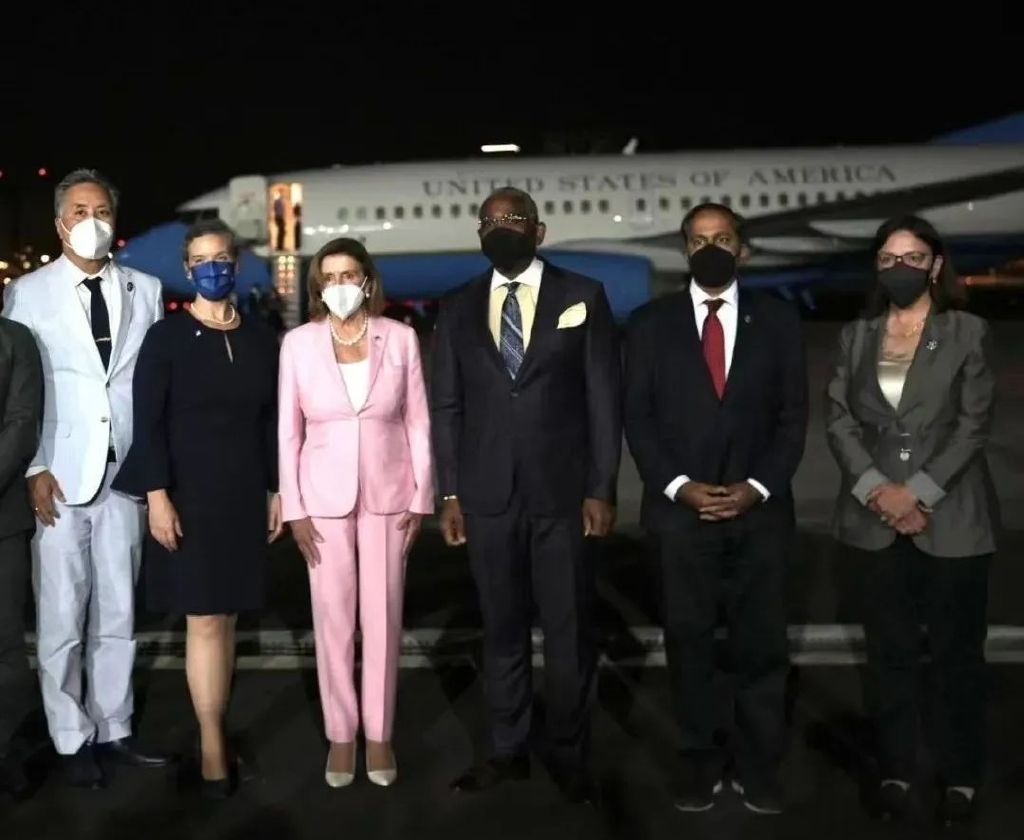
佩洛西竄訪台灣 資料圖
因此,像佩洛西竄訪台灣這樣高調的行動會不必要地加劇緊張局勢,同時也損害了美國的利益。儘管拜登總統聲稱由於美國政府三權分立,他無法干預此事,但這種理由無法讓我們信服;我們不會天真到認為,他不能打個電話來阻止這次竄訪,或許他認為阻止佩洛西有損他的個人利益,並認為佩洛西的竄訪可能危害不大。然而,佩洛西訪台後解放軍的實彈軍事演習標誌了局勢的嚴重性,隨後解放軍軍機越過台灣海峽中線的行動,標誌着現狀發生了不可逆的改變。
任何挑釁行為——無論是來自台灣當局還是美國——都可能以不可逆轉的方式改變現狀。
**海防:**您認為這些挑釁行為的動機是什麼?對於戰爭推演和南海爭端,中方的態度非常模糊。中方如何看待美國在太平洋地區,特別是在台灣不斷增長的軍事存在的動機?美國似乎正逐漸協同推進軍事、政治和外交挑釁行為。
**周波:**他人的動機總是最難揣測的,但利益卻相對容易辨別。比如,向台灣地區出售武器顯然對美國的軍工複合體有利。有關將台灣變成“豪豬”的説法,只不過是對這些軍售提供了一個方便的藉口而已。
至於佩洛西這樣的政客,因為她一直倡導支持所謂民主,而且知道自己的任期即將結束,所以她可能只是想做些什麼來成就個人的“高光時刻”。以利益而非動機來評判他人可能更加準確。
以下為採訪原文:
Interviewer: Thank you so much, Zhou Bo, for joining me today. For those who may not know you, you are currently a senior fellow at the Center for International Security and Strategy at Tsinghua University. Previously, you served as a Senior Colonel in the People’s Liberation Army. We have a lot of questions to get to, especially for Americans and Western audiences, there’s a lot of misunderstanding, especially on the geopolitical and military fronts when it comes to U.S.-China relations and China’s role in the world.
Let’s start with the South China Sea and the Philippines. Recently, we’ve seen many stories in the West about China and the Philippines getting into skirmishes, which are being described confrontations. I want to ask you about your understanding of these growing tensions that the US and the West are talking about. What is China’s position on the South China Sea? What is actually going on between China and the Philippines?
Zhou Bo: Thank you. Actually, you’ve asked several good questions, and it’s not easy to give a short answer, but I’ll try my best.
First, when there’s a rivalry between a giant like China and a smaller country like the Philippines, people instinctively feel more sympathy for the smaller one. This is human nature—similar to how people love baby cucumbers or baby tomatoes, they just look more adorable and eatable. In this case, I understand how people might feel.
But let me provide a simple fact: very few people seem to know that it is actually the Filipinos who have killed Chinese fishermen on three occasions—in 2000, 2006, and 2013, against innocent Chinese fishermen from both Mainland China and Taiwan, which is part of China. If people understood this and also realized that China has never used force against the Philippines, their perception might change.
For example, in 1999, the Filipino government deliberately stranded a rusted World War II-era warship on the Ren Ai Jiao(Second Thomas Shoal). China protested, the Filipino government made promises but claimed so-called “technical difficulties”, and so they didn’t tow it away. Then, this became an issue. But think about this: given the overwhelming military strength of the People’s Liberation Army (PLA), if we decided to do something, couldn’t we easily resolve this issue? The simple question is, how could those Filipino marine corp soldiers have remained there for 25 years if the Chinese government and the PLA are not self-restrained.
Yes, Chinese Coast Guard vessels have used water cannons. This might look dramatic on TV, especially when the other party is a smaller country. However, I would argue that this is precisely because we do not want to use force, so this is a kind of deterrence, aimed at preventing the Filipino Coast Guard from delivering building materials to fortify the stranded ship to a permanent base.
Interviewer: That’s a very different perspective than what we often see in Western media. In the West, we often hear about China’s “aggressive ambitions” in the South China Sea, and blame for the disputes is frequently placed solely on China because China is the bigger country. What is the truth about this, because these disputes are very misunderstood; I don’t think the ordinary person in the US would know about it. What would you say?
Zhou Bo: Western media often claims that China wants to turn the South China Sea into a “Chinese lake,” but this is not true. According to the Chinese government, we believe all the islands and rocks in the South China Sea are Chinese territory. With these territories, China naturally could claim rights to territorial seas, contiguous zones and exclusive economic zones under international law. However, we do not have a claim over the entire South China Sea. That is China’s position.
Additionally, terms like “aggressive” and “coercive” are frequently used to describe China’s actions, but there is no evidence of China using—or even threatening to use—force in the South China Sea. In fact, China and ASEAN countries are negotiating a “Code of Conduct in the South China Sea”. While this process has been slower than it should be, the question is, who is to be blamed? I would say nobody is to be blamed. People always neglect a fact: disputes exist among ASEAN claimants themselves. I think it’s somewhat unfair that whenever we talk about South China Sea, it immediately becomes an issue between China and other claimants; that’s not true.
Interviewer: You mentioned water cannons used by the Chinese Coast Guard, which you’ve emphasized in previous interviews as an indication that China seeks to prevent larger conflicts rather than escalate them. However, there have also been incidents where Filipino and Chinese vessels rammed into each other. Could you talk about this? Western media, such as CNN, often portrays these incidents as evidence of China’s escalation. What do you know about these incidents?
Zhou Bo: When two ships get close to each other, there’s always a risk of collision. If one ship tries to stop another from moving somewhere, a collision can happen too. I won’t point fingers at which side caused such incidents, because both sides are trying to prevent the other from achieving specific objectives.
However, stepping back, my general assessment is that there won’t be a serious conflict in the South China Sea. This is partly because China’s military strength is overwhelming, allowing us to keep the situation under control. Additionally, we’ve pledged not to use or threaten to use force in the South China Sea, and other claimants have made similar commitments.
Therefore, my best hope is that Mother Nature itself will eventually resolve some of these issues, because Mother Nature has its own strength, called “force majeure”. Consider the ship itself: as it becomes more and more rusted, and China decides not to use force, eventually, the vessel will disintegrate because of Mother Nature, this outcome might serve everyone’s interests.
Interviewer: You mentioned China’s overwhelming military strength. There’s not a lot of understanding, especially in the West, about China’s military capabilities, often framed as a “threat.” As a retired Senior Colonel of the People’s Liberation Army, could you talk about China’s military capabilities? Are they truly a threat, as portrayed in Western media?
Zhou Bo: That’s an interesting question because sometimes I also do not have a clear conclusion and have to think about it. The People’s Liberation Army (PLA) is certainly developing rapidly. However, it hasn’t fought a war since 1979. This raises a key question: Can the PLA fight effectively?
The answer is yes. If you compare it to the past, after the founding of the People’s Republic, China basically had a war every decade until 1979, when we had the last war with Vietnam. Since then, China has focused on economic development. This shift has actually provided the economic resources to strengthen our military.
To provide some perspective, we can compare the PLA to Russia’s military. Before the war in Ukraine, Russia was universally considered the second-strongest military after the United States, if not neck-and-neck. However, the PLA’s budget is three times larger than Russia’s, although four times smaller than America’s. The PLA also boasts the world’s largest standing army and navy in terms of ship numbers.
China is continuously developing state-of-the-art weapons, some of which even surpass those available to Russia.Putting all this together, I would say that China’s ambition to become a world-class military is logical and openly announced: we aim to achieve this by 2049, and now we’re talking about speeding up this process.
And there are two more questions. What is a world-class military? How can China achieve a “world-class military” status with a defense budget of only 1.5% of GDP, which is lower than NATO’s 2% of GDP standard?
For the first question, in my opinion, the definition of a “world-class military” varies. If we consider only the United States to hold that status, then China still has a long way to go. However, if there can be more than one world-class military, many would already consider the PLA to be in that category.
Let’s assume for now the US is the only one, and China still had a long way to go. I believe there are certain advantages for the PLA. First is the political determination of the Chinese leadership and the entire nation; as I said, this isn’t a secret, we want to make our military world-class. Second, China’s military budget is sustainable and three times bigger than Russia’s; it is the second-largest globally because the military is supported by the largest industry in the world. China’s shipbuilding capabilities is more than 200 times bigger than that of the United States. With all this, we have confidence.
That said, there remains a fundamental dilemma: proving the PLA’s world-class status is challenging without engaging in conflict. But my answer to this is very simple. Imagine having a sword—of course you’d want it to be very sharp, but you wouldn’t test it by chopping off someone’s head. Having peace over 40 years made China the world’s second largest economy, it also helped to alleviate poverty of 800 million people. This peace is invaluable, we should enjoy it and try our best to maintain it.
That matters tremendously for the world; if you look at world history, you seldom find examples of a rising power that’s so peaceful. The West would describe China as “coercive” and “aggressive” but they can’t give a concrete example of Chinese aggression anywhere. The only incident is a deadly brawl between Chinese and Indian troops along the Himalayas; but even that deadly brawl was only done in a stone age manner, with no shooting. That means they knew they shouldn’t shoot at each other under any circumstances.
Interviewer: Often when we talk about war, we are measuring it by how much a nation has won wars. However, for China, it has had a long period of peace, which makes it challenging to assess military strength. This leads to another question. In recent years, U.S. think tanks like the Rand Corporation and the Center for a New American Security, both very close to military planners, have conducted war simulations involving China. What do you think of China’s readiness for war, with the US in particular? Where do you think such a scenario would lead, because planning and simulating these war games would lead to a pessimistic outlook. What do you think of such war simulations, and where might such a conflict between the US and China erupt?
Zhou Bo: I’m aware of these war games conducted by U.S. think tanks. However, I caution against taking their results at face value; to wrongly believe that China certainly is superior, that shouldn’t be what we think.
When discussing potential conflict scenarios between China and the United States, there are two main areas of concern: the South China Sea and the Taiwan Strait. Of the two, I consider the South China Sea more dangerous. I wrote about this in my article titled “it’s the South China Sea, stupid”.
In the South China Sea, we face challenges in fully controlling the situation due to frequent U.S. activities, including naval patrols, reconnaissance missions, and freedom of navigation operations. China cannot stop these activities. These operations are often hyped in the media, but they conduct about 20 to 21 times annually against around 15 countries, with just one or two focused on China.
Nonetheless, the close reconnaissance and surveillance activities—whether at sea or in the air—create the risk of dangerous encounters. China views these actions as threats to our sovereignty and territorial integrity, while the United States considers them routine exercises of freedom of navigation. I had led a delegation to the Pentagon to talk about the legal implications of these freedom of navigation operations in 2013; we couldn’t agree much on this issue. UNCLOS is ambiguous enough for both sides to justify their position, sometimes even quoting the same article.
If the PLA continues to grow stronger, China’s tolerance for what we perceive as provocations may decrease. Pentagon reports indicate over 180 interceptions in two years—roughly one every four days. While I hope for peaceful resolutions, there’s always the risk that another collision could act as a wake-up call for both sides.
For the South China Sea, these things can’t be avoided. On the other hand, the Taiwan Strait is different. Taiwan cannot physically move away, time is on China’s side as the PLA grows stronger. No matter how the Taiwanese authority continues its separatistic moves, by and large time is on our side.
Then, there’s the billion-dollar question of whether the US would intervene or not. I don’t have any answer, given America’s strategic ambiguity. However, I believe that for them, China poses a bigger strategic ambiguity, whether China would use force or not. That’s why American generals keep on guessing.
However, I wish to quote US secretary of defense Lloyd Austin’s remarks at Shangri-la Dialogue last year: conflict is not imminent or inevitable. I highly value these remarks, and included them in my article in Foreign Affairs, because he talks with authority, not only as the senior-most defense official, but because his remarks should in theory be supported by intelligence. His remarks are a direct denial of remarks by those generals and admirals. He has demonstrated confidence in the situation across the Taiwan Strait, and we are still talking about peaceful reunification. Use of force is not a given, and we still hope for the best.
Interviewer: I think it’s a great point you made about the risk of conflict in the South China Sea and the Taiwan Strait; for the US, there’s a lot of guessing, with 2025 or 2027 often mentioned as dates for a Chinese invasion. Could you elaborate the overall situation on Taiwan from the military and strategic perspective? This is where we hear most the hype from the US, but you also have leaders like Austin refuting the idea of conflict as imminent; there seems to be a lot of mixed messaging. What is the Chinese military’s perspective on Taiwan, given what we hear from the US media, is there a big difference?
Zhou Bo: From the Chinese military, it’s very simple: you have to be prepared for the worst-case scenario, so it needs to become stronger.
People always talks about China’s stick, but people forget that China has also offered a lot of carrots. For example, in Fujian Province, which faces Taiwan, Taiwanese residents receive preferential treatment, including access to education, residency permits, and providing electricity and perhaps buildings a bridge between our side and those outer islands. These efforts are meant to convince Taiwanese people that we can live together. Before COVID, there were reportedly 1.5 million Taiwanese in mainland China, mostly near and in Shanghai. This is understandable because that’s the best developed area in mainland China. Even though two sides have different political systems, people go to places with better economic opportunities and politics does not matter as much; these Taiwanese people are not poor, they’re middle class or above. I am confident that, as the world is becoming smaller with globalization and AI, there will be greater cross-strait integration and people will have better understanding of each other.
Interviewer: The current leadership of Taiwan, Lai Ching-Te, he recently came out and said, if China wants to reunify Taiwan, why doesn’t it also talk to Russia about lands long in the past. Meanwhile, Taiwan separatism goes along with US military presence, because there are US special forces just a few miles from mainland China, in Kinmen. We’ve talked about the Chinese military’s role, but there’s also the US military involvement, including weapon sales, special forces and military training of Taiwan forces. How does China view these developments, especially the role of the United States?
Zhou Bo: From China’s perspective, the key to avoiding conflict is to allow China to maintain the hope for peaceful reunification. China will not look for non-peaceful tools listed in our anti-secession law, as long as there is still room for reunification. If the U.S. or Taiwan were to take actions that eliminate this hope—such as openly supporting Taiwanese independence—it would force Beijing to reconsider its approach. Then, this would be the role of the US military, in the eyes of Beijing: are you supporting Taiwan’s independence move or not? Because, if you’re doing that, it will not serve the U.S. interests.
This is why high-profile visits, like that of Nancy Pelosi, escalate tensions unnecessarily and harms the U.S. interests more. While President Biden claimed he couldn’t intervene due to the balance of powers in the U.S. government, such reasoning doesn’t convince us; we aren’t so naïve to believe that he couldn’t call her to stop the visit, because he might consider such a move harmful to his personal interest, and Pelosi’s visit not that harmful. As we have seen, the PLA’s four-day live-fire military exercises following Pelosi’s visit demonstrated the seriousness of the situation, and the subsequent increase in PLA aircraft crossing the median line in the Taiwan Strait has signaled an irreversible change to the status quo.
Every provocation—whether by the Taiwanese authorities or the U.S.—risks altering the status quo in ways that may not be reversible.
Interviewer: What do you think are the motivations for these provocations? With the war games and South China Sea disputes, there’s a lot of ambiguity on the Chinese side, but how does the Chinese side view US motivations with regards to its growing military presence in the Pacific, and Taiwan specifically? We’re seeing more and more military, political and diplomatic provocations that seem to align with each other.
Zhou Bo: Motivations of the others are always the most difficult to discern, but interests are easier to identify. For example, selling arms to Taiwan benefits the U.S. military-industrial complex. Claims about turning Taiwan into a “porcupine” are just a convenient justification for these sales.
As for political figures like Nancy Pelosi, because she’s been championing support for democracy, and knew that she was at the end of her term, she might have just wanted to do something to be in the highlight. We have to judge people by their interests rather than motivations.

本文系觀察者網獨家稿件,文章內容純屬作者個人觀點,不代表平台觀點,未經授權,不得轉載,否則將追究法律責任。關注觀察者網微信guanchacn,每日閲讀趣味文章。