周波:解決俄烏衝突,中國可發揮三重作用
guancha
俄烏問題會在特朗普的推動下,很快得到解決嗎?特朗普的下一步,是台灣嗎?中國又將在其中發揮什麼樣的作用,以及如何應對?
日前,清華大學戰略與安全研究中心研究員周波在慕尼黑安全會議現場接受“德國之聲”採訪。記者理查德·沃克就多個國際熱點問題展開提問,周波就中美關係、中國核力量發展、美國“新帝國主義”傾向及台灣問題等眾多問題闡述觀點。北京對話和觀察者網授權翻譯如下。
【文/周波,翻譯/毛琪、王奕涵,核譯/劉松瑀】
**理查德·沃克:**我們正在慕尼黑安全會議現場,這次會議的核心議題是跨大西洋關係和結束烏克蘭戰爭。然而,我們也希望瞭解世界另一超級大國——中國的觀點。今天,我們將與前中國軍方的周波大校進行交流。他現在是清華大學戰略與安全研究中心研究員,也是慕尼黑安全會議的常客。
感謝您接受德國之聲的採訪。過去幾天,慕安會備受關注,特朗普政府正在推動一項新的和平方案以解決烏克蘭問題。特朗普本人曾與弗拉基米爾·普京對話。那麼,中國對此持何種態度?您認為特朗普有可能成為烏克蘭問題的“和平締造者”嗎?
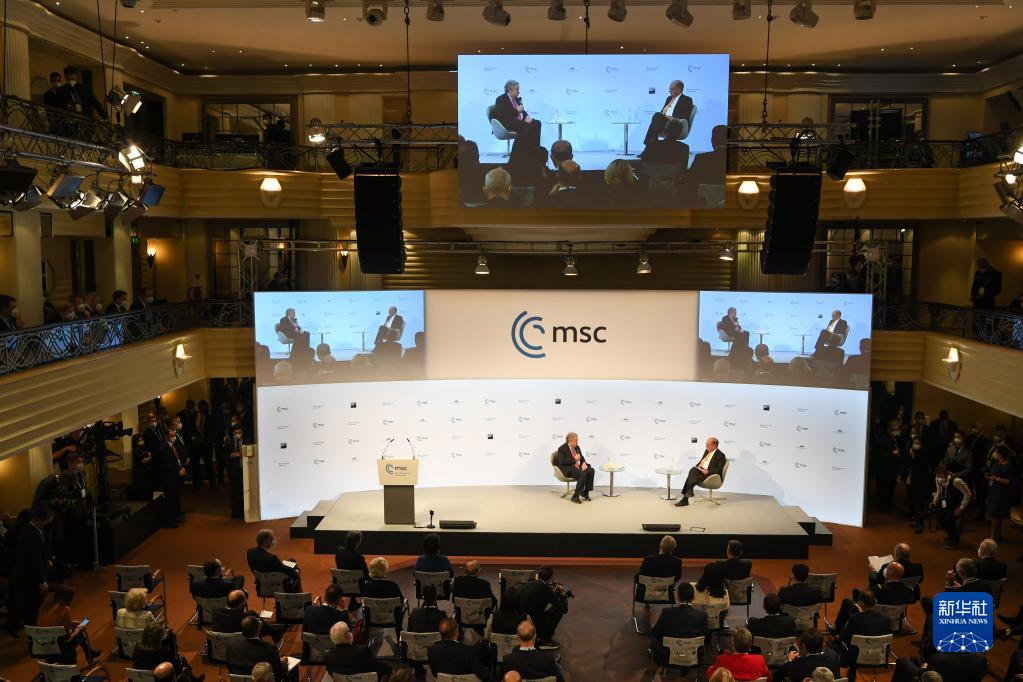
第58屆慕尼黑安全會議2月18日在德國慕尼黑開幕 新華社
**周波:**我認為,任何有關烏克蘭的和平倡議,中國都會表示歡迎。事實上,特朗普本人也曾請求中國提供幫助。作為一名中國人,我對此感到有趣,因為他此前表示能夠在24小時內解決烏克蘭問題。
當然,這種説法在更像是一種選舉期間的競選口號,但他向中國尋求幫助的事實表明,中國在烏克蘭戰爭中可以發揮一定作用。
我認為,中國的作用首先體現在與其他主要大國一道,為烏克蘭,甚至俄羅斯,提供某種集體安全保障。為什麼這麼説?因為這種集體安全保障不僅是烏克蘭總統澤連斯基經常提及,同時也深深植根於所有烏克蘭人的歷史記憶之中——早在1990年代,烏克蘭決定放棄核武器時,這一問題就已成為關鍵考量。
是的,我們無法確定這場戰爭還會持續多久,但肯定還會持續一段時間。然而,戰爭不會永遠打下去。總有一天,各方將不得不討論如何實現停火。
而烏克蘭方面經常提到一個問題:誰來保障停火協議的執行?所以我認為中國這次可以與其他主要大國一道,為烏克蘭提供這種集體安全保障。
中國可能提供的第二種協助是——如果交戰國同意維和行動,那麼我認為中國及印度等國或許是最佳的出兵國。因為對於歐洲國家而言,如波蘭總理和法國總統所提議的那樣,由歐洲人直接介入並不現實。俄羅斯必然會將此視為北約在烏克蘭的另一種存在。
第三種可能的協助是戰後重建。中國在基礎設施建設方面的能力首屈一指,這一點無需贅述,不言自明。中國能夠以更快的速度、更高的效率和更低的成本完成重建工作。
**理查德·沃克:**您提到了北約。特朗普政府曾暗示——儘管其中存在一些不確定性——可能會考慮將烏克蘭加入北約的選項最終排除在討論範圍之外。您認為這是一個好的決策嗎?因為中國一貫對北約的東擴持批評態度。
**周波:**中國方面認為,這場戰爭與北約的擴張有一定關係。因為雖然人們在討論這場戰爭,討論俄羅斯對烏克蘭的侵略,但人們往往忽視了一個事實,那就是從米哈伊爾·戈爾巴喬夫到鮑里斯·葉利欽,再到普京總統,也就是説,從蘇聯時期到今天的俄羅斯,蘇聯和俄羅斯的領導人一直在警告這種擴張的危害。
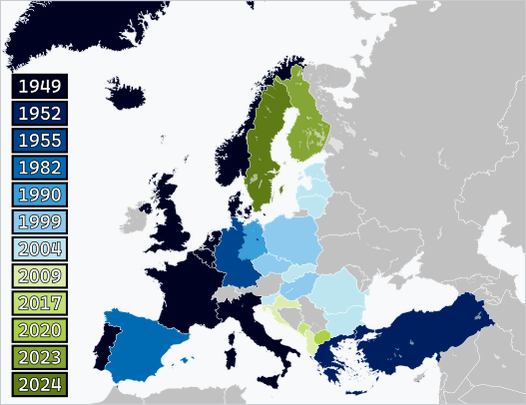
北約從1949年到2024年的擴張 維基百科
關於北約的未來,問題在於,隨着西方民主的衰退,北約是否會變得更強大?或許有人會説,芬蘭和瑞典的加入證明北約實力的增長。但我不這麼認為。
我曾經説過,北約是一具行走的殭屍。為什麼這麼説呢?因為這種軍事聯盟,或者説所有軍事聯盟,都依賴於威脅而生存。它們就像水蛭一樣吸血,因此必須尋找敵人。
理查德·沃克:難道威脅不是來源於俄羅斯嗎?
**周波:**我並不是在為俄羅斯辯護,但事實是,即使在這場戰爭之前,北約就已經將俄羅斯視為威脅,因為蘇聯解體後,北約的未來並不確定。然而,為了生存,北約必須找到一個威脅。而誰能成為威脅呢?之前是蘇聯,現在當然就是俄羅斯。
因此,我認為這種軍事聯盟事實上並不會加強西方民主。相反,它實際上引發了戰爭。因此,歐洲安全的根本問題是,不管願不願意,北約必須與俄羅斯共存,因為俄羅斯無法被抹去。所以,歐洲的安全本質上是北約如何與俄羅斯共存。人們必須思考這個問題,不能僅僅着眼於幾個簡單的事件。
**理查德·沃克:**之前您説的確實是歷史的一部分,特別是中國的看法。今天的會議,討論的焦點之一就是美國副總統萬斯的演講,他批評了歐洲民主,特別是德國的民主。許多人將這視為中國改善與歐洲關係的機會,而歐洲正因這番批評而感到震驚。您認為這個時機到來了嗎?
**周波:**我認為,歐洲肯定會思考萬斯所説的話,以及接下來會有什麼行動。事實上,依據《金融時報》的報道,中國和歐盟之間的漸進式接觸已經在發生,因為我在記者吉登·拉赫曼的觀點中讀到,他引用了一位歐洲官員的話説:“相信我,這已經開始發生了。”
所以我認為這次會議表明了歐洲人如何對萬斯的演講感到失望,因為即便作為中國人,我也感到驚訝。
我本以為大家關注的主要是烏克蘭問題,所以他會在演講中大談烏克蘭;而且鑑於美國與中國所謂的戰略競爭,他也會談到美中競爭。但他完全沒有提及這些內容。相反,他談論的內容讓歐洲人感到驚訝和憤怒,這很有趣。
**理查德·沃克:**這是否感覺像是送給中國代表團的禮物呢?
**周波:**我認為這不是我們所創造的局面。但最終,我認為歐洲人會覺得他們必須尋求一種平衡。因為這種情況已經在發生,甚至馮德萊恩也談到了與中國達成新協議。所以即便在這次會議之前,歐洲領導人就已經有所表態,而與歐洲保持良好關係始終是中國的利益所在。
對中國來説,這場戰爭實際上對我們有些不公平,因為中國並未參與這場戰爭,也沒有被告知這場戰爭即將發生。但由於這場戰爭,中國與歐洲各國的關係變得緊張,而這並不符合我們的利益。
**理查德·沃克:**當然,歐洲各國與中國的關係變得緊張,原因之一是它們對中國在經濟和外交上對俄羅斯的支持感到非常沮喪。但我還想談談與新政府相關的另一個問題——特朗普曾談到想要接管格陵蘭島,讓加拿大成為美國的第51個州。
這似乎反映了一種被一些人稱為新帝國主義的意識形態,或者至少是一種想要擴張美國領土的理念。您對此有何看法?
**周波:**其實,就像它讓所有人感到驚訝一樣,這件事也讓我感到驚訝。誰都沒想到他會到處搜刮,確實挺出乎意料的。不過,我現在關注的重點倒不是他接下來會幹什麼——這個誰也説不準——但我覺得他肯定還會繼續出乎大家的意料。
真正讓我思考的是,到他第二個任期結束時,美國的國際形象可能會繼續下滑。畢竟,如果大家都認定美國既不願承擔國際責任,除此之外還想在各地攫取土地,那麼美國的道德高地又何在呢?
**理查德·沃克:**我的意思是,從某種程度上講,我有點擔心,因為特朗普釋放出這樣的信號可能意味着他並不介意中國大陸採取行動來控制枱灣。從中國的角度來看,你覺得這是不是某種暗示,表明特朗普可能不會阻止台灣迴歸中華人民共和國?
**周波:**的確,很多人喜歡把中國對台灣的立場與烏克蘭戰爭、甚至特朗普的言論聯繫在一起。但我認為,中國政府的立場始終如一,那就是,我們依然希望通過和平方式實現統一。
只有在三種特定情況下中國才會考慮非和平手段,這一點早已明確寫入《反分裂國家法》。所以我不認為特朗普的言論會對中國的決策產生任何影響。
至於如何解開這道價值連城的難題——如何保持台海的和平穩定?我的答案很簡單,就是必須讓中國相信和平統一仍然是可能的。
因為中國使用非和平手段的最後一個條件,是中國認為和平統一的前景已經完全喪失。因此,對全球而言,最重要的就是向中國釋放清晰的信息:和平統一的機會依然存在。這樣,台海的戰爭就並非不可避免。
**理查德·沃克:**美國國防部長皮特·海格賽斯表示,美國決定在歐洲收縮軍力的一個動機,是需要重新部署部隊到亞太地區,以應對他所稱的“來自中國的威脅”。對此,你怎麼看?
**周波:**我一點都不擔心這個問題。試想一下,美國如果把重點轉向印太地區,那誰會真正幫它?畢竟,拜登政府把盟友的重要性提到了前所未有的高度,對吧?
特朗普主張“美國優先”,但對拜登來説,可能更像是“盟友優先”。可如果真的爆發一場中美戰爭,美國能指望誰呢?
日本可能是最重要的盟友之一,但民調顯示,支持與中國直接對抗的日本人只有11%左右。再看澳大利亞。沒錯,澳大利亞確實要從美英購買8艘核動力潛艇,但現任澳大利亞政府已經明確表示不會參與台海衝突。接着是韓國,但韓國更關心朝鮮半島局勢,在這方面他們絕對需要中國的支持。
再來看菲律賓。菲律賓確實向美軍提供了9個軍事基地,這些基地位於第一島鏈的關鍵位置,對美國來説非常有價值。
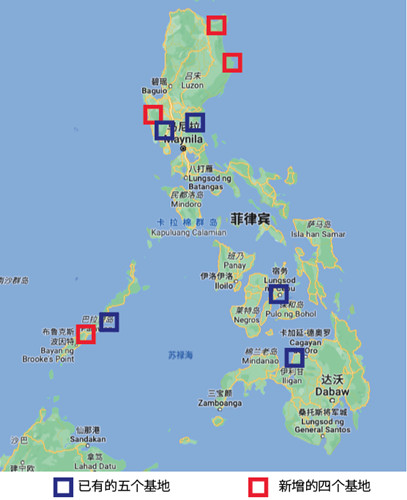
菲律賓的9個美軍基地的位置,紅色方框為2023年新增的4個基地 Ksliu
但菲律賓政府也不是傻子,他們給美軍使用這些基地設定了嚴格的條件——比如,美軍不能在這些基地存放武器,也不能從這些基地直接發動攻擊。這些限制至今仍然有效。
所以,沒有誰是傻子。我不認為中美在西太平洋發生戰爭的情況下,美國一定能贏。事實上,根據美國智庫的研究,大多數兵棋推演的結果顯示,美國反而是輸的一方。
**理查德·沃克:**我的意思是,美國人現在在問的一個問題是:為什麼中國正在如此迅速地擴充其核武庫?他們的擔憂是,這可能是為了在未來某個時候中美之間可能爆發的戰爭中作為後盾。那麼,為什麼中國正在如此快速地擴展其核力量?
另外,特朗普最近也在試探性地提出,他希望與中國和普京就軍備控制問題進行對話,中國是否會接受他的提議?
**周波:**首先,中國並沒有真正快速地擴充其核武庫。因為全球90%的核武庫仍然屬於兩個國家——俄羅斯和美國。
**理查德·沃克:**雖然中國的核武庫規模仍然遠遠落後,但它的擴張速度確實在加快。
**周波:**但中國確實有充分的理由擴充核武庫。為什麼呢?首先,你應該明白,武器現代化是必然的,就像所有類型的武器都會經歷升級換代一樣。這並不意味着你永遠只做維護工作。
我舉個例子,我個人對烏克蘭戰爭的看法是,為什麼北約至今沒有派兵直接與俄軍作戰?我認為,俄羅斯的核威懾起到了至關重要的作用。而這讓我不得不把俄羅斯和中國進行比較。
美國似乎並不太擔心與中國發生直接衝突,而更擔心與俄羅斯發生直接衝突。這是為什麼?難道不就是因為俄羅斯擁有更龐大的核武庫嗎?
要知道,中國的航母比俄羅斯多,軍隊的規模也比俄羅斯更大,中國的軍費預算更是俄羅斯的三倍。但為什麼美國仍然不像對待俄羅斯那樣對中國忌憚?
於是我問自己:是不是因為中國的核武庫規模還不到美國的十分之一?如果真是這樣,那問題就很清楚了——我們需要的是一個政治決定。
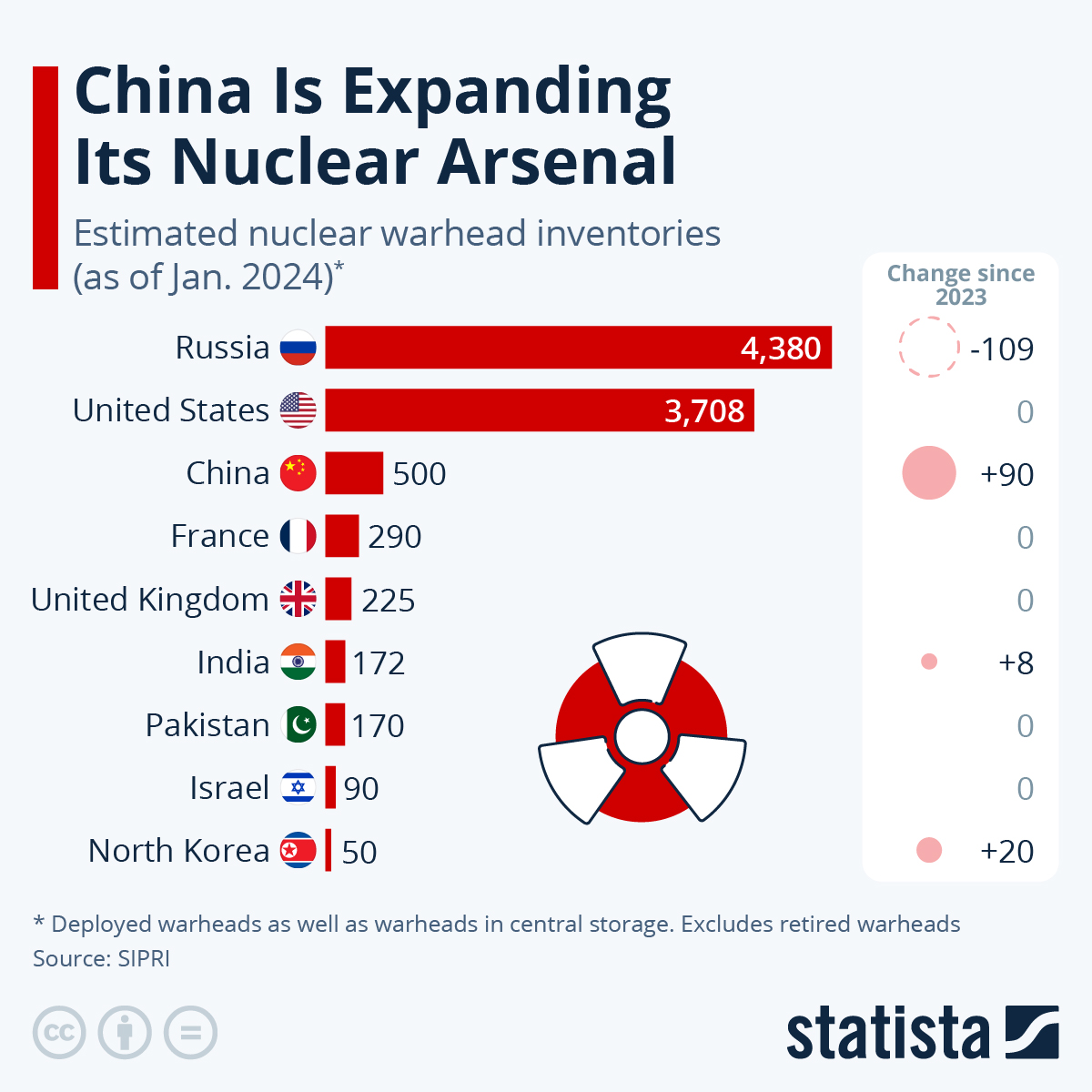
世界國家核彈頭數量排名(截至2024年1月)
畢竟,中國有雄厚的工業實力,有成熟的技術,而就在幾個月前,我們的洲際彈道導彈試驗也已經證明了中國的導彈能力完全沒有問題。因此,對我們來説,唯一的需要決定的就是要不要增加核武器的數量。
更值得警惕的是,一些美國人甚至公開討論過在台海衝突中對中國使用核武器。這是一個極其危險的信號。
為什麼他們會這麼説?因為他們意識到,在台海的常規戰爭中,他們已經失去了對中國的優勢,所以才會有人主張訴諸核武器。
**理查德·沃克:**我們今天就先聊到這裏,但這個話題真的值得深入探討,我希望能繼續與你討論,因為核軍備控制無疑會成為今年乃至明年的熱點議題之一。不過,今天就先到這裏,我們在慕尼黑感謝你接受德國之聲的採訪。
**周波:**謝謝。
Richard Walker: We’re here at the Munich Security Conference, where transatlantic relations and ending the Ukraine war have been the primary focus. But we want to get the view from the other superpower in the world, China. And we’re going to speak with Senior Colonel Zhou Bo, who is a former member of the Chinese military. He’s now an analyst at Tsinghua University. He’s a regular at the Munich Security Conference.
Zhou Bo, thanks for speaking to DW. We’ve seen what’s been going on these last few days in Munich – the Trump administration is pushing a new idea of bringing about peace in Ukraine. Donald Trump once talks with Vladimir Putin, does the PRC welcome this? Do you see Trump potentially as a peacemaker?
Zhou Bo: I think any ideas about peace in Ukraine is welcomed in China. In fact, Donald Trump himself has asked China to help. This is interesting for me to observe as a Chinese, because he previously talked about how to resolve this within 24 hours. Of course, that is a kind of rhetoric during the election, but the fact that he asked China to help really demonstrates that China might have a role in the war in Ukraine. I believe China’s role, first of all, is in joining other major powers in providing kind of a collective security guarantee to Ukraine and even to Russia. Why? Because this kind of collective security guarantee is often talked about by President Zelensky, and is also deep in the memory of all Ukrainians when Ukraine decided to relinquish nuclear weapons in the 1990s, so this is what they remember.
So yes, we don’t know how long the war will last, except that the war will last for a while, but no war will last forever. So there definitely will be a time when people will discuss how to have a ceasefire. Then the question, as raised by Ukrainian from time to time, is who is going to guarantee this ceasefire. So I think at this time, China can join other major powers in providing this kind of collective security guarantee.
The second possible assistance from China is that, if people have so decided, I mean, the warring countries have decided to have peacekeeping operations, then I believe China, and countries like China and India, might be the best troop-contributing countries in that for Europeans to do this, as proposed by the Polish Prime Minister, and proposed by the French President, it would not be realistic. Russia definitely would take it as another way of NATO’s presence in Ukraine.
The third possible assistance is the post-war reconstruction. China’s capability in infrastructure is next to none. So I don’t need to elaborate on that; I think this is just self-evident. China can just do it more quickly and do it more efficiently at a lower cost.
Richard Walker: You mentioned NATO, the Trump administration has sort of indicated – although there’s some confusion about this – but indicated that it might take the idea of Ukraine joining NATO eventually off the table. Do you think that’s a good thing to remove that? Because China has generally been pretty critical of NATO expansion.
Zhou Bo: We in China really consider that this war has something to do with NATO expansion. Because, yes, people talking about the war, talking about this kind of invasion by Russia against Ukraine, but people forgot that actually, starting from Mikhail Gorbachev down to Boris Yeltsin down to President Putin, that means from Soviet time to Russia today, Soviet and Russian leaders have been warning about this kind of expansion.
Then about the future of NATO. The question is, with the Western democracy going down, would NATO become really stronger? Probably people say that the membership of Finland and Sweden might be proof of NATO’s growing strengths. I don’t think so. I used to say that NATO is a zombie that is still walking. Why? Because this kind of military alliance – all military alliance – lives on threat. They’re just like leeches sucking blood, so they have to find enemies.
Richard Walker: Isn’t it true that the threat is Russia?
Zhou Bo: I’m not just trying to defend Russia, but it’s true that even before this war, NATO has taken Russia as a threat, because after the dissolution of the Soviet Union, the future of NATO is not that certain. But for NATO to survive, they have to find a kind of threat. And who can be the threat? In the old days, it is the Soviet Union, and nowadays, of course, it is Russia. So I believe that this kind of military alliance actually would not strengthen Western democracy. On the contrary, it actually invites the war. The fundamental question about security in Europe is that NATO has to coexist with Russia, like it or not, because Russia cannot be washed away. So the security of Europe is essentially how they can coexist. People have to think about that. You just cannot look at a few simple events.
Richard Walker: That’s part of the history, certainly the Chinese view of it. This conference has been dominated, really, by the discussions around these halls by conversations about this speech by JD Vance, the US Vice President, in which he criticized European democracy, particularly German democracy. Many see this as an opportunity for China to improve relations with Europe, which is reeling from this criticism. Do you see that opportunity taking shape?
Zhou Bo: I think definitely Europe will think about what Vance said, and what is going to do next. In fact, according to the Financial Times, this kind of inching together between China and EU is already happening, because this is what I read from Gideon Rahman’ opinion, in which he quoted an European official saying: “believe me, this is already happening”. So I think this conference will tell how Europeans would actually become disappointed with JD Vance’s speech, because, even as a Chinese, I was surprised. I thought, because people’s concern here is primarily Ukraine, therefore he will talk a lot about Ukraine, and then, because the United States is in so-called strategic competition with China, therefore he will talk about US-China competition, but he has not talked about all these at all. Instead, he’s talking about something that surprised Europeans and angered them, so this is interesting.
Richard Walker: Is it feel like a gift to the Chinese delegation?
Zhou Bo: I think this is not what we have created. But as a result, I think the Europeans will feel that they have to strike a balance. Because this is what is already happening, because Ursula Von der Leyen talked about having new agreement with China, so even before this conference, the European leaders have said something, and is always in China’s interest to have good relationship with Europe. Because for China, this war actually is somewhat unfair for China, in that China is not involved in this war. China is not informed about this war. But because of this war, China’s relationship with European capitals has become sour, and this is not in our interest.
Richard Walker: But of course, the reason that the relations have been soured is the European capitals are very frustrated by the economic and diplomatic backing that the Chinese have been providing for Russia. But I just want to touch on another thing relating to this new administration – Donald Trump’s been talking about wanting to take over Greenland, talking about Canada becoming the 51st State of the United States. This seems to reflect a kind of what some people call a neo-imperialism, or at least an idea that, you know, wanting to add territory to the United States. What’s your take on that?
Zhou Bo: Actually, it surprised me as it surprised everybody. Nobody has anticipated that he would talk about this kind of gain here and there. So it is really surprising. What I am thinking actually is not what he is going to do next – I don’t know, but I believe he will continue to surprise people. What I’m thinking is that at the end of his second term, American’s image probably will go down further. Because if all people concluded that the United States does not want to shoulder any international responsibility, and apart from that America wants to grab land here and there, what is the moral high ground of the United States?
Richard Walker: I mean, at some point to that, I’m worried that if Trump is sending these signals, it might suggest that he wouldn’t mind for instance if China made moves to take control of Taiwan. From a Chinese point of view, do you think that is some sort of encouragement that Trump might not stand in the way of, as you would see it, the reunification of Taiwan with the People’s Republic of China?
Zhou Bo: Well, people certainly put a lot of reference to China’s intention on Taiwan, be the Ukraine War, or be the remarks about Donald Trump. But I believe the Chinese government has been consistent to insist that we still would wish to have a peaceful reunification. So we only would use non-peaceful means in three conditions that are well documented in China’s anti-secession law. So I believe that Trump’s remarks would not really have anything to do with China.
And how could we resolve this billion-dollar question about maintaining peace in Taiwan Strait?
My personal answer is very simple -- we have to let China believe that peaceful reunification is still possible. Because one of the last conditions for China to use a non-peaceful means is that when China concludes that all possibilities for peaceful reunification are exhausted. So for the rest of the world, it’s extremely important to assure China that there are still opportunities for peaceful reunification. So war across the strait is not inevitable.
Richard Walker: Pete Hegseth, the Defense Secretary, has been saying that one of the motivations for the US to pull back within Europe is that it needs to reassign forces to the Asia-Pacific to face what he describes as the threat from China. What’s your perspective on that?
Zhou Bo: I don’t worry about that at all. Because just imagine, the United States could refocus on Indo-Pacific, so who can help the United States? Because the Biden administration has placed unprecedented importance on allies, right? Trump said America first, but for Biden, probably it is allies first. But in the war, in a hypothetical war with China, who can really help the United States?
Japan is on top of the list, but according to a public opinion poll, there are just about 11% of people who support a direct confrontation with China. And then it goes down to Australia. Australia, yes, would buy 8 nuclear-powered submarines from the United States and Britain, but the current Australian government has made it quite clear that they would not be involved in conflict in the Taiwan Strait. And then comes South Korea. South Korea would worry more about Korean Peninsula, and on that they definitely need support from the Chinese government. And then the Philippines. The Philippines has provided 9 military bases that are just on the first chain of Islands that would have tremendous military value for the United States. But the Filipinos are not stupid, because they have laid down conditions for the United States to use these bases. They cannot store weapons there, cannot launch attacks from there. Until this moment, still, this is the policy.
So no one is stupid. I don’t believe that in a war between China and the US in the Western Pacific, it is a sure saying that the United states can win. Actually according to American think tanks, in most of the war games, the United states has actually lost to China.
Richard Walker: So I mean, one of the questions that Americans are asking themselves is why China is building up its nuclear arsenal so rapidly? The fear is that it might be to serve as a backstop for the kind of war that could potentially emerge between the two superpowers at some point in the future. Why is China expanding its nuclear forces so fast? And will the Chinese be open to suggestions from Donald Trump, which he’s been floating as well that he would like to talk with the Chinese and with Vladimir Putin about arms control?
Zhou Bo: First of all, China is not really building its nuclear arsenal that fast. Because 90% of the nuclear arsenal around the world still belong to two countries -- Russia and the United States.
Richard Walker: It is still far behind, but it is still rapidly accelerating.
Zhou Bo: But China does have good reasons to increase its nuclear arsenals. Why? Because first of all you should modernize your weaponries and the equipment, as it happens to all kinds of weapons. So it does not mean that you can always do the maintenance work. I will give an example. How do I feel personally about the war in Ukraine about why NATOs would not send any soldiers to fight against the Russians. I think Russia’s nuclear deterrence has really played a critical role. Then I have to compare Russia with China.
The United States doesn’t seem to care that much to be involved in a direct conflict with China as it would worry to be in a direct conflict with Russia. Why is that? Isn’t it just because Russia has more nuclear weapons? China has more aircraft carriers than Russia. China’s military is bigger than Russian military, and China’s defense budget is three times bigger than the Russian military. So why the United States seems to be less afraid of China? I ask myself this question: is it because that China has just a nuclear arsenal that is less than 1/10 of that of the United States? If that is the case, what we need is a political decision. Because China has strong industry. China has the technical know-how and has demonstrated in our ICBM launch just several months ago that our missiles are quite all right. So the only question for us is to increase the number or not.
And some Americans actually have talked about using nuclear weapons against the Chinese in a conflict in Taiwan Strait. That is really, really alarming. And why would they say that? They say that because they feel that they actually have lost their advantage in a conventional warfare with China in theTaiwan Strait. So they are advocating using nuclear weapons against China.
Richard Walker: So Zhou Bo, we’re going to have to end it there. But this is a conversation that I would love to continue with you because I think nuclear arms control is definitely going to be one of the hottest issues this year and heading into next year. But for now, from Munich, thank you Zhou Bo very much for speaking to DW.
Zhou Bo: Thank you.

本文系觀察者網獨家稿件,文章內容純屬作者個人觀點,不代表平台觀點,未經授權,不得轉載,否則將追究法律責任。關注觀察者網微信guanchacn,每日閲讀趣味文章。