周波:美國撤離之際,中國如何在歐洲安全中發揮作用
guancha
**編者按:**清華大學國際戰略與安全研究中心研究員周波22日在《南華早報》發表評論《美國撤離之際,中國如何在歐洲安全中發揮作用》(How China could play a role in European security as the US retreats),分析了烏克蘭衝突背景下美國戰略收縮對歐洲安全的衝擊,探討了中國在促成停火、維和及塑造歐洲安全格局中的潛在角色。文章指出,面對北約擴張的停滯與歐洲戰略自主的困境,中國可通過集體安全保障與維和行動,在歐洲安全事務中發揮前所未有的影響力,開啓地緣政治新篇章。
本文為北京對話與觀察者網翻譯發佈,以饗讀者。
【文/周波,翻譯/王凡非】
儘管塵埃尚未完全落定,籠罩俄烏衝突的迷霧已開始消散。俄羅斯即將完全收復庫爾斯克西部地區,並據其自身評估,控制了盧甘斯克幾乎全部領土,以及頓涅茨克、扎波羅熱和赫爾松地區超過七成的領土。
這也解釋了為何俄羅斯總統普京並不急於接受停火協議。他意在先爭取時間,確保戰場上的徹底勝利,最終才着手解決衝突的根源問題。
烏克蘭是無可爭議的失敗一方。總統澤連斯基,這位昔日的喜劇演員,將以悲劇人物的身份載入史冊。烏克蘭絕不會承認俄羅斯的吞併,被佔領的四個地區在未來數十年可能成為俄羅斯的致命軟肋,儘管如此,烏克蘭將別無選擇,不甘願也只能接受俄羅斯事實上對四個地區的控制。
即便如歐盟委員會主席馮德萊恩所提議,烏克蘭在2030年前加入歐盟,其加入北約的願望看起來已無實現可能。此外,研究顯示,680萬烏克蘭難民中,計劃在戰後返回家園的人不足半數。
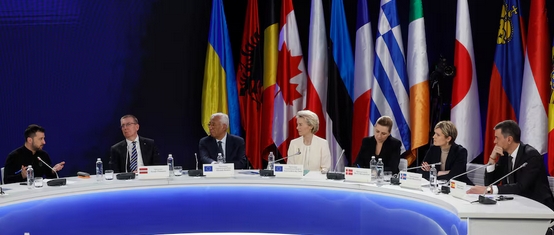
當地時間2月24日,馮德萊恩稱烏克蘭有望於2030年前加入歐盟。
歐洲同樣是失敗的一方。其挫敗更多源於俄羅斯還是美國尚無定論。美國副總統萬斯在慕尼黑安全會議上對歐洲領導人的尖鋭批評,令歐洲深感失望,決心加大防務投入。這一過程當然痛苦,但歐洲尚有能力負擔。即使失去美國的支持,其他北約成員國也擁有充足資源,足以研發多樣化的武器與作戰系統。十年之內,歐洲的安全架構或將發生深刻變革。
歐洲真能實現其所標榜的戰略自主嗎?簡而言之,不可能。只要歐盟仍依賴美國的核威懾作為北約的終極屏障,答案只能是否定的。即便英國與法國的核武庫加在一起,與俄羅斯相比也無法平衡。
法國總統馬克龍承諾為歐洲提供“延伸核威懾”的説法因此令人質疑。究竟有多少國家能真正相信法國的保證?據稱,前法國總統戴高樂曾質疑美國是否會“為了拯救巴黎而犧牲紐約”,這一疑慮或許才是推動法國發展核武庫的真正動力。
歐洲的安全取決於其與俄羅斯共存的能力。俄羅斯的勢力範圍已大幅萎縮,在歐洲僅剩白俄羅斯為其忠實盟友。俄羅斯不可能在常規戰爭中擊敗由32國組成的北約,也不致於會考慮對北約國家發動先發制人的核打擊,因為這無疑將招致報復。
北約的擴張已近尾聲。它或能苟活,卻難以興盛。首先,西方自由民主在全球的衰退削弱了北約作為其軍事支柱的力量。這一趨勢在美國總統特朗普的領導下可能加速,他對民主原則漠不關心。
其次,特朗普希望將歐洲安全交給歐洲人,專注於印太地區及與中國的競爭,這使北約的歐洲化不可避免,因此將加速這一聯盟的衰落。
烏克蘭衝突激發了世界對中國發揮更大全球作用的期待,無論是在戰後還是在萬斯慕尼黑演講之後。中國提出的12點和平計劃及與巴西共同推動全球南方國家支持停火,表明它願意為結束戰爭作出貢獻。
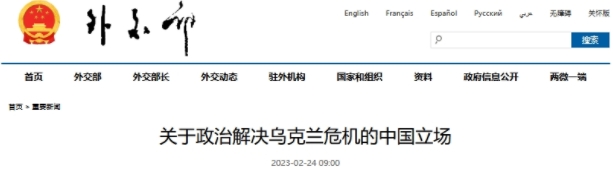
外交部相關公告截圖
然而,中國的實質性角色可能在停火或休戰達成後才能顯現。這取決於兩大條件:如果包括中國在內的大國需要提供集體安全保障;如果為防止俄羅斯或烏克蘭違反停火需要開展維和行動。
1953年的朝鮮停戰協定提供了一個範例,展示了大國支持的非正式協議可以緩解敵對狀態。該協定主要由中國、美國和朝鮮談判達成,儘管未簽署正式和平條約,朝鮮衝突未再演變為上世紀50年代初的激烈戰爭。
維和行動需首先獲得交戰雙方的同意。若聯合國授權,中國作為安理會常任理事國中最大的部隊派遣國,可以引領全球南方國家及部分非北約歐洲國家共同行動。俄羅斯將堅決反對任何北約或歐盟成員國的參與。
若這些設想成真,將是中國首次被邀請參與塑造歐洲安全格局。頗具諷刺的是,當美國謀求轉向印太地區之際,中國或將深入歐洲腹地。這預示着一個新時代的開啓。
以下為英文采訪原文:
Even if the dust has yet to fully settle, the fog shrouding the Ukraine conflict has begun to lift. Russia is on the verge of reclaiming full control over the western reaches of Kursk and, by its own reckoning, holds nearly all of Luhansk and over 70 percent of the Donetsk, Zaporizhzhia, and Kherson regions.
This explains why Russian President Vladimir Putin is in no rush to embrace a ceasefire. He seeks to bide his time, securing a decisive battlefield victory before turning to address the war’s underlying causes.
Ukraine, however, emerges as the unequivocal loser. President Volodymyr Zelensky, once a comedian, will be etched in history as a tragic figure. Ukraine will never acknowledge Russia’s annexation, and the four occupied regions may yet prove to be Russia’s Achilles’ heel in the decades ahead. Still, Ukraine will have little choice but to grudgingly accept Russia’s de facto control.
Even if Ukraine joins the European Union before 2030, as suggested by European Commission President Ursula von der Leyen, its aspirations for NATO membership appear doomed. Moreover, studies indicate that fewer than half of the 6.8 million Ukrainian refugees plan to return home once the war concludes.
Europe, too, finds itself among the vanquished, though whether its setbacks stem more from Russia or the United States remains unclear. Following U.S. Vice President Vance’s scathing critique of European leaders at the Munich Security Conference, a disillusioned Europe has resolved to bolster its defense spending. Painful as this may be, it is within Europe’s means. Even without U.S. support, other NATO members possess ample resources to develop a wide array of weapons and combat systems. Within a decade, Europe’s security framework could undergo a profound transformation.
But can Europe ever attain its much-vaunted strategic autonomy? The answer, in short, is no—not while the EU continues to rely on American nuclear deterrence as NATO’s ultimate shield. The combined nuclear arsenals of Britain and France pale in comparison to Russia’s.
This casts doubt on French President Emmanuel Macron’s pledge to extend nuclear deterrence across Europe. How many nations truly place faith in such a guarantee? Former French President Charles de Gaulle reportedly questioned whether the U.S. would “risk New York to save Paris”—a skepticism that likely spurred France’s pursuit of its own nuclear arsenal.
Europe’s security hinges on its capacity to coexist with Russia. Russia’s sphere of influence has contracted to the point where only Belarus remains a steadfast ally in Europe. Russia lacks the capacity to defeat a 32-member NATO in conventional warfare, nor should it contemplate a preemptive nuclear strike on a NATO state, which would surely provoke retaliation.
NATO’s expansion is nearing its end. It may endure, but it will not flourish. First, the global decline of liberal democracy undermines NATO’s strength as its military arm. This erosion is likely to accelerate under U.S. President Donald Trump, who shows little regard for democratic principles.
Second, Trump’s desire to delegate Europe’s security to Europeans while focusing on the Indo-Pacific and competition with China renders NATO’s Europeanization inevitable, further hastening the alliance’s decline.
The Ukraine conflict has fueled expectations for China to assume a greater global role, both in the war’s aftermath and following Vance’s Munich address. China has signaled its willingness to contribute, as evidenced by its 12-point peace proposal and joint efforts with Brazil to rally Global South nations in support of a ceasefire.
China’s substantive role, however, may materialize only after a ceasefire or armistice is secured. This hinges on two conditions: the need for a collective security guarantee involving major powers, including China, and the requirement for peacekeeping to prevent violations of a ceasefire by either Russia or Ukraine.
The 1953 Korean armistice offers a precedent for how an informal agreement backed by great powers can de-escalate hostilities. Negotiated primarily by China, the U.S., and North Korea, the truce has prevented the Korean conflict from reverting to the intense warfare of the early 1950s, despite the absence of a formal peace treaty.
For peacekeeping to proceed, the consent of the warring parties is essential. Should the UN issue a mandate, China—the largest troop contributor among the UN Security Council’s permanent members—could lead the effort, alongside Global South nations and select non-NATO European states. Russia would categorically oppose the involvement of any NATO or EU member.
Should these scenarios unfold, it would mark the first time China is invited to shape Europe’s security landscape. The irony is striking: as the U.S. seeks to pivot to the Indo-Pacific, China may find itself drawn into the European heartland. This heralds the dawn of a new era.

本文系觀察者網獨家稿件,文章內容純屬作者個人觀點,不代表平台觀點,未經授權,不得轉載,否則將追究法律責任。關注觀察者網微信guanchacn,每日閲讀趣味文章。